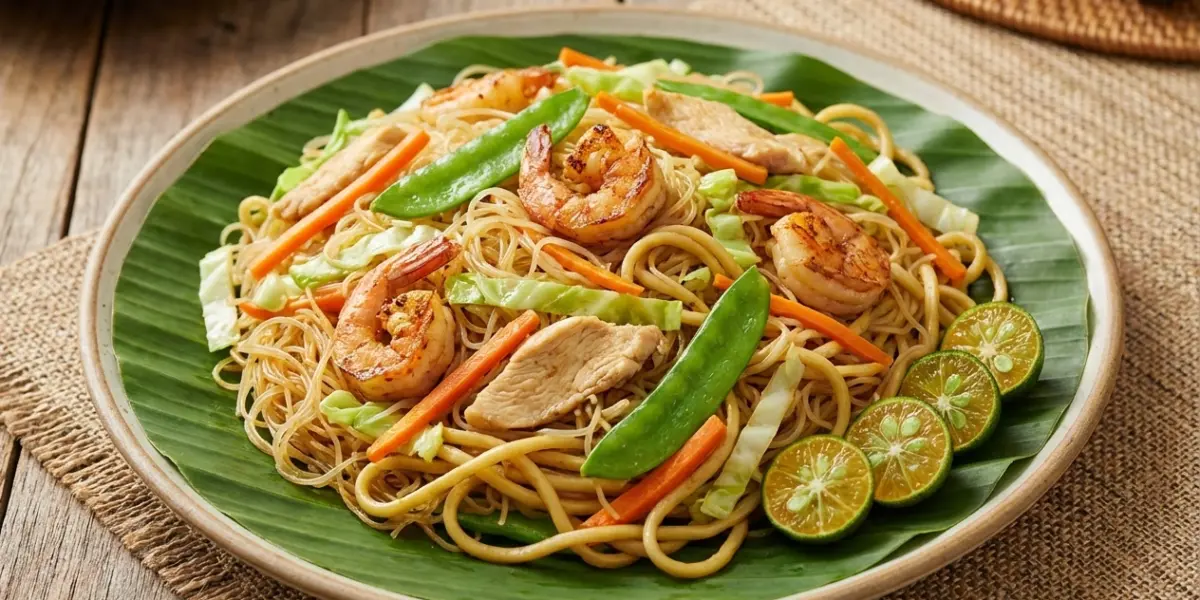
Pancit is the Filipino noodle dish that appears at every birthday, fiesta, and family gathering — a symbol of long life and good fortune, and one of the most satisfying one-pan meals in Filipino cooking. Stir-fried with vegetables, meat, and a savory sauce, it is fast to cook and deeply flavorful.
What Is Pancit?
Pancit is a broad category of Filipino noodle dishes, all descended from the noodle traditions introduced by Chinese immigrants (Hokkien traders) who settled in the Philippines centuries ago. The word itself comes from the Hokkien pian e sit, meaning ”something conveniently cooked.” Over time, Filipino cooks absorbed and transformed these Chinese techniques, developing regional variations so distinct they are now thoroughly Filipino.
The most common version is pancit canton, which uses thick, yellow wheat noodles stir-fried with chicken or pork, shrimp, cabbage, carrots, and celery in a soy sauce and fish sauce base. Close behind is pancit bihon, made with thin rice vermicelli that absorbs the sauce more readily and produces a lighter result. Many cooks combine both in a dish called pancit bihon-canton, mixing the textures.
Beyond the noodle type, regional specialties span the archipelago: pancit lomi (thick egg noodles in a starchy, gravy-like broth from Batangas), pancit palabok (rice noodles blanketed in a shrimp-based orange sauce), and pancit malabon (similar to palabok but richer, with more seafood toppings). This recipe focuses on pancit bihon, the everyday version most Filipino families cook weekly.
Ingredients
For the pancit bihon (serves 4–6):
- 250g (9 oz) dried rice vermicelli noodles (bihon)
- 250g (9 oz) chicken thighs, boneless, thinly sliced — or use leftover rotisserie chicken
- 150g (5 oz) pork belly or pork shoulder, thinly sliced
- 150g (5 oz) medium shrimp, peeled and deveined
- 3 tbsp cooking oil
- 6 cloves garlic, minced
- 1 medium onion, sliced
- 2 tbsp soy sauce
- 2 tbsp oyster sauce
- 1 tbsp fish sauce
- 500ml (2 cups) chicken stock or broth
- 2 cups cabbage, shredded
- 1 medium carrot, julienned
- 3 stalks celery, sliced diagonally
- 3 spring onions (scallions), cut into 5 cm (2-inch) lengths
- Ground black pepper, to taste
To serve:
- Calamansi or lemon wedges
- Extra fish sauce or soy sauce
- Chicharon (pork crackling), crumbled (optional)
Ingredient notes: Soak the dried vermicelli in room-temperature water for 20–30 minutes before cooking — they should be pliable but not fully cooked. Do not use boiling water; the noodles will turn mushy in the wok. Calamansi (Philippine lime) is the traditional table condiment — squeeze it over your bowl just before eating. Lemon is an acceptable substitute.
How to Make Pancit Bihon
- Soak the noodles: Place dried vermicelli in a large bowl and cover with room-temperature water. Soak for 20–30 minutes until pliable. Drain and set aside. Do not soak in hot water.
- Prepare the protein: Season the sliced chicken and pork lightly with salt and pepper. Have the shrimp ready separately — they cook faster and will be added later.
- Make the sauce mixture: In a small bowl, combine the soy sauce, oyster sauce, fish sauce, and chicken stock. Set aside.
- Sauté aromatics: Heat 2 tablespoons of oil in a large wok or wide pan over high heat. Add the garlic and cook for 30 seconds, stirring constantly. Add the onion and cook for 2 minutes until softened.
- Cook the meat: Add the pork and cook for 3–4 minutes until lightly browned. Add the chicken and cook for another 3 minutes until cooked through.
- Add shrimp: Add the shrimp and cook for 1–2 minutes until pink. Remove all the protein from the wok and set aside.
- Stir-fry the vegetables: Add the remaining tablespoon of oil to the wok. Add the carrots and celery and stir-fry for 2 minutes. Add the cabbage and cook for 1 minute more. The vegetables should still have some crunch.
- Add noodles and sauce: Add the soaked, drained noodles to the wok. Pour the sauce mixture over the noodles. Toss using tongs or two large spoons, working the noodles through the sauce and vegetables. Cook for 3–4 minutes, adding more stock if the noodles seem dry.
- Return the protein: Add the cooked meat and shrimp back to the wok along with the spring onions. Toss everything together and cook for 1 more minute until heated through.
- Taste and adjust: Season with black pepper and additional fish sauce if needed. Transfer to a large platter and serve with calamansi wedges.
Tips for the Best Pancit
- High heat is essential. Pancit is a stir-fry. A hot wok develops the slightly charred, smoky flavor that makes restaurant noodles taste different from home versions. Get the wok screaming hot before you start.
- Don’t oversoak the noodles. The noodles will continue cooking in the wok. If they are already fully soft from soaking, they will turn to mush in the pan. Stop soaking when they are pliable but still have a slight resistance to biting.
- Cook the protein in batches. Overcrowding the wok steams rather than sears the meat. Work in batches if your wok is small.
- Reserve some stock. Noodles absorb liquid as they sit. Keep a splash of chicken stock nearby to loosen the dish if it looks dry while cooking.
- Calamansi at the table, not in the wok. The citrus is a finishing element added by each person to their own bowl. Adding it during cooking destroys its bright flavor.
Variations
Pancit Canton: Use thick, yellow egg noodles (canton) instead of vermicelli. They hold up to more robust stir-frying and have a satisfying, chewy bite. No soaking required — cook them directly in boiling water for 2 minutes, then finish in the wok.
Vegetarian Pancit: Replace the meat and shrimp with firm tofu, mushrooms (shiitake and king oyster), and an extra handful of vegetables. Use vegetable stock and replace fish sauce with additional soy sauce. The result is still deeply savory.
Pancit Guisado (Sautéed Pancit): A simpler version with just one protein — usually chicken or pork — and fewer vegetables. Faster to prepare on a weeknight when you don’t have time for a full production.
What to Serve With Pancit
- Lumpia shanghai — the classic pairing at Filipino parties; the contrast of soft noodles and crispy rolls is unbeatable
- Pandesal (Filipino bread rolls) — soft rolls eaten alongside the pancit, used to scoop up noodles
- Lechon (roast pork) — for special occasions, sliced lechon served alongside pancit is a feast combination
- Calamansi juice — the traditional drink to accompany Filipino noodle dishes
Storage and Reheating
Store leftover pancit in an airtight container in the refrigerator for up to 2 days. The noodles will continue absorbing liquid and may clump together as they cool. To reheat, add 2–3 tablespoons of water or chicken stock to a hot pan, add the pancit, and stir-fry over medium-high heat for 2–3 minutes until heated through. Alternatively, microwave with a splash of water covered with a damp paper towel for 2 minutes. Pancit does not freeze well — the vermicelli becomes unpleasantly mushy when thawed.