Last updated: March 29, 2026
Bonito flakes — known in Japanese as katsuobushi — are one of the most concentrated sources of umami on Earth. Pale pink, paper-thin, and almost weightless, they shimmer and curl in the steam rising off a bowl of hot rice, and a single pinch can reshape the savor of a soup. Without them, you cannot make traditional dashi, the elemental Japanese stock that underpins miso soup, simmered vegetables, donburi, and a thousand sauces. With them, even a humble cube of cold tofu becomes a complete dish.
This guide walks through everything a home cook needs: what bonito flakes actually are, how a single fish becomes the world’s hardest food, the varieties you’ll find on shelves, how to buy and store them, what to use when you’re out, and five recipes that show off their range. We also cover the nutritional case for keeping a bag in your pantry and the questions readers ask most often.
What Are Bonito Flakes?
Bonito flakes are wafer-thin shavings of katsuobushi, a Japanese ingredient made from skipjack tuna (Katsuwonus pelamis) that has been filleted, simmered, smoked, sun-dried, and — for the most prized grades — fermented for months with a beneficial mold called Aspergillus glaucus. The finished block is so dry and dense that it rings like a piece of wood when you tap two together. In fact, traditional katsuobushi is often described as the hardest food in the world.
To use it, the rock-hard block is shaved against a special plane called a kezuriki, producing pale pink ribbons that range from gossamer-fine ”flower flakes” (hanakatsuo) to thicker shavings used for richer stocks. Most home cooks today buy the flakes pre-shaved in vacuum-sealed bags, which is what we mean when we say ”bonito flakes” in English.
The flavor is hard to describe in Western terms because there is no real Western analog. Bonito flakes are smoky, fishy in the cleanest sense of the word, faintly sweet, deeply meaty, and overwhelmingly savory. They are loaded with inosinate, one of the three primary umami compounds, and when paired with kombu — which is rich in glutamate — the two ingredients produce the umami synergy at the heart of classic dashi.
The History and Origin of Katsuobushi
The story of bonito flakes is, in many ways, the story of Japan’s coastal towns. Skipjack tuna migrate in vast schools through the warm Kuroshio Current, and Japan has fished them for at least 1,500 years. Early forms of preserved bonito appear in eighth-century records as katsuo no irori, a kind of dried fish used as tribute to the imperial court. By the Heian period, dried bonito was traded as a dense, transportable protein source, and the word katsuobushi — literally ”bonito section” — begins to appear in cookbooks.
The technique we recognize today crystallized in the Edo period. In 1674, a fisherman from Tosa Province named Jintaro is credited with refining the smoking-and-molding process that produces arabushi and the more refined karebushi. The Tosa method spread along the Pacific coast, and rival production hubs grew up in Yaizu (Shizuoka), Makurazaki (Kagoshima), and Ibusuki — each with its own subtle profile. Makurazaki and Yaizu still produce the bulk of Japan’s katsuobushi today.
Katsuobushi was also a spiritual and cultural object. The hardness, durability, and shape of a finished block led samurai households to give pairs of them as wedding gifts; the word katsuo sounds like katsu, ”to win,” making the dried fish a charm for victory. Stylized bonito blocks still appear at Japanese New Year and in mizuhiki envelope decorations.
The science arrived later. In 1908, the chemist Kikunae Ikeda, working in Tokyo, identified glutamate in kombu and named the resulting taste umami. Twenty-five years later, his student Shintaro Kodama isolated inosinate from katsuobushi. Their two papers, taken together, finally explained why dashi tasted the way it did and why the kombu-and-bonito pairing worked so much harder than either ingredient alone — the foundation of every bowl of miso soup made since.
How Bonito Flakes Are Made
Producing katsuobushi is one of the slowest food processes still practiced commercially. From whole fish to finished block, it can take six months. The steps are:
- Cutting (kaitai): Skipjack are filleted into four ”logs” — two from the back, two from the belly. The bloodlines and pinbones are removed by hand.
- Simmering (nijuku): The pieces are simmered at around 80°C (175°F) for 60–90 minutes, just below boiling, which sets the proteins and concentrates flavor without breaking up the flesh.
- Deboning and shaping: After cooling, the smaller bones are picked out by hand and any cracks in the flesh are filled with bonito paste so the fish can be shaped into a uniform block.
- Smoke-drying (baikan): The blocks are smoked over oak, evergreen oak, or chinquapin wood for as long as a month, in repeated cycles. They are smoked, rested, smoked, rested. Each cycle drives out a little more moisture and lays down another layer of phenolic flavor compounds. After smoking, the blocks are called arabushi and are ready for the cheaper grades of bonito flakes.
- Sun-drying and molding (kabitsuke): For premium karebushi, the blocks are scraped clean, brushed with Aspergillus glaucus spores, and left in a humid room. The mold consumes residual moisture and fat, producing the signature deep, mellow aroma. After each round, the blocks are sunned and re-inoculated. Two to four cycles produce karebushi; four to six produce the rare and expensive honkarebushi.
- Shaving: The finished block is planed against a kezuriki — essentially an upside-down wood plane mounted over a drawer. The shavings curl up like wood ribbons and are bagged immediately, since freshly shaved katsuobushi loses aroma within hours.
This is also why most modern home cooks buy pre-shaved bagged flakes. Whole katsuobushi blocks and home shavers exist and are wonderful, but for everyday cooking, vacuum-packed bags from a reputable producer are nearly as good and far more practical.
Types of Bonito Flakes
”Bonito flakes” is a single English term, but Japanese cooks distinguish at least half a dozen forms, each with its own purpose. The most common ones you’ll see at an Asian grocer or online are:
| Japanese Name | English / Description | Best For |
|---|---|---|
| Hanakatsuo | ”Flower flakes” — wide, paper-thin, pink shavings, the most common type sold worldwide | Toppings (okonomiyaki, takoyaki, hiyayakko), garnishes, basic dashi |
| Ito-kezuri | Hair-thin threads, almost dust-fine | Garnishing rice bowls, finishing salads, decorative use |
| Atsu-kezuri | Thick shavings, 1–2 mm, often dark | Long-simmered stocks, niban dashi, soba and udon broths |
| Kezuribushi (mixed) | Blends of arabushi and karebushi, sometimes with mackerel or sardine flakes | Everyday dashi, household cooking, restaurant kitchens |
| Karebushi flakes | From mold-fermented blocks; fragrant, mellow, deep amber | High-grade dashi for kaiseki and clear soups (suimono) |
| Honkarebushi flakes | From four-to-six-cycle fermented blocks; rarest and most expensive | Special-occasion dashi where the stock is the point of the dish |
Outside of katsuobushi proper, you may also see sababushi (mackerel flakes), urumebushi (round-scad sardine), and mejikabushi (young bonito). They follow the same process and are commonly blended with bonito for darker, more robust dashi used in soba broth and oden.
For most home cooking, hanakatsuo is the right choice. It hydrates fast, releases umami quickly, and works equally well as a stock ingredient and a garnish. Look for it labeled simply ”bonito flakes” or ”hanakatsuo” on Japanese-brand bags.
The Flavor Profile and the Science of Umami
What makes bonito flakes taste the way they do? The answer sits at the intersection of biochemistry and tradition.
Skipjack tuna is naturally rich in inosine 5′-monophosphate (IMP), also known as inosinate. IMP is one of the three umami nucleotides — alongside guanylate (found in dried shiitake mushrooms) and adenylate (found in shellfish). On its own, IMP gives bonito a meaty, almost beefy savor.
The smoking process layers smoky phenols and ketones on top of that meaty base. The mold-fermentation step in karebushi grades does something subtler: Aspergillus glaucus consumes residual fat (preventing rancidity, which is why karebushi keeps for years) and produces additional aromatic compounds that round off the smoke into a softer, more complex profile.
The real magic is umami synergy. Glutamate (from kombu, tomatoes, soy sauce, aged cheese) and inosinate (from bonito, dried sardines, cured meats) are eight times more umami-intense in combination than the sum of either alone. That is why dashi made with kombu plus bonito tastes so much richer than either ingredient simmered alone, and why a sprinkle of bonito flakes wakes up tomato sauce, scrambled eggs, or buttered popcorn. Once you taste the synergy in action, you start finding excuses to use bonito everywhere.
How to Buy Bonito Flakes
You will find bonito flakes in three main settings: well-stocked supermarkets, Japanese and pan-Asian grocers, and online retailers that specialize in Japanese pantry items. They are sold in vacuum-sealed plastic bags, often inside a cardboard outer carton; smaller producers also offer single-serving sachets meant for one bowl of dashi or one topping job.
What to look for:
- Color: Quality hanakatsuo is rosy pink to amber, never gray or dull brown. A slight curl is good; flakes that have been pressed flat may have lost aromatics.
- Origin: Look for ”Made in Japan” with city of origin (Yaizu, Makurazaki, or Ibusuki are all reliable). Some producers in Indonesia and the Maldives now make competent bonito flakes as well.
- Ingredients: A short list. Premium products list only ”bonito (skipjack tuna).” Some budget bags add mackerel or sardine flakes, which is fine for everyday dashi but not what you want when you specifically want clean bonito flavor.
- Packaging: Vacuum-sealed bags or nitrogen-flushed pouches keep flavor longest. Once you open the bag, you’ll know within seconds if it’s good — fresh bonito has a clean smoky-marine aroma that should fill the kitchen.
- Size of pack: Bonito flakes lose aroma quickly after opening. If you cook with them once a week, a 1.5 oz (40 g) bag is fine. If you only use them occasionally, single-serve sachets prevent waste.
For a standard household pantry, a mid-grade hanakatsuo from Yaizu or Makurazaki is the best balance of price and quality. For special-occasion clear dashi or chawanmushi, splurge on a karebushi-grade bag and use it the same week you open it.
How to Store Bonito Flakes
Two enemies destroy bonito flakes: oxygen and moisture. Heat and light are slower threats. Store accordingly:
- Unopened bags: Keep in a cool, dry pantry away from direct sunlight. Vacuum-sealed bags will hold their flavor for 6–12 months past production date. Check for the printed best-by date.
- Opened bags: Press out as much air as possible, fold the bag tightly, and clip it shut. For best flavor, transfer the contents to a small airtight tin or jar with as little headspace as possible. Use within 2 to 4 weeks for peak aroma.
- Long-term: For storage longer than a month, freeze opened bags in a zip-top freezer bag with the air pressed out. Frozen bonito flakes keep their flavor for up to 6 months and can be used straight from the freezer — they do not need thawing.
- Whole katsuobushi blocks: A finished karebushi block is so dry and so high in beneficial mold metabolites that it can keep at cool room temperature for years. Wipe with a damp cloth, dry, and store wrapped in clean paper. The premium varieties improve in the first 6 months after purchase.
If your flakes have gone gray, smell musty in the wrong way (think wet basement, not dry oak), or feel limp and flexible rather than crisp, retire them. Bonito flakes do not become dangerous when stale — they just lose their reason for existing.
Bonito Flakes Substitutes
Nothing matches bonito flakes exactly — the smoke, the inosinate, and the sea-air aroma are a one-of-a-kind combination. But cooks adapt. The chart below covers the most common substitutions for bonito in dashi, broth, and as a topping, with use cases and ratios.
| Substitute | Best Used For | Ratio (vs. bonito flakes) | Notes |
|---|---|---|---|
| Dashi powder (instant hondashi) | Dashi, miso soup, simmered dishes | 1 tsp powder per 1 cup hot water (replaces ~1 cup loose flakes) | Convenient; check label for MSG content if you’re avoiding it |
| Niboshi (dried sardines) | Robust dashi for soba, udon, nimono | 3–4 small fish per cup of water | Stronger and fishier; remove heads and bellies for less bitterness |
| Kombu only (vegan) | Vegetarian dashi, light broths | 10 g kombu per 4 cups water | Lacks inosinate; pair with dried shiitake to add another umami nucleotide |
| Dried shiitake mushrooms (vegan) | Vegetarian dashi, Asian broths | 3–4 caps per 4 cups water, soaked overnight | Adds guanylate; combine with kombu for full umami synergy |
| Mushroom powder + soy sauce | Quick fix when you need umami fast | 1 tsp mushroom powder + 1 tsp soy sauce per cup water | Closest in savor profile but missing the smoke |
| Anchovy or fish sauce | Stocks (poor topping replacement) | 1 tsp fish sauce per cup of stock | Use sparingly; fish sauce is much saltier than bonito |
| Smoked salt + nutritional yeast | Vegan topping for okonomiyaki, takoyaki, tofu | 1 tsp each, mixed | Mimics smoke and savor; sprinkle over hot food so the salt blooms |
| Crumbled nori | Vegan topping | To taste | Different in flavor but provides ocean-savory and visual contrast |
The best vegetarian substitute for bonito flakes in dashi is the kombu + dried shiitake combination, which uses the same umami-synergy principle (glutamate plus a nucleotide) to produce a remarkably full broth. The best topping replacement is a sprinkle of toasted sesame seeds combined with crumbled nori — not the same flavor, but the right kind of finishing punctuation.
5 Recipes That Star Bonito Flakes
Once a bag of bonito flakes is open, you’ll want a rotation of dishes that use it up before the aroma fades. Here are five reliable ways into katsuobushi cooking, from the foundation stock to a quick lunchbox filling.
1. Awase Dashi (Kombu and Bonito Stock)
The mother of Japanese cooking. This is the umami-synergy stock referenced everywhere on this site. Once you have it, miso soup, oden, simmered vegetables, chawanmushi, and a hundred other dishes are minutes away.
- 4 cups (1 L) cold filtered water
- 10 g kombu (one 4-inch square)
- 20 g (about 2 packed cups) hanakatsuo bonito flakes
Wipe the kombu lightly with a damp cloth (do not wash off the white powder, which is glutamate). Submerge in cold water in a saucepan and let it soak for 30 minutes. Set the pan over medium-low heat and bring slowly to just under a simmer (around 60°C / 140°F) over 8 to 10 minutes. Pull the kombu out before it boils — boiled kombu turns slimy and bitter. Bring the water to a gentle simmer, add the bonito flakes, turn off the heat, and let them steep for 2 minutes. Strain through a fine sieve lined with cheesecloth or a paper towel, pressing only gently on the flakes. The result is the clean, golden first dashi (ichiban dashi) used for clear soups. For a stronger second-pass dashi, simmer the spent kombu and flakes in fresh water for 10 minutes — perfect for miso soup. Full method: how to make dashi.
2. Okaka Onigiri Filling
Okaka is the simplest and one of the most beloved onigiri fillings in Japan. Three ingredients, two minutes, packs in any lunchbox.
- 1 cup (10 g) bonito flakes, packed loosely
- 1 tablespoon soy sauce
- 1 teaspoon mirin (optional, for a touch of sweetness)
- 1 teaspoon toasted white sesame seeds (optional)
In a small bowl, drizzle the soy sauce and mirin over the bonito flakes and toss with chopsticks until the flakes have absorbed the liquid evenly. The flakes will collapse into a damp, savory tangle. Stir in the sesame seeds. Spoon a teaspoon into the center of each rice ball as you form it. The okaka filling keeps in the fridge for 3 days. Pair this with our step-by-step onigiri shaping guide.
3. Hiyayakko (Cold Tofu with Bonito)
The fastest, most elegant Japanese summer dish, and the cleanest demonstration of what bonito flakes can do. The flakes ”dance” on the warm-from-room-temperature tofu — a small theatrical pleasure that has charmed Japanese kids for generations.
- 1 block (300–400 g) silken tofu, drained
- 2 tablespoons bonito flakes
- 1 tablespoon thinly sliced scallion (green parts)
- 1 teaspoon grated fresh ginger
- 2 teaspoons soy sauce
- A few drops of sesame oil (optional)
Cut the tofu into 4 thick slabs and divide between 2 plates. Top each portion with the scallions and ginger, then mound the bonito flakes in the center. Drizzle the soy sauce around the edge — never on top, or you’ll wet down the dancing flakes. Add a drop of sesame oil if you like. Eat immediately.
4. Okonomiyaki Topping (with Aonori and Mayo)
If you’ve ever seen a video of pink flakes waving on top of a Japanese pancake like the breath of the dish itself, that’s bonito reacting to the heat rising off the okonomiyaki. The flakes are so thin and dry that water vapor sets them in motion. To get the effect, the pancake must be hot and the flakes must be fresh.
- 1 hot okonomiyaki, fresh off the griddle
- 2 tablespoons okonomiyaki sauce
- 1 tablespoon Kewpie mayonnaise
- 1 teaspoon aonori (dried green seaweed flakes)
- 3 tablespoons (about 5 g) bonito flakes
Brush the surface of the hot pancake with okonomiyaki sauce. Drizzle Kewpie in a tight zig-zag. Sprinkle aonori over the top, then mound a generous handful of bonito flakes on top of everything. Carry to the table immediately — the flakes will start dancing within 5 seconds and the show should not be missed. Full pancake recipe in our Okonomiyaki guide.
5. Furikake from Spent Bonito Flakes
After making dashi, do not throw out the strained kombu and bonito flakes. They still hold flavor — just transformed into something earthier and softer. Turning them into homemade furikake is the most satisfying zero-waste move in Japanese cooking.
- Spent bonito flakes and kombu from one batch of dashi (squeezed dry, kombu finely chopped)
- 2 tablespoons soy sauce
- 1 tablespoon mirin
- 1 tablespoon sugar
- 2 teaspoons toasted sesame seeds
- 1 teaspoon dried scallion or ao-nori, optional
Roughly chop the spent bonito flakes and kombu. In a dry, nonstick pan over medium-low heat, combine them with the soy sauce, mirin, and sugar. Stir constantly until the liquid evaporates and the mixture is dry, dark, and crumbly — about 8 to 12 minutes. Toward the end, fold in the sesame seeds and scallion. Cool fully and store in a jar in the fridge for up to 2 weeks. Sprinkle over hot rice, sliced cucumber, eggs, or buttered toast.
Nutritional Benefits of Bonito Flakes
Beyond flavor, bonito flakes have a real nutritional case. Because the production process removes water and most of the fat, what remains is concentrated protein and minerals.
- High protein: A 5 g serving (about a small handful) delivers roughly 4 g of complete protein — that is over 75% protein by dry weight, more concentrated than any cut of beef. Bonito protein contains all nine essential amino acids.
- Low in fat and calories: The same 5 g serving has only about 17 calories and less than half a gram of fat. The mold-fermented karebushi is leaner still.
- Rich in B vitamins: Particularly vitamin B12, niacin, and B6 — important for energy metabolism and red blood cell formation.
- Mineral-dense: Selenium, iron, magnesium, and potassium are all concentrated in the dried flakes. A pinch over rice provides a meaningful amount of selenium.
- Histidine and inosinate: High levels of free histidine give bonito a faint sweetness and contribute to satiety. Inosinate, the umami nucleotide, is being studied for its role in dietary salt reduction — umami-rich foods help people feel satisfied with less sodium.
- Low in carbohydrates: Bonito flakes are essentially carb-free, making them friendly to keto, paleo, and low-carb diets.
Bonito does contain naturally occurring sodium and purines, so people on low-purine diets (gout patients) should be moderate. The histamine load is also a consideration for the histamine-intolerant. For the average eater, however, a dusting of bonito flakes is one of the most flavor-dense, nutrient-rich finishing ingredients you can keep on hand.
Everyday Ways to Use Bonito Flakes
Bonito flakes are not just for traditional Japanese dishes. Once you have a bag, the easiest way to use it is to sprinkle a small handful on dishes you already cook. Try:
- On a fried egg, with a few drops of soy sauce — instant breakfast upgrade.
- Over buttered popcorn, with a pinch of salt and aonori. Movie theater snack, Tokyo-style.
- Stirred into mayonnaise with a touch of soy sauce as a sandwich spread.
- On steamed rice with a drop of soy sauce and a soft-boiled egg — a 90-second lunch known as neko manma, or ”cat rice.”
- Folded into pasta with butter, soy sauce, and black pepper — Japan’s twist on cacio e pepe.
- On grilled vegetables: roasted sweet potato, charred eggplant, blistered shishito peppers.
- Whisked into vinaigrette: bonito flakes steeped in warm rice vinegar and soy for 5 minutes make an extraordinary salad dressing base.
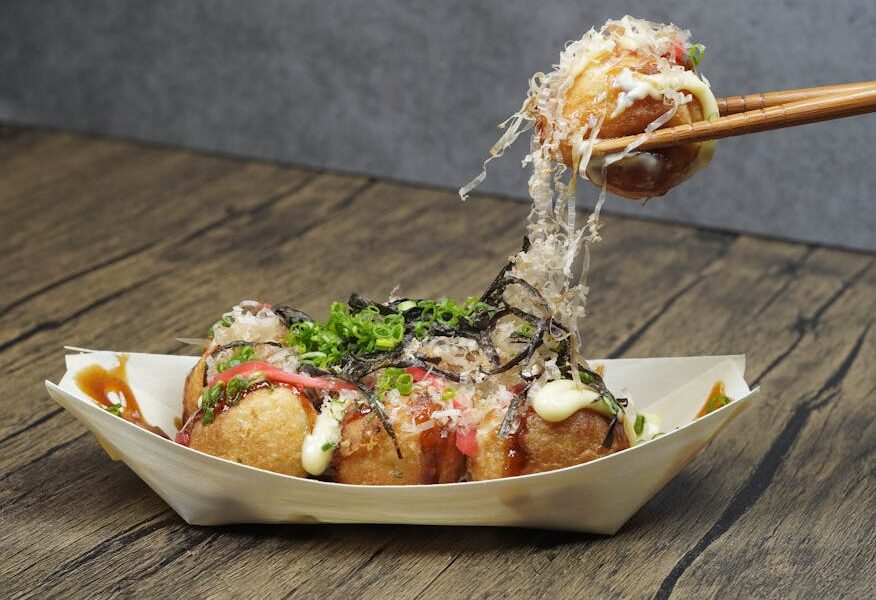
- As a finisher for takoyaki, where the heat sets the flakes dancing and adds the smoky-savory crown that defines the dish.
The general rule: any dish that benefits from concentrated savor and a hint of smoke welcomes a sprinkle of bonito flakes. Add them at the end so they retain their crisp ribbon shape and aromatic punch.
Common Mistakes to Avoid
A few errors come up often in home kitchens. None are catastrophic, but each one costs flavor.
- Boiling the flakes: When making dashi, never let the bonito flakes boil. They turn the broth bitter and cloudy. Add the flakes off the heat or just at the start of a simmer, then strain within 2 to 3 minutes.
- Pressing the flakes when straining: Squeezing the spent flakes extracts bitterness and tannins. Let gravity do the work; press gently only at the very end.
- Storing in a wide jar: A wide jar exposes flakes to air with every opening. A small zip-top bag with the air pressed out is better.
- Adding too early to a stir-fry: Bonito flakes scorch easily. Stir them in only at the very end, off the heat, or use as a finishing garnish.
- Using old flakes for clear dashi: A flat, unscented bag of bonito will produce a flat, unscented dashi. For clear soups, open a fresh bag.
- Skipping the kombu: A bonito-only dashi is fine but tastes one-dimensional. The kombu-bonito synergy is what makes Japanese stock the umami benchmark it is.
Bonito Flakes vs. Other Asian Pantry Staples
Where do bonito flakes fit on a shelf next to other umami-heavy Japanese pantry staples? Here is a quick orientation:
| Ingredient | Primary Umami Source | Best Role |
|---|---|---|
| Bonito flakes (katsuobushi) | Inosinate | Stock, topping, finishing seasoning |
| Kombu | Glutamate | Stock; pairs with bonito |
| Dried shiitake | Guanylate | Vegetarian stock; layered umami |
| Miso | Glutamate (fermented) | Soups, marinades, dressings |
| Soy sauce | Glutamate (fermented) | Seasoning, sauces, dipping |
| Mirin | Sugars + amino acids | Glaze, sweetness, balance |
| Niboshi (dried sardines) | Inosinate | Robust dashi for noodle broth |
The takeaway: bonito flakes occupy the savory-meaty corner of the umami map. They pair, they don’t compete. A pantry that holds bonito flakes alongside kombu, miso, and soy sauce can build essentially the entire repertoire of Japanese home cooking.
Frequently Asked Questions
What are bonito flakes made of?
Bonito flakes are made from skipjack tuna (Katsuwonus pelamis) that has been filleted, simmered, smoked over hardwood, sun-dried, and — for premium grades — fermented with Aspergillus glaucus mold. The resulting rock-hard block, called katsuobushi, is then shaved into thin pink ribbons.
Why do bonito flakes move on hot food?
The flakes are so thin and dry that the water vapor and convection currents rising from hot food are enough to lift and curl them. There’s no chemistry trick — it’s just physics meeting an extremely lightweight ingredient. The dancing flakes are a signature of fresh okonomiyaki and takoyaki.
Are bonito flakes the same as fish flakes?
Not exactly. Bonito flakes refer specifically to katsuobushi, made from skipjack tuna. ”Fish flakes” or kezuribushi can be made from mackerel, sardines, or other oily fish. Many supermarket bags labeled ”bonito flakes” are blends — check the ingredient list if you want pure bonito.
Are bonito flakes vegetarian?
No. Bonito flakes are made from fish and are not vegetarian or vegan. For a plant-based dashi, use kombu plus dried shiitake mushrooms — the glutamate-and-guanylate pairing reproduces the same umami synergy that kombu and bonito create together.
Can I eat bonito flakes raw?
Yes. Bonito flakes are fully cooked, smoked, and dried during production. They are safe to eat straight from the bag and are commonly used as a topping without further cooking.
How long do bonito flakes last?
Unopened vacuum-sealed bags keep for 6 to 12 months in a cool pantry. Once opened, use within 2 to 4 weeks for peak aroma. For longer storage, freeze in a zip-top bag with the air pressed out — they’ll keep for 6 months and can be used straight from the freezer.
What’s the difference between arabushi and karebushi?
Arabushi is bonito that has been simmered, smoke-dried, and stopped — a more assertive, smoky flavor at a lower price. Karebushi takes the arabushi block and ferments it with mold over multiple cycles, removing fat and rounding the smoke into a softer, more complex profile. Karebushi is more expensive and is the grade used in fine kaiseki dashi.
Can I substitute dashi powder for fresh bonito flakes?
Yes, for stock and braises. One teaspoon of instant dashi (hondashi) powder dissolved in a cup of hot water roughly equals the strength of a small batch of fresh dashi. The flavor will be flatter and saltier, and many brands include MSG. For toppings and garnishes, dashi powder cannot replace the texture or appearance of fresh flakes.
Where can I buy bonito flakes in the US?
Japanese grocery stores (Mitsuwa, Tokyo Central, H Mart’s Japanese aisles), most well-stocked pan-Asian supermarkets, and online retailers specializing in Japanese pantry. The international aisle of larger conventional supermarkets often carries a small bag, usually labeled ”bonito flakes” or ”katsuobushi.”
What’s the best brand of bonito flakes?
Look for Japanese producers based in Yaizu (Shizuoka) or Makurazaki (Kagoshima) — both are historic katsuobushi-making cities and produce most of the world’s premium supply. The brand matters less than the freshness of the bag and the simplicity of the ingredient list.
Can bonito flakes be used in non-Japanese cooking?
Absolutely. Modern chefs use bonito as a finishing garnish on pasta, eggs, popcorn, roasted vegetables, and risotto, and stir bonito-infused oil or butter into Western sauces. Bonito flakes work anywhere a dish wants smoky, meaty depth without added fat or salt.
The Bottom Line on Bonito Flakes
Bonito flakes are not optional in Japanese cooking — they are the cornerstone. Their inosinate-rich savor, when paired with the glutamate of kombu, creates the umami synergy that defines dashi and, by extension, the overwhelming majority of Japanese sauces, soups, and simmered dishes. Beyond the dashi pot, they are one of the most versatile finishing ingredients in any pantry: smoky, meaty, almost weightless, and ready to elevate everything from a fried egg to a grand kaiseki bowl.
Buy a fresh bag from a Japanese producer, store it tightly sealed, and reach for it whenever a dish needs depth without bulk. Once you have made your first proper kombu-and-bonito dashi, the bag will not last long. Pair what you’ve learned here with our complete dashi guide, our authentic miso soup recipe, and our wider Japanese recipes collection to start putting katsuobushi to work in your kitchen.

Mei Lin Chen
Mei Lin Chen is an Asian food writer and recipe developer. Melbourne-raised and London-based, she has spent over a decade exploring the rice paddies, hawker stalls, and home kitchens of South-East and East Asia. Her recipes balance traditional technique with everyday practicality.