Last updated: March 28, 2026
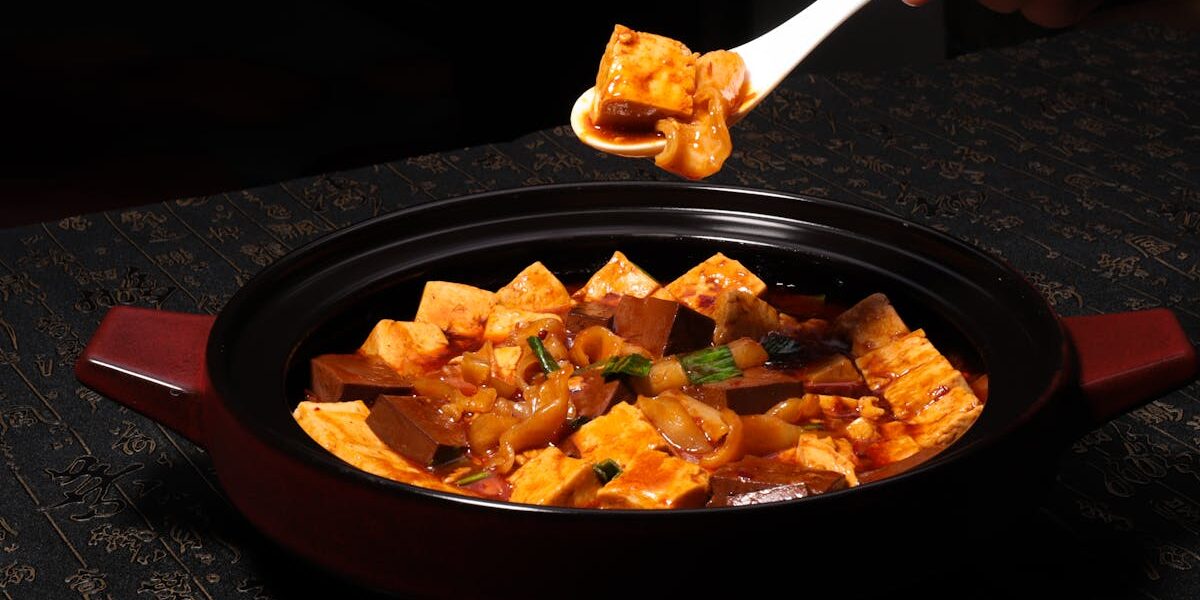
Mapo tofu (麻婆豆腐, má pó dòu fu) is one of the most iconic dishes in all of Chinese cuisine — a fiery, numbingly spicy, deeply savory bowl of silken tofu suspended in a glossy, brick-red sauce streaked with minced beef or pork. Born in the late 19th-century alleys of Chengdu, this Sichuan classic gets its name from a pockmarked grandmother (má pó) who supposedly invented it to feed traveling oil merchants. Today, mapo tofu is the gold standard for testing a Sichuan kitchen: it must achieve má (numbing tingle from Sichuan peppercorns), là (chili heat), tàng (mouth-scalding hot), xiān (savory umami), nèn (tender silken tofu), xiāng (fragrant), and sū (a slight crispness on the meat) — the famous seven qualities of authentic mapo tofu.
This recipe walks you through restaurant-quality mapo tofu you can make at home in 25 minutes, with every authentic ingredient explained, every step photographed in words, and every pitfall flagged before you fall into it. The secret is not in any one flourish — it is in the disciplined layering of three Chinese pantry staples (doubanjiang, fermented black beans, and freshly toasted Sichuan peppercorns) cooked in just enough oil to blossom their pigments and aromatics. Done right, mapo tofu is one of the cheapest, fastest, most addictive weeknight meals on the planet.
What Is Mapo Tofu?
Mapo tofu is a Sichuan stir-braise of silken tofu and minced meat in a sauce built on doubanjiang (broad-bean chili paste), fermented black beans, garlic, ginger, ground Sichuan pepper, and chili powder. The tofu is poached briefly in salted water before being slid into the sauce so it stays intact during cooking. The dish is finished with a cornstarch slurry that gives the sauce its signature lacquered shine, a final cascade of toasted Sichuan pepper powder, and a confetti of green scallions.
The dish sits squarely in the canon of Sichuan cuisine, alongside gong bao chicken, twice-cooked pork, and dan dan noodles. It is served as part of a multi-dish family meal, ladled over rice — never as a noodle topping in traditional contexts. In Chengdu, the most acclaimed version comes from the original restaurant Chen Mapo Tofu, founded in 1862; in modern home cooking, every Sichuan grandmother has a slightly different version, and that is part of the dish’s enduring charm.
The Origin Story: Pockmarked Grandma Chen
The dish is named after Chen Liu Shi, the wife of a man named Chen Chunfu, who together ran a small restaurant in the Wanfu Bridge district of Chengdu in 1862. Chen Liu Shi had pockmarks (má zǐ) on her face from a childhood bout of smallpox, and so she became known affectionately around the neighborhood as Chen Má Pó — Pockmarked Grandma Chen. Her restaurant catered to canal porters and rapeseed oil traders who would stop in for a quick, cheap, intensely flavored meal after a long day’s haul.
Legend has it the porters would arrive with their own ingredients — a chunk of beef, a block of tofu, a bottle of cooking oil — and ask Chen to assemble them into something hot, fast, and satisfying. She bound the silken tofu and meat with broad-bean paste, sluiced everything with oil, and threw on a finishing pinch of toasted Sichuan pepper. The dish caught fire — figuratively and literally — and within a generation, ”Chen Mapo Tofu” was a Chengdu institution. The restaurant still operates today, more than 160 years later, with branches across Sichuan and a few flagship locations in major Chinese cities.
The Seven Qualities of Authentic Mapo Tofu
Sichuan culinary doctrine identifies seven qualities that mapo tofu must possess to be considered authentic. Memorize these — they will guide every taste-and-adjust decision you make at the stove.
| Quality | Chinese | What It Means | How to Achieve It |
|---|---|---|---|
| Numbing | 麻 (má) | Tingling, almost electric mouth sensation | Freshly ground toasted Sichuan peppercorns at the end |
| Spicy | 辣 (là) | Clean chili heat that lingers | Doubanjiang plus a pinch of Sichuan chili powder |
| Hot (temperature) | 烫 (tàng) | Mouth-scalding — eaten piping hot | Serve directly from the wok; the oil holds heat |
| Savory | 鲜 (xiān) | Deep, layered umami | Fermented black beans, soy sauce, doubanjiang |
| Tender | 嫩 (nèn) | Silken, jiggling tofu cubes | Use silken tofu and pre-poach in salted water |
| Fragrant | 香 (xiāng) | Complex aromatic depth | Bloom doubanjiang slowly until oil turns red |
| Crisp (meat) | 酥 (sū) | Slight crackle on the meat bits | Cook ground meat until water evaporates and it browns |
Ingredients
This recipe serves four as part of a multi-dish Chinese meal, or two as a generous main with rice. Quantities are measured by both U.S. customary and metric units; metric is more accurate for the doubanjiang and chili amounts, which are the soul of the dish.
For the Tofu and Meat
- 14 oz (400 g) silken tofu — also labeled ”soft tofu” in some brands; do not substitute firm tofu
- 1 tsp kosher salt — for the poaching water
- 5 oz (140 g) ground beef — 80/20 is ideal; ground pork is equally traditional
- 1 tsp Shaoxing wine — see our guide to Shaoxing wine
- 1/2 tsp dark soy sauce — for color on the meat
For the Sauce Base
- 3 tbsp neutral oil — peanut, canola, or vegetable
- 2 tbsp Pixian doubanjiang (Pixian broad-bean chili paste) — the single most important ingredient; finely chopped if chunky
- 1 tbsp fermented black beans (douchi) — rinsed and roughly chopped
- 1 tbsp Sichuan chili flakes or er jing tiao chili powder — optional but traditional for color
- 4 cloves garlic — finely minced (about 1 heaping tbsp)
- 1 tbsp fresh ginger — finely minced
- 1 cup (240 ml) low-sodium chicken stock or unsalted water
- 1 tsp light soy sauce
- 1/2 tsp sugar — balances, not sweetens
For Finishing
- 1 tbsp cornstarch + 2 tbsp cold water — slurry, added in two stages
- 1 tsp whole Sichuan peppercorns — toasted and ground at the last second
- 3 scallions — green parts only, finely sliced
- 2 tsp toasted sesame oil or chili oil — drizzled on at the end
- Steamed jasmine rice — for serving
Equipment You’ll Need
Mapo tofu does not require fancy equipment, but a few tools make a real difference. A carbon-steel wok is best because its sloped sides let you fold the tofu gently and the high heat blooms the doubanjiang quickly without scorching. If you don’t have a wok yet, check out our buying guide. A 12-inch nonstick skillet also works.
- Wok or 12-inch nonstick skillet
- Spider strainer or slotted spoon (for transferring tofu)
- Small dry skillet (for toasting Sichuan peppercorns)
- Mortar and pestle, or spice grinder (for grinding peppercorns)
- Chinese cleaver or sharp chef’s knife — see our cleaver guide
- Cutting board, mixing bowls, measuring spoons
Step-by-Step Cooking Instructions
Step 1: Prepare the Tofu (5 minutes)
Open the silken tofu carefully and slide it onto a cutting board. With a sharp knife, cut it into 3/4-inch (2 cm) cubes. Silken tofu is fragile — make clean, decisive cuts in one direction first, then perpendicular. Don’t try to shape the cubes; just keep them roughly even.
Bring a small saucepan of water to a gentle simmer, add 1 teaspoon of kosher salt, and lower the heat to keep the water barely trembling. Using a spider strainer, slide the tofu cubes into the water in a single layer. Let them sit for 2 to 3 minutes — they will firm up subtly, lose any beany aftertaste, and warm through so they don’t cool the wok later. Do not let the water boil; rolling water will break the tofu. Turn off the heat and leave the tofu in the warm water until needed.
Step 2: Toast and Grind the Sichuan Peppercorns (2 minutes)
This is the step that separates a flat mapo tofu from one that sings. Place 1 teaspoon of whole Sichuan peppercorns in a small dry skillet over medium-low heat. Swirl constantly. After about 60 to 90 seconds, you’ll smell a sharp, almost menthol-like floral fragrance and the peppercorns will look slightly glossy and a shade darker. Pull them off the heat immediately — burnt Sichuan peppercorns turn bitter.
Tip the toasted peppercorns into a mortar or spice grinder. Grind to a coarse powder — you should still see some texture. Set aside for the final flourish. Whatever you do, do not skip this step or use pre-ground Sichuan pepper from a year-old jar; the volatile compounds that produce the numbing sensation dissipate within hours of grinding.
Step 3: Brown the Meat (4 minutes)
Heat a wok over high heat until a drop of water evaporates on contact. Add 1 tablespoon of neutral oil and swirl to coat. Add the ground beef and immediately break it apart with a wok spatula into small, irregular crumbles — you want surface area, not a single patty. In a traditional mapo, the meat is not finely ground; it’s chopped by hand into rice-grain-sized pieces, but supermarket ground beef works fine.
Add the Shaoxing wine and dark soy sauce. Keep the heat high and continue stirring. The meat will release its water; let that water completely evaporate. Then keep going. You’re aiming for sū — the meat should turn from pink to grey to a deep, crackly brown, with crispy edges. This takes about 3 minutes of patient stirring. Push the cooked meat to one side of the wok.
Step 4: Bloom the Aromatics — The Critical Step (3 minutes)
Lower the heat to medium. In the cleared space of the wok, add the remaining 2 tablespoons of oil. Once the oil shimmers, add the doubanjiang and stir it gently in the oil, breaking up any large chunks with the back of your spatula. You’ll see the oil begin to turn a deep brick-red — this is the doubanjiang blooming and releasing its color and fragrance. This process takes 60 to 90 seconds; do not rush it and do not let the paste burn or it will turn bitter. If you’ve never used doubanjiang before, our complete guide walks through how to spot the good stuff at the store.
Once the oil is red, add the chopped fermented black beans, Sichuan chili flakes, minced ginger, and minced garlic. Stir for 30 seconds until everything is fragrant. The aroma at this point should hit you like a wave — that’s the xiāng coming through.
Step 5: Build the Sauce (2 minutes)
Now fold the browned meat back into the aromatics so every grain is coated in red oil. Pour in the chicken stock, light soy sauce, and sugar. Stir to combine and bring everything to a simmer. Taste the sauce — it should be intensely savory, deeply spicy, and slightly funky from the fermented elements. Adjust salt with a splash more soy sauce if needed. Do not add salt directly; doubanjiang and douchi are both salty, and the balance is delicate.
Step 6: Add the Tofu (3 minutes)
Using a spider strainer, lift the warmed tofu cubes out of their salted water (let some water cling to them — it’s fine) and gently slide them into the simmering sauce. Do not stir with the spatula at this point. Instead, grasp the wok by both handles and gently swirl the whole pan in small circles. This moves the tofu and sauce together without breaking the cubes.
Let the tofu simmer in the sauce for 2 to 3 minutes so it absorbs flavor. Use the back of your spatula to gently push sauce over the top of any cubes that aren’t fully submerged.
Step 7: Thicken the Sauce in Three Stages
This is the technique that gives restaurant mapo tofu its signature glossy, clinging sauce. Mix 1 tablespoon of cornstarch with 2 tablespoons of cold water in a small bowl — give it a final stir right before pouring, because cornstarch settles fast.
Drizzle one-third of the slurry around the edges of the wok and swirl gently. Let the sauce return to a simmer; it will thicken slightly. Add the next third, swirl, simmer again. Add the final third, swirl, and let it bubble for 30 seconds. The triple-thickening method produces a sauce that’s thick enough to coat every cube without ever feeling gummy or starchy.
Step 8: The Finishing Flourish
Turn off the heat. Drizzle 2 teaspoons of toasted sesame oil or homemade chili oil over the top. Sprinkle the freshly ground toasted Sichuan peppercorn powder evenly across the surface — this is what delivers the má. Finally, scatter the sliced scallion greens on top. Transfer to a serving bowl (or take the wok straight to the table) and serve immediately with steamed jasmine rice.
Tips for Restaurant-Quality Results
- Buy Pixian doubanjiang, not generic chili bean paste. Pixian (郫县) is a region in Sichuan whose broad-bean paste is protected by geographic indication. Look for jars or bags labeled ”Pixian Doubanjiang” or ”郫县豆瓣酱.” Lee Kum Kee toban djan is a workable substitute if Pixian is unavailable, but the flavor will be one-dimensional.
- Use silken tofu, full stop. Firm tofu produces a chewy, rubbery mapo that misses the point. Silken tofu wobbles, jiggles, and tastes like custard pillows in fire.
- Pre-poaching tofu is non-negotiable. Cold tofu from the package will lower the wok temperature and bleed water into the sauce. Salted poaching also seasons the tofu from the inside.
- Toast Sichuan peppercorns fresh every time. Pre-ground commercial Sichuan pepper has lost most of its numbing alkaloids. The 90 seconds you spend toasting and grinding will be the single biggest flavor upgrade.
- Don’t skimp on oil. Three tablespoons sounds like a lot, but most of it is suspended in the sauce as the carrier for the doubanjiang’s color and fragrance. Skinny mapo is sad mapo.
- Master your stir-fry game. If you’re new to high-heat wok cooking, our stir-fry technique guide covers heat management and timing.
- Use chicken stock, not water, if you have it. The extra umami is noticeable. Vegetable stock works for vegetarian versions.
- Triple-thicken the sauce. Adding cornstarch slurry in three rounds gives a glossier, more controlled finish than dumping it in all at once.
- Serve hot enough to scald. Tàng is one of the seven qualities for a reason. Heat the serving bowl before plating.
Common Mistakes and How to Fix Them
| Mistake | What Goes Wrong | The Fix |
|---|---|---|
| Tofu breaks into mush | Stirring with spatula instead of swirling the wok | Use a swirling motion; lift tofu with a spider |
| Sauce tastes bitter | Doubanjiang or peppercorns burned | Lower heat when blooming paste; toast peppercorns until fragrant, not dark |
| Sauce too watery | Skipped cornstarch slurry or tofu released water | Pre-poach tofu; use the triple-thicken method |
| Not numbing enough | Old, pre-ground Sichuan pepper | Buy whole peppercorns, toast and grind fresh |
| Not spicy enough | Generic chili paste; not enough doubanjiang | Use Pixian doubanjiang; bump to 3 tbsp; add chili flakes |
| Meat is mushy, not crispy | Pulled meat off heat too soon | Cook past the grey stage until edges crisp and brown |
| Sauce is too salty | Added salt or extra soy sauce | Doubanjiang and douchi are already salty; taste before salting |
| Flat, one-note flavor | Skipped fermented black beans | Douchi adds layered funk; do not omit |
Variations
Vegetarian Mapo Tofu (Mapo Doufu Su)
Replace the ground meat with 5 oz of finely chopped fresh shiitake or rehydrated dried shiitake mushrooms. Squeeze the soaked mushrooms dry and chop them to the size of rice grains. Cook them in oil first, getting them deeply browned and crisped — this builds the same sū quality you’d get from meat. Use vegetable stock or the mushroom soaking liquid (strained) in place of chicken stock. Many Buddhist Sichuan restaurants serve a mushroom mapo that’s arguably more aromatic than the meat version.
Pork Mapo Tofu
Substitute ground pork for the ground beef. Pork is more traditional in many Chengdu households because it was historically cheaper. Pork’s higher fat content also gives the dish a richer mouthfeel. The technique is identical; cook until brown and crispy.
Extra Numbing (Má Là Heavy)
If you adore the numbing tingle, double the Sichuan peppercorns to 2 teaspoons, and infuse the first tablespoon of oil with 1 teaspoon of whole peppercorns before adding the meat — strain them out before continuing. The oil itself will be charged with the numbing alkaloid sanshool. Finish with the standard ground topping for a one-two punch.
Mild Mapo Tofu (for Kids or Heat-Sensitive Eaters)
Reduce doubanjiang to 1 tablespoon and skip the additional chili flakes. Add 1 extra teaspoon of light soy sauce to compensate for the lost saltiness. Finish with only a quarter teaspoon of ground Sichuan pepper. The dish remains recognizably mapo — savory, garlicky, aromatic — but the heat dials down to a gentle warm hum.
Japanese-Style Mabo Dofu
Japan adopted mapo tofu in the 1950s through chef Chen Kenmin and his son Chen Kenichi, who softened it for Japanese palates. To make a Japanese-style mabo dofu, halve the doubanjiang, skip the chili flakes, add 1 tablespoon of miso paste at the bloom stage, and finish with only a whisper of Sichuan pepper. Add a teaspoon of grated ginger at the end for brightness. It’s a different dish — milder, sweeter, more umami-driven — but historically important and delicious in its own right.
What to Serve with Mapo Tofu
Mapo tofu is almost always served as part of a multi-dish family meal, balanced by milder, fresher dishes. The Sichuan philosophy is that bold flavors are amplified by quieter foils. A classic Sichuan home table looks like this:
- Steamed jasmine rice — non-negotiable; sauce is meant for rice
- A simple stir-fried green vegetable — garlicky bok choy, snow pea shoots, or yu choy
- A cold, vinegary salad — smashed cucumber, pickled daikon, or a wood ear mushroom salad
- A clear soup — daikon and pork rib soup, or a simple seaweed and egg drop soup. Try our egg drop soup recipe
- A protein dish — perhaps cold poached chicken with scallion ginger sauce, or a steamed fish
For drinks, an off-dry Riesling or Gewürztraminer handles the heat better than red wine. Pilsner-style or Japanese lager beer is the classic everyday pairing. A pot of pu-erh tea between bites cools the palate.
Nutritional Information
The numbers below are per serving, based on the recipe dividing into four servings as part of a multi-dish meal. They include the dish itself only — not the accompanying rice. Values are approximate and will vary based on the specific brands of doubanjiang, soy sauce, and stock used.
| Nutrient | Amount per Serving | % Daily Value |
|---|---|---|
| Calories | 275 kcal | 14% |
| Total Fat | 20 g | 26% |
| Saturated Fat | 5 g | 25% |
| Cholesterol | 30 mg | 10% |
| Sodium | 790 mg | 34% |
| Total Carbohydrate | 9 g | 3% |
| Dietary Fiber | 2 g | 7% |
| Sugars | 2 g | — |
| Protein | 18 g | 36% |
| Iron | 3 mg | 17% |
| Calcium | 180 mg | 14% |
Mapo tofu is naturally high in plant protein from the tofu and moderate in animal protein from the meat. The sodium is the main number to watch — most of it comes from doubanjiang and soy sauce. If you’re managing sodium, use low-sodium soy sauce and reduce doubanjiang to 1.5 tablespoons. The dish is naturally gluten-containing because of the soy sauce and doubanjiang’s wheat content; for gluten-free, substitute tamari and check the doubanjiang label.
Storage and Reheating
Mapo tofu is at its absolute peak the moment it leaves the wok. The tofu is silky, the sauce clings, the peppercorn fragrance is alive. After 30 minutes, the dish remains delicious but begins to change character — the tofu firms up, the sauce thickens further, and the numbing fragrance fades. With that caveat, here is how to store and revive leftovers.
Refrigerator (3 days)
Transfer cooled mapo tofu to an airtight glass container. Press a piece of plastic wrap directly onto the surface to prevent a skin from forming on the sauce. Refrigerate up to 3 days. The flavors will deepen overnight, and many Chengdu cooks insist day-two mapo is the best.
Freezer (Not Recommended)
Silken tofu’s structure breaks down when frozen — it becomes spongy and pocked. If you must freeze, do so for up to 1 month and accept the textural change. The sauce itself freezes fine; consider freezing just the sauce and meat base for up to 3 months, then add fresh tofu when reheating.
Reheating
The best method is a low simmer on the stove. Transfer the mapo tofu to a small saucepan or skillet, add 2 to 3 tablespoons of water or stock to loosen the sauce, and warm over medium-low heat for 4 to 5 minutes, gently swirling. Top off with a fresh sprinkle of ground Sichuan pepper and scallions just before serving to revive the aromatic dimension. Microwave reheating works in a pinch (cover loosely, 2 minutes on medium power) but is harder on the tofu.
Shopping Guide: Where to Find the Ingredients
Pixian doubanjiang, fermented black beans, and whole Sichuan peppercorns are the three ingredients home cooks most often struggle to source outside major cities. All three are available online — Umamicart carries them all, and Asian grocers in most U.S. metros stock them. Look in this order:
- Pixian doubanjiang — Asian grocery, online specialty retailers, or stage.umamicart.com. Mainstream supermarkets rarely carry the authentic Pixian version.
- Fermented black beans (douchi) — Chinese grocers sell them in small bags labeled ”fermented black beans” or ”salted black beans.” Pearl River Bridge is a reliable brand.
- Whole Sichuan peppercorns — buy red ones (not green; green is more floral and used for fish). Recent harvests are visibly oily; old peppercorns look dusty.
- Silken tofu — most U.S. supermarkets stock Mori-Nu or House Foods silken tofu. Look for ”silken” or ”soft” — never ”firm” for this dish.
- Shaoxing wine — wine aisle of Asian grocers; substitute dry sherry if unavailable.
The Science Behind the Numbing Sensation
The tingling, almost vibrating sensation you feel from Sichuan peppercorns is caused by a class of molecules called hydroxy-alpha-sanshools. These compounds activate the same nerve fibers (specifically RA1 mechanoreceptors) that respond to light touch and vibration. Scientists at University College London measured the sensation in 2013 and found it occurs at approximately 50 Hertz — meaning the nerve fires roughly 50 times per second while under Sichuan pepper’s influence.
This is why authentic mapo tofu feels almost effervescent on the tongue. It’s not heat in the conventional sense; it’s a partial neurological short-circuit. When combined with the chili heat of doubanjiang (which activates pain-sensing TRPV1 receptors), the result is the famous má là sensation — a complex, layered burn that the Sichuan tradition has spent centuries perfecting. The reason fresh, recently toasted peppercorns matter so much is that sanshool degrades on exposure to air and light; a peppercorn ground a year ago has lost most of its punch.
Frequently Asked Questions
Can I make mapo tofu without doubanjiang?
Not really — doubanjiang is the soul of the dish. It contributes the red color, the fermented depth, the salt, and most of the umami. A passable emergency substitute is 1.5 tablespoons of gochujang + 0.5 tablespoons of miso + a teaspoon of chili powder, but the result is mapo-adjacent rather than mapo. If you can only stock one Chinese ingredient for your pantry, make it Pixian doubanjiang.
Is mapo tofu spicy?
Yes — authentic mapo tofu is firmly in the spicy category, both from chili heat and Sichuan peppercorn numbing. On the Scoville scale, the dish itself usually clocks in around 3,000 to 8,000 SHU — comparable to a mild jalapeño. The numbing sensation, however, is the more startling aspect for first-timers, since it’s a sensation rather than pure heat. The mild variation above is approachable for most palates.
What is the difference between silken tofu and soft tofu?
In American supermarkets the terms are mostly used interchangeably — both refer to undrained tofu with a custard-like texture and water content of 88-90%. Japanese-style ”silken” is often slightly firmer and holds shape a bit better; Chinese-style ”soft” or 嫩豆腐 (nèn dòufu) is more delicate. Either works for mapo tofu. Avoid ”firm” and ”extra-firm” tofu, which have been pressed and have a denser texture.
Can I make mapo tofu vegan?
Yes — use the vegetarian variation above with shiitake mushrooms in place of meat, swap chicken stock for vegetable or mushroom stock, and double-check your doubanjiang label (most are vegan but some include shrimp paste). The result is genuinely delicious and was historically common in Buddhist temples across Sichuan.
How long does it take to make mapo tofu?
About 25 minutes total — 10 minutes of prep (chopping aromatics, cubing tofu, toasting peppercorns) and 15 minutes of active cooking. It’s faster than ordering takeout once you’ve made it twice.
Why is my mapo tofu sauce greasy on top?
A thin red sheen of oil on top is correct and traditional — it’s the doubanjiang oil rising. A thick layer of pooled oil means you used too much oil at the start. Stick to 3 tablespoons total. The oil should be emulsified into the sauce, not sitting as a separate slick.
Can I prepare anything in advance?
Yes. The minced garlic, ginger, chopped doubanjiang and rinsed fermented black beans can all be prepped up to 24 hours ahead and refrigerated in a small dish. The Sichuan peppercorns should be toasted and ground only minutes before serving — that’s the one step that doesn’t keep. The cornstarch slurry can be mixed and held for an hour or so; restir before using.
Is mapo tofu gluten-free?
Not as traditionally prepared. Doubanjiang contains wheat as part of its fermentation, and soy sauce contains wheat. For a gluten-free version, find a wheat-free chili bean paste (rare but exists), use tamari instead of soy sauce, and confirm the Shaoxing wine is gluten-free or substitute dry sherry.
What’s the difference between mapo tofu and mala tofu?
”Mala” is the broader flavor profile — numbing-spicy — used across many Sichuan dishes including hot pot, dry pot, and mapo tofu. ”Mapo” specifically refers to this dish: pockmarked-grandma-style braised silken tofu with meat. All mapo tofu is mala, but not all mala dishes are mapo.
Can I use ground turkey or chicken?
Yes, though traditionally mapo tofu uses beef or pork. Turkey and chicken work but are leaner; add 1 extra teaspoon of oil during browning to compensate, and be patient — they take an extra minute to crisp.
What’s the best rice to serve with mapo tofu?
Plain steamed long-grain jasmine rice. Its mild fragrance complements but never competes. Avoid sticky rice, brown rice, or seasoned rice — they fight the sauce. See our guide to rice varieties for more on choosing the right rice.
Final Notes
Mapo tofu is the kind of dish that gets better the more you cook it — not because the recipe changes, but because your hands learn the timing. Doubanjiang blooms by smell, not by clock. Tofu firms by feel. Sauce thickens by sound — there’s a moment when the simmer goes from bubbling to gentle plopping that tells you the cornstarch is ready. After three or four times making this, you’ll stop measuring; after ten, you’ll start tasting and adjusting like a cook in a Chengdu alley restaurant.
Treat the recipe as a framework, not a fence. The classic ratio of meat to tofu can shift toward more or less meat depending on what you have. The heat level is yours to tune. The one thing that does not flex is respect for the three core ingredients — Pixian doubanjiang, fermented black beans, and freshly toasted Sichuan peppercorns. Source those well, treat them carefully, and you will have one of the great Asian dishes on your dinner table in under half an hour. Welcome to mapo tofu — once you’ve made it, you’ll never go back to the takeout version again.

Mei Lin Chen
Mei Lin Chen is an Asian food writer and recipe developer. Melbourne-raised and London-based, she has spent over a decade exploring the rice paddies, hawker stalls, and home kitchens of South-East and East Asia. Her recipes balance traditional technique with everyday practicality.