Last updated: March 14, 2026
Kashmiri food is one of the most distinctive cuisines in the Indian subcontinent, shaped by the high-altitude valleys of the Himalayas, centuries of Persian and Central Asian trade, and a unique split between two communities — the Muslim Wazas, who developed the celebrated Wazwan feast, and the Kashmiri Pandits, who built an entirely separate culinary tradition without onion or garlic. The result is a cuisine that tastes like nowhere else in South Asia: warm with dried Kashmiri red chilies, perfumed with fennel and dry ginger, gilded with saffron from Pampore, and built on slow braising over wood fires rather than the quick tadka-driven cooking of the plains.
If you have ever eaten Rogan Josh in a North Indian restaurant and assumed you knew Kashmiri food, this guide will reframe the cuisine completely. The real thing is far more layered, with thirty-six-course banquets, breakfast breads sold from clay ovens at dawn, pink salt tea churned by hand, and a vegetarian repertoire that turns a single lotus root or a handful of fresh greens into a course worth lingering over. Below is the full picture: history, regions, essential ingredients, the dishes you cannot miss, the techniques that define the cuisine, and how to bring it home to your own kitchen.
A Brief History of Kashmiri Cuisine
Kashmir sits at a crossroads. For more than two thousand years, the valley was a stop on caravan routes connecting Central Asia, Persia, Tibet, and the Indian plains, and every passing empire left something behind on the table. The earliest Kashmiri food was a Hindu-Buddhist vegetarian tradition built around rice, dairy, mountain herbs, and freshwater fish from the Jhelum River and Dal Lake. Texts from the eleventh-century scholar Kshemendra describe markets selling rice cakes, fermented vegetables, and dairy preparations that are still recognizable on a Kashmiri Pandit table today.
Everything shifted in the fourteenth and fifteenth centuries, when Timur’s invasions and the subsequent migration of cooks from Samarkand and Persia introduced slow meat braises, dried fruits, saffron-infused rice, and the elaborate banquet format. The court cuisine that emerged under the Sultans and later the Mughal emperors was unapologetically meat-driven, and the Wazas — a hereditary caste of master chefs descended from those original Central Asian cooks — codified it into a multi-course feast called Wazwan, served at weddings and major life events. Emperor Jahangir, who summered in Kashmir, recorded in his memoirs that Kashmiri lamb dishes outshone those of his own Mughal kitchens in Agra.
The Kashmiri Pandits — the Hindu Brahmin community of the valley — held onto a parallel cuisine. They eat meat, including lamb and fish, but reject onion, garlic, and tomato as overly stimulating, building flavor instead from asafoetida, fennel powder, dry ginger powder, yogurt, and Kashmiri red chili. The two traditions share ingredients and techniques but produce strikingly different flavors from the same lamb leg, and any honest survey of Kashmiri food has to treat them as two halves of one story.
The Regions of Kashmir and How They Eat
Most people picture Kashmir as a single valley, but the cuisine varies meaningfully by elevation and ethnicity. The Kashmir Valley itself — Srinagar, Anantnag, Baramulla, the towns ringing Dal Lake — is the heartland of Wazwan and Pandit cooking, and most dishes in this guide come from here. North and east, the high-altitude regions of Ladakh and Zanskar eat differently: barley flour, butter tea, momo dumplings, and thukpa noodle soups that share more with Tibetan food than with the valley below. To the south, Jammu — the winter capital — leans toward Dogra cuisine, with rajma (kidney beans), kalari cheese, and a heavier hand with mustard oil than is typical in the valley.
Within the valley, the Gurez and Tulail regions in the far north, populated by Dard Shin communities, eat buckwheat breads and preserve meat by smoking and drying it through long winters. The Bakarwal and Gujjar pastoralists who move livestock through the high pastures contribute a tradition of grilled meats, fresh ricotta-style cheeses, and ghee made fresh each morning. When this guide refers to ”Kashmiri food” without further qualification, it means the cuisine of the central valley, but the broader region is far richer than a single archetype.
Essential Kashmiri Ingredients
Kashmiri cooking depends on a relatively small pantry, but the quality of each ingredient matters enormously. Substitutes work in a pinch, but a few items — saffron, Kashmiri chili, dry ginger powder — really cannot be swapped without losing the cuisine’s character. Here is the working pantry you will see referenced across the dishes below.
| Ingredient | Kashmiri Name | Role in the Cuisine |
|---|---|---|
| Kashmiri red chili | Wari mirch | Provides the deep red color and gentle heat that defines Rogan Josh and Yakhni gravies; far milder than cayenne |
| Saffron | Kong | Grown in Pampore; perfumes rice, tea, and meat dishes; a few threads color an entire pot |
| Fennel powder | Saunf powder | Sweet-anise base note in nearly every Pandit dish and most Wazwan curries |
| Dry ginger powder | Sonth | Warming, slightly astringent; used instead of fresh ginger in most cooked gravies |
| Asafoetida | Hing | Onion-garlic substitute in Pandit cooking; bloomed in mustard oil at the start of every dish |
| Mustard oil | Aess tel | Primary cooking fat; must be smoked until it loses its raw pungency before use |
| Yogurt | Zaman | Whisked thin and stirred into meat braises to build creamy, slightly tart gravies |
| Black cardamom | Bod elaichi | Smoky, camphorous; toasted at the start of meat dishes |
| Green cardamom | Choti elaichi | Floral, used in rice, tea, and finishing aromatics |
| Cockscomb flower | Mawal | Dried red flower used to color Rogan Josh; subtly floral |
| Ratan jot | Alkanet root | Traditional red colorant for Wazwan dishes; provides the signature crimson hue |
| Praan (Kashmiri shallots) | Praan | Tiny, sweet shallots used whole in Wazwan dishes like Yakhni and Marchwangan Korma |
| Nadru (lotus root) | Nadur | Pulled from Dal Lake; eaten in yogurt curries, fried as snacks, and pickled |
| Haak (Kashmiri collard greens) | Haak saag | Daily green; cooked simply with mustard oil, asafoetida, and chili |
| Walnuts | Doon | Crushed into chutneys, ground into meat fillings, eaten with tea |
The non-negotiable item is Kashmiri red chili. Indian grocers sell whole dried pods and ground powder under the name ”Kashmiri chili” — look for a deep brick-red color and a labeled Scoville heat under 2,000 if possible. Substitute a 4:1 blend of paprika and cayenne if you truly cannot find it, but expect a flatter flavor. Saffron should be purchased as whole threads, not powder; soak a small pinch in two tablespoons of warm milk or water for fifteen minutes before adding to any dish. For more on the building blocks shared across the subcontinent, see our broader guide to Indian cuisine, which covers the foundational spice categories that Kashmir builds on.
The Mustard Oil and Asafoetida Foundation
Before any specific dish, it helps to understand how a Kashmiri pan is started. Mustard oil is heated in a heavy-bottomed pot until it just begins to smoke, then briefly cooled — this step burns off the pungent allyl isothiocyanate compounds that make raw mustard oil sharp, leaving behind a nutty, almost almond-like base fat. A small pinch of asafoetida is bloomed next, especially in Pandit cooking, releasing its strange savory aroma that mimics what onion and garlic would contribute. From there, whole spices go in: black cardamom, cloves, cinnamon, sometimes bay leaves. Only then does the main ingredient — meat, root vegetable, or greens — meet the pot.
This sequence matters because it builds layers of flavor without the sweet, browned-onion base that defines most North Indian curries. Once you understand the mustard oil-asafoetida-whole spice opening, the cuisine starts to feel coherent rather than mysterious. Our guide to tadka tempering covers the broader Indian technique of blooming spices in hot fat, which Kashmiri cooks use both at the start of dishes and as a finishing flourish.
12 Must-Try Kashmiri Dishes
The dishes below span both Wazwan and Pandit traditions, breakfast through dinner, and include vegetarian options that are anything but afterthoughts. If you are exploring the cuisine for the first time, work top to bottom — the list moves from foundational to specialized.
1. Rogan Josh
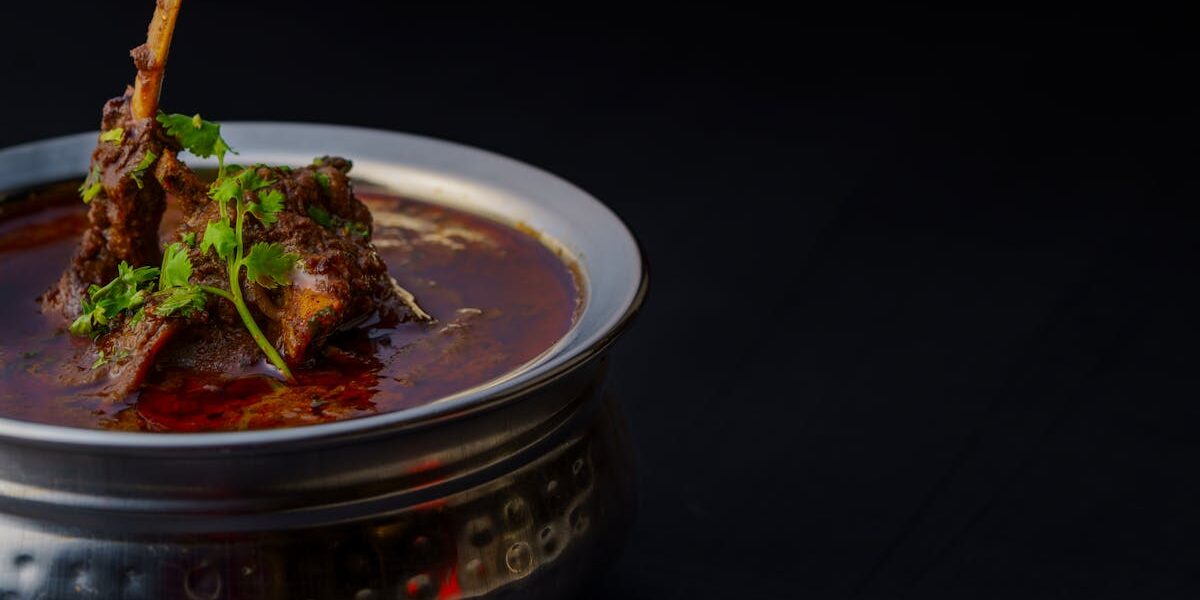
The dish that introduced Kashmir to the world. Bone-in lamb shoulder or shank is browned in mustard oil with whole spices, then slow-cooked in a brick-red gravy built from yogurt, Kashmiri chili powder, fennel powder, and dry ginger powder. Authentic Wazwan Rogan Josh uses ratan jot or cockscomb flower for color rather than tomato — which never appears — and the finished dish is glossy, deeply red, and meant to be eaten with rice. The Pandit version skips onion entirely; the Muslim Wazwan version uses praan shallots. The lamb should fall off the bone with the touch of a spoon, and the gravy should coat rice without being thick or stew-like.
2. Yakhni
A pale, almost ivory-colored yogurt-based lamb curry that is the philosophical opposite of Rogan Josh — same lamb, but built from whole green spices (cardamom, cloves, cinnamon) and finished with fennel and a slow stir of whisked yogurt. The trick is keeping the yogurt from breaking: it goes in cold, off the heat, and the pot is brought back to a bare simmer with constant stirring. The flavor is delicate, herbal, and faintly tart, and it is one of the dishes most clearly carrying Central Asian DNA. Yakhni shows up in nearly every Wazwan feast and most Pandit family dinners.
3. Gushtaba
Considered the dish of honor — the final course of a Wazwan, the one that signals the meal is complete. Lamb is pounded by hand on a flat stone with a wooden mallet until it becomes an aerated, almost mousse-like paste, then rolled into large meatballs the size of tennis balls. The meatballs simmer in a yogurt gravy similar to Yakhni but richer, often finished with crushed mint. A guest who refuses Gushtaba is, by tradition, insulting the host. Eating it is an obligation and a pleasure: the texture is unlike any meatball you have had elsewhere — silky, light, almost custardy.
4. Rista
Gushtaba’s red sibling. Same hand-pounded meatballs, but cooked in a red gravy built from Kashmiri chili, fennel, and ratan jot for color. Rista is one of the earliest courses in a Wazwan, served when guests are still hungry and ready for assertive flavors. The meatballs are usually slightly smaller than Gushtaba’s, and the gravy is brighter, more aromatic, with a clean chili warmth rather than the cooling tang of yogurt. Eaten with rice, it is the dish many Kashmiris cite as their favorite from the entire repertoire.
5. Tabak Maaz
Lamb ribs first simmered in milk with whole spices until tender, then shallow-fried in ghee until the edges crisp and the meat pulls easily from the bone. The two-stage cooking produces a contrast you do not get from a single technique — the inside is silky and almost confit-like, while the outside takes on a deep brown crust. Tabak Maaz is usually one of the first solid courses in a Wazwan and is eaten with the fingers, the rib bone serving as a handle. It is a clear demonstration of how Kashmiri cooks layer techniques to get textures that one method alone cannot achieve.
6. Modur Pulav
A sweet rice dish that turns up at celebrations and weddings. Basmati rice is cooked with ghee, saffron, milk, sugar, and a generous handful of whole almonds, raisins, and slivered cashews. Cinnamon and cardamom perfume the steam. Unlike a dessert, Modur Pulav appears mid-meal alongside savory courses, and the sweetness is restrained — more like a gentle counterpoint than a confection. The saffron from Pampore gives it a warm orange color and a flavor that no substitute matches. Pair it with a yogurt-based dish like Yakhni and you will understand how Kashmir balances flavors across a feast.
7. Haak Saag
The everyday green of the valley, eaten daily in many households. Haak is a Kashmiri variety of collard greens with thick stems and broad leaves; the entire plant is chopped and simmered briefly in water with mustard oil, a dried red chili, and asafoetida or, in Muslim homes, a small amount of garlic. The greens stay bright green, the cooking liquid stays thin and pale, and the dish is eaten by ladling spoonfuls over rice. It is the closest thing Kashmiri cuisine has to a culinary baseline — the dish people miss when they leave the valley.
8. Nadru Yakhni
Lotus root pulled fresh from Dal Lake, sliced into thick coins, and simmered in a yogurt gravy seasoned with fennel, dry ginger, and cardamom. The lotus root keeps a satisfying crunch even after twenty minutes of cooking, and the holes in each slice trap pockets of the silky gravy. It is one of the great vegetarian dishes in any cuisine — substantial enough to anchor a meal, delicate enough to taste mostly of clean water, yogurt, and fennel. Pandit kitchens make this constantly; it also appears as a vegetarian course in Wazwan feasts. Closely related, Nadru Yakhni shows how lotus root rewards careful technique, much like the silky paneer that anchors many North Indian dishes.
9. Dum Aloo Kashmiri
Baby potatoes pricked all over with a toothpick, fried whole until their skins blister, then simmered slowly in a fennel-and-chili gravy. The pricking step matters — it lets the gravy penetrate deep into each potato, so every bite carries the full flavor of the sauce rather than just the surface. Kashmiri Dum Aloo is fiery red, slightly sour from yogurt, and has none of the cream, cashew, or tomato that North Indian restaurant versions rely on. It is one of the easiest Kashmiri dishes to make at home and one of the most rewarding once you taste the difference from the restaurant rendition.
10. Kashmiri Pulao
Not to be confused with biryani, this is a fragrant rice dish layered with caramelized onions, fried paneer, pomegranate seeds, slivered almonds, and saffron-soaked milk. The rice is parboiled, then steamed gently with the toppings folded in — no meat in the traditional Pandit version, though Muslim households often add lamb. Each grain stays separate, perfumed with cardamom, and the pomegranate seeds add little bursts of tart juice that lift the whole bowl. Compare with our biryani guide to see how rice traditions diverge across the subcontinent.
11. Marchwangan Korma
The hottest dish on the Wazwan menu and one of the most spectacular. Lamb is cooked in a paste of dried Kashmiri chilies — sometimes ten or twelve pods per kilogram of meat — soaked, ground, and fried until they release a deeply red oil. The dish is not painfully hot, because Kashmiri chilies carry color far more than heat, but the sheer volume of chili gives it a brooding warmth and a sauce thick enough to coat a spoon. Marchwangan is for chili lovers and for understanding what Kashmiri chili tastes like when it is the star rather than a supporting note.
12. Harissa
Nothing to do with North African harissa paste. Kashmiri Harissa is a winter breakfast — lamb cooked overnight with rice, fennel, and water until it becomes a smooth, porridge-like paste, then served in small bowls at dawn with a drizzle of mutton fat tempered with shallots and chilies. Specialist Harissa-makers in downtown Srinagar fire up their pots at three in the morning, and by six there are queues of customers eating standing up before work. It is one of the most distinctive things you can eat in Kashmir and a dish that captures how the cuisine treats meat as a vehicle for slow transformation rather than quick satisfaction.
Wazwan: The Thirty-Six-Course Feast
To understand Kashmiri Muslim cuisine, you have to understand Wazwan — the formal banquet served at weddings, engagements, and major celebrations. The full version traditionally counts thirty-six courses, though most modern weddings serve sixteen to twenty. Guests sit four to a copper plate called a trami, eating with their right hand, sharing each course. The Waza, the master chef, presides over the kitchen and supervises a team of cooks who work for two or three days to prepare a single feast. The structure is rigid: rice fills the trami first, then meat courses arrive in a set sequence — Tabak Maaz, Rista, Rogan Josh, Marchwangan Korma, Aab Gosht (lamb in milk), Daniwal Korma, Yakhni — closing always with Gushtaba.
A handful of dishes are non-negotiable, and their order encodes a sequence of flavor and intensity that Kashmiri palates have internalized over centuries. Red and white courses alternate. Heavy and light alternate. The pacing prevents palate fatigue across what is otherwise an enormous quantity of meat — a Wazwan can run to two kilograms of lamb per guest. Watching a skilled Waza orchestrate a feast for three hundred people is one of the great spectacles of South Asian food culture, and any time you can be invited to one, accept.
Kashmiri Cooking Techniques
The cuisine relies on a small handful of techniques applied with patience and precision. Mastering even two or three of them will transform any home cook’s South Asian repertoire.
Smoking Mustard Oil
Mustard oil is heated in a heavy pot until thin wisps of smoke rise from the surface, then briefly removed from the heat. This burns off the volatile compounds that make raw mustard oil eye-wateringly sharp, mellowing it into a sweet, nutty fat. Skipping this step is a common home-cook mistake; the dish will taste raw and harsh even with everything else done right.
Yogurt Tempering
Whisked yogurt is the body of Yakhni-style gravies, but it splits the moment it hits a hot pot. Kashmiri cooks add the yogurt cold, off the heat, then bring the pot back up over a low flame with constant stirring in one direction. The proteins relax, the gravy stays smooth, and the finished sauce is silky rather than curdled.
Hand-Pounding Meat
Gushtaba and Rista are made from meat pounded by hand on a flat stone with a wooden mallet for forty minutes or longer. The pounding does not just tenderize — it incorporates air and gently denatures the proteins, producing a texture that no food processor can replicate. The home substitute is to fold the ground meat by hand with crushed ice for ten minutes; not the same, but closer than a machine.
Dum Cooking
Dum means steam, and a true Kashmiri dum involves sealing a heavy pot with a wet flour dough around the lid, then cooking over low heat for an hour or more. The steam circulates inside the sealed vessel, basting the food with its own vapors. Modern home cooks substitute aluminum foil under a tight lid; the principle is the same — no steam escapes, and the flavors concentrate.
Slow Simmering Over Wood Heat
Traditional Wazwan kitchens cook over wood-fired pits dug into the ground. The diffuse, gentle heat lets meat braise for two or three hours without scorching the bottom of the pot. Domestic versions use the lowest possible gas flame or, even better, the oven at 285°F (140°C). The gravy you get from a real low-and-slow simmer is incomparable to anything you can rush.
Kashmiri vs. Other North Indian Cuisines
Many cooks lump Kashmiri food into the broader category of North Indian curries, but the differences are sharp once you start cooking. Here is how Kashmiri stacks up against the cuisines it is most often confused with.
| Feature | Kashmiri | Punjabi | Mughlai | Hyderabadi |
|---|---|---|---|---|
| Base fat | Mustard oil, ghee | Ghee, butter | Ghee, cream | Ghee, oil |
| Onion in gravies | Rare (Pandit) to moderate (Muslim) | Heavy, caramelized base | Heavy, often pureed | Heavy, often fried crisp |
| Tomato | Almost never | Common | Sometimes | Common |
| Yogurt | Central — gravy body | Sometimes — marinade | Central — gravy body | Sometimes |
| Cream | Never | Common | Common | Sometimes |
| Garlic | None (Pandit) to light (Muslim) | Heavy | Moderate | Moderate |
| Signature spice | Fennel + dry ginger | Garam masala | Garam masala + saffron | Star anise + stone flower |
| Heat level | Mild to moderate (warm color) | Mild to moderate | Mild | High |
| Signature dish | Rogan Josh, Wazwan feast | Butter chicken, dal makhani | Korma, biryani | Hyderabadi biryani, mirchi ka salan |
The clearest distinguishing markers of Kashmiri food are the absence of tomato, the central role of fennel and dry ginger, and the use of yogurt as the gravy body rather than as a marinade. Once you can spot those three signals on the plate, you will recognize Kashmiri cooking anywhere.
Breads and Breakfast in Kashmir
Breakfast in the Kashmir Valley revolves around the local bakery — the kandur — which fires up tandoor ovens before dawn. There are at least a dozen distinct breads in the daily rotation. Tsot is a small, soft round bread eaten with butter and tea. Kulcha is a richer, slightly sweet bread, often sprinkled with poppy seeds. Baqarkhani is layered with ghee, flaky and rich, eaten on special occasions. Sheermal is sweet and yellow with saffron, served at weddings. Lavasa is large and thin, more like Iranian sangak than the dense breads of the Indian plains.
All of these are designed to be dipped in noon chai, the salty pink tea that defines a Kashmiri morning. Green tea leaves are simmered with baking soda and water until the color turns dark green, then aerated by ladling repeatedly into a second pot — the introduction of air shifts the color through olive to brown to, finally, a soft pink as the tea oxidizes. Milk and salt are added at the end, along with a sliver of cinnamon and crushed cardamom. It is one of the most distinctive drinks anywhere in Asia, and the first sip — salty, creamy, faintly floral — is unforgettable. For travelers, breakfast in a Srinagar kandur with a kulcha and a cup of noon chai is one of the small wonders of the cuisine. Compare with our guide to naan to see how Kashmiri breads diverge from their plains-Indian counterparts.
Meal Planning: How to Build a Kashmiri Menu at Home
A full Wazwan is well beyond the scope of a home kitchen, but a credible Kashmiri dinner is more accessible than it looks. The principles to follow:
- Alternate red and white. Serve one red, chili-forward dish (Rogan Josh, Dum Aloo, Rista) alongside one white, yogurt-based dish (Yakhni, Nadru Yakhni). The contrast is the whole point.
- Always serve rice. Plain basmati is the canvas for everything else. A small pot of Modur Pulav alongside adds celebration without much extra work.
- One green. Haak saag, cooked simply in mustard oil with asafoetida and a dried chili, provides the freshness that anchors the meal.
- Finish with chutney. A walnut chutney made by grinding walnuts with green chili, yogurt, and a pinch of salt cuts through the richness of the meat courses.
- Serve noon chai or kahwa at the end. Pink noon chai is a meal in itself; kahwa — green tea with saffron, cinnamon, and crushed almonds — is the lighter post-meal option.
For a dinner for four, a workable menu is: Rogan Josh, Nadru Yakhni, plain basmati, haak saag, and a bowl of walnut chutney, finished with kahwa. Total active time runs about ninety minutes; passive simmering brings it to three hours. Start the Rogan Josh first because it tolerates long cooking; the haak and the chutney are done in fifteen minutes each at the end.
Sourcing Kashmiri Ingredients in the United States
Most American cooks can build a working Kashmiri pantry from a well-stocked South Asian grocer plus a handful of mail-order specialty items. Kashmiri red chili powder is widely available in Indian groceries under brand names like MDH and Everest; check the label for ”Kashmiri” specifically rather than generic red chili powder. Fennel powder and dry ginger powder are straightforward — buy whole seeds and dried ginger and grind them as needed for the freshest aroma. Asafoetida is sold as a yellow powder; the better brands are pure asafoetida resin without wheat fillers. Saffron is the budget breaker; buy whole threads from a reputable source and store them in a sealed glass jar away from light.
Mustard oil sold in the United States is sometimes labeled ”for external use only” due to a vintage FDA regulation, but the same product is the cooking oil of Bengal, Bihar, and Kashmir. Buy it knowingly. Praan, the small Kashmiri shallots, are nearly impossible to source outside the valley; substitute small French shallots cut in half. Nadru (fresh lotus root) appears seasonally in East Asian groceries and freezes well. Ratan jot and cockscomb flower can be ordered online from specialty Indian spice retailers; the dishes work without them but lose some of their signature color.
Kashmiri Sweets and Drinks
Desserts are not a major part of the daily Kashmiri table, but a few sweets show up at festivals and weddings. Phirni is a thick rice pudding cooked with milk, saffron, and crushed cardamom, served chilled in small earthenware bowls. Shufta is a dried fruit and paneer compote cooked with sugar, saffron, and ghee — almost a chunky candy. Halwa made with cottage cheese (chaman) and walnut halwa both turn up at celebrations.
Beyond noon chai and kahwa, Kashmir’s beverage tradition includes sherbets flavored with rose, almond, or sandalwood, and in pre-Islamic times an arak made from local grains. Today the drinks landscape is tea-driven. Kahwa, the saffron-spiced green tea, is served after meals from a samovar — a Russian-style metal urn with a central charcoal chamber that keeps the tea hot for hours. A cup of kahwa with a few crushed almonds floating on top is the way most Kashmiri meals end, and it is one of the small pleasures that distinguishes the cuisine from the rest of South Asia.
The Future of Kashmiri Food
Kashmiri cuisine is having a moment. After decades of being represented internationally by a single restaurant dish — Rogan Josh, often Punjabi-style with tomato and cream — the broader repertoire is gaining visibility through chef-driven restaurants in London, New York, Dubai, and Bangalore. A new generation of Kashmiri chefs is presenting full Wazwan service in fine-dining formats, and home cooks displaced by political turmoil over the past three decades have published cookbooks documenting both Pandit and Muslim traditions before they fade.
The cuisine faces real pressures. Younger Kashmiris in the diaspora often grow up without the patience to hand-pound meat for Gushtaba or to spend three hours simmering yakhni. Climate change is affecting Pampore’s saffron yields. Yet the cuisine is also being documented and adapted at an accelerating rate, and 2026 has seen multiple new Kashmiri restaurants open in major Western cities — a development that would have been unimaginable in the 1990s. For anyone interested in regional Asian cuisines beyond the obvious headliners, Kashmiri food is one of the most rewarding places to spend your curiosity.
Frequently Asked Questions About Kashmiri Food
Is Kashmiri food spicy?
Not in the way many people expect. Kashmiri red chili contributes deep color and gentle warmth — most pods score between 1,000 and 2,000 Scoville units, less than a jalapeño. The cuisine looks fiery red but tastes mild compared to Andhra, Sri Lankan, or Sichuan cooking. The single exception is Marchwangan Korma, which uses so much chili that even Kashmiri palates consider it the spicy dish on the menu.
What is the difference between Kashmiri Pandit and Kashmiri Muslim food?
Pandit (Hindu Brahmin) cooking avoids onion, garlic, and tomato entirely, building flavor from asafoetida, fennel, and dry ginger. Muslim (Wazwan) cooking uses praan shallots and sometimes small amounts of garlic, and is the source of the elaborate banquet tradition. Both eat lamb and fish, both rely on yogurt, mustard oil, and Kashmiri chili, and many dishes — Rogan Josh, Yakhni, Dum Aloo — exist in both traditions with slightly different formulas.
Can Kashmiri food be vegetarian?
Yes, especially in Pandit kitchens. Nadru Yakhni (lotus root in yogurt), Dum Aloo (potatoes in red gravy), Haak Saag (collard greens), Chaman (paneer in red gravy), and Kashmiri Pulao are all naturally vegetarian. Wazwan feasts are overwhelmingly meat-driven, but a Pandit meal can easily be fully vegetarian without feeling reduced.
What rice is used in Kashmiri cooking?
Long-grain basmati is standard, though traditional Kashmiri households also use a short, fragrant local variety called mushk budji that has near-mythical status in the valley — heirloom mushk budji rice can cost ten times the price of basmati. For Modur Pulav and Kashmiri Pulao, basmati is fine and what most cooks use today.
What is Wazwan?
Wazwan is the formal multi-course Muslim banquet of Kashmir, traditionally counting thirty-six courses though commonly served as sixteen to twenty in modern weddings. Guests share a copper plate (trami) of four, eat with their right hand, and progress through a fixed sequence of meat dishes ending with Gushtaba. It is cooked by hereditary master chefs called Wazas and is one of the most elaborate banquet traditions in South Asia.
Why is mustard oil so important in Kashmiri food?
Mustard oil is the traditional cooking fat of the valley, prized for its nutty flavor after it has been smoked to remove raw pungency. It carries fat-soluble flavors from spices more aggressively than neutral oils, and it is what gives Kashmiri food its distinctive base note. Ghee is used as well, especially in finishing and in sweets, but mustard oil is the workhorse.
How long does it take to cook a Kashmiri meal?
A home dinner of three or four dishes runs about three hours total — most of it passive simmering. Rogan Josh and Yakhni both need at least ninety minutes of low cooking after browning. The vegetable dishes (haak, dum aloo, nadru yakhni) come together in twenty to thirty minutes. A full Wazwan is a different scale entirely: two to three days of preparation by a team of professional cooks.
What can substitute for Kashmiri red chili?
A 4:1 blend of sweet paprika and cayenne pepper approximates the color and heat profile, but lacks the slightly fruity, dried-fruit aroma of real Kashmiri chili. Hungarian paprika alone gives good color but no heat. For dishes where color is paramount — Rogan Josh, Rista — paprika does most of the work. For dishes where chili flavor dominates — Marchwangan Korma — try to source the real thing.
Is Kashmiri food halal?
Kashmiri Muslim cuisine, including all Wazwan dishes, is halal. Lamb is the dominant meat, and pork is absent from the cuisine entirely. Kashmiri Pandit cooking is vegetarian-leaning but includes lamb and fish; it is not certified halal but observes its own dietary code that excludes onion and garlic.
What does Kashmiri saffron taste like compared to other saffron?
Saffron from Pampore is among the world’s most prized, with deep red threads, high crocin content (which gives color), and a slightly more honeyed aroma than Iranian or Spanish saffron. The difference is real but subtle; any high-quality saffron will work in Kashmiri recipes, and Iranian saffron is what most diaspora cooks use day to day.
Final Thoughts: Why Kashmiri Food Is Worth Your Time
Kashmiri cuisine is a long-form cuisine. It rewards patience, ingredient quality, and a willingness to set aside the muscle memory built up from cooking other North Indian food. Get the mustard oil right, find good Kashmiri chili, source whole saffron, and treat yogurt with the care it requires, and you will produce flavors that taste like nothing else you have made at home. Wazwan may be out of reach, but Rogan Josh, Yakhni, Nadru Yakhni, and Haak Saag are entirely within the capacity of a competent home cook, and once you have made them you will understand why writers from Kshemendra to the present have devoted so much ink to the food of a single Himalayan valley.
If this guide opens the door for you, the natural next steps are to spend a weekend on Rogan Josh, then to try a Yakhni or Nadru Yakhni the following week, and then to invite friends for a small Kashmiri dinner once you have those two anchors comfortable. The cuisine reveals itself slowly, and the slow revelation is part of its pleasure.

Mei Lin Chen
Mei Lin Chen is an Asian food writer and recipe developer. Melbourne-raised and London-based, she has spent over a decade exploring the rice paddies, hawker stalls, and home kitchens of South-East and East Asia. Her recipes balance traditional technique with everyday practicality.