Last updated: March 26, 2026
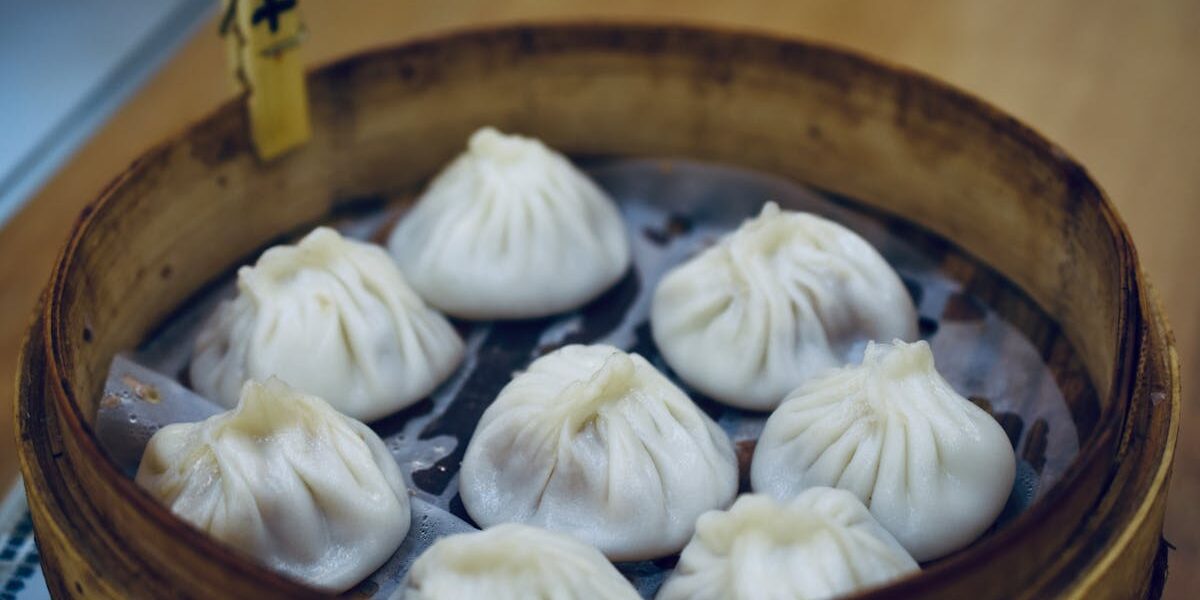
Xiao long bao (小笼包), the legendary soup dumplings of Shanghai, look like a magic trick. Pleated by hand into delicate purses no bigger than a ping-pong ball, each one cradles a spoonful of fragrant broth around a tender pork meatball, all wrapped in dough so thin you can almost see through it. Bite carelessly and you scald your tongue; bite skillfully and a hot tide of savory soup floods your mouth before the dough and meat catch up. They are, hands down, one of the most technically demanding street foods in the world—and one of the most rewarding to learn at home.
This guide walks you through the entire xiao long bao technique: making the gelatinized pork stock that becomes the soup, mixing a hot-water dough thin enough to twist but tough enough to hold, building the perfect filling, pleating with the classic eighteen folds, and steaming in a bamboo basket without splitting a single skin. Whether you are a seasoned dumpling maker or someone who has only ever ordered them at Din Tai Fung, this article will get you to a tray of beautiful, soup-filled bao on your kitchen counter.
What Are Xiao Long Bao?
Xiao long bao literally means ”little basket buns,” named after the small bamboo steamers (xiao long) they are cooked in. Unlike yeasted bao buns, xiao long bao use a thin, unleavened wheat-flour wrapper. The defining feature is the soup inside: a small amount of pork stock is set with gelatin (or naturally with collagen-rich pork skin), chopped into cubes, and folded into the meat filling. When the dumpling steams, the gelatin melts and the cube becomes a hot, savory broth.
The dish originated in the late nineteenth century in Nanxiang, a town now part of greater Shanghai. From there it spread throughout the Jiangnan region and eventually around the world via the Taiwanese chain Din Tai Fung, which standardized the famous eighteen-pleat shape and elevated xiao long bao to international fame. Today you’ll find regional variations across Shanghai’s food scene, in Hong Kong dim sum parlors, and in Chinese restaurants from London to Los Angeles.
Xiao long bao should not be confused with sheng jian bao (pan-fried Shanghai buns made with yeasted dough), tang bao (oversized soup dumplings drunk through a straw), or guan tang jiao zi (soup-filled jiaozi shaped like crescents). Each is its own creature. What unites the soup-dumpling family is the trick of solidifying broth with gelatin, encasing it in dough, and trusting steam to do the work.
The Science Behind the Soup
The ”soup” inside xiao long bao is not added as liquid—if you tried, the wrapper would tear before you could pleat it. Instead, the soup is created in three stages. First, you make a rich, collagen-heavy pork stock by simmering pork bones, skin, and aromatics for several hours. The collagen extracts as gelatin, and the stock chills into a wobbly aspic the consistency of soft Jell-O. Second, you dice that aspic into small cubes and mix it into the ground pork filling, where it stays solid as long as it’s cold. Third, the moment the dumpling enters a hot steamer, the aspic melts back into liquid—now trapped inside the cooked dough.
Gelatin’s ”melt point” is just under body temperature, around 95°F (35°C), which is why aspic shimmers between solid and liquid as you handle it. Steam runs at 212°F (100°C), more than enough to liquefy the gelatin within ninety seconds of cooking. The wrapper, meanwhile, must seal completely—any pinhole and the soup escapes into the steamer. This is the central technical bargain of xiao long bao: a dough thin enough that you taste the filling first, strong enough that it never leaks.
Some shortcut recipes use powdered gelatin to set chicken or pork stock. This works, and at home it is the most reliable path. Traditional kitchens, however, simmer pork skin and bones for many hours to extract enough natural collagen that no added gelatin is needed. Both methods are covered below.
Equipment You’ll Need
Xiao long bao do not require a wildly specialized kit, but a few tools make a serious difference. The bamboo steamer is non-negotiable: it absorbs surface condensation that would otherwise drip onto and split your dumplings. Metal steamers wrapped in cloth can substitute in a pinch but are forgiving on a much narrower margin.
| Equipment | Purpose | Notes |
|---|---|---|
| Bamboo steamer (10-inch, 2-tier) | Cooks dumplings without dripping | See our bamboo steamer guide |
| Wide wok or 12-inch pot | Holds the steamer over rolling water | Must be wider than the steamer base |
| Heavy stockpot (5-quart+) | Simmers the aspic stock | Enameled cast iron is ideal |
| Small Chinese rolling pin (12 inch) | Rolls thin wrappers from the center out | Tapered dowel preferred over standard rolling pins |
| Bench scraper | Divides dough into precise portions | A serrated knife also works |
| Kitchen scale | Portions both wrappers and filling accurately | Critical for consistent dumpling size |
| Parchment liners or napa cabbage leaves | Prevents sticking to the steamer | Cabbage adds subtle flavor |
| Soup spoons (deep, ceramic) | Catches the soup at the table | Plus chili-vinegar dipping bowls |
If you plan to make xiao long bao often, consider also a half-sheet tray for resting filled dumplings, a damp tea towel for keeping dough portions covered, and a fine-mesh skimmer for cleaning the stock during simmering. Restaurants use heavy stainless dough boards because wood absorbs moisture; for home use, a clean countertop dusted with cornstarch will do.
Ingredients Overview
Xiao long bao have only three components—aspic, dough, and filling—but each demands the right ingredient choices. Skimping on the pork or skipping the Shaoxing wine in the filling produces a dumpling that looks the part but tastes flat. Here is what to buy.
For the Aspic (makes about 2 cups)
- 1 lb pork skin (or 1 lb pork trotters, split)
- 1 lb pork bones (neck or back bones)
- 1 chicken carcass (optional, for depth)
- 3 inches fresh ginger, smashed
- 4 scallions, knotted
- 2 tbsp Shaoxing rice wine
- 8 cups cold water
- 1 tsp salt
- Shortcut substitute: 4 cups good chicken stock plus 1.5 tablespoons unflavored powdered gelatin (about 4 envelopes)
For the Dough (makes ~24 wrappers)
- 2 cups (260 g) all-purpose flour
- ½ cup (120 ml) just-boiled water
- 2 tbsp (30 ml) cold water
- ½ tsp salt
- 1 tsp neutral oil
For the Filling
- 1 lb (450 g) ground pork, 70% lean / 30% fat
- 1 cup chilled aspic, finely diced (¼-inch cubes)
- 1 tbsp Shaoxing wine
- 1 tbsp light soy sauce
- 1 tsp dark soy sauce
- 1 tsp sugar
- ½ tsp white pepper
- 1 tbsp toasted sesame oil
- 2 tbsp finely minced ginger
- 3 tbsp scallion-ginger water (recipe below)
For the Dipping Sauce
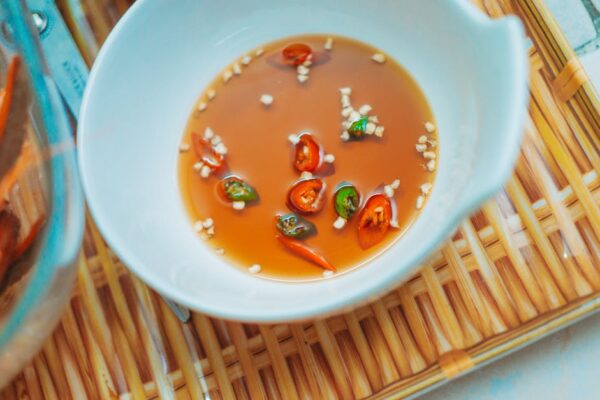
- 4 tbsp Chinkiang black vinegar
- 2 tbsp very finely julienned young ginger
- Optional: a few drops of chili oil
Step One: Making the Aspic
Begin a day ahead. The aspic must chill overnight to set firmly enough to dice. Start by blanching the pork skin and bones: place them in a large pot, cover with cold water, bring to a boil, and cook for 5 minutes. Drain, rinse under cold water, and use a knife to scrape any hair or impurities from the skin. This step removes the scum that would cloud your stock.
Return the cleaned skin and bones to the pot with the chicken carcass (if using), ginger, scallions, Shaoxing wine, and 8 cups of cold water. Bring to a gentle simmer—not a boil; a hard boil emulsifies fat and clouds the broth. Skim any foam that rises in the first thirty minutes. Cover loosely and simmer on the lowest heat for 4 to 5 hours. The skin should be falling-apart tender and the liquid should have reduced to about 4 cups.
Strain the stock through a fine-mesh sieve lined with cheesecloth into a clean container. Discard the solids (or save the bones for a second extraction). Stir in 1 teaspoon salt and let cool at room temperature for an hour. Cover and refrigerate at least 8 hours, or overnight. The next morning the surface will be capped with a thin layer of pork fat—skim and discard, or save for cooking. Underneath, you should find a wobbly, opaque aspic.
To test: tilt the container. Properly extracted aspic should hold its shape and only slowly slump. If it is liquidy, return it to the stove with 1 tablespoon bloomed gelatin per cup, dissolve, and re-chill. If you used the shortcut method, simply heat the chicken stock to a simmer, sprinkle the gelatin over the surface, whisk until fully dissolved, then chill until firm. Once set, dice the aspic into small ¼-inch cubes and refrigerate until you are ready to fold the filling.
Step Two: Mixing the Dough
Xiao long bao dough is a hot-water dough, also called tang mian. Pouring just-boiled water into flour partially gelatinizes the starch and denatures some of the gluten. The result is a dough that’s soft, pliable, and easy to roll thin without snapping back—exactly what you want for a paper-thin wrapper that still holds its shape after pleating. This is different from the cold-water dough used for boiled jiaozi (which we cover in our homemade dumpling wrapper guide).
Whisk the flour and salt in a wide bowl. Make a well in the center, then pour in the just-boiled water (off the boil for ten seconds is fine). Stir immediately with chopsticks or a fork in tight circles until the flour looks shaggy and clumpy. Wait one minute for the steam to dissipate, then drizzle in the cold water and oil. Switch to your hands and bring the dough together into a rough ball.
Turn out onto a clean counter and knead for 8 to 10 minutes. The dough should transform from rough and shaggy to smooth and elastic, with the surface taking on a satiny sheen. Window-pane stretching is not required, but the dough should pass the indentation test: poke it with a finger, and the dent should slowly fill back in over a few seconds. If it feels dry, dab with damp fingers; if sticky, knead in a teaspoon of flour at a time.
Wrap the ball tightly in plastic and rest at room temperature for at least 30 minutes, ideally an hour. This rest allows the gluten to relax so you can roll wrappers thin without fighting the dough. Do not skip it.
Step Three: Building the Filling
While the dough rests, mix the filling. The most important seasoning detail is the scallion-ginger water: combine 2 tablespoons finely minced ginger and 2 finely chopped scallion whites in a small bowl with 4 tablespoons cold water. Squeeze with your fingers for one minute to extract flavor, then strain. You’ll add the liquid to the meat and discard the solids. This trick infuses the pork with aromatics without leaving stringy bits in the filling.
In a large bowl, combine the ground pork, soy sauces, sugar, white pepper, and Shaoxing wine. Using chopsticks or a sturdy spatula, stir vigorously in one direction—always one direction—for two full minutes. The mixture will gradually become tacky and start to look glossy as the salt-soluble proteins (myosin) extract and form a tight emulsion. This is the same principle behind a classic Chinese meatball: stirring in one direction builds bounce.
Add the strained scallion-ginger water one tablespoon at a time, stirring after each addition until fully absorbed before adding more. The filling should look creamy and almost mousse-like. Finally, drizzle in the sesame oil and stir to incorporate. Cover and refrigerate for at least 30 minutes—chilling firms the meat and makes folding much easier.
Just before assembly, gently fold in the diced aspic cubes. Use a light hand: you want the cubes to stay intact, not break down into the meat. Return the bowl to the fridge until you are filling each wrapper. The aspic must remain cold—if it warms above 90°F, it begins to liquefy and your filling will turn into a puddle.
Step Four: Rolling the Wrappers
Unwrap the rested dough and roll it into a long rope about 1 inch in diameter on a lightly floured surface. Use a bench scraper to cut the rope into 24 equal pieces (a kitchen scale helps—each piece should weigh about 12 grams). Cover the cut pieces with a damp towel as you work, so they don’t dry out.
Press one piece flat with your palm into a small disc. Now the technique that distinguishes xiao long bao from other dumpling wrappers: roll only the outer edge, leaving the center thicker. With a small Chinese rolling pin, roll forward an inch or two while rotating the wrapper a quarter-turn with your other hand after each pass. The goal is a disc about 3 inches wide, with a thicker center ”belly” and a thin, almost translucent rim. The thicker center supports the weight of the filling; the thin rim folds into delicate pleats without bunching up at the top.
Each wrapper takes practice. Don’t worry if your first batch looks lumpy—the pleating step covers a lot of sins. Stack finished wrappers under a damp towel as you go, but only briefly: a wrapper sitting longer than ten minutes will dry out at the edges and crack when you fold.
Step Five: The Eighteen-Pleat Fold
Tradition (popularized by Din Tai Fung’s quality-control standard) calls for exactly eighteen pleats. Home cooks should aim for twelve to eighteen evenly spaced folds—the structural goal is a top opening tight enough to seal completely without leaving a thick knot of dough. Our guide to dumpling folding techniques covers other shapes; this section is specific to xiao long bao.
Cradle a wrapper in your non-dominant hand, slightly cupped. Place a heaping teaspoon (about 18 grams) of filling in the center. Make sure to scoop both meat and at least one aspic cube. Don’t overfill—the dumpling should feel two-thirds full, not bursting.
With your dominant hand, pinch a small section of the rim between your thumb and forefinger. Lift it up slightly. Use your thumb to anchor that first pleat in place. Then move your forefinger about 5mm to the right (clockwise from your perspective), pinch a new piece of dough, and fold it back over to meet the anchor point. Press to seal. Continue rotating the dumpling between your fingers, making one pleat at a time, always folding new dough back to the previous seal point. The dumpling will spiral closed as you go.
When you reach the start, twist the final pleat down and pinch it shut at the very top. The crown should look like the top of a swirled ice cream cone, with a small ”nipple” of dough where the pleats meet. Resist the urge to leave a long twist; an oversized knot will be doughy and chewy after steaming. Place finished dumplings on a parchment-lined tray, well spaced so they don’t touch.
Step Six: Steaming
Bring an inch or two of water to a vigorous boil in your wok or pot. Line the bamboo steamer with parchment circles cut with small ventilation holes, or with cabbage leaves brushed lightly with oil. Arrange dumplings in the steamer with at least an inch of space between each—they expand slightly as they cook. Don’t crowd; leftover dumplings can wait on the tray.
Cover the steamer and place over the boiling water. Steam over high heat for 8 to 9 minutes. The wrappers should turn translucent and slightly puff. Don’t lift the lid mid-cook—a sudden temperature drop can cause the dumplings to deflate. When time is up, turn off the heat and wait a full minute before opening, which allows the steam to settle and the soup to redistribute.
Serve immediately, in the steamer they cooked in, on a small plate with the dipping sauce on the side. Xiao long bao do not hold; the wrappers continue to soften and the soup begins to leak as the dumplings cool.
How to Eat Xiao Long Bao
The proper eating technique matters as much as the cooking. Pick up a dumpling by its top knot using chopsticks—gently, so you don’t pierce the skin. Set it on your soup spoon. Use your chopsticks to nip a small hole in the side wall, releasing a curl of steam. Add a few strands of julienned ginger and a few drops of black vinegar from your dipping bowl directly onto the dumpling. Now sip the soup from the spoon. Once you’ve tasted the broth, eat the rest of the dumpling in one or two bites.
Common rookie mistake: popping the entire dumpling in your mouth like a popcorn shrimp. The soup inside is at near-boiling temperature and will burn the roof of your mouth instantly. Even at restaurants, give a dumpling a minute on the spoon before eating.
Common Mistakes and How to Fix Them
| Problem | Likely Cause | Fix |
|---|---|---|
| Soup leaks out during steaming | Pinhole in the seam, or pleats not pressed tightly enough | Inspect the top knot before steaming. Always seal pleats with firm pressure. If a hole appears, pinch the wrapper closed and dust with flour. |
| No soup inside the cooked dumpling | Aspic warmed and leaked into the meat before cooking, or under-extracted aspic | Keep filling cold during assembly. Test aspic by tilting the bowl—it should hold its shape, not slosh. |
| Wrappers tear when picked up | Dough rolled too thin, or steamed too long | Aim for translucent but not transparent. Stick to 8–9 minute steam time. Never use frozen-and-thawed wrappers. |
| Doughy, thick top knot | Too many revolutions when twisting the pleats closed | Pinch the final pleat once and seal in one motion—don’t keep twisting. |
| Dumplings stick to the steamer | Insufficient liner or no oil on cabbage leaves | Always use parchment with vent holes or oil-brushed cabbage. Never place dumplings directly on bare bamboo. |
| Cracked or dry wrappers | Dough dried out before assembly | Cover all dough portions and finished wrappers with a damp towel at all times. |
| Filling tastes flat or grainy | Insufficient stirring of meat in one direction | Stir vigorously for 2 full minutes until tacky, then add the scallion-ginger water gradually. |
| Soup is bland | Aspic was made from light stock without enough collagen | Use pork skin or trotters; or fortify with chicken stock and powdered gelatin. Salt the aspic before chilling. |
| Dumplings collapse after steaming | Lid lifted too early; sudden temperature change | Wait a full minute after turning off heat before lifting the lid. Steam continuously for 8–9 minutes. |
| Wrappers shrink and thicken | Dough not rested long enough | Rest dough at least 30 minutes (1 hour is better) so gluten relaxes. |
Practice Exercises for Beginners
Becoming proficient at xiao long bao takes deliberate practice. The good news is that several skills can be drilled in isolation before you tackle a full batch. Try these exercises:
- Pleating drill: Make a single batch of dough. Roll out 6 wrappers, then fill them with a tablespoon of mashed potato (cheaper to discard than meat) and practice pleating. Aim for visual symmetry first; speed comes later. Do this exercise three times before attempting a real batch.
- Wrapper rolling drill: Cut 12 dough portions and roll each into a 3-inch disc with a thicker center. Stack them and check the diameters with a ruler—they should all be within 5mm of each other.
- Aspic test: Make a half-batch of stock using the shortcut gelatin method first. This builds intuition for what set aspic should feel like. Once you can recognize the right consistency, attempt the long-simmered traditional version.
- Stirring drill: Mix a basic meatball filling without the aspic. Stir for 30 seconds, 1 minute, and 2 minutes, taking pinches at each interval. Compare the textures—the difference is dramatic and will train your eye for when the meat is properly emulsified.
- Steam timing drill: Steam 4 dumplings at a time at different durations: 6, 8, 10, and 12 minutes. Cut each open and observe the soup, dough texture, and meat doneness. The 8-minute mark is almost always the winner.
Advanced Tips from Restaurant Kitchens
Once you have the basics, several professional tweaks will elevate your xiao long bao closer to restaurant quality. Most home cooks never reach for these because they require either a few specialized ingredients or a willingness to add extra steps. They are worth it.
- Hand-mince your pork. Most ground pork from supermarkets is over-processed, which damages the protein structure and produces a mealy filling. Buy pork shoulder or belly and chop it by hand with a Chinese cleaver, alternating coarse and fine passes. The texture difference in the cooked dumpling is night and day.
- Use a small amount of crab roe or shrimp. The classic Shanghainese variant adds a teaspoon of finely chopped crab roe and small bits of shrimp on top of each filling portion before sealing. It bumps the umami significantly without overpowering the pork.
- Aged Shaoxing wine. The standard cooking grade is fine, but a bottle of three-year aged hua diao Shaoxing transforms the depth of the filling. Just one tablespoon makes a noticeable difference.
- Two-stage stirring. Stir the meat alone with seasonings first until tacky, then add the scallion-ginger water in three additions. Some chefs further whip in a tablespoon of whipped pork fat for added richness.
- Cold dough surface. If your kitchen is hot, refrigerate finished wrappers between rounds of pleating. Warm dough sticks to the filling and tears easily.
- Steam-in-batches discipline. Resist the urge to load multiple steamer levels. Each level steams slightly differently, and the bottom can over-cook by the time the top reaches doneness. One basket at a time is the professional standard.
- Test the seal underwater. When practicing, drop a single uncooked dumpling into a bowl of cold water. If air bubbles come from anywhere except the top, you have a leak. Use this only for testing—don’t drop your real batch.
Variations Across Regions
While the Shanghainese xiao long bao is the most internationally recognized version, several regional variations are worth knowing. Each has its own balance of dough, soup, and filling.
Nanxiang Xiao Long Bao
The original. Slightly thicker dough than the Din Tai Fung style, with a chunkier filling and unmistakably porky soup. Made famous by Nanxiang Mantou Dian, the historic shop that still operates in Shanghai’s Yuyuan Garden district. Often eaten with rice vinegar instead of black vinegar.
Wuxi-Style
From Wuxi in Jiangsu province, these are sweeter and softer, with sugar added directly to the pork filling. The soup is also a touch sweeter. Outside China, you’ll find them mostly in Jiangnan-region restaurants.
Crab Roe Xiao Long Bao (Xie Fen Xiao Long Bao)
A luxury version made during autumn, when hairy crabs are in season. Fresh crab meat and crab roe are folded into the filling, and the soup is enriched with crab stock. Significantly more expensive at restaurants because of the labor in picking the crab.
Tang Bao
Not technically xiao long bao, but worth mentioning: tang bao are giant, single-serving soup dumplings the size of a tennis ball. They are eaten by piercing the wrapper with a straw and drinking the soup before eating the dough. Yangzhou is known for the best examples.
Vegetarian Xiao Long Bao
A modern adaptation that swaps pork for finely chopped mushrooms (often a mix of dried shiitake, oyster, and king trumpet) and replaces the pork aspic with a kombu-mushroom stock set with agar instead of gelatin. Trickier to balance but very satisfying.
Xiao Long Bao vs. Other Soup-Filled Dumplings
| Dumpling | Origin | Wrapper | Cooking | Distinguishing Feature |
|---|---|---|---|---|
| Xiao long bao | Shanghai (Nanxiang) | Hot-water dough, paper-thin | Steamed | Pleated top, gelatin-based soup |
| Sheng jian bao | Shanghai | Yeasted dough | Pan-fried then steamed | Crispy bottom, thicker bun |
| Tang bao | Yangzhou, Jiangsu | Hot-water dough | Steamed | Tennis-ball size, drunk through a straw |
| Guan tang jiao zi | Northern China | Cold-water dough | Boiled or steamed | Crescent-shaped, less soup |
| Har gow | Cantonese (dim sum) | Wheat starch dough | Steamed | Translucent, shrimp filling, no soup |
| Khinkali | Georgia (not Chinese) | Plain wheat dough | Boiled | Twisted top, broth-rich filling, eaten by hand |
Storage and Make-Ahead Strategies
Xiao long bao are best eaten fresh, but they freeze beautifully if handled properly. After folding, place the dumplings on a parchment-lined tray and freeze uncovered for 2 hours, until rock-solid. Transfer to a zip-top freezer bag, pressing out as much air as possible. They keep up to 2 months.
To cook from frozen, do not thaw. Place directly into a hot bamboo steamer over boiling water and add 2 to 3 minutes to the cooking time, for a total of 10 to 11 minutes. Thawed dumplings tend to leak because the aspic melts before the wrapper is sealed by heat. Cooking from frozen also gives the wrapper that distinctive translucent stretch.
The aspic itself can be made up to 5 days ahead and kept refrigerated, or frozen for up to 1 month. Thaw overnight in the fridge before using; do not microwave or melt. The dough should be made fresh on the day of cooking—it stiffens after a day in the fridge and the wrappers crack.
Cooked leftover dumplings, sadly, don’t reheat well. The wrapper goes leathery and the soup absorbs into the meat. If you must, pan-fry leftover dumplings in a touch of oil to crisp the bottom, sheng-jian-bao style, accepting that the soup is gone.
Pairing and Serving
A traditional Shanghainese order of xiao long bao is rarely a meal on its own. They are typically the centerpiece of a small banquet that includes drunken chicken, smoked fish, cold cucumber salad, a green vegetable like garlic-stir-fried pea shoots, and a broth-based soup. The dumplings provide richness; the surrounding dishes balance with cold textures and bright flavors.
For drinks, the classic choice is a pot of unsweetened jasmine tea or pu-erh, which cuts through the rich pork fat. Light Chinese white wines like a young Riesling or a dry-style sake also work surprisingly well. Avoid heavy reds—they fight the delicate broth.
If you are serving xiao long bao at a dinner party, plan for 5 to 7 dumplings per person as part of a larger spread, or 10 to 12 if they’re the main event. Have one bamboo steamer ready to go and a second batch waiting on a tray—steam in two rounds rather than overcrowding a single basket.
Recipe Examples and Adaptations
Classic Shanghai Pork Xiao Long Bao
Use the master technique above. Filling is straight pork with the aspic, scallion-ginger water, soy sauces, sugar, white pepper, sesame oil, and Shaoxing wine. Yields 24 dumplings. Steam 8 to 9 minutes. Serve with black vinegar and shredded ginger.
Pork and Crab Xiao Long Bao
Replace 4 ounces of the ground pork with 4 ounces fresh-picked crab meat (lump or claw), and add 2 tablespoons crab roe to the filling. Use a slightly richer aspic by including a chicken back when simmering. Top each dumpling with a tiny pinch of additional crab roe before pleating. Steam time stays at 8 to 9 minutes.
Spicy Sichuan-Inspired Xiao Long Bao
Add 1 tablespoon doubanjiang and 1 teaspoon ground Sichuan peppercorns to the pork filling. Skip the sugar. Serve with a dipping sauce of black vinegar, chili oil, minced garlic, and a pinch of sugar. Not traditional, but a delicious modern fusion.
Vegetarian Mushroom Xiao Long Bao
For the aspic, simmer 1 ounce dried shiitake, 4-inch piece kombu, 4 cups water, and 1 tablespoon light soy for 45 minutes. Strain, set with 2 teaspoons agar (per cup of liquid). Filling: 8 ounces finely chopped mixed mushrooms (king trumpet, oyster, shiitake), sweated in oil with minced ginger and scallion until dry and concentrated. Stir in soy sauce, sugar, white pepper, and sesame oil. Mix in the diced agar aspic at assembly. Steam 7 to 8 minutes.
Frequently Asked Questions
Can I use store-bought wrappers for xiao long bao?
No—or rather, you can, but it won’t be xiao long bao. Round dumpling wrappers in plastic packs are designed for boiled jiaozi and are too thick, too uniform in thickness, and too brittle to hold pleats. The defining textural quality of xiao long bao comes from the hand-rolled wrapper. Make the dough; it’s worth it.
Why does my soup keep leaking out during steaming?
Most likely cause: an incomplete seal at the top knot. Inspect each dumpling before steaming and pinch any visible openings. Second most likely cause: a tear in the bottom from over-thinning the wrapper or rough handling when transferring to the steamer. Always lift dumplings by the body, not the top knot.
How do I know when the aspic is set enough?
Tilt the container 90 degrees. Properly set aspic should hold its shape and only slowly slump in a wobbling motion. If liquid runs out, it isn’t ready—chill longer or fortify with bloomed gelatin. The aspic should be firm enough to dice into clean cubes that hold their square edges for at least 30 seconds at room temperature.
Can I make xiao long bao without a bamboo steamer?
You can, but it’s much harder. Metal steamer baskets drip condensation as the lid cools, which lands on dumplings and tears the wrappers. If you must use a metal steamer, wrap the lid tightly in a clean tea towel, knotted on top, to absorb condensation. Bamboo is genuinely the right tool for the job—see our bamboo steamer guide for buying advice.
What’s the difference between xiao long bao and soup dumplings?
”Soup dumpling” is the English umbrella term for any dumpling containing liquid broth. Xiao long bao is one specific type—the small Shanghainese steamed version with pleated tops. Other soup dumplings include sheng jian bao (pan-fried), tang bao (giant, drunk through straws), and Cantonese har gow with broth (rare). All are soup dumplings; only one is xiao long bao.
Why exactly 18 pleats?
The 18-pleat number is a quality standard popularized by Din Tai Fung as part of their precision branding. Mathematically, 18 pleats produce a tightly sealed top with a neat appearance. Traditional Shanghai shops use 12 to 16 pleats. Anywhere in that range works structurally—what matters is even spacing and a clean seal, not hitting an exact count.
Can I substitute beef for pork?
You can, but the result diverges from xiao long bao. Beef is leaner, less collagen-rich, and the flavor profile clashes with the delicate aspic. If you avoid pork, ground chicken thigh with extra fat is closer to the original texture. Halal versions of soup dumplings exist in Chinese Muslim cuisine and use beef with added beef tendon for collagen.
How long can I keep the cooked dumplings warm?
Maximum 2 to 3 minutes in the steamer with the heat off. Beyond that, the wrappers absorb soup and become soggy. The professional rhythm is steam-and-serve in continuous waves: one basket cooking, one basket waiting. Don’t try to steam everything at once.
What’s the best dipping sauce ratio?
The classical ratio is 3 parts black vinegar to 1 part julienned young ginger by volume. The vinegar should be high-quality Chinkiang (also spelled Zhenjiang) vinegar—nothing else has the same fermented depth. Skip soy sauce; xiao long bao soup is already salty enough.
Are xiao long bao gluten-free friendly?
No. The wrapper is wheat flour and there’s no commonly accepted gluten-free version that achieves the same paper-thin pliability. Some experimental cooks have tried tapioca-based wrappers similar to har gow but the results behave very differently. If you need gluten-free, look to other dumpling traditions.
The Bottom Line on Xiao Long Bao
Xiao long bao reward patience like few other dishes in the home cook’s repertoire. The technique is layered—aspic from yesterday, dough today, fillings hours apart, pleats one by one—and there’s no skipping a step without losing something essential. But once you have the rhythm down, a Sunday afternoon making a few dozen for the freezer pays back for weeks. There’s something quietly perfect about pulling six handmade dumplings from the freezer on a Wednesday night, dropping them into a steamer, and eating soup-filled bao on the couch ten minutes later.
The best advice we can offer is the same advice given to apprentices in Shanghai’s xiao long bao restaurants: make them often. Speed and consistency come from repetition. Your first batch will probably leak; your tenth will be solid; by the fiftieth, you’ll be folding eighteen pleats without thinking. And every batch—even the leaky ones—is good food. For more techniques in this tradition, browse our complete Asian cooking techniques guide and our broader Chinese recipes collection.

Mei Lin Chen
Mei Lin Chen is an Asian food writer and recipe developer. Melbourne-raised and London-based, she has spent over a decade exploring the rice paddies, hawker stalls, and home kitchens of South-East and East Asia. Her recipes balance traditional technique with everyday practicality.