Last updated: March 22, 2026
Black sesame is one of the most distinctive and revered ingredients in Asian cooking. Tiny, obsidian-dark, and packed with a toasty, nutty aroma that’s deeper and more assertive than its pale cousin, these little seeds show up everywhere across East and Southeast Asia, from Japanese goma dressings and Korean injeolmi rice cakes to Chinese tang yuan, Taiwanese shaved ice, and Indian til ke laddu. In 2026, black sesame broke out of the specialty aisle and landed on Yelp’s Food & Drink Trends Forecast as a ”standout flavor,” showing up in American soft-serve shops, craft lattes, and trendy bakery cookies. If you’ve been staring at a jar of black seeds wondering what to do with them, this guide has you covered.
Below we walk through the ingredient’s long history, the varieties you’ll see in Asian grocery stores, how to buy quality seeds, how to store them so they don’t turn rancid, what to substitute when you run out, five essential recipes, the real nutritional picture, and answers to the questions home cooks ask most.
What Is Black Sesame?
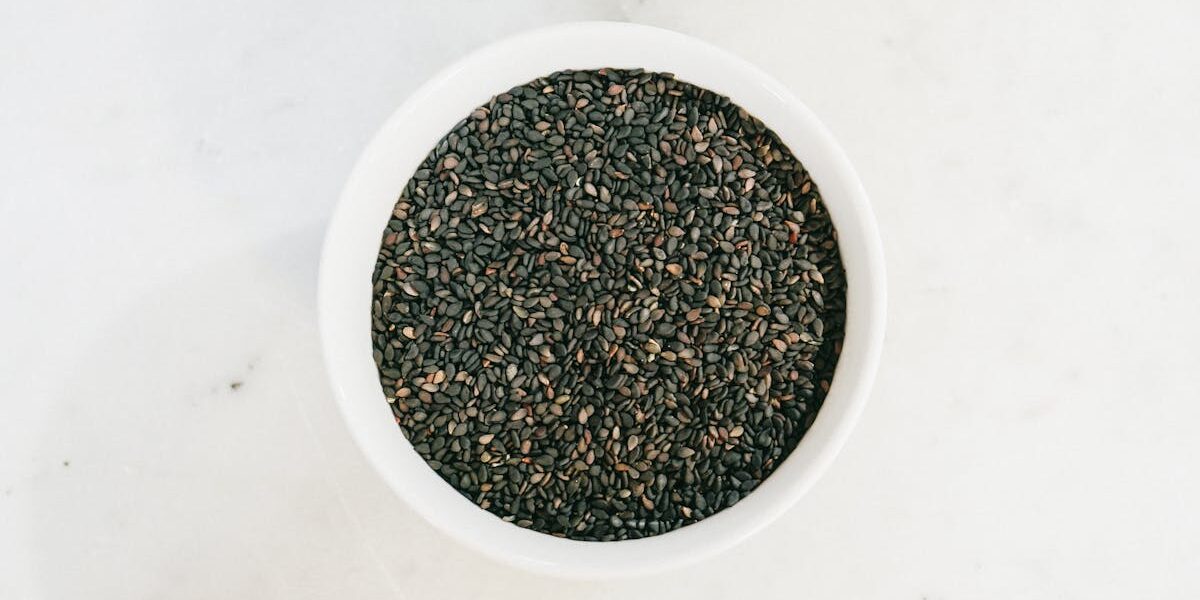
Black sesame (Sesamum indicum) is the dark-hulled variety of the sesame plant, one of the oldest cultivated oilseeds on earth. The seeds are roughly 2-3 millimeters long, flat, and teardrop-shaped. Unlike white sesame seeds, which have had their outer hull polished away, black sesame seeds retain their hull intact, which is what gives them the inky color and much of their mineral content. The hull also contributes a firmer, crunchier bite and a slightly bitter edge that balances the rich, buttery interior.
In Chinese, black sesame is hei zhi ma (黑芝麻). In Japanese, it’s kuro goma (黒ごま). In Korean, it’s heuk-immja (흑임자). In Hindi, kaala til. In Thai, nga dam. Across these cuisines, the seed plays overlapping roles: it’s ground into pastes for sweets, toasted and scattered over rice and noodles, pressed for oil, used medicinally, and incorporated into ritual and celebratory foods.
History and Origins of Black Sesame
Sesame is believed to be one of the oldest cultivated crops, with archaeological evidence of its use dating back more than 5,000 years. Most botanists trace its origin to the Indian subcontinent or tropical Africa, with the plant spreading along ancient trade routes into Mesopotamia, China, Japan, and Southeast Asia. Sanskrit texts from ancient India mention til, the sesame seed, as sacred, tied to ancestor worship and the winter solstice festival of Makar Sankranti, when sesame and jaggery sweets are still prepared today.
Sesame likely reached China by way of the Silk Road during the Han Dynasty (206 BCE–220 CE), where it was embraced in traditional Chinese medicine as a tonic associated with longevity, glossy black hair, and kidney health. Legend attributes its introduction to Zhang Qian, the diplomat and explorer who opened overland routes to Central Asia. From China, sesame crossed the sea to Japan and Korea, where black sesame became particularly associated with ceremonial and auspicious foods. In Japan, the practice of grinding toasted sesame in a suribachi (ridged ceramic mortar) to release its fragrance dates back centuries and remains a daily ritual in many kitchens.
Commercial sesame production today is dominated by Myanmar, India, Sudan, Tanzania, and China, with smaller contributions from Nigeria, Ethiopia, and Mexico. Black sesame specifically is most associated with East Asian cultivation and consumption, though it’s grown wherever sesame is grown. In the United States, once-niche varieties are now found in mainstream supermarkets thanks to surging demand for plant-based, mineral-rich superfoods.
Black Sesame vs. White Sesame: What’s the Difference?
On the plant, sesame seeds range in color from pale ivory to deep black, with brown, red, gold, and tan varieties in between. The two most common in cooking are white (hulled) and black (unhulled with naturally dark seed coats). They are not interchangeable by default; they behave differently on the palate and in recipes.
| Feature | Black Sesame | White Sesame |
|---|---|---|
| Hull | Intact, naturally black | Hulled (polished away) |
| Flavor | Deeper, nuttier, slightly bitter | Milder, sweeter, cleaner |
| Texture | Firmer, crunchier | Softer when toasted |
| Calcium content | Higher (hull-derived) | Lower |
| Oil color | Dark amber to brown | Pale gold |
| Best uses | Desserts, pastes, dressings, finishing garnish | Breads, stir-fries, coatings, crusts |
| Visual impact | Dramatic contrast on light foods | Blends or browns discreetly |
When a recipe simply says ”sesame seeds,” white is usually assumed. When it specifies black, it’s asking for that deeper flavor and striking visual. In a pinch you can swap one for the other, but understand that the dish’s character will shift.
Varieties and Forms You’ll Encounter
Raw Black Sesame Seeds
Whole, untoasted seeds sold in bulk bags or small jars. They have a subtle flavor raw and really come alive once toasted in a dry pan. Keep a bag of these as your base pantry ingredient.
Toasted Black Sesame Seeds
Pre-toasted and ready to sprinkle. Convenient, but they lose aroma fast. If you cook with sesame frequently, toasting your own raw seeds will always taste better. Toasted seeds are what you’ll find in most Japanese furikake rice seasonings.
Black Sesame Paste
A thick, dark spread made by grinding toasted black sesame seeds into a fine paste, sometimes with added sugar or oil. There are two styles: unsweetened (savory, used in dressings, noodles, and dipping sauces) and sweetened (dessert-grade, used for fillings and ice cream). Read the label carefully, because Chinese and Japanese brands differ.
Black Sesame Powder
Ground toasted seeds without added oil or sugar. Finer than whole seeds, faster-cooking than paste, and useful in baking, lattes, smoothies, and congee. Korean heuk-immja-garu is essentially this.
Black Sesame Oil
Pressed from toasted black sesame seeds. It has a deeper color and bolder flavor than golden sesame oil. Taiwanese and Hakka cuisines use it as a medicinal warming oil, especially in dishes like sesame oil chicken (ma you ji) given to new mothers during postpartum recovery.
Gomashio and Furikake
Japanese seasonings that incorporate black sesame with sea salt (gomashio) or dried seaweed and other aromatics (furikake). Both are great finishing sprinkles for rice, salads, avocado toast, and eggs.
How to Buy Black Sesame
Quality varies more than people realize. Here’s how to choose wisely whether you’re at a Japanese market, a Chinese grocer, or an online specialty store.
- Check the color. Genuine black sesame is uniformly deep black to dark brown-black. Seeds with gray patches, uneven coloring, or a chalky dust may have been dyed or are simply old. Rub a few between damp fingers; if color comes off, the batch has been artificially darkened.
- Smell before buying when possible. Fresh seeds have a warm, faintly sweet, nutty aroma. A sharp, paint-like, or sour smell means the oil has gone rancid.
- Feel for plumpness. Good seeds are firm and slightly oily-slick, not brittle or dusty. Shriveled seeds have lost moisture and flavor.
- Favor smaller, opaque packaging. Sesame is rich in polyunsaturated fat, so light and heat are its enemies. Buy what you’ll use in two to three months.
- Read paste labels carefully. Japanese neri goma is usually pure sesame. Chinese-labeled pastes often include sugar and are designed for sweets. Korean black sesame paste often contains salt and toasted grain powder. Know which you’re buying.
- Look for origin. Japanese and Taiwanese brands (Kuki Sangyo, Mitoku, Yamajirushi) are consistently high quality. Premium Myanmar and Indian seeds are also excellent, often sold unroasted.
- Price check. Very cheap black sesame can be mixed with cheaper dyed seeds. Expect to pay more for high-quality whole seeds than for white sesame.
How to Store Black Sesame
Because of its high oil content, black sesame goes rancid faster than many dried pantry staples. Storage matters.
- Whole seeds: Transfer to an airtight glass jar and keep in a cool, dark cupboard for up to three months. For longer storage, refrigerate (up to six months) or freeze (up to a year). Let seeds come to room temperature before toasting.
- Toasted seeds: Use within two to three weeks at room temperature, or refrigerate for up to two months. Toast small batches as needed for the best flavor.
- Ground powder: Oxidation accelerates once the seeds are ground. Keep in the fridge and use within a month.
- Paste: Refrigerate after opening. Oil separation is normal; stir before each use. Use within three to four months. Discard if it smells sharp or sour.
- Oil: Store in a dark cupboard away from heat. Once opened, use within six months. If you rarely use it, refrigerate it; it may cloud slightly but will clear at room temperature.
A rancid sesame product is unmistakable: it smells like old crayons or oil paint. It won’t make you sick, but it will ruin anything you cook with it. When in doubt, throw it out.
How to Toast Black Sesame the Right Way
Toasting is the single most important thing you can do to unlock flavor. Because black sesame is already dark, you can’t watch for a color change the way you would with white seeds. Go by sound and smell.
- Place seeds in a dry, heavy skillet in a thin, even layer. A carbon steel or stainless pan works best; cast iron retains too much heat.
- Set over medium-low heat. Stir or shake the pan constantly.
- After about two minutes, seeds will begin to pop and release a warm, nutty aroma. This is the signal.
- Continue for 30 to 60 more seconds until the popping slows and the fragrance is rich but not acrid.
- Immediately slide seeds onto a cool plate. Carryover heat will continue to toast them; if you leave them in the pan, they will burn and turn bitter fast.
To check doneness, crush a few seeds between your fingers. They should smell intensely fragrant and crumble easily. Store cooled toasted seeds in a sealed jar.
Black Sesame Substitution Table
If you’re halfway into a recipe and out of black sesame, these swaps will get you through, though each one shifts the dish slightly. The closer you stay to the seed’s oil content and texture, the better the result.
| Substitute | Best For | Ratio | Notes |
|---|---|---|---|
| Toasted white sesame seeds | Garnish, coating, dressings | 1:1 | Loses visual contrast and nutty depth, but closest behavior |
| Tahini | Paste-based dressings, hummus-style dips | 1:1 for paste | Lighter flavor; add a pinch of toasted sesame oil for depth |
| Black sesame oil | Sauces, noodle dressings | 1 tbsp per 2 tbsp seeds | Skip if recipe needs texture |
| Nigella seeds (kalonji) | Finishing garnish only | 1:1 | Peppery, onion-like; not a flavor match but similar look |
| Poppy seeds | Baking, bagels, garnish | 1:1 | Different flavor, similar crunch |
| Ground flax seeds (dark) | Smoothies, baking | 1:1 | More mucilaginous; increases binding |
| Black sesame paste | Any recipe calling for ground seeds | 2 tbsp paste per 3 tbsp seeds | Sweetened varieties affect balance |
| Chia seeds (dark) | Garnish on cold foods | 1:1 | Gels when wet; not for hot pan cooking |
One swap to avoid: do not use charcoal powder or black food coloring just to mimic the look. You will get the color but none of the nutrition, aroma, or texture that make black sesame worthwhile.
Nutritional Benefits of Black Sesame
For such a small seed, black sesame is nutritionally dense. Two tablespoons (about 18 grams) of whole black sesame seeds provide roughly:
- Calories: approximately 100
- Protein: 3 grams
- Fat: 9 grams (mostly unsaturated)
- Carbohydrates: 4 grams, including 2 grams of fiber
- Calcium: roughly 18 percent of the daily value
- Iron: roughly 15 percent of the daily value
- Magnesium: roughly 17 percent of the daily value
- Copper, manganese, zinc, and phosphorus: significant amounts
Beyond the basic nutrition panel, black sesame is notable for two specialized compounds called sesamin and sesamolin, lignans studied for antioxidant and cardiovascular effects. The hull, left intact in black sesame, is where much of the calcium and fiber live, which is why black seeds out-rank their hulled white counterparts mineral-for-mineral.
A few caveats worth knowing. Sesame is one of the nine major allergens recognized by U.S. law since 2023; if you are new to it, introduce small amounts and watch for reactions. The oxalate content is moderate, so people prone to kidney stones should eat it in normal culinary quantities rather than megadoses. And because it is calorie-dense, a sprinkle goes further than a scoop.
Five Plus Essential Recipes Using Black Sesame
Here are six dishes that show off what black sesame can do across East Asian and Southeast Asian cooking. Each recipe uses pantry-friendly quantities and assumes you will toast your seeds first for peak flavor.
1. Black Sesame Ice Cream (Japanese-Style)
Smooth, deeply nutty, and utterly addictive. This is the ice cream you see at Japanese cafes with that haunting charcoal color.
- 1/2 cup black sesame paste (unsweetened) or 3/4 cup toasted ground seeds
- 2 cups heavy cream
- 1 cup whole milk
- 2/3 cup sugar
- 6 large egg yolks
- 1/4 teaspoon fine salt
Warm milk, cream, salt, and half the sugar until steaming. Whisk yolks with remaining sugar. Temper the yolks with hot dairy, then return to pan and cook to 170 to 175°F, stirring constantly, until it coats a spoon. Whisk in sesame paste until smooth. Strain, chill overnight, then churn. Freeze at least four hours before serving.
2. Tang Yuan with Black Sesame Filling
Soft glutinous rice balls filled with molten sweet black sesame, eaten during Chinese New Year and the Lantern Festival. Wonderfully comforting on a cold night.
- 1/2 cup toasted black sesame, finely ground
- 1/4 cup powdered sugar
- 3 tablespoons lard or unsalted butter, softened
- 1 1/2 cups glutinous rice flour
- 2/3 cup warm water, plus more as needed
Mix sesame, sugar, and fat into a paste. Roll into 12 small balls and freeze 20 minutes. Stir rice flour with warm water to form a smooth, pliable dough. Divide into 12 portions, flatten each, wrap around a frozen sesame ball, and seal tightly. Boil gently in water until they float, about five minutes. Serve in the cooking water with a piece of ginger and a little sugar.
3. Goma Dressing (Japanese Sesame Dressing)
Creamy, savory, deeply nutty. A restaurant staple for good reason, and a two-minute project at home.
- 3 tablespoons black sesame paste (unsweetened)
- 2 tablespoons soy sauce
- 2 tablespoons rice vinegar
- 2 tablespoons mirin
- 1 tablespoon sugar
- 1 teaspoon toasted sesame oil
- 2 to 4 tablespoons dashi or water to thin
Whisk everything together until smooth. Adjust with water to reach a pourable consistency. Pour over blanched spinach, steamed broccoli, cold noodles, or chilled tofu. Keeps in the fridge for a week.
4. Korean Black Sesame Porridge (Heuk-Immja-Juk)
A silky, slightly sweet breakfast porridge traditionally served to elders for strength and to new mothers for recovery. Takes 25 minutes and tastes like a warm hug.
- 1/2 cup short-grain rice, soaked 30 minutes
- 1/2 cup toasted black sesame seeds
- 5 cups water, plus more as needed
- 1 to 2 tablespoons sugar or honey
- Pinch of fine salt
Drain rice. In a blender, combine rice, sesame, and 2 cups water and blend until smooth. Pour into a pot with the remaining 3 cups water. Cook over medium-low, whisking constantly, until thickened and glossy, about 15 minutes. Stir in sugar and salt. Serve hot, thinned with more water if desired.
5. Taiwanese Sesame Oil Chicken (Ma You Ji)
A warming one-pot dish built around black sesame oil, rice wine, and ginger. Nourishing for cold weather and a traditional postpartum restorative.
- 1/3 cup black sesame oil
- One 3-inch knob ginger, unpeeled, sliced thin
- 1 1/2 pounds bone-in chicken thighs and drumsticks, cut into 2-inch pieces
- 1 cup rice wine (Taiwanese mijiu preferred) or Shaoxing wine
- 1 cup water
- 1 teaspoon rock sugar
- Salt to taste
In a clay pot or heavy pan, warm the black sesame oil over medium-low. Fry ginger slices until curled and fragrant, about three minutes. Add chicken and sear until the skin is golden. Pour in rice wine and water, add sugar, and bring to a gentle simmer. Cover and cook 25 minutes, until the chicken is tender. Season with salt. Serve over steamed rice.
6. Black Sesame Latte
The 2026 Korean cafe trend that went viral worldwide. Creamy, toasty, and naturally caffeine-free, though you can add espresso for a dirty version.
- 2 tablespoons toasted black sesame, finely ground
- 1 cup whole milk or oat milk
- 1 to 2 teaspoons honey or maple syrup
- 1/4 teaspoon vanilla extract (optional)
- Pinch of salt
Warm milk to a gentle simmer. Blend with sesame, sweetener, vanilla, and salt for one minute until frothy and deeply gray. Pour into a mug and top with extra foam and a sprinkle of seeds. For iced, blend with ice cubes and pour over more ice.
Black Sesame in Traditional Chinese Medicine
In traditional Chinese medicine, black sesame is considered a bu (tonic) food classified as sweet and neutral to slightly warm. Practitioners associate it with the kidney and liver meridians and with the element water. It is prescribed for dry skin, constipation, premature graying, weak bones, and postpartum recovery. The famous Chinese tonic he shou wu black sesame paste pairs it with fo-ti root and other herbs to support hair pigmentation, though modern clinical evidence for the hair-darkening claim is limited.
None of this is a substitute for medical advice, but it does explain why black sesame shows up in so many restorative Asian dishes: a pregnant woman’s congee, an elder’s breakfast porridge, a winter solstice dessert soup. The food is a vehicle for the cultural logic of warmth, richness, and renewal.
Black Sesame in Modern 2026 Food Trends
Named a standout flavor by Yelp’s 2026 Food and Drink Forecast, black sesame has moved rapidly from specialty-aisle curiosity to mainstream darling. A few directions we are seeing right now:
- Bakery and pastry: Cookies, babkas, croissants, and madeleines flavored with black sesame paste show up at independent bakeries across American cities. The color signals something luxe and different.
- Plant-based applications: Black sesame milk, yogurt, and ice creams tap the seed’s natural creaminess without dairy or nuts, opening up options for people with common allergies.
- Pairings with savory: 2026 trend forecasts noted a shift toward savory in sweet contexts, and black sesame leads the charge: miso and black sesame chocolate, soy-caramel sesame brittle, sesame-furikake butter toast.
- Cafes and drinks: Hojicha-black-sesame lattes, black sesame horchata, and ”charcoal-look” cookies-and-cream shakes use black sesame as a clean-label alternative to activated charcoal.
- Functional foods: Bars, granolas, and protein powders add black sesame for calcium, iron, and that marketable ”superfood” label.
Where to Buy Black Sesame
In the United States, black sesame is increasingly easy to find.
- Asian grocery stores (H Mart, 99 Ranch, Mitsuwa, Nijiya, Patel Brothers) stock whole seeds, pastes, and oils at the best prices.
- Online specialty retailers like Umamicart, The Japanese Pantry, and Yamibuy carry premium Japanese and Taiwanese brands.
- Mainstream supermarkets such as Whole Foods, Trader Joe’s (when seasonal), and larger Kroger or Wegmans stores carry seeds in the bulk or baking aisle and paste in the international aisle.
- Indian grocery stores often carry the freshest seeds at very reasonable prices, sold loose or in bulk bags as kaala til.
Frequently Asked Questions
Is black sesame healthier than white sesame?
Per gram, yes, slightly. Because the hull is intact, black sesame contains more calcium, fiber, iron, and antioxidants than hulled white sesame. The difference is real but not dramatic. Eating either regularly is good; most people will not notice a meaningful difference beyond flavor and color.
Can you eat black sesame raw?
You can, and it is safe, but the flavor is thin and the seed coat is tough. Toasting releases the oils and makes the nutrients more bioavailable. Always toast, even briefly, unless a recipe specifically calls for raw.
Why does my ground black sesame taste bitter?
Two likely causes. Either you over-toasted, which creates harsh bitter compounds, or the seeds have oxidized and gone slightly rancid. Toast more gently next time and always store ground sesame in the refrigerator.
Is black sesame gluten-free?
Pure black sesame seeds and oil are naturally gluten-free. However, some flavored products, pastes, or furikake blends contain soy sauce, wheat starch, or barley malt. Read labels if you follow a strict gluten-free diet.
Does black sesame really make hair black?
This is an old East Asian folk belief with thin scientific support. Black sesame is nutritious and supports general hair and skin health thanks to its minerals and healthy fats. There is no strong clinical evidence that eating it will reverse gray hair. Enjoy it as food, not medicine.
Can babies eat black sesame?
Whole seeds are a choking hazard for babies and small children. Ground black sesame or thin pastes can be introduced after about six months in small amounts, pending family allergy history. Sesame is a top allergen, so introduce deliberately and watch for reactions. Check with your pediatrician.
How do I grind black sesame at home?
A Japanese suribachi mortar gives the best texture and fragrance, but a spice grinder, small food processor, or clean coffee grinder works. For paste, grind toasted seeds in a high-powered blender, adding a teaspoon of neutral oil if needed to help it come together. It takes patience; plan for five to ten minutes of grinding with scraping-down breaks.
What is the difference between black sesame paste and tahini?
Tahini is a Middle Eastern paste made from hulled white sesame. Black sesame paste is an East Asian paste made from toasted black seeds, often darker, nuttier, and sometimes sweetened. They serve different culinary traditions and are not direct swaps, though either can deepen a dip or dressing.
Can I use black sesame in baking?
Absolutely. Ground black sesame or paste folds beautifully into cookies, cakes, muffins, and ice cream. Whole toasted seeds work well sprinkled on bread dough or bagels before baking. Reduce other fats slightly when using paste, because sesame already carries significant oil.
Does black sesame go bad?
Yes. Like any oilseed, sesame eventually oxidizes and turns rancid. Stored properly it lasts several months; stored poorly it can go off in weeks. Trust your nose.
The Takeaway
Black sesame is one of those rare ingredients that delivers on nearly every front at once: flavor, nutrition, visual drama, cultural depth, and versatility across sweet and savory. A jar of quality whole seeds and a small tub of paste will take you from morning congee to Chinese New Year dessert to late-night ice cream, through Chinese, Japanese, Korean, Taiwanese, Indian, and Southeast Asian kitchens. Keep them fresh, toast them gently, and you will understand why this tiny seed has kept its place on the Asian pantry shelf for five thousand years and counting.
Ready to cook? Try pairing a bowl of black sesame porridge with a drizzle of toasted sesame oil, fold black sesame paste into homemade mochi, or sprinkle toasted seeds over perfectly cooked rice. For more pantry guides, check out our complete guide to Asian cooking ingredients, and if you are curious about other essential staples, you will love learning what miso is and how to use it.

Mei Lin Chen
Mei Lin Chen is an Asian food writer and recipe developer. Melbourne-raised and London-based, she has spent over a decade exploring the rice paddies, hawker stalls, and home kitchens of South-East and East Asia. Her recipes balance traditional technique with everyday practicality.