Last updated: March 22, 2026
Okinawan food is one of the world’s most fascinating regional cuisines, a sun-soaked culinary tradition that looks and tastes nothing like the sushi, ramen, and tempura most travelers associate with Japan. Shaped by five centuries as the independent Ryukyu Kingdom, shaped again by trade with China and Southeast Asia, and then reshaped a third time by the long American military presence after World War II, Okinawan cuisine has become a living archive of the island chain’s history. It is rustic, deeply seasonal, famously healthy, and built around a handful of unforgettable ingredients: bitter melon, pork, sweet potato, tofu, awamori liquor, and sea vegetables harvested off the coral reefs. For US cooks increasingly interested in longevity diets, Blue Zone nutrition, and regional Japanese food beyond Tokyo and Kyoto, learning to cook the Okinawan way is a revelation.
This guide walks you through everything you need to understand, shop for, and cook Okinawan food at home. We cover the history and regions, the essential pantry, more than a dozen must-try dishes, the core techniques that define the style, meal planning ideas for weeknights and weekends, and answers to the most common questions new cooks ask. By the time you finish, you should be able to build a balanced Okinawan meal, use a bitter melon with confidence, and understand why the islanders call their food philosophy nuchi gusui, or ”medicine for life.”
What Is Okinawan Cuisine?
Okinawan cuisine, known in Japanese as Ryukyu ryori or Uchinaa ryori in the local Okinawan language, is the regional food tradition of Okinawa Prefecture, a subtropical island chain stretching between the southern tip of Kyushu and Taiwan. Although politically part of Japan since 1879, Okinawa sits closer to Taipei than to Tokyo, and its climate, agriculture, and history diverged dramatically from the mainland for hundreds of years. The result is a cuisine that shares surface-level techniques with Japanese cooking (the use of dashi, soy, and rice) but pulls its flavor profile from somewhere else entirely: porky, herbal, slightly bitter, often stir-fried, and frequently sweetened with brown sugar pressed from local cane.
Three forces give Okinawan food its identity. First, the indigenous Ryukyuan tradition of eating kusui mun, or foods considered medicinal, produced a deep culture of using bitter greens, sea vegetables, and pork offal for wellness. Second, centuries of tribute trade with Ming and Qing China introduced stir-frying, long-braised pork, and a love of pig in every form. Third, the postwar American presence left behind Spam, corned beef, taco rice, and A&W root beer, which locals have folded into the everyday table without apology. To eat in Okinawa is to taste all three currents at once.
A Brief History of Okinawan Food
The food story of Okinawa begins with survival. The Ryukyu Islands are narrow, hilly, and periodically battered by typhoons, which made traditional wet-rice agriculture difficult. When the sweet potato arrived from China via the Philippines in the early 1600s, it changed everything. A hardy, storm-resistant crop, beni imo and other sweet potato varieties quickly became the islanders’ staple, feeding the population through famine years and freeing rice for rituals and the aristocracy. Even today, sweet potato in various colors—white, gold, and the famous vivid purple—appears in everything from tempura to tarts to shochu.
The Ryukyu Kingdom, founded in 1429 and lasting until 1879, served as a trading crossroads between China, Japan, Korea, and Southeast Asia. Royal banquets at Shuri Castle in Naha produced a refined court cuisine called Ryukyu kyutei ryori, featuring dishes like mimiga (pig ear), rafute (braised pork belly), and delicate fish stocks. Court cooks were sent to Fuzhou, in southern China, to train. Many techniques brought home—stir-frying, long simmering in rice liquor, sugar-and-soy glazing—remain core to home cooking today.
World War II devastated the islands and the food culture with them. In the rebuilding years under US occupation, which lasted until 1972, Okinawans adapted whatever the commissaries provided. Spam became folded into stir-fries, canned corned beef became hash, and Mexican-style taco fillings were served over Japanese rice instead of tortillas. This fusion stream is every bit as ”authentic” to modern Okinawa as the older Ryukyu court traditions, and any honest guide to the cuisine has to include both.
In the late 1990s, international researchers turned their attention to Okinawa as one of the original ”Blue Zones,” a region with an unusually high proportion of people living past 100. Studies pointed to a traditional diet heavy in sweet potato, vegetables, tofu, and small portions of pork, paired with mindful eating practices such as hara hachi bu—stopping at 80 percent full. This gave Okinawan cuisine a second life in wellness circles around the world, and the ”Okinawa diet” became one of the most-searched regional Asian food terms on Google in the mid-2020s.
Regions and Sub-Cuisines of Okinawa
Okinawa Prefecture is made up of roughly 160 islands spread across more than 1,000 kilometers of ocean. Food varies noticeably from one group to the next, and serious eaters treat Okinawa as a mini-archipelago of sub-cuisines rather than a single cooking style.
Okinawa Main Island. Home to Naha and the old Shuri capital, the main island is the heartland of classic Ryukyu court cuisine as well as the American-influenced postwar hybrids. This is where you find the clearest examples of champuru stir-fries, rafute, Okinawa soba, and taco rice. It is also the island with the highest tofu consumption per person in Japan.
Yaeyama Islands (Ishigaki, Iriomote, Taketomi). The southern Yaeyama group has a more tropical, Southeast-Asia-influenced feel. Ishigaki is famous for its wagyu beef, raised on sea-breeze pasture, and for spicy soba topped with kourei-gusu, a fiery sauce of chili peppers soaked in awamori. Locally caught reef fish like irabucha (parrotfish) show up in brothy stews.
Miyako Islands. Miyako, closer to the main island but geologically distinct, leans on its famous mangoes, brown sugar, and a clear, pork-forward soba that many locals consider the finest in Okinawa. Miyako’s miyako zenzai—shaved ice over kidney beans—is one of the iconic summer desserts of the prefecture.
Amami Islands. Administratively part of Kagoshima Prefecture today but culturally and culinarily Ryukyuan, the Amami group specializes in keihan, a chicken-and-rice soup poured tableside like an elegant chazuke. It is one of the best single-bowl meals in the islands.
Essential Okinawan Ingredients
Okinawan cooking is built on a compact pantry that leans heavily on pork, sea vegetables, soy products, and tropical produce. Once you stock the ingredients below, most recipes come together in under 30 minutes.
| Ingredient | Okinawan Name | What It Is | Primary Uses | Substitute |
|---|---|---|---|---|
| Bitter melon | Goya / Nigauri | Warty green gourd with pronounced bitterness | Champuru stir-fries, tempura, salads | Young zucchini with a squeeze of grapefruit juice |
| Okinawan tofu | Shima-dofu | Dense island tofu, firmer and saltier than mainland tofu | Champuru, braises, chilled salads | Extra-firm tofu pressed and salted |
| Pork belly | San-mai-niku | Layered belly cut, often with skin on | Rafute, soba toppings, champuru | Skinless pork belly or pork shoulder |
| Sweet potato | Beni imo / Imo | White, gold, or vivid purple tuber | Tempura, tarts, shochu, side dishes | Japanese satsuma-imo or Okinawan purple yam |
| Brown sugar | Kokuto | Unrefined sugarcane sugar in dark lumps | Rafute glaze, sata andagi, drinks | Muscovado or Filipino panocha |
| Rice liquor | Awamori | Long-grain rice spirit distilled since the 1400s | Braises, marinades, sipping | Sake + a splash of aged rum |
| Sea vegetables | Mozuku / Umibudo | Slippery brown seaweed and ”sea grape” algae | Salads, soups, snacks with ponzu | Wakame or samphire |
| Pork stock | Soki-jiru / Tonkotsu | Light pork bone broth | Okinawa soba, simmered dishes | Low-sodium chicken stock + fish sauce |
| Dried bonito | Katsuobushi | Shaved smoked bonito | Dashi base for champuru sauce | Instant dashi powder |
| Chili awamori | Kourei-gusu | Red chilies steeped in awamori | Drizzled over soba, stews | Sambal oelek thinned with sake |
| Island salt | Shima-masu | Flaky mineral-rich sea salt | Finishing, brines, salt-rubs | Maldon or fleur de sel |
| Peanut tofu | Jimami-dofu | Peanut-starch ”tofu” set into silky blocks | Chilled with shoyu and ginger | Homemade peanut blancmange |
| Okinawan noodles | Soba / Sobagi | Thick wheat-based noodles despite the name | Hot soup bowls, stir-fries | Thick udon, lightly cooked |
| Dried pig’s foot | Tebichi | Cured pork trotter | Long braises, broth-building | Fresh pig’s foot or collagen-rich ham hock |
| Shikuwasa | Hirami lemon | Small, tart Okinawan citrus | Juices, dressings, ponzu | Calamansi or yuzu-lime blend |
If you cannot find shima-dofu, the single most important swap to get right is the tofu: press extra-firm tofu under a heavy plate for at least 30 minutes, then salt the surface lightly before stir-frying. For deeper pantry background, our complete guide to Asian cooking ingredients walks through sourcing and storage for every item above.
15 Must-Try Okinawan Dishes
The dishes below are the ones you will encounter in a food-focused trip through Naha, Ishigaki, and the smaller islands, and the ones most worth cooking at home. They run from light and vegetable-forward to rich and deeply savory, which is exactly how a traditional Okinawan menu is built.
1. Goya Champuru
The most iconic dish in the prefecture, goya champuru is a quick stir-fry of bitter melon, shima-dofu, pork belly or Spam, and egg, seasoned with dashi and soy. The word champuru means ”mixed up” in the Okinawan language and sums up the cuisine’s philosophy of high-heat one-pan cooking. Expert home cooks salt and rinse the goya first to tame its bitterness, then sear tofu planks until golden before adding pork, vegetables, and a final fold of beaten egg. Serve with white rice and a bowl of miso soup.
2. Rafute
Rafute is pork belly, skin on, simmered slowly in dashi, awamori, soy sauce, and kokuto brown sugar until the skin turns gelatinous and the meat melts at the touch of a chopstick. It is Okinawa’s answer to Chinese hong shao rou, but with a deeper caramel character from the unrefined sugar and a subtle floral heat from the rice liquor. Traditional recipes call for blanching the belly first to remove scum, then braising for two hours or more. Leftovers are sliced over Okinawa soba or tucked into rice balls.
3. Okinawa Soba
Despite the name, Okinawa soba contains no buckwheat. It is a thick wheat noodle, more like a flat udon, floating in a clear pork-bone broth and topped with soki (simmered pork spare rib), scallions, pickled ginger, and a sprinkle of kamaboko fish cake. It is arguably the single best cold-weather meal in the prefecture and a good starting point for cooks who already make ramen at home. If you make your own noodles, our homemade ramen noodles guide covers the alkaline dough techniques that carry over.
4. Taco Rice
Invented in Kin Town in the 1980s to feed hungry US Marines, taco rice is ground-beef taco filling with lettuce, tomato, and cheese layered over a bowl of short-grain Japanese rice. It has become a national comfort food and a cafeteria staple on the main island. Good versions lean heavily on Okinawan shima-masu salt and finish with a slick of chili awamori. Home cooks can build it in under 20 minutes with ingredients already in a typical US pantry, which is one reason it has spread on TikTok in the past two years.
5. Sata Andagi
Sata andagi are golf-ball-sized fritters of egg, flour, sugar, and a touch of baking powder, dropped by spoonful into hot oil and fried until dark mahogany. The name translates roughly to ”sugar deep-fried thing,” which is perfectly descriptive. The crust is crackly, the interior cakey, and the flavor recalls a good cake doughnut with faint citrus notes. They are sold at festivals and train stations throughout the islands and are the go-to celebratory sweet at Ryukyuan weddings.
6. Jimami Tofu
Jimami tofu is not really tofu at all—it is a silken block made from peanuts and sweet potato starch, bound with no soy. It is served chilled with a dashi-and-ginger dipping sauce as an elegant starter, or fried for a contrasting crust on the outside and a pudding-like interior. The flavor is nutty, slightly sweet, and richer than any soy tofu, which makes jimami a favorite of Ryukyuan court cuisine fans and an easy crowd-pleaser for vegetarians.
7. Mimiga
Mimiga, thinly sliced and seasoned pig’s ear, is the quintessential Okinawan izakaya snack. It is boiled until tender, chilled, then julienned and dressed with peanut miso, shikuwasa juice, and a scatter of cucumber. The texture is pure cartilage—crunchy, gelatinous, and strangely addictive. It is the best argument in Okinawan cuisine for the old saying that the islanders ”eat every part of the pig except the oink.”
8. Umibudo Salad
Umibudo, or ”sea grapes,” are a green algae that grows in tiny clustered pearls along the Okinawan reefs. Eaten raw with a splash of ponzu or shikuwasa juice, they pop between the teeth like caviar and taste faintly of cucumber and ocean brine. They are the easiest Okinawan food for a newcomer to love and are now widely sold refrigerated through specialty Asian grocers in the US.
9. Mozuku Su
A small dish of mozuku seaweed in a sweet-sour vinegar dressing, mozuku su is the classic Okinawan palate cleanser. It is usually served in tiny ceramic cups before a heavier course. The seaweed is slippery, dark, and faintly iodine-rich, and the vinegar is cut with dashi and a pinch of kokuto. It is also an ingredient Okinawans credit with supporting their famously healthy arterial profiles.
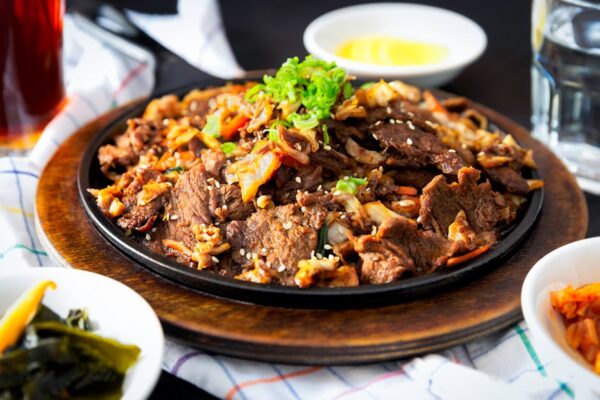
10. Ishigaki Beef Yakiniku
The Yaeyama Islands are home to some of Japan’s lesser-known but highly prized wagyu, raised on sea-air pastures rather than indoor barns. Ishigaki beef is typically served yakiniku-style over charcoal—often traditional binchotan white charcoal—with a dipping sauce of soy, shikuwasa, and toasted sesame. For the at-home approach, our Korean BBQ at home guide translates directly to Okinawan tabletop grilling.
11. Tebichi
Tebichi is pig’s foot stewed for hours with daikon, konbu, and a light soy-dashi broth until the collagen breaks down into something between soup and jelly. It is rustic, gelatinous, and beloved by older Okinawans for its purported effects on skin and joints. Younger cooks often modernize it by adding black vinegar and a handful of fried garlic chips for crunch.
12. Beni Imo Desserts
The vivid purple Okinawan sweet potato has become a global flavor in its own right thanks to beni imo tarts, puddings, ice creams, and soft-serve. A good beni imo tart uses the natural sweetness and earthiness of the tuber, relying on minimal added sugar and a shortbread crust. Home bakers in the US can order beni imo powder online and start with a simple dairy-free mousse or a cheesecake swirl.
13. Chanpuru Variations (Fu, Somen, Tofu)
Goya gets the headlines, but champuru is really a family of stir-fries. Fu champuru uses rehydrated wheat gluten sponges soaked in beaten egg, which creates a fluffy, French-toast-like texture. Somen champuru uses cold-water wheat noodles tossed with pork, scallion, and bonito flakes. Tofu champuru simply swaps in more tofu and more vegetables when the day’s market is leaner. Learning the base pattern—sear protein, add vegetable, fold in egg, finish with dashi and soy—lets you improvise dozens of meals.
14. Goya Juice and Shikuwasa Drinks
Pressed bitter melon juice, often cut with apple or shikuwasa citrus, is a morning drink in many Okinawan homes. It is intensely green, sharply bitter, and sold in single-serve bottles at highway rest stops. Shikuwasa juice on its own is one of the most food-friendly citrus beverages in Asia: more tart than lime, more fragrant than yuzu, and excellent both sweet and savory.
15. Awamori Cocktails
Awamori is Okinawa’s most important spirit, a long-grain rice liquor distilled with black koji mold and aged in underground clay pots. On its own it has a grassy, slightly petrol-like note that rewards patience. Mixed with shikuwasa juice, brown sugar syrup, and soda, it becomes a drinkable cooler that bridges most Okinawan meals. It is also the base of any serious rafute braise, and its umami-lifting power is why substitutes never quite hit the same notes.
Core Techniques of Okinawan Cooking
Okinawan technique is more forgiving than high-end Japanese washoku. The defining moves are champuru stir-frying, slow pork braising, and careful salting of tofu and bitter vegetables. Once you have these down, almost any family recipe becomes accessible.
Champuru Stir-Frying
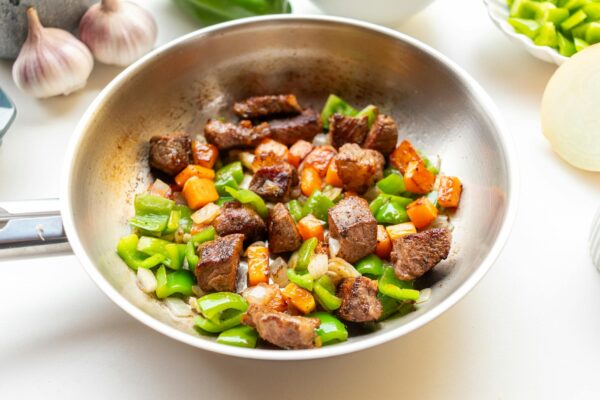
Champuru is done in a well-seasoned iron or carbon-steel pan over medium-high heat, not the screaming high heat of Cantonese wok hei. The goal is softened, savory vegetables that still have a little bite, proteins caramelized on one side, and a loose sauce held together by egg. A typical sequence: sear tofu planks until gold on both faces and set aside; brown pork belly with aromatics; add the harder vegetables (goya, carrot) and a splash of dashi; return the tofu; season with soy and a pinch of sugar; pour beaten egg around the perimeter and fold into ribbons. If you want a deeper technique primer, our stir-fry master guide covers heat management and pan choice in detail.
Slow Braising With Awamori and Kokuto
Dishes like rafute, tebichi, and soki rely on a gentle two-to-three-hour simmer. The technique is simple: blanch the pork to remove scum, then transfer to a heavy pot with dashi, soy, awamori, brown sugar, and aromatics. Cover and cook at a bare simmer. The kokuto provides color, not just sweetness, and the awamori enzymes tenderize the meat in a way that regular sake cannot replicate. Finish uncovered to reduce the sauce into a glossy glaze. If you prefer a guided introduction to this style, see our red braising guide, which shares most of the same principles.
Salting and Rinsing Bitter Vegetables
Goya, and to a lesser extent daikon greens and bitter sweet-potato leaves, benefits from a short salt cure to mellow its bitterness. Halve the goya, scoop out seeds, slice into thin half-moons, and toss with about one teaspoon of kosher salt per cup. Rest for 10 minutes, then rinse and squeeze dry. Diehards skip this step, insisting that bitterness is the whole point. Home cooks new to goya will have more fun starting with the salt method.
Building a Light Pork Dashi
Okinawan pork broth is clearer and lighter than tonkotsu ramen broth. It is built by simmering pork spare ribs with konbu and a small portion of katsuobushi, skimming often, for about two hours. The aim is a pale gold stock that tastes of pork and sea rather than collagen. This broth is the base for Okinawa soba, tebichi, and most braises. If you’re more comfortable with the Japanese style first, our dashi guide will set up the konbu-and-katsuobushi fundamentals.
Okinawan vs. Mainland Japanese Cuisine: A Comparison
Okinawan food is sometimes called ”Japanese cuisine with Chinese soul,” but that undersells it. The table below maps the most important differences between Okinawa and the mainland, so you can plan menus and stock your pantry accordingly.
| Dimension | Okinawan Cuisine | Mainland Japanese Cuisine |
|---|---|---|
| Staple carbohydrate | Sweet potato historically, rice now | Short-grain rice |
| Signature protein | Pork (every part) | Fish, chicken, some beef |
| Core stock | Pork-bone broth with konbu | Katsuobushi-konbu dashi |
| Dominant cooking method | Stir-fry (champuru), slow braise | Simmer, grill, raw (sashimi) |
| Soy product of choice | Shima-dofu, firm and salted | Silken or momen tofu |
| Key sweetener | Kokuto unrefined brown sugar | Mirin and refined sugar |
| Chief spirit | Awamori (long-grain rice, koji) | Sake (short-grain rice) |
| Characteristic vegetable | Goya bitter melon | Daikon, nasu, greens |
| Typical heat level | Medium with chili awamori | Mild, wasabi or ichimi-togarashi |
| Dessert style | Deep-fried cakes, purple sweet potato | Wagashi, mochi, custards |
| American fusion presence | Strong (taco rice, Spam, A&W) | Minor, mostly yoshoku |
The big takeaway: if you already cook mainland Japanese food, you can get into Okinawan cooking with three additions—pork belly, bitter melon, and firm island-style tofu—plus a willingness to use more brown sugar than you are used to.
Okinawan Meal Planning
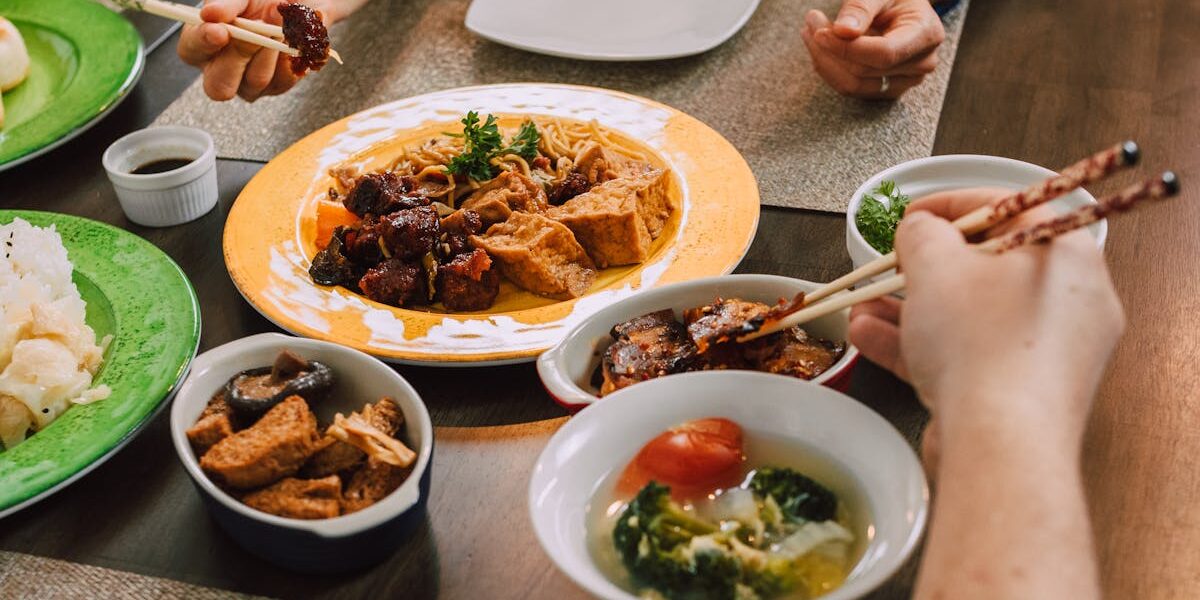
Traditional Okinawan meals are structured around multiple small plates rather than one big main. A home dinner might include rice, a bowl of miso or pork soup, a champuru, a pickled or seaweed side, and a small dish of simmered vegetables. This structure is nutritionally dense and emotionally satisfying, and it also makes great use of leftovers.
A Balanced Weeknight Plate
For a 45-minute weeknight dinner, build around goya champuru as the central dish. Pair with short-grain rice, a bowl of miso soup with mozuku seaweed, and a small plate of umibudo with ponzu. Serve a pot of genmaicha and, if you like, a wedge of beni imo tart bought from a local Asian bakery. This plate hits most of the Blue Zone markers—high vegetable load, moderate pork, fermented elements, and controlled portions.
A Weekend Project Menu
On a Saturday when you have more time, build a four-hour rafute braise and structure the menu around it. Start with mozuku su or jimami tofu as a starter, continue with rafute over rice, add a simple fu champuru for vegetables, and close with sata andagi and cold brown sugar soy milk. Leftover rafute sauce becomes a killer morning noodle stir-fry on Sunday, in the Okinawan tradition of never wasting a single gram of pig.
Hosting an Okinawan Izakaya Night
For a casual dinner party, think Okinawan izakaya: lots of small plates and awamori or beer on ice. Plan four cold items—mimiga, umibudo, mozuku su, and jimami tofu; three hot dishes—goya champuru, soki soba, and Ishigaki-style beef yakiniku; and sata andagi for dessert. Offer kourei-gusu chili awamori and shikuwasa juice on the table so guests can tune each bite.
The Okinawan Longevity Template
Researchers studying the traditional Okinawan diet have consistently pointed to a few quiet habits. Eat until you are about 80 percent full (hara hachi bu). Make vegetables, especially leafy greens and sweet potatoes, the largest share of the plate. Use pork as a flavoring rather than a centerpiece. Drink jasmine or genmaicha tea between meals. Sit down with family to eat. These habits scale easily to a US weekly meal plan even if you never cook a single Okinawan recipe.
Tools and Equipment for Okinawan Cooking
You do not need specialty equipment to cook Okinawan food well, but three items make a big difference.
A heavy skillet or light wok. Champuru is easiest in a 12-inch carbon-steel skillet or a lighter wok that lets you move ingredients quickly. Our best wok buying guide covers specific models for home ranges.
A well-fitting lid Dutch oven. For rafute and tebichi, a 5- to 7-quart enameled cast-iron pot holds a steady, low simmer for two to three hours with minimal evaporation.
A good cleaver. Okinawan home cooks typically use a single medium cleaver for everything from slicing pork belly to julienning pig’s ear. Our Chinese cleaver knife skills guide applies directly—the grip, the knuckle guide, and the slicing motions carry across cuisines.
Shopping for Okinawan Ingredients in the US
Five years ago, sourcing authentic Okinawan ingredients in the US meant a trip to Hawaii or a subscription to a Japanese food-box service. Today, the picture is much better. Specialty Asian grocers like Umamicart and regional Japanese markets in California, New York, and Texas now carry kokuto, awamori, beni imo powder, shima-masu salt, and frozen shima-dofu blocks. Fresh goya is seasonal but increasingly found at Korean and Filipino markets year-round (often sold as ”bitter melon” or ampalaya).
For the harder-to-find items, look for these US-friendly swaps. If shima-dofu is unavailable, buy two blocks of extra-firm tofu, press them under a cutting board and a heavy pot for an hour, then salt the surfaces and pan-fry. If kokuto is out of stock, muscovado or Filipino panocha is a very close cousin. If awamori is not at the liquor store, a 3:1 blend of dry sake and aged rum will get you most of the way there for braises. If shikuwasa is impossible, mix three parts lime with one part yuzu for a similar aromatic profile.
Okinawan Cuisine and Health
The Blue Zone research around Okinawa is famous enough that it has its own cottage industry of diet books and supplements. The actual pattern is simpler than most of them suggest. Traditional Okinawans ate a plant-heavy, moderate-protein, calorie-restricted diet with a small but consistent amount of pork, fermented soy, seaweed, and bitter vegetables. Modern Okinawa, which switched rapidly to American convenience food after the war, has seen some of the steepest rises in obesity and diabetes in Japan. The lesson for home cooks is to cook more from the traditional playbook—champuru, mozuku su, sweet potato, tofu—and save the Spam musubi for occasional indulgence.
Nutritionally, the stars of the Okinawan pantry are well studied. Goya is rich in vitamin C, folate, and compounds associated with blood-sugar support. Mozuku and umibudo are high in fucoidan, a sulfated polysaccharide under active research for cardiovascular effects. Kokuto retains minerals stripped out of refined sugar. None of these are magic bullets, but as daily habits built into a meal pattern, they add up.
Dining Etiquette and Food Culture in Okinawa
Okinawan table manners are warmer and less formal than mainland Japanese etiquette, reflecting the islands’ relaxed, sun-drenched culture. Meals are served family-style more often than in individual sets, and passing communal dishes with one’s own chopsticks (reversed to use the blunt end) is considered normal at home. The toast of choice, kanpai, is often followed by a second and specifically Okinawan phrase, karii, meaning ”good fortune.” Dessert is almost always tea-based rather than coffee-based, usually sanpin-cha (jasmine tea) served in small clay cups.
If you are eating out in Naha, start with an izakaya for small plates and awamori, graduate to a soba shop for a quiet midday meal, and finish with a visit to a yuntaku tea house—a spot for lingering conversation. Tipping is not expected anywhere. If you are new to chopsticks in general, our chopsticks guide covers the basics and common etiquette slips.
Seasonality in Okinawan Cooking
Because Okinawa sits in a subtropical climate, the seasonal rhythm is distinct from mainland Japan. Spring brings mozuku harvests and the first bitter melons. Summer is goya season, umibudo, mangoes, and shaved ice. Fall delivers sweet potato varieties, from gold annou imo to the deep purple beni imo, as well as the start of pork butchery for end-of-year feasts. Winter, mild by US standards, is the time for long pork braises, tebichi stews, and hot Okinawa soba.
Home cooks outside Okinawa can still follow this rhythm roughly. Start with summer champuru in July and August when bitter melon is cheapest. Shift to slow-braised rafute in November and December when pork belly is on sale for holidays. Use the shoulder seasons to experiment with fu champuru and jimami tofu.
Common Mistakes to Avoid
Skipping the tofu press. Most US firm tofu is wetter than shima-dofu. If you do not press and salt it, champuru ends up watery and the tofu crumbles.
Using white sugar instead of kokuto. The unrefined sugar gives rafute and sata andagi their signature molasses-caramel depth. White sugar cannot replicate the color or flavor. If you cannot find kokuto, use dark muscovado.
Boiling goya instead of quick-frying. Long cooking turns bitter melon mushy and intensely bitter. Stir-fry it in under five minutes over medium-high heat.
Over-saucing the champuru. Champuru is a stir-fry, not a saucy braise. A tablespoon or two of dashi and a splash of soy is plenty. Too much liquid steams the ingredients and breaks the egg.
Treating Okinawan food as diet food. The longevity diet works because it is a sustained pattern, not because any single dish is a weight-loss miracle. Cook the food because it tastes good first; the health benefits are a bonus.
Frequently Asked Questions
Is Okinawan food spicy?
Not inherently. Okinawan cuisine is more about umami and bitterness than heat. Most tables keep a bottle of kourei-gusu (chili peppers steeped in awamori) nearby, which lets each eater dial up the spice to taste. If you like Thai or Sichuan levels of heat, plan to add your own.
Can I make Okinawan food vegetarian?
Yes, though you will need to adjust. Replace pork in champuru with extra tofu and shiitake, use a konbu-only dashi, and rely on kokuto and miso for depth. Jimami tofu, mozuku su, umibudo salad, and sata andagi are already vegetarian. Rafute and tebichi are harder to adapt honestly, so we recommend building the menu around plant-first dishes instead.
What’s the difference between Okinawa soba and Japanese soba?
They share a name but almost nothing else. Japanese soba is thin buckwheat noodles served hot or cold with a soy-based dipping sauce. Okinawa soba is a thick wheat noodle served in a clear pork-bone broth. Think of Okinawa soba as closer to udon than to mainland soba.
Is awamori like sake?
Both are rice-based, but they are produced differently and taste very different. Sake is a brewed rice wine with around 15 percent alcohol, made from short-grain rice and koji. Awamori is a distilled spirit made from long-grain Thai rice and black koji mold, typically bottled at 25 to 43 percent alcohol. Awamori has a more assertive, grassy character and is often aged in clay pots for years.
Why is pork so important in Okinawan cuisine?
Pork arrived from China through royal trade and became the default protein of the Ryukyu Kingdom, in part because Buddhist prohibitions on beef had never taken strong root on the islands. Over centuries, Okinawans developed dishes using every part of the pig, from ear to trotter, to ensure nothing was wasted. Today, pork remains the centerpiece of celebration meals and an everyday flavoring in champuru.
What is ”Blue Zone” food?
”Blue Zone” is a term coined by researcher Dan Buettner for regions with unusually long-lived populations, including Okinawa, Sardinia, Nicoya in Costa Rica, Ikaria in Greece, and Loma Linda in California. The common dietary thread across these regions is plant-forward eating, moderate protein, minimal processed food, and strong social meals. Traditional Okinawan cuisine is the clearest Asian example.
Can I cook Okinawan food without a wok?
Absolutely. A 12-inch carbon-steel or cast-iron skillet handles champuru perfectly, and a Dutch oven is ideal for rafute and tebichi. Most Okinawan home cooks use a flat-bottomed pan, since island kitchens historically had small charcoal stoves rather than high-BTU Chinese-style burners.
Where can I try Okinawan food outside Japan?
Hawaii has the largest Okinawan diaspora outside Japan and the best selection of Okinawan restaurants in the US, especially in Honolulu. Los Angeles, New York, and Seattle each have one or two dedicated Okinawan spots, and Japanese izakayas across the country often feature at least a goya champuru or Okinawa soba on the menu. Ordering Okinawan ingredients online through specialty grocers is the most reliable way to cook the cuisine at home.
What’s the easiest Okinawan dish to start with?
Taco rice. It uses grocery-store ingredients, takes 20 minutes, and is an authentic everyday Okinawan meal. Once you are comfortable with the flavor profile, move on to goya champuru as your second recipe. From there, rafute is the natural weekend project.
How long does awamori last after opening?
Unopened awamori, especially aged kusu, actually improves with time. Once opened, store the bottle upright in a cool, dark place; it will hold its flavor for a year or more without significant degradation. This makes it a more forgiving pantry item than opened sake, which oxidizes within weeks.
Bringing Okinawan Cuisine Into Your Kitchen
Okinawan food rewards exactly the kind of cooking many US home cooks already love: one-pan stir-fries, slow Sunday braises, and relaxed small-plate dinners for friends. It is also a gentle on-ramp into regional Japanese cooking beyond sushi and ramen, a window onto a Blue Zone diet that actually tastes like something you’d want to eat twice a week, and a bridge between mainland Japanese, southern Chinese, and American cooking traditions that is truly unique in Asia.
If you are just starting, pick up a bitter melon, a block of extra-firm tofu, some pork belly, and a bottle of soy sauce. Make goya champuru tonight. Next weekend, buy kokuto and awamori online and braise a rafute. In a month you will have a five-dish Okinawan rotation that your family asks for by name. Along the way you will be eating the kind of food that has quietly helped thousands of islanders celebrate their hundredth birthdays—not because it is a miracle diet, but because it is honest, seasonal, deeply satisfying cooking. For more Japanese regional cooking to pair with this guide, see our 20 essential Japanese recipes and our round-up of essential Asian cooking techniques.

Mei Lin Chen
Mei Lin Chen is an Asian food writer and recipe developer. Melbourne-raised and London-based, she has spent over a decade exploring the rice paddies, hawker stalls, and home kitchens of South-East and East Asia. Her recipes balance traditional technique with everyday practicality.