Last updated: March 19, 2026
Tibetan food is one of the world’s most distinctive and least understood cuisines. Shaped by extreme altitude, harsh winters, and centuries of Buddhist tradition, the cooking of the Tibetan Plateau stands apart from every neighboring cuisine. Where Chinese cooking celebrates wok-fired complexity and Indian food layers elaborate spice blends, Tibetan cuisine thrives on simplicity, sustenance, and warmth. Every dish is engineered for survival above 4,000 meters, where growing seasons are short, oxygen is thin, and the body demands extraordinary caloric fuel.
For most Western diners, the entry point to Tibetan food is momos — those irresistible steamed or fried dumplings that have conquered street food scenes from Kathmandu to Jackson Heights, Queens. But momos barely scratch the surface. Behind them lies a culinary world built on roasted barley flour, yak butter, dried cheese, hand-pulled noodle soups, and fermented beverages that reflect a pastoral, nomadic heritage stretching back thousands of years.
This guide covers everything you need to know about Tibetan cuisine: its history and regional variations, essential ingredients, must-try dishes, cooking techniques, and practical tips for cooking Tibetan food at home. Whether you are exploring Tibetan restaurants for the first time or want to recreate traditional Tibetan recipes in your own kitchen, this is your complete reference.
The History and Origins of Tibetan Cuisine
Tibetan cuisine has been shaped by three powerful forces: geography, religion, and trade. The Tibetan Plateau — often called the ”Roof of the World” — averages over 4,500 meters in elevation, making it the highest inhabited region on earth. This extreme environment dictated what could be grown, raised, and preserved, producing a cuisine fundamentally different from the lowland traditions of China, India, and Nepal that surround it.
Highland barley (called nas in Tibetan) has been the foundation grain for at least 3,500 years. Archaeologists have found carbonized barley grains at Tibetan sites dating to roughly 1600 BCE, confirming that this cold-hardy crop was domesticated specifically for high-altitude agriculture. Unlike rice or wheat, barley thrives in poor soil, short growing seasons, and freezing temperatures, making it the ideal staple for plateau life.
The domestication of the yak — believed to have occurred around 4,500 years ago — was equally transformative. Yaks provided meat, milk, butter, cheese, hides, and even fuel (dried yak dung remains a primary cooking fuel in many pastoral areas). The entire Tibetan food system revolves around yak products in ways that have no parallel in any other Asian cuisine.
Buddhism arrived in Tibet during the 7th century CE under King Songtsen Gampo, whose marriages to Chinese Princess Wencheng and Nepali Princess Bhrikuti brought new foodways and cooking techniques. Tea, introduced via Chinese trade routes, quickly became essential. By the 10th century, compressed tea bricks were the primary trade currency along the Tea Horse Road (Chamadao), a network of caravan routes connecting Yunnan and Sichuan to Lhasa. Tea mixed with yak butter and salt — po cha, or butter tea — became the defining beverage of Tibetan civilization.
Buddhist monasteries also influenced Tibetan cooking in profound ways. While Tibet never adopted strict vegetarianism (the harsh climate makes an all-plant diet nearly impossible), monastic traditions prohibited garlic and onions and encouraged restraint and mindfulness at meals. Many traditional Tibetan dishes reflect this philosophy — they are simple, nourishing, and deliberately unfussy.
Regional Variations in Tibetan Cuisine
Despite the common misconception that Tibetan food is uniform, there are meaningful regional differences across the vast Tibetan cultural area, which spans not only the Tibet Autonomous Region but also parts of Qinghai, Sichuan, Gansu, and Yunnan provinces in China, as well as Tibetan diaspora communities in Nepal, India (particularly Dharamsala and Ladakh), and Bhutan.
Central Tibet (Ü-Tsang): The region around Lhasa and Shigatse represents the heartland of classical Tibetan cuisine. Tsampa, butter tea, and yak meat dominate. The cooking is the most austere and traditional, reflecting the high elevation and strong monastic influence. Dried yak meat (sha kampo) and hard dried cheese (chhurpi) are staple preserved foods.
Eastern Tibet (Kham): The Kham region, spanning western Sichuan and eastern TAR, has a more varied diet thanks to lower valleys where vegetables and fruit can grow. Khampa cooking incorporates more Sichuan peppercorn and chili heat, reflecting proximity to Sichuan cuisine. Khampa people are known for their love of raw yak meat and elaborate butter sculptures.
Northeastern Tibet (Amdo): The Amdo region, covering Qinghai and southern Gansu, shows strong Muslim and Mongolian influences. Lamb and mutton are more common than yak, and hand-pulled noodle dishes reflect the region’s connection to the la mian tradition. Amdo cuisine tends to be spicier and uses more wheat-based breads.
Diaspora Tibetan Food: In exile communities in India and Nepal, Tibetan cuisine has evolved significantly. Momos have become more diverse (with paneer, chicken, and cheese fillings unknown in traditional Tibet), and Indian spices have crept into Tibetan soups and stews. The momo shops of Dharamsala and Boudhanath represent a vibrant fusion tradition.
Essential Tibetan Ingredients
Tibetan cuisine relies on a relatively small pantry of ingredients, each selected for its ability to sustain life at extreme altitude. Understanding these core ingredients is the key to understanding Tibetan food.
| Ingredient | Tibetan Name | Description | Primary Uses |
|---|---|---|---|
| Highland barley flour | Tsampa | Roasted barley ground into fine flour; the single most important food in Tibetan culture | Mixed with butter tea or yogurt as a daily staple; rolled into balls by hand |
| Yak butter | Mar | Rich, pungent butter churned from yak or dri (female yak) milk; higher fat content than cow butter | Butter tea, tsampa, butter sculptures, cooking fat |
| Yak meat | Yak sha | Lean, slightly sweet red meat with less cholesterol than beef; often dried or air-cured | Stews, dried jerky (sha kampo), momo fillings, raw preparations |
| Brick tea | Ja | Compressed black or pu-erh tea leaves traded from Yunnan and Sichuan for centuries | Butter tea (po cha), sweet milk tea (ja ngamo) |
| Dried cheese | Chhurpi | Rock-hard dried cheese made from buttermilk; comes in soft and hard varieties | Chewed as a snack, added to soups, grated into dishes |
| Sichuan peppercorn | Yer ma | The same numbing spice used in Sichuan cuisine; grows wild in eastern Tibet | Seasoning for meats, soups, and chili sauces |
| Dried red chilies | Mala sipo | Sun-dried red chilies used more moderately than in Sichuan or Indian cooking | Chili sauces, stews, momo dipping sauces |
| Mustard oil | Yungs mar | Pungent cooking oil common in eastern and diaspora Tibetan cooking | Frying, seasoning, pickle making |
| Dried yak yogurt | Sho | Tangy, thick yogurt made from yak milk; sometimes dried into portable cakes | Eaten fresh, mixed with tsampa, fermented into drinks |
| Turnips and radishes | Nyungma | Among the few vegetables that grow reliably at high altitude; essential winter stores | Soups, stews, pickles, momo fillings |
12 Must-Try Tibetan Dishes
From the everyday staple of tsampa to elaborate festival soups, these are the dishes that define Tibetan cuisine. Each one tells a story about life on the plateau.
1. Momos (Tibetan Dumplings)
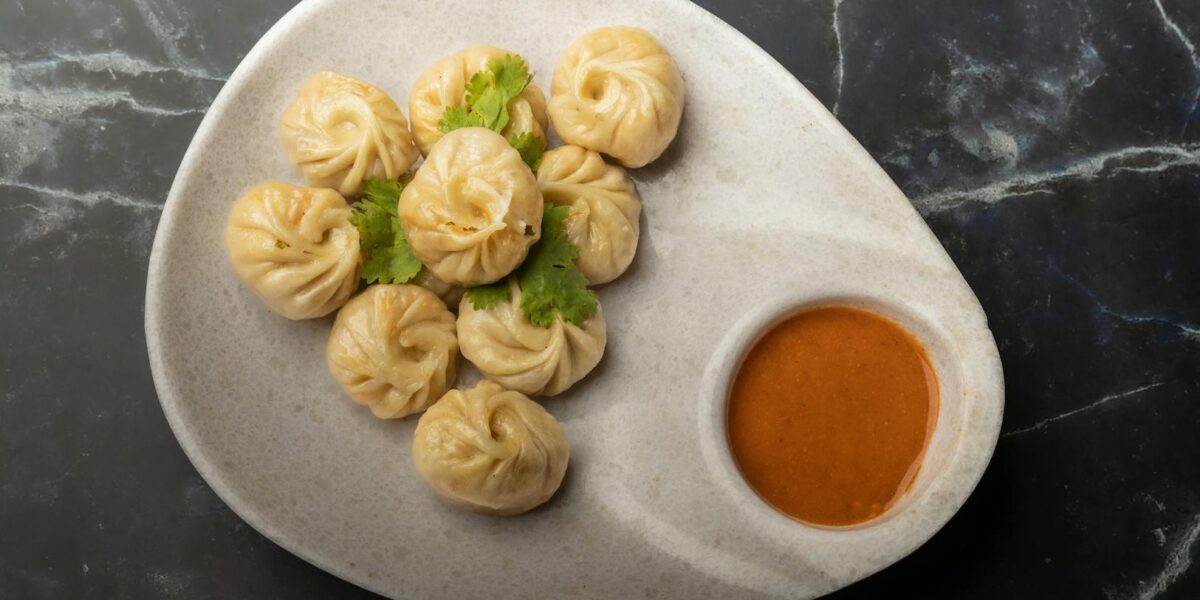
Momos are by far the most famous Tibetan food internationally, and for good reason. These hand-folded dumplings are filled with seasoned yak meat (or beef, chicken, or vegetables in modern versions) and either steamed, fried, or simmered in soup. The traditional Tibetan momo differs from Chinese jiaozi in several ways: the dough is slightly thicker, the filling uses more onion and minimal ginger, and the dipping sauce is a fiery tomato-and-chili condiment rather than soy-vinegar.
The best momos have thin but sturdy wrappers that hold a burst of meat juice inside. They are typically pleated into a crescent or round purse shape. In Tibetan communities, making momos is a social event — families gather to fold hundreds of dumplings together, much like the Chinese tradition of wrapping jiaozi during Lunar New Year.
2. Tsampa (Roasted Barley Flour)
Tsampa is not just a food — it is the foundation of Tibetan identity. This roasted barley flour is eaten daily by virtually every Tibetan, mixed by hand with butter tea or yogurt into a stiff dough and eaten in small balls. The taste is nutty, toasty, and subtly sweet, with a satisfying chewiness. Tsampa is incredibly portable and energy-dense, making it the perfect fuel for nomads, pilgrims, and travelers crossing high mountain passes.
At its simplest, tsampa requires just two ingredients: roasted barley flour and liquid. But the ritual of mixing it — kneading the flour and tea together in a small wooden bowl using only one hand — is a skill every Tibetan child learns. Tsampa is also used ceremonially: it is thrown into the air during Losar (Tibetan New Year) celebrations as an offering.
3. Po Cha (Yak Butter Tea)
Butter tea is the most consumed beverage in Tibet. Made by churning brick tea with yak butter and salt, po cha is savory, rich, and deeply warming — more like a thin, salty soup than anything Westerners would recognize as tea. Tibetans drink anywhere from 20 to 40 cups a day, and the beverage provides essential calories, fat, and hydration in the cold, dry climate.
Traditionally, butter tea is prepared in a dongmo, a tall wooden churn. The tea is brewed strong from compressed brick tea, then transferred to the churn with a generous lump of yak butter and a pinch of salt. Vigorous churning emulsifies the fat, creating a smooth, frothy drink. Modern Tibetans often use electric blenders, but the flavor profile remains the same.
4. Thukpa (Tibetan Noodle Soup)
Thukpa is Tibet’s great comfort food: a hearty noodle soup loaded with hand-pulled or hand-cut noodles, vegetables, and meat in a spiced broth. The name is a broad category that encompasses many variations. The noodles are typically made from wheat flour and pulled or rolled by hand, giving them a satisfyingly chewy texture that distinguishes them from the refined noodles of Chinese noodle soups.
Common variations include thukpa bathuk (with small pulled dough pieces resembling gnocchi), thenthuk (with flat, torn noodle pieces), and gyathuk (with Chinese-influenced thin noodles). The broth is usually meat-based, seasoned with onion, garlic, ginger, and sometimes Sichuan peppercorn and chili.
5. Thenthuk (Hand-Torn Noodle Soup)
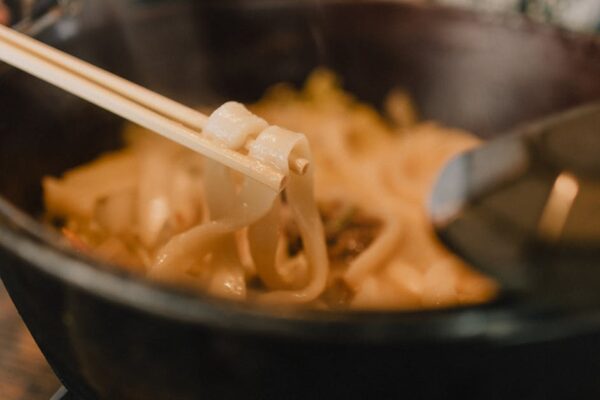
Thenthuk deserves its own entry because it is perhaps the most beloved everyday Tibetan dish after tsampa. The name literally means ”pulled noodles,” and the technique is beautifully simple: a basic wheat dough is rolled into a rope, then small flat pieces are torn off by hand directly into a pot of simmering broth. The irregular shapes create varying textures — some thick and chewy, some thin and silky — that catch the broth beautifully.
The soup typically includes whatever vegetables and meat are available: radish, potato, spinach, yak meat, or beef. It is everyday peasant food at its most satisfying — quick to prepare, endlessly adaptable, and deeply warming after a cold day on the plateau.
6. Sha Phaley (Tibetan Fried Meat Bread)
Sha phaley is a spectacular street food: seasoned ground meat (traditionally yak, now often beef) and cabbage are stuffed inside a wheat dough wrapper, sealed into a half-moon shape, and deep-fried until golden and crispy. The result is a crunchy, juicy meat pie that is the Tibetan answer to Chinese scallion pancakes or Indian samosas. Sha phaley is particularly popular during festivals and celebrations.
7. Sha Kampo (Dried Yak Meat)
Dried yak meat is the original Tibetan jerky and one of the world’s oldest preserved protein sources. Strips of yak meat are hung to air-dry in the cold, thin Tibetan air during winter, where the combination of low humidity, freezing temperatures, and high UV exposure naturally cures the meat over several weeks. The result is intensely flavorful, slightly chewy, and remarkably shelf-stable — perfect for nomads and travelers.
Sha kampo can be eaten straight as a snack, reconstituted in soups and stews, or ground into powder to add richness to other dishes. The flavor is more concentrated and complex than commercial beef jerky, with notes of grassland herbs and a distinctive yak musk.
8. Guthuk (Tibetan New Year Soup)
Guthuk is the most symbolic dish in Tibetan cuisine, prepared only on the 29th day of the 12th Tibetan month, the eve of Losar (New Year). This thick noodle soup contains nine specific ingredients representing purification and renewal. Hidden inside some of the dough balls are small objects — a piece of chili (signaling a talkative person), a piece of charcoal (signaling a black heart), wool (signaling a gentle spirit), and others. Family members break open their dough balls to reveal their ”fortune,” turning the meal into a raucous, laughing celebration.
9. Dresil (Sweet Saffron Rice)
Dresil is one of the few sweet dishes in the Tibetan repertoire and is served on special occasions, particularly during Losar and at weddings. Cooked rice is mixed with melted yak butter, sugar or honey, golden raisins, and a pinch of saffron, creating a fragrant, golden dish that is eaten at the start of a celebratory meal. While rice is not a plateau crop (it must be imported from lower altitudes), dresil’s use of this luxury ingredient makes it inherently festive.
10. Laping (Spicy Cold Mung Bean Noodles)
Laping is a wildly popular street food that surprises many newcomers to Tibetan cuisine with its heat. Cold, slippery mung bean noodles (or starch jelly) are dressed with chili oil, soy sauce, vinegar, garlic, and Sichuan peppercorn, creating a fiery, numbing, tangy dish that is pure refreshment on warm days. Laping is clearly influenced by Sichuan liangfen (cold noodle dishes), but Tibetans have made it their own, and it has become a staple at every Tibetan market and gathering.
11. Balep Korkun (Tibetan Flatbread)
Balep korkun is a skillet-fried flatbread that serves as an everyday bread in many Tibetan households. Made from a simple dough of wheat flour, water, and baking powder, the bread is rolled thin, folded into layers, and cooked on a dry skillet until spotted brown on both sides. The layers create a flaky, tender texture that pairs perfectly with butter tea, curry, or stew. Some versions incorporate tsampa flour for added nuttiness.
12. Tingmo (Steamed Bread Rolls)
Tingmo are fluffy, twisted steamed bread rolls that function as the Tibetan equivalent of mantou (Chinese steamed buns) or naan. The dough is leavened with yeast, pulled and twisted into an elegant knotted shape, and steamed in a bamboo steamer. Light, pillowy, and slightly sweet, tingmo are designed to soak up sauces and stews. They are almost always served alongside sepen, a spicy Tibetan dipping sauce made from tomatoes, chilies, and garlic.
Tibetan Cooking Techniques
Tibetan cooking techniques are born from necessity. At extreme altitudes where fuel is scarce (primarily yak dung and dried brush), elaborate cooking methods are impractical. Efficiency and preservation dominate. Here are the core techniques that define Tibetan cuisine.
Roasting and Toasting: The most essential Tibetan technique is dry-roasting barley to make tsampa. The grain is roasted in hot sand in a large iron pan, which provides even heat distribution, then winnowed and ground. This process transforms raw barley into a shelf-stable, instantly edible flour that needs no further cooking. The same technique is applied to wheat and other grains.
Boiling and Simmering: Because water boils at a lower temperature at high altitude (around 85°C at 4,500 meters versus 100°C at sea level), Tibetans have adapted their cooking accordingly. Soups, stews, and noodle dishes are simmered for longer periods. This is one reason why thukpa and thenthuk — dishes that involve cooking noodles directly in broth — are so central to the cuisine. The extended simmering extracts maximum flavor and nutrition from limited ingredients.
Air-Drying and Curing: The cold, dry, high-altitude air of the Tibetan Plateau is a natural preservation environment. Yak meat is hung in strips to air-dry during winter months, producing sha kampo. Cheese is dried into rock-hard chhurpi that can last for years. Even yogurt is dried into portable cakes. These preservation techniques were essential for nomadic herders who needed lightweight, long-lasting food for months on the move.
Churning and Emulsifying: The dongmo (butter tea churn) represents a uniquely Tibetan culinary tool. The vigorous churning action breaks down yak butter into tiny droplets suspended in hot tea, creating a stable emulsion. This technique — essentially the same principle behind making mayonnaise or vinaigrettes — is what gives butter tea its characteristic smooth, creamy texture. Without proper churning, the butter simply floats on top as an oily slick.
Steaming: Steaming is the primary technique for cooking momos and tingmo. Tibetan steamers are typically stacked bamboo or metal trays set over boiling water. The gentle, moist heat produces tender dumpling wrappers and fluffy bread without requiring the oven baking that higher altitudes would make unreliable (low air pressure causes baked goods to rise and collapse unpredictably).
Deep-Frying: While less common than boiling or steaming, deep-frying appears in dishes like sha phaley and kapse (fried pastries made during Losar). The frying oil is traditionally yak butter or mustard oil. Fried momos (known as kothey) are pan-fried on one side for a crispy bottom while remaining steamed on top — a technique shared with Japanese gyoza.
Tibetan Cuisine vs. Neighboring Cuisines
Tibetan food occupies a unique position at the crossroads of Chinese, Indian, Nepali, and Central Asian culinary traditions. Understanding how it differs from — and overlaps with — its neighbors helps clarify what makes Tibetan cuisine distinctive.
| Feature | Tibetan | Chinese (Sichuan/Cantonese) | Indian (North) | Nepali |
|---|---|---|---|---|
| Primary grain | Highland barley (tsampa) | Rice, wheat | Wheat (chapati, naan) | Rice, millet |
| Primary protein | Yak meat and dairy | Pork, chicken, fish | Lentils, chicken, lamb | Lentils, chicken, goat |
| Primary fat | Yak butter | Vegetable oil, lard | Ghee, mustard oil | Mustard oil, ghee |
| Spice level | Moderate (chili, Sichuan peppercorn) | Varies (mild to extremely spicy) | Complex spice blends (garam masala) | Moderate (cumin, turmeric, chili) |
| Signature beverage | Yak butter tea (po cha) | Green tea, pu-erh tea | Chai (spiced milk tea) | Chiya (spiced tea) |
| Dumpling tradition | Momos (steamed/fried) | Jiaozi, wontons, baozi | Samosas, modak | Momos (adapted from Tibet) |
| Cooking fuel | Yak dung, brush | Gas, coal, wood | Gas, wood, cow dung | Wood, gas |
| Preservation methods | Air-drying, fermentation | Salting, smoking, pickling | Spicing, drying, pickling | Drying, pickling |
| Vegetable use | Minimal (turnips, radishes, potatoes) | Extensive variety | Extensive variety | Moderate variety |
| Religious influence | Buddhism (no garlic/onion in monastic food) | Varied (Buddhist, Muslim) | Hinduism, Islam | Hinduism, Buddhism |
The Role of Yak in Tibetan Food Culture
No discussion of Tibetan food is complete without understanding the yak. This large, shaggy bovine is the single most important animal in Tibetan civilization, and its influence on the cuisine cannot be overstated. Yaks provide milk (from which butter, cheese, and yogurt are made), meat, hides, hair (woven into tents and ropes), and dung (the primary cooking and heating fuel above the tree line).
Yak milk contains roughly twice the fat content of cow milk, which is why yak butter is so rich and calorie-dense — essential qualities when your daily life involves herding livestock at 5,000 meters in sub-zero temperatures. A single Tibetan nomad family may consume several kilograms of yak butter per week, primarily through butter tea.
Yak meat is leaner than beef despite the animal’s massive size, with a flavor that is richer and slightly gamier. In some regions of Kham, raw yak meat is considered a delicacy, eaten freshly slaughtered with chili and salt. More commonly, yak meat is dried into sha kampo or used in momos and stews. The meat’s low fat content and high protein make it increasingly popular in Western health food markets, though at a significant premium over beef.
Chhurpi, the hard dried cheese made from yak buttermilk, deserves special mention. The hard variety is rock-solid — often compared to chewing on a pebble — and is meant to be slowly gnawed like gum, softening gradually in the mouth over 30 to 60 minutes. It provides a sustained release of protein and calories, making it the original Tibetan energy bar. The soft variety of chhurpi is more similar to ricotta and is used in cooking.
Tibetan Beverages: Beyond Butter Tea
While po cha (butter tea) dominates Tibetan drinking culture, several other beverages play important roles in daily life and celebrations.
Ja Ngamo (Sweet Milk Tea): A lighter alternative to butter tea, ja ngamo is black tea boiled with milk and sugar. This preparation is more common among younger Tibetans and in diaspora communities, reflecting Indian and Nepali chai influence. It lacks the savory richness of po cha but is easier for newcomers to enjoy.
Chang (Barley Beer): Chang is a mildly alcoholic fermented beverage made from highland barley, millet, or rice. The fermented grain is placed in a container and hot water is poured over it repeatedly, with each extraction producing a progressively weaker drink. The first pour is the strongest and most prized. Chang has a slightly sour, yeasty flavor and is ubiquitous at celebrations, festivals, and social gatherings. It plays a similar cultural role to sake in Japan or makgeolli in Korea.
Arak/Raksi: For stronger spirits, Tibetans produce arak (also called raksi), a distilled liquor made from fermented barley or rice. Arak is clear, potent, and served warm — essential for ceremonies, winter warmth, and medicinal purposes. It is often offered to guests as a sign of hospitality, similar to the tradition of offering Shaoxing wine in Chinese culture.
Tibetan Food During Festivals and Celebrations
Tibetan festivals are inseparable from food. Each major celebration has its own required dishes, and the preparation and sharing of food carries deep spiritual and social significance.
Losar (Tibetan New Year): The most important Tibetan holiday involves days of food preparation. Families make kapse (deep-fried pastries in elaborate shapes), dresil (sweet saffron rice), guthuk (fortune soup), and enormous quantities of momos. Butter sculptures, some depicting mythological scenes, are crafted as offerings. Tsampa is thrown into the air with shouts of ”Tashi Delek!” (good fortune) at midnight.
Saga Dawa: This sacred Buddhist month commemorates the birth, enlightenment, and death of the Buddha. Many Tibetans abstain from meat during this period, eating only vegetable momos, tsampa, and dairy. It is one of the few times vegetarianism is widely practiced in Tibetan society.
Shoton (Yogurt Festival): Originally a monastic festival marking the end of summer meditation retreats, Shoton translates to ”yogurt banquet.” Monks were offered fresh yak yogurt after their weeks of seclusion. Today it has evolved into a major cultural festival in Lhasa featuring open-air opera performances, with picnicking families eating yogurt, dried cheese, and other dairy dishes in the city’s parks.
How to Cook Tibetan Food at Home
Tibetan food is surprisingly accessible for home cooks, requiring few specialized ingredients and no complex techniques. Here is how to get started.
Stock your pantry: You need very few specialty items. Regular all-purpose flour works for momos, tingmo, and thenthuk. For tsampa, look for roasted barley flour at Tibetan, Nepali, or health food stores (some are sold as ”barley tsampa” online). Unsalted butter substitutes adequately for yak butter in butter tea, though the flavor will be milder. For Sichuan peppercorn and dried chilies, any Asian grocery or online Asian ingredient store will carry them.
Start with momos: Momos are the ideal first Tibetan recipe. The dough is just flour and water, the filling is ground meat with onion and minimal spices, and the folding technique is forgiving. Steam them in a bamboo steamer lined with cabbage leaves to prevent sticking. Make the tomato-chili dipping sauce (sepen) by blending roasted tomatoes, garlic, cilantro, and dried chilies.
Try thenthuk for weeknight dinners: Thenthuk is the perfect weeknight meal because it comes together in under 30 minutes. Make a simple broth with onion, garlic, ginger, and whatever protein and vegetables you have. While it simmers, prepare a basic dough (flour, water, pinch of salt), rest it briefly, roll into ropes, and tear pieces directly into the bubbling soup. The torn noodles cook in minutes. Season with soy sauce, chili flakes, and a squeeze of lime.
Make butter tea at home: Brew a strong pot of black tea (pu-erh or any robust black tea works). Add a tablespoon of unsalted butter and a pinch of salt per cup. Blend in a blender for 30 seconds until frothy and emulsified. The key is proper emulsification — if the butter separates and floats on top, blend longer. Serve immediately in small cups, refilling frequently as is Tibetan custom.
Tibetan Meal Planning Tips
Planning a Tibetan meal at home is refreshingly straightforward. Unlike Chinese banquets that require balancing multiple dishes or Indian thalis with many components, a Tibetan meal centers on one or two main dishes supported by tea and bread.
For a simple everyday meal: Serve thukpa or thenthuk as a one-bowl meal with a side of balep korkun (flatbread) and butter tea. This is how most Tibetans eat on a daily basis — a warming soup, bread, and an endless supply of tea.
For a momo feast: Make momos the star. Prepare two filling varieties (one meat, one vegetable), steam a large batch, and serve with sepen (tomato-chili sauce) and a clear soup made from the momo steaming liquid. Add a plate of sha phaley for contrast in texture. Serve sweet milk tea or chang (barley beer, if you can source it).
For a Losar celebration: Begin with dresil (sweet saffron rice), followed by guthuk (soup with hidden fortunes — use folded paper fortunes inside dough balls for a fun dinner party version). Serve kapse (fried pastries) and dried fruit for dessert. Have butter tea flowing throughout.
For a fusion approach: Tibetan flavors pair beautifully with other Asian cuisines. Serve momos alongside homemade chili oil for dipping. Use the thenthuk noodle technique with a ramen-style broth. Add tsampa as a nutty coating for fried foods — it works surprisingly well as a breading for chicken or vegetables.
Where to Find Tibetan Food
Tibetan restaurants are concentrated in areas with significant Tibetan diaspora communities. In the United States, Jackson Heights in Queens (New York City) has the highest concentration of Tibetan restaurants, with dozens of momo shops and sit-down restaurants along Roosevelt Avenue and 74th Street. Other notable hubs include Somerville and Cambridge in Massachusetts, Minneapolis, Portland (Oregon), and the San Francisco Bay Area.
Outside the US, Dharamsala and McLeod Ganj in northern India (home of the Dalai Lama and the Tibetan government-in-exile) offer the most authentic diaspora Tibetan dining. Boudhanath and Thamel in Kathmandu, Nepal, also have excellent Tibetan restaurants. In Tibet itself, Lhasa’s Barkhor Street area and Shigatse have traditional Tibetan restaurants alongside modern Chinese-influenced eateries.
For cooking Tibetan food at home, most ingredients are available at any well-stocked grocery store. Specialty items like tsampa flour, dried chhurpi cheese, and Tibetan brick tea can be found at Nepali and Tibetan grocery stores or ordered online.
Frequently Asked Questions About Tibetan Food
Is Tibetan food spicy?
Tibetan food is moderately spicy compared to its neighbors. It uses fewer and simpler spices than Indian, Sichuan, or Thai cuisine. Dried red chilies and Sichuan peppercorn provide heat and numbness in some dishes, particularly laping and momo dipping sauces, but the overall cuisine leans more toward savory, buttery, and meaty flavors than fiery heat. You can easily adjust spice levels to your preference.
What does yak meat taste like?
Yak meat tastes similar to lean beef with a slightly sweeter, more herbaceous flavor. It is less fatty than beef but not dry, with a tender texture when cooked properly. Dried yak meat (sha kampo) has a more concentrated, almost cheese-like umami intensity. If you cannot source yak meat, lean ground beef is the closest substitute for momos and stews.
Is Tibetan food vegetarian-friendly?
Traditional Tibetan cuisine is heavily meat- and dairy-based, reflecting the harsh environment where plant agriculture is limited. However, vegetable momos, tsampa with butter or yogurt, thenthuk with vegetables, and various breads are all naturally vegetarian. Diaspora Tibetan restaurants, especially in India, typically offer extensive vegetarian options including paneer momos and vegetable thukpa.
What is the difference between Tibetan momos and Chinese dumplings?
While both are filled dumplings, Tibetan momos and Chinese jiaozi differ in several ways. Momo dough is typically thicker and uses only flour and water (no egg). The filling is more heavily spiced with onion and sometimes cumin, whereas jiaozi often include ginger, scallion, and sesame oil. The signature momo dipping sauce is tomato-and-chili-based, while jiaozi are served with soy-vinegar dipping sauce. Momos also tend to be larger than jiaozi and have distinctive pleating patterns.
Can I make butter tea without yak butter?
Yes. Regular unsalted cow’s butter works as a substitute, though the flavor will be milder and less tangy than authentic yak butter. Use a strong black tea (pu-erh is ideal), add butter and salt, and blend thoroughly until emulsified. Some people find the idea of salty, buttery tea off-putting, but approach it as you would a savory broth rather than expecting a sweet tea experience.
Is Tibetan food the same as Nepali food?
No, though there is significant overlap, especially regarding momos. Nepali cuisine (see our complete Nepali food guide) incorporates dal bhat (lentils and rice) as its daily staple, uses a wider range of spices influenced by Indian cooking, and includes many more vegetables and legumes. Tibetan cuisine is more dairy-heavy, relies on barley instead of rice, and has a narrower spice palette. The shared momo tradition reflects centuries of cross-Himalayan cultural exchange.
What is tsampa and how do you eat it?
Tsampa is roasted barley flour, the most fundamental food in Tibetan culture. To eat it traditionally, place a few tablespoons in a bowl, add butter tea or yogurt, and mix with your fingers until it forms a soft, pliable dough. Pinch off small pieces and eat them by hand. The flavor is nutty and toasty, similar to roasted grain or malted barley. Modern preparations include tsampa porridge (cooked with milk and sweetened), tsampa energy balls (mixed with honey and dried fruit), and tsampa used as a flour in baking.
Bringing Tibetan Flavors Into Your Kitchen
Tibetan cuisine may come from one of the most remote and extreme environments on earth, but its flavors are surprisingly accessible and deeply satisfying. The emphasis on honest, warming, fuel-for-the-body cooking resonates with anyone who believes food should be nourishing first and complicated never. A steaming basket of momos, a bowl of hand-torn thenthuk, a cup of salty butter tea — these are dishes that have sustained a civilization for millennia, and they translate remarkably well to home kitchens anywhere in the world.
Start with momos or thenthuk — both require nothing more than flour, water, and whatever protein and vegetables you have on hand. Once you experience the simple, profound satisfaction of Tibetan food, you will understand why tsampa and butter tea have fueled journeys across the highest mountains on earth for thousands of years.
For more Asian cuisine guides, explore our complete collections of Chinese recipes, Indian cuisine, Nepali food, and Asian recipes to continue your culinary journey across the continent.

Mei Lin Chen
Mei Lin Chen is an Asian food writer and recipe developer. Melbourne-raised and London-based, she has spent over a decade exploring the rice paddies, hawker stalls, and home kitchens of South-East and East Asia. Her recipes balance traditional technique with everyday practicality.