Last updated: March 19, 2026
Chicken karaage is Japan’s most beloved fried chicken — bite-sized pieces marinated in soy sauce, ginger, and garlic, then coated in potato starch and fried until impossibly crispy on the outside and juicy on the inside. Unlike Western fried chicken, karaage uses a light starch coating rather than a thick batter, creating a delicate crunch that shatters with every bite. This recipe walks you through every detail, from the essential double-frying technique to the perfect marinade ratio, so you can make restaurant-quality karaage at home in under 45 minutes.
Whether you’ve fallen in love with karaage at a Japanese izakaya, spotted it in a bento box, or simply want a better fried chicken recipe, this guide covers everything. We’ll explore the history behind this iconic dish, break down the science of what makes karaage so crispy, and give you variations for every palate — from spicy to gluten-free.
What Is Chicken Karaage?
Karaage (唐揚げ, pronounced ”kah-rah-ah-geh”) is a Japanese cooking technique where food is marinated, coated in starch, and deep-fried. While you can make karaage with fish, squid, or vegetables, chicken karaage (鶏の唐揚げ, tori no karaage) is by far the most popular version. It’s a staple of Japanese home cooking, convenience stores, izakaya menus, and bento boxes across the country.
The name ”karaage” literally translates to ”Chinese-style frying,” reflecting the technique’s origins in Chinese cooking methods that were adopted and refined in Japan during the early 20th century. The first karaage restaurant, Rairaiken, opened in Usa City, Oita Prefecture, in 1962, and the dish quickly became a national obsession.
What sets karaage apart from other fried chicken styles is the marinade-first approach. The chicken absorbs deep umami flavors from soy sauce, fresh ginger, and garlic before being coated in a thin layer of potato starch (katakuriko). This creates a lighter, crispier result than the flour-and-egg batters used in Western fried chicken or even chicken katsu, which uses panko breadcrumbs for a different kind of crunch.
Chicken Karaage vs. Other Fried Chicken Styles
Understanding how karaage compares to other Asian fried chicken dishes helps you appreciate what makes it unique. Here’s how the major styles stack up:
| Style | Origin | Coating | Marinade | Texture | Serving Style |
|---|---|---|---|---|---|
| Chicken Karaage | Japan | Potato starch or cornstarch | Soy sauce, ginger, garlic, sake | Light, shatteringly crispy | Bite-sized pieces with lemon wedges |
| Korean Fried Chicken | Korea | Double-coated flour and starch | Minimal; sauced after frying | Ultra-crispy, stays crunchy | Tossed in gochujang or soy-garlic sauce |
| Chicken Katsu | Japan | Flour, egg, panko breadcrumbs | Salt and pepper only | Thick, crunchy panko shell | Sliced cutlet with tonkatsu sauce |
| Taiwanese Popcorn Chicken | Taiwan | Sweet potato starch | Five-spice, soy sauce, garlic | Crackly, light | Small pieces with Thai basil leaves |
| Chinese Salt and Pepper Chicken | China | Cornstarch | Light soy and rice wine | Crispy, dry | Tossed with chili, garlic, scallion |
The key difference with karaage is its emphasis on the marinade. Where Korean fried chicken gets its flavor from post-fry sauces and chicken katsu relies on dipping sauces, karaage is seasoned deeply before it ever hits the oil. Every bite is flavorful all the way through.
Ingredients for Chicken Karaage
One of karaage’s greatest strengths is its short ingredient list. You don’t need a specialty Asian grocery run for this recipe — most of the ingredients are pantry staples, though a few authentic touches make a big difference.
For the Chicken
- 2 lbs (900g) boneless, skinless chicken thighs — Thighs are non-negotiable for karaage. They stay juicy during frying and have more flavor than breast meat. Cut into roughly 1.5-inch (4cm) pieces.
- 3 tablespoons soy sauce — Use regular Japanese soy sauce (koikuchi shoyu). Learn more about soy sauce varieties here.
- 1 tablespoon sake — Tenderizes the chicken and adds depth. Dry sherry works as a substitute.
- 1 tablespoon toasted sesame oil — Adds nutty aroma. Use sparingly — a little goes a long way.
- 1 tablespoon freshly grated ginger — Fresh ginger is essential. Don’t substitute dried ginger powder.
- 3 cloves garlic, minced or grated — Fresh garlic grated on a microplane gives the smoothest distribution.
- 1 teaspoon sugar — Balances the saltiness and promotes browning.
- 1/2 teaspoon white pepper — More subtle and aromatic than black pepper.
- 1 egg, lightly beaten — Optional but helps the starch adhere better.
For the Coating
- 3/4 cup (90g) potato starch (katakuriko) — The traditional choice for karaage. Creates the lightest, crispiest coating. Available at most Asian grocery stores.
- 1/4 cup (30g) cornstarch — Optional addition. Mixing with potato starch gives extra crunch. You can also use 1 cup of cornstarch alone if potato starch is unavailable.
For Frying and Serving
- Neutral oil for deep frying — Vegetable, canola, or peanut oil. You’ll need about 2-3 inches in your pot.
- Lemon wedges — Traditional and essential. The acid cuts through the richness.
- Japanese mayonnaise (Kewpie) — The classic dipping accompaniment.
- Shredded cabbage — Served underneath, Japanese-style, as a fresh counterpoint.
The Science Behind Crispy Karaage
Understanding why karaage gets so crispy helps you nail it every time. Three things are working together:
Potato starch creates a superior crust. Potato starch granules are larger than cornstarch or wheat flour granules. When they hit hot oil, they create bigger air pockets in the coating, which means a lighter, crunchier texture. This is the same principle behind tempura’s light crispiness.
The marinade contributes to Maillard browning. Soy sauce and sugar in the marinade contain amino acids and sugars that undergo the Maillard reaction at frying temperatures, creating that deep golden-brown color and complex savory flavor. This is similar to the browning you see in teriyaki chicken.
Double-frying drives out moisture. The first fry at a lower temperature cooks the chicken through. The rest period lets residual heat redistribute moisture to the surface. The second fry at a higher temperature then blasts that surface moisture away, creating an extra-crispy shell. This technique is the same one that makes Korean fried chicken so addictively crunchy.
Step-by-Step Chicken Karaage Recipe
This recipe serves 4 as a main dish or 6-8 as an appetizer. Total time is about 45 minutes, including 20 minutes of marinating.
Step 1: Cut the Chicken
Pat the chicken thighs dry with paper towels. Trim any excess fat or sinew. Cut each thigh into 4-5 roughly equal pieces, about 1.5 inches (4cm) each. Try to keep the pieces similar in size so they cook evenly. Slightly irregular shapes are fine — the nooks and crannies create extra crispy bits.
Step 2: Make the Marinade
In a large bowl, combine the soy sauce, sake, sesame oil, grated ginger, minced garlic, sugar, and white pepper. Whisk until the sugar dissolves. Add the chicken pieces and mix thoroughly, making sure every piece is coated. If using the egg, add it now and mix again. Cover with plastic wrap and refrigerate for at least 20 minutes, or up to 2 hours. Don’t marinate longer than 2 hours — the soy sauce will make the chicken too salty and the texture will become mushy.
Step 3: Set Up Your Frying Station
Pour oil into a heavy-bottomed pot or Dutch oven to a depth of 2-3 inches. Attach a deep-fry thermometer if you have one. Line a wire rack with paper towels and set it nearby. Place the potato starch (and cornstarch, if using) in a shallow bowl or plate.
Heat the oil to 320°F (160°C) for the first fry. Use medium heat and be patient — rushing to temperature often means overshooting.
Step 4: Coat the Chicken
Remove the chicken from the marinade one piece at a time. Let excess marinade drip off for a moment, then place the piece in the starch. Press the starch onto all sides, then gently shake off the excess. The coating should be thin and even — not clumpy. Place the coated pieces on a clean plate. Don’t coat the chicken too far in advance or the starch will become gummy.
Step 5: First Fry (320°F / 160°C)
Carefully lower 5-6 pieces into the oil. Don’t overcrowd — too many pieces drops the oil temperature and you’ll get soggy chicken instead of crispy karaage. Fry for 3-4 minutes, turning occasionally, until the chicken is light golden and cooked through. The internal temperature should reach 165°F (74°C).
Transfer to the wire rack and let rest for 3-4 minutes. This rest period is crucial — it lets residual steam escape and moisture redistribute. Repeat with the remaining chicken pieces.
Step 6: Second Fry (375°F / 190°C)
Increase the oil temperature to 375°F (190°C). Working in the same batches, return the chicken to the hot oil for 1-2 minutes. This second fry happens fast — you’re looking for a deep golden-brown color and an audible crackling sound. The coating will visibly tighten and darken.
Transfer to a clean section of the wire rack. The chicken should be deeply golden, incredibly fragrant, and audibly crispy when you tap it with tongs.
Step 7: Serve Immediately
Arrange the karaage on a plate lined with shredded cabbage. Serve with lemon wedges and Japanese mayonnaise on the side. Squeeze fresh lemon juice over the chicken just before eating — this is the traditional way and the acid brightens every bite.
Karaage is best eaten within minutes of frying. The crispy coating starts to soften after about 15-20 minutes, so don’t wait.
Essential Tips for Perfect Karaage
After testing this recipe dozens of times, these are the details that separate great karaage from mediocre karaage:
Use chicken thighs, not breasts. This is the single most important decision. Thigh meat has more fat and connective tissue, which keeps it moist during high-heat frying. Breast meat dries out and becomes chalky. Every karaage shop in Japan uses thighs.
Grate your ginger, don’t mince it. Grated ginger releases more juice and distributes more evenly through the marinade than minced ginger. A microplane or Japanese oroshigane grater works best. You want the pulp and the juice.
Don’t skip the double-fry. Single-frying gives you decent karaage. Double-frying gives you extraordinary karaage. The difference is that shattering crunch that lasts even as the chicken cools slightly. It’s worth the extra 5 minutes.
Monitor your oil temperature carefully. Temperature control is everything in deep frying. If the oil is too cool, the chicken absorbs oil and turns greasy. Too hot, and the outside burns before the inside cooks. A thermometer removes all guesswork. If you don’t have one, test with a small piece of coating — it should sink slightly, then rise to the surface with active bubbling within 2-3 seconds.
Let excess marinade drip off. Too much wet marinade under the starch creates steam pockets that make the coating fall off. A few seconds of dripping makes a noticeable difference.
Coat the chicken right before frying. Starch plus moisture equals glue over time. If you coat the chicken and let it sit for 10 or more minutes, the starch absorbs marinade and becomes gummy instead of crispy. Coat in small batches, fry immediately.
Variations and Flavor Twists
Once you master the basic recipe, karaage becomes a canvas for experimentation. Here are popular variations you’ll find across Japan and beyond:
Tatsuta-age (Dragon Field Fried Chicken)
Tatsuta-age is karaage’s close cousin. The difference is the coating: tatsuta-age always uses potato starch (never cornstarch) and the chicken is not drained of excess marinade before coating, creating a thicker, more irregular crust. The name comes from the Tatsuta River in Nara, where autumn maple leaves floating on the water resemble the reddish-brown patches on the fried chicken.
Spicy Karaage
Add 1-2 teaspoons of shichimi togarashi (seven-spice blend) to the starch coating, or toss the finished karaage in a mixture of 1 tablespoon sriracha, 1 tablespoon honey, and 1 teaspoon rice vinegar for a sweet-spicy glaze.
Yuzu Kosho Karaage
Add 1 tablespoon of yuzu kosho (yuzu chili paste) to the marinade for a citrusy, spicy kick. This version is especially popular in Kyushu, where yuzu kosho originates.
Curry Karaage
Mix 1 tablespoon Japanese curry powder into the starch coating. The warm spices complement the ginger-soy marinade beautifully. Serve with Japanese curry sauce for dipping.
Garlic Karaage (Ninniku Karaage)
Double or triple the garlic in the marinade and add 1 teaspoon of garlic powder to the starch coating. Popular at izakayas as a drinking snack, this version is unapologetically pungent.
Gluten-Free Karaage
Replace the soy sauce with tamari (gluten-free soy sauce) and use pure potato starch or cornstarch for the coating. The result is virtually identical to the original — karaage is one of the easiest Japanese dishes to adapt for gluten-free diets.
What to Serve with Chicken Karaage
Karaage is versatile enough to be a snack, appetizer, or main course. Here’s how to build a complete meal around it:
As an izakaya appetizer: Serve on a small plate with lemon wedges, Kewpie mayo, and a cold Japanese beer. Add takoyaki and edamame for a full izakaya spread.
As a bento component: Karaage is one of the most popular bento items in Japan. Pack it with steamed rice, pickled vegetables, a rolled omelet (tamagoyaki), and some blanched broccoli. It’s delicious at room temperature, making it ideal for packed lunches.
As a main dish (teishoku style): Serve with a bowl of steamed Japanese short-grain rice, miso soup, shredded cabbage, and pickled daikon. This is the standard karaage set meal at Japanese restaurants.
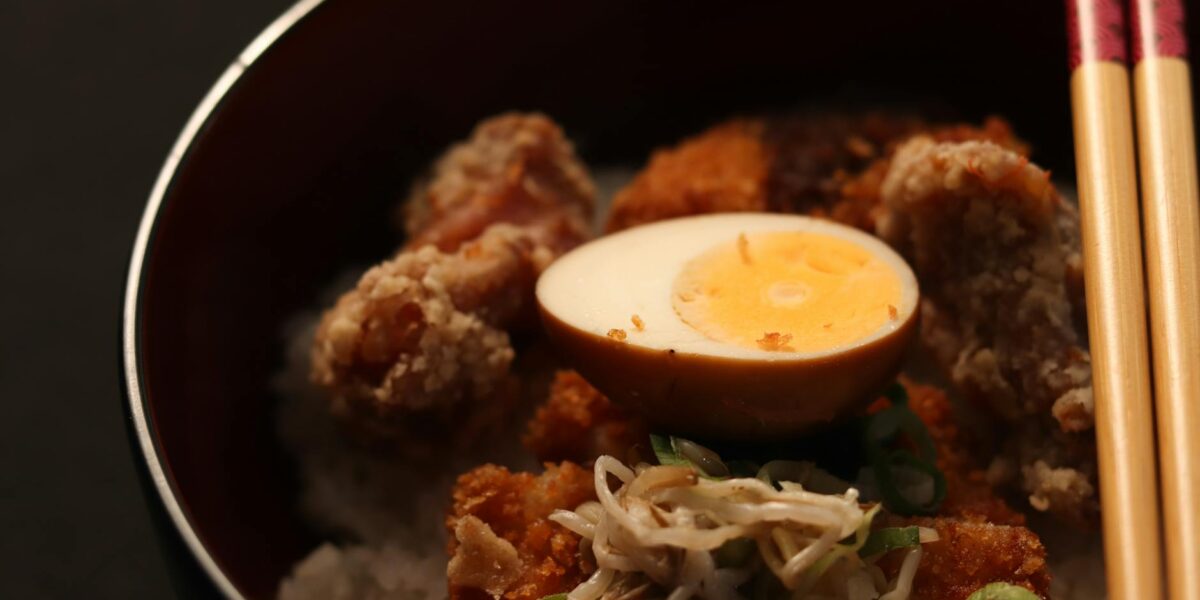
Over rice (karaage don): Place hot karaage over a bowl of rice, drizzle with a mixture of soy sauce, mirin, and rice vinegar, and top with shredded scallions and a soft-boiled egg.
In a sandwich: Stuff karaage into a soft milk bread roll with shredded cabbage, Kewpie mayo, and a squeeze of lemon. This karaage sando has become a modern Japanese convenience store favorite.
Nutritional Information
The following nutritional values are approximate and based on one serving (about 6-7 pieces, roughly one-quarter of the full recipe). Values may vary depending on the exact size of chicken pieces and amount of oil absorbed during frying.
| Nutrient | Per Serving (approx.) | % Daily Value |
|---|---|---|
| Calories | 420 kcal | 21% |
| Total Fat | 24g | 31% |
| Saturated Fat | 5g | 25% |
| Cholesterol | 185mg | 62% |
| Sodium | 780mg | 34% |
| Total Carbohydrates | 18g | 7% |
| Dietary Fiber | 0.5g | 2% |
| Sugars | 2g | — |
| Protein | 34g | 68% |
| Iron | 2.1mg | 12% |
| Potassium | 380mg | 8% |
| Vitamin B6 | 0.5mg | 29% |
A note on calories from frying: Deep-fried foods absorb varying amounts of oil depending on coating thickness, oil temperature, and frying time. Karaage’s thin starch coating absorbs less oil than battered fried chicken. The double-frying technique also helps — the second high-heat fry actually drives out some of the oil absorbed during the first fry.
Storage and Reheating Tips
While karaage is best fresh, it stores and reheats better than most fried foods thanks to its thin coating.
Refrigerator storage: Place cooled karaage in an airtight container, separating layers with parchment paper to prevent sticking. It will keep for 3-4 days in the refrigerator.
Freezer storage: Spread cooled karaage in a single layer on a baking sheet and freeze until solid (about 2 hours). Transfer to a freezer bag, removing as much air as possible. Frozen karaage keeps for up to 1 month.
Reheating for crispiness: The best method is an oven or toaster oven at 400°F (200°C) for 8-10 minutes, flipping halfway through. This re-crisps the coating without additional oil. An air fryer at 375°F (190°C) for 5-6 minutes works even better. Avoid the microwave — it makes the coating soggy and rubbery.
Reheating from frozen: No need to thaw. Place frozen karaage directly in a 400°F (200°C) oven for 12-15 minutes, or in an air fryer at 375°F (190°C) for 8-10 minutes. They’ll be nearly as crispy as fresh.
Common Mistakes to Avoid
Even simple recipes have pitfalls. Here are the most common karaage mistakes and how to avoid them:
Using chicken breast. Breast meat dries out during the double-fry process. The leaner the meat, the less forgiving it is. Stick with thighs.
Over-marinating. More than 2 hours in the soy sauce marinade makes the chicken too salty and breaks down the texture. The sweet spot is 20 minutes to 2 hours. If you want deeper flavor, increase the ginger and garlic rather than the marinating time.
Using too much coating. Karaage is not Southern fried chicken — the coating should be thin and barely visible. Excess starch creates a thick, pasty shell instead of a light, crispy one. Shake off vigorously after coating.
Crowding the pot. Adding too many pieces at once drops the oil temperature dramatically, leading to greasy, pale chicken. Fry in batches of 5-6 pieces maximum, and let the oil recover to temperature between batches.
Skipping the rest between fries. The 3-4 minute rest between the first and second fry isn’t just about convenience — it’s a crucial step that lets steam escape and the crust set. Without it, the second fry doesn’t produce the same level of crunch.
Forgetting the lemon. It might seem like a garnish, but the squeeze of fresh lemon is integral to the karaage experience. The citric acid cuts through the richness of the fried chicken and enhances the ginger in the marinade. Always serve with lemon wedges.
The History and Culture of Karaage in Japan
Karaage has deep roots in Japanese food culture that go far beyond a simple fried chicken recipe. Understanding its history gives you a richer appreciation of this beloved dish.
The technique of frying marinated food in oil was introduced to Japan from China during the Edo period (1603-1868), which is reflected in the ”kara” (唐) in karaage, meaning ”Tang Dynasty” or simply ”Chinese.” However, the specific style of marinated, starch-coated fried chicken that we know today didn’t emerge until the mid-20th century.
Two cities claim to be the birthplace of modern chicken karaage: Usa City and Nakatsu City, both in Oita Prefecture on the island of Kyushu. Usa City points to the restaurant Rairaiken, which began serving marinated fried chicken in 1962. Nakatsu City has its own network of karaage specialty shops dating to the 1970s. The rivalry between these two cities is friendly but fierce — both have ”Karaage Streets” lined with specialty vendors, and both host annual karaage festivals.
In 2008, karaage culture received a major boost when the Japan Karaage Association (日本唐揚協会) was founded. Yes, karaage has its own official association. They certify the best karaage shops across Japan through their Karaage Grand Prix, a nationwide competition that draws hundreds of entries. They’ve also designated every day as ”karaage day” because, in their words, karaage deserves to be eaten daily.
Today, karaage is consistently ranked as one of Japan’s top three most-loved home-cooked dishes, alongside curry rice and ramen. It’s a fixture in convenience store hot food cases (where it’s sold as individual pieces for quick snacking), izakaya menus, school lunch programs, and family dinner tables. The average Japanese household makes karaage at home about 2-3 times per month.
Frequently Asked Questions
Can I use chicken breast instead of thighs?
You can, but the result won’t be as juicy. If you must use breast, cut the pieces slightly larger (2 inches instead of 1.5 inches) and reduce the first frying time by about 30 seconds to prevent drying out. Adding the optional egg to the marinade also helps breast meat retain moisture.
What’s the difference between potato starch and cornstarch for karaage?
Potato starch (katakuriko) creates a lighter, more delicate crunch that’s the hallmark of authentic karaage. Cornstarch produces a slightly harder, denser crust. Both work well, and many Japanese home cooks mix the two for the best of both worlds — the lightness of potato starch with the staying power of cornstarch. If you can only find one, use it alone and you’ll still get great results.
Can I shallow-fry karaage instead of deep-frying?
You can pan-fry karaage in about 1 inch of oil, turning the pieces to cook all sides. The result is slightly less even in color and crispiness, but still delicious. Use a heavy skillet and maintain the same temperatures. You’ll need to turn the pieces more frequently — about every 60-90 seconds.
Can I make karaage in an air fryer?
Yes. Spray or lightly brush the coated chicken with oil and air fry at 375°F (190°C) for 12-14 minutes, shaking the basket halfway through. The result is lighter and less crispy than traditional deep-fried karaage, but still very good. You won’t get the same shattering crunch, but you’ll use significantly less oil.
How do I keep karaage crispy for a bento box?
Let the karaage cool completely on a wire rack before packing — trapping steam in a closed container is the fastest way to destroy crispiness. Use a vented bento box if possible. Place a small piece of parchment paper between the karaage and other items. The coating will soften somewhat, which is normal and expected for bento karaage — it’s still delicious at room temperature.
What oil is best for frying karaage?
Any neutral oil with a high smoke point works well. Vegetable oil, canola oil, and peanut oil are the most common choices. Peanut oil gives slightly richer flavor. Avoid olive oil (too low smoke point and strong flavor) and coconut oil (imparts coconut taste). Many Japanese home cooks use simple salad oil (a blend of soybean and canola oils).
Is karaage gluten-free?
Traditional karaage contains gluten from the soy sauce. However, it’s very easy to make gluten-free by substituting tamari for soy sauce and ensuring your potato starch or cornstarch is certified gluten-free. The starch coating itself is naturally gluten-free, unlike flour-based fried chicken.
Can I marinate the chicken overnight?
It’s not recommended. Soy sauce is quite salty and acidic, and overnight marinating will make the chicken overly salty and affect its texture. The maximum recommended marinating time is 2 hours. If you want to prep ahead, cut and season the chicken, then refrigerate and add the soy sauce component 20 minutes to 2 hours before frying.
What can I do with leftover frying oil?
Let the oil cool completely, then strain it through a fine-mesh sieve or cheesecloth to remove food particles. Store in a sealed container in a cool, dark place. You can reuse karaage frying oil 2-3 times. It will take on some flavor from the chicken and marinade, which actually improves subsequent batches. Discard the oil when it becomes dark, smells off, or starts foaming excessively when heated.
Make It Your Own
Karaage is one of those rare recipes that’s both deeply traditional and endlessly adaptable. The basic technique — marinate, coat, double-fry — works with countless flavor combinations. Once you’ve mastered the classic version, try adding a splash of mirin to the marinade for subtle sweetness, or experiment with different starches and spice blends to find your signature style.
The beauty of karaage lies in its simplicity. A handful of ingredients, a pot of oil, and a bit of attention to temperature and timing are all you need to create fried chicken that rivals anything you’ll find in Japan. No special equipment, no complicated techniques — just perfectly crispy, deeply savory, irresistibly juicy chicken that disappears from the plate faster than you can make it.
Squeeze that lemon, dip in some Kewpie mayo, and enjoy. That’s the karaage way.

Mei Lin Chen
Mei Lin Chen is an Asian food writer and recipe developer. Melbourne-raised and London-based, she has spent over a decade exploring the rice paddies, hawker stalls, and home kitchens of South-East and East Asia. Her recipes balance traditional technique with everyday practicality.