Last updated: March 16, 2026
Egg drop soup is one of the most beloved Chinese soups in the world, and for good reason. Known as 蛋花汤 (dan hua tang) or ”egg flower soup” in Chinese, this silky, comforting bowl comes together in under 15 minutes with just a handful of pantry staples. The wispy ribbons of egg floating through a savory, golden broth have made it a staple at Chinese restaurants and dinner tables across America and beyond for decades.
But here is the thing most people discover when they make egg drop soup at home for the first time: the restaurant version, while familiar, barely scratches the surface of what this soup can be. When you control the broth, the seasoning, and the technique, you get something far more flavorful, more nuanced, and more satisfying than anything that arrives in a takeout container.
This recipe walks you through the authentic Chinese method for making egg drop soup from scratch. We will cover the proper broth base, the exact technique for creating those signature silky egg ribbons (it is all about the pour), and a handful of variations that keep this quick soup in your weeknight rotation all year long. Whether you are looking for a light starter, a soothing sick-day bowl, or a fast lunch that actually tastes like something, this is the egg drop soup recipe you have been looking for.
What Is Egg Drop Soup?
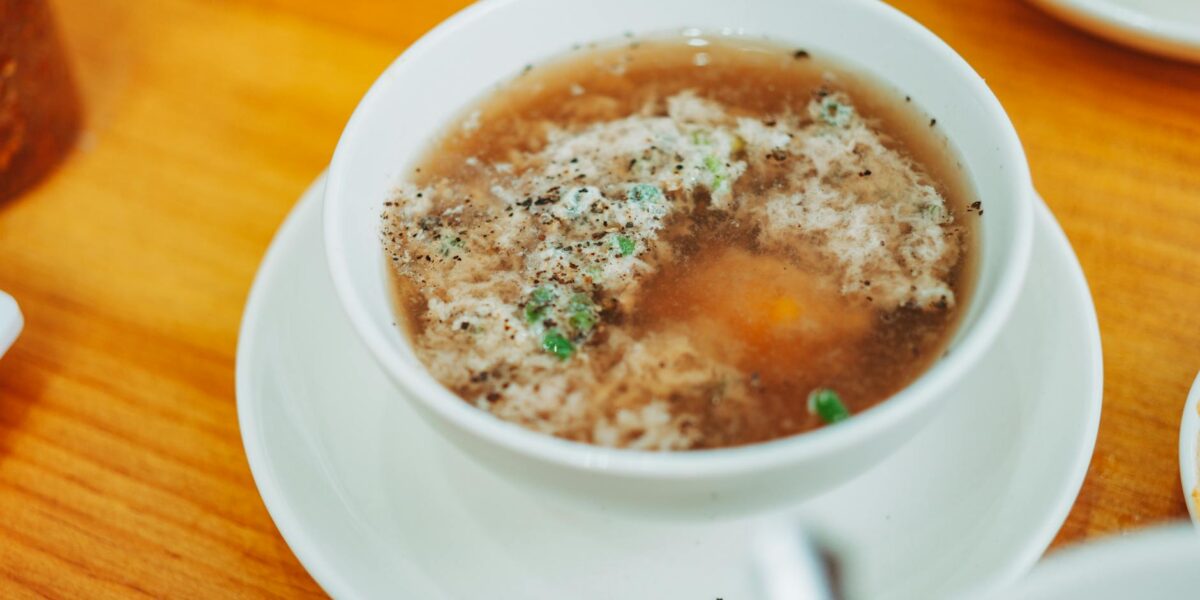
Egg drop soup is a traditional Chinese soup made by drizzling beaten eggs into a pot of seasoned, simmering broth. As the eggs hit the hot liquid, they cook almost instantly into delicate, feathery strands — the ”egg flowers” that give the soup its Chinese name. The result is a bowl that looks simple but delivers surprisingly deep comfort: warm, savory, lightly thickened, and studded with those wispy threads of cooked egg.
The soup has roots in Chinese home cooking that stretch back centuries. It belongs to a category of quick, nourishing soups that Chinese families serve as part of everyday meals — not elaborate banquet dishes, but practical, wholesome food made from ingredients almost everyone has on hand. In China, egg drop soup is often served alongside stir-fried dishes and steamed rice as a way to balance a meal with something light and hydrating.
In the United States, egg drop soup became a Chinese-American restaurant fixture starting in the mid-20th century. Its mild flavor profile and easy preparation made it a natural fit for American palates, and it quickly became one of the most commonly ordered appetizers at Chinese restaurants nationwide. The American version tends to be slightly thicker and more heavily seasoned with sesame oil than the lighter Chinese original, but both share the same essential appeal: maximum comfort from minimal ingredients.
Why This Egg Drop Soup Recipe Works
There are a lot of egg drop soup recipes out there, and most of them produce something that is fine but forgettable. This version is different because it pays attention to the details that actually matter:
The broth has real depth. Instead of relying on a single type of stock, this recipe builds flavor with chicken broth enhanced by ginger, white pepper, and a touch of Shaoxing wine. The result is a broth that tastes complete on its own before the eggs even go in.
The egg ribbons are genuinely silky. The secret is a cornstarch slurry that lightly thickens the broth before the eggs are added. This thickened broth suspends the egg strands instead of letting them clump at the bottom. Combined with the proper pouring technique, you get those restaurant-quality wispy ribbons every single time.
It comes together in 15 minutes. This is not an all-day project. From the moment you turn on the stove to the moment you sit down with a bowl, you are looking at about 15 minutes of active cooking. It is one of the fastest homemade soups you can make, and it delivers a level of satisfaction that far exceeds the effort involved.
It is endlessly adaptable. The base recipe is perfect on its own, but it also serves as a canvas for additions like corn, tofu, tomatoes, seaweed, or shrimp. We will cover all of these variations later in the article so you can customize this soup to your taste throughout the week.
Ingredients for Egg Drop Soup
One of the beautiful things about egg drop soup is its short ingredient list. You likely have most of these in your kitchen right now. Here is what you need:
| Ingredient | Amount | Notes |
|---|---|---|
| Chicken broth | 4 cups (960 ml) | Low-sodium preferred; homemade is best but store-bought works well |
| Large eggs | 3 | Room temperature for best ribbon texture |
| Cornstarch | 2 tablespoons | Mixed with 3 tablespoons cold water to form a slurry |
| Sesame oil | 1 teaspoon | Toasted sesame oil for finishing |
| Shaoxing wine | 1 tablespoon | Optional; adds subtle depth (substitute dry sherry) |
| Fresh ginger | 1-inch piece, sliced | Infuses the broth; removed before serving |
| Soy sauce | 1 tablespoon | Light soy sauce preferred |
| White pepper | 1/4 teaspoon | Ground white pepper is traditional; black pepper works in a pinch |
| Salt | To taste | Depends on broth sodium level |
| Scallions | 2, thinly sliced | For garnish |
Ingredient Notes and Substitutions
Chicken broth: The quality of your broth makes or breaks this soup. If using store-bought, choose a low-sodium option so you can control the salt level. For a vegetarian version, use vegetable broth or a light mushroom stock. If you want to go the extra mile, a broth made with dashi as a base adds incredible umami depth.
Eggs: Three large eggs for four cups of broth gives you the ideal ratio — enough egg ribbons to feel substantial without turning the soup into scrambled egg broth. Let your eggs come to room temperature before beating them, as cold eggs can cause the broth temperature to drop too quickly, resulting in clumpy strands instead of silky ribbons.
Cornstarch slurry: This is the single most important component for achieving restaurant-quality texture. The slurry thickens the broth just enough to create a slightly viscous liquid that holds the egg ribbons in suspension. Without it, the eggs sink and clump. Always mix the cornstarch with cold water first — adding it directly to hot broth creates lumps.
White pepper: This is the signature seasoning in egg drop soup and many other Chinese soups. White pepper has a sharper, more pungent heat than black pepper, with a slightly earthy, fermented quality that is distinctly Chinese. It is worth keeping a jar in your pantry if you cook Chinese food regularly. Sichuan peppercorn can be added alongside white pepper for a numbing-spicy variation.
Shaoxing wine: A splash of Shaoxing wine rounds out the broth with a warm, slightly sweet undertone. If you do not have it, dry sherry is the closest substitute. You can also omit it entirely — the soup will still be delicious, just slightly less complex.
Sesame oil: Use toasted (dark) sesame oil, not the light variety. A teaspoon drizzled in at the very end adds a nutty fragrance that is characteristic of Chinese egg drop soup. Do not cook with it — the flavor degrades quickly with heat.
Equipment You Will Need
Egg drop soup requires minimal equipment, but a few tools make the process smoother:
- Medium saucepan or pot (2-3 quart): Any pot works. A wider pot gives you more surface area for pouring the egg, which helps create longer ribbons.
- Fork or chopsticks: For stirring the broth while you pour the egg. Chopsticks actually work better than a fork here because they create a gentler current in the broth.
- Small bowl or measuring cup with a spout: You need to pour the beaten egg in a thin, steady stream. A measuring cup with a spout or a small bowl gives you the most control.
- Whisk or fork for beating eggs: Beat the eggs thoroughly so the whites and yolks are fully combined. Streaks of unmixed white will create uneven ribbons.
How to Make Egg Drop Soup: Step-by-Step Instructions
Follow these steps carefully, especially the egg-pouring technique, and you will have restaurant-quality egg drop soup every time.
Step 1: Prepare the Cornstarch Slurry and Beat the Eggs
In a small bowl, mix 2 tablespoons of cornstarch with 3 tablespoons of cold water. Stir until completely smooth with no lumps. Set aside.
In a separate bowl or measuring cup with a spout, beat the 3 eggs until the whites and yolks are fully combined. You want a uniform yellow color with no streaks of white. Do not overbeat — you do not want foam. Set aside.
Step 2: Heat and Season the Broth
Pour the 4 cups of chicken broth into a medium saucepan. Add the sliced ginger, soy sauce, Shaoxing wine, and white pepper. Bring the broth to a gentle boil over medium-high heat. Once boiling, reduce the heat to medium and let it simmer for 3-4 minutes to allow the ginger to infuse the broth.
Taste the broth and adjust the seasoning. If using low-sodium broth, you will likely need to add salt. The broth should taste well-seasoned on its own because the eggs will dilute the flavor slightly. Remove the ginger slices with a slotted spoon or chopsticks and discard.
Step 3: Add the Cornstarch Slurry
Give the cornstarch slurry a quick stir (cornstarch settles quickly) and pour it into the simmering broth while stirring constantly. Continue stirring for about 30 seconds until the broth thickens slightly. It should look glossy and feel just a bit more viscous than plain broth — think the consistency of a light gravy, not a thick sauce.
This step is critical. The thickened broth is what allows the egg to form those beautiful, delicate ribbons instead of sinking to the bottom in clumps. Make sure the broth is actively simmering (not a rolling boil) before you move to the next step.
Step 4: Create the Egg Ribbons (The Key Technique)
This is the moment that defines your egg drop soup. Here is the technique:
Make sure the broth is at a gentle simmer — bubbles should be breaking the surface slowly. Hold the bowl or measuring cup of beaten egg about 6-8 inches above the pot. With your other hand, use chopsticks or a fork to stir the broth in a slow, steady circular motion.
While stirring, pour the beaten egg in a very thin, steady stream into the moving broth. Pour slowly. The egg should hit the surface and immediately cook into long, wispy ribbons. Keep stirring gently as you pour — this is what creates the classic egg flower pattern.
Once all the egg is in, stop stirring immediately. Let the soup sit undisturbed for 15-20 seconds so the last of the egg sets completely. Stirring at this point will break up the delicate ribbons.
Step 5: Finish and Serve
Remove the pot from heat. Drizzle in the teaspoon of toasted sesame oil and give the soup one very gentle stir to distribute it. Taste and adjust salt if needed.
Ladle the soup into bowls and garnish with sliced scallions. Serve immediately — egg drop soup is best enjoyed piping hot. A sprinkle of additional white pepper on top is welcome for those who like extra heat.
Tips for Perfect Egg Drop Soup Every Time
Even a simple recipe like egg drop soup has a few pitfalls. Here are the tips that make the difference between a mediocre bowl and a perfect one:
Temperature matters more than anything. The broth must be at a gentle simmer — not a rolling boil and not below a simmer. If the broth is boiling too vigorously, the egg will cook into tough, rubbery bits instead of silky ribbons. If it is not hot enough, the egg will not cook instantly and you will get a cloudy, muddled mess.
Pour thin and slow. The thinner your stream of egg, the more delicate and wispy your ribbons will be. Resist the urge to dump the egg in quickly. A measuring cup with a narrow spout is your best friend here. Some Chinese home cooks pour the egg through the tines of a fork to create an even thinner stream.
Do not skip the cornstarch slurry. This is the step that separates restaurant egg drop soup from the homemade versions that do not quite work. The slight thickening of the broth is what suspends the egg ribbons beautifully and gives the soup its characteristic silky mouthfeel.
Use room temperature eggs. Cold eggs lower the broth temperature when they hit it, which can cause uneven cooking. Take your eggs out of the fridge 20-30 minutes before you start cooking, or place them in warm water for 5 minutes.
Beat the eggs thoroughly but gently. You want a completely uniform mixture with no streaks of white, but you do not want to incorporate a lot of air. Foam on the beaten egg will create an unpleasant texture in the soup.
White pepper is non-negotiable. Black pepper works in a pinch, but white pepper is what gives egg drop soup its distinctive, authentic flavor. The difference is noticeable, and a jar of ground white pepper costs very little.
Egg Drop Soup Variations
The basic egg drop soup recipe is a canvas that welcomes additions. Here are the most popular variations, all of which use the same base technique:
Corn Egg Drop Soup (Yu Mi Dan Hua Tang)
This is arguably the most popular variation in Chinese home cooking. Add 1 cup of sweet corn kernels (fresh, frozen, or canned and drained) to the broth in Step 2, and simmer for 3-4 minutes before adding the cornstarch slurry. The natural sweetness of the corn plays beautifully against the savory broth. For extra richness, add 1/2 cup of creamed corn along with the whole kernels.
Tomato Egg Drop Soup (Fan Qie Dan Hua Tang)
A staple in Chinese households, this version adds 2 medium tomatoes (cut into wedges) to the broth. Simmer the tomatoes for 5-6 minutes until they soften and release their juices, creating a slightly tangy, sweet-savory broth. You can skip the cornstarch slurry in this version — the tomato juices provide enough body. This pairs wonderfully with steamed rice as part of a simple weeknight meal.
Seaweed Egg Drop Soup (Zi Cai Dan Hua Tang)
Add a sheet of dried nori or a small handful of dried wakame seaweed to the broth after adding the cornstarch slurry. The seaweed rehydrates in the hot broth and adds a subtle oceanic umami. This is a common lunchtime soup in China and works especially well with a dashi-based broth for a Japanese-influenced take.
Tofu Egg Drop Soup
Cut 4 ounces of soft or silken tofu into small cubes and add them to the broth in Step 2. The tofu adds protein and a creamy, delicate texture that complements the egg ribbons. Be gentle when stirring so the tofu does not break apart.
Shrimp Egg Drop Soup
Add 6 ounces of peeled, deveined shrimp (cut into small pieces if large) to the broth after the ginger infusion in Step 2. Simmer for 2-3 minutes until the shrimp are just pink, then proceed with the cornstarch slurry and egg. This turns a light soup into something more substantial.
Spinach or Watercress Egg Drop Soup
Add 2 cups of fresh spinach leaves or watercress to the broth just before adding the egg in Step 4. The greens wilt almost instantly in the hot broth and add color, nutrients, and a pleasant freshness. This is a popular variation in Cantonese home cooking, where light, nourishing soups are served with nearly every meal — a tradition you can explore further in our Cantonese food guide.
The History and Cultural Significance of Egg Drop Soup
Egg drop soup has a longer and more interesting history than most people realize. While the exact origins are difficult to trace, egg-based soups appear in Chinese culinary texts dating back to the Tang Dynasty (618-907 CE). The technique of swirling beaten eggs into hot broth was likely developed as a way to stretch a small amount of protein into a full dish — a practical innovation born from the everyday challenges of feeding a family with limited resources.
In China, egg drop soup is considered a home-style dish (jia chang cai) rather than a restaurant specialty. It falls into the category of quick, nourishing soups that Chinese families make on weeknights when there is not time for a more elaborate preparation. It is the kind of soup a parent makes when someone in the family is feeling under the weather, or when you need something warm and comforting that can be ready in minutes.
The soup’s journey to America began with the wave of Chinese immigration in the 19th century and accelerated during the mid-20th century boom in Chinese-American restaurants. American diners took to egg drop soup immediately — its mild, approachable flavor and familiar ingredients (eggs and chicken broth) made it one of the most accessible Chinese dishes for the American palate. By the 1970s and 1980s, it was a fixture on virtually every Chinese restaurant menu in the United States, typically offered alongside wonton soup as a starter option.
The Chinese-American version evolved to suit local tastes. It tends to be thicker than the Chinese original, with more cornstarch and a heavier hand with sesame oil. Some American adaptations also include soy sauce for color, which gives the broth a darker appearance compared to the paler, more delicate Chinese version. Neither approach is wrong — they are simply different expressions of the same comforting idea.
Today, egg drop soup holds a unique place in the landscape of Chinese food in America. It is simultaneously one of the most well-known Chinese dishes and one of the most underestimated. Making it at home reveals just how satisfying this simple soup can be when the broth is properly seasoned and the egg technique is dialed in.
Nutritional Information
Egg drop soup is naturally low in calories and high in protein, making it an excellent option for health-conscious meals. Here is the approximate nutritional breakdown per serving (recipe makes 4 servings):
| Nutrient | Per Serving (approx.) | % Daily Value |
|---|---|---|
| Calories | 90 kcal | 4% |
| Total Fat | 5 g | 6% |
| Saturated Fat | 1.5 g | 8% |
| Cholesterol | 140 mg | 47% |
| Sodium | 480 mg | 21% |
| Total Carbohydrates | 5 g | 2% |
| Dietary Fiber | 0 g | 0% |
| Total Sugars | 1 g | — |
| Protein | 7 g | 14% |
| Vitamin A | 5% DV | 5% |
| Calcium | 2% DV | 2% |
| Iron | 4% DV | 4% |
Dietary notes: Egg drop soup is naturally gluten-free if you use tamari or gluten-free soy sauce instead of regular soy sauce. It is dairy-free and low-carb. For a lower-sodium version, use unsalted broth and reduce the soy sauce. The recipe is not suitable for those with egg allergies, as eggs are the central ingredient.
How to Store and Reheat Egg Drop Soup
Egg drop soup is best eaten fresh, right after cooking. The egg ribbons have their finest texture when they are just made — silky, tender, and perfectly suspended in the warm broth. That said, you can store and reheat it successfully if you follow a few guidelines:
Refrigerator storage: Let the soup cool to room temperature, then transfer it to an airtight container. It will keep in the refrigerator for up to 2 days. The egg ribbons will absorb some broth and become softer over time, which slightly changes the texture but does not ruin the soup.
Reheating: Reheat gently on the stovetop over medium-low heat. Stir occasionally but gently — aggressive stirring will break up the egg ribbons. Avoid microwaving if possible, as the microwave tends to make the egg rubbery. If you do microwave, use 50% power and stir halfway through.
Freezing: Egg drop soup does not freeze well. The egg ribbons become watery and lose their texture when thawed. If you want to meal-prep, consider freezing just the seasoned broth (without the egg and cornstarch slurry), then adding fresh egg and cornstarch when you reheat. This takes only a few extra minutes and produces a far better result.
Make-ahead tip: You can prepare the seasoned broth (Steps 1-2) up to 3 days ahead and store it in the refrigerator. When ready to serve, bring the broth to a simmer, add the cornstarch slurry, and pour in fresh beaten egg. This is an excellent strategy for quick weeknight dinners or when you want to serve egg drop soup as part of a larger Chinese meal.
What to Serve with Egg Drop Soup
In a traditional Chinese meal, egg drop soup is served as one of several dishes rather than as a standalone course. Here are some excellent pairing ideas:
As a starter: Serve a small bowl before any stir-fry main course. It pairs especially well with kung pao chicken, cashew chicken, or beef stir fry.
With noodles: For a more filling meal, cook thin wheat noodles or rice vermicelli separately and place them in the bowl before ladling the soup over top. This transforms egg drop soup into a light noodle soup that works as a complete lunch. Check our guide to rice noodles for options.
With fried rice: A classic combination in Chinese-American dining. The light, brothy soup balances the richness of fried rice perfectly. Add a plate of spring rolls to round out the meal.
As a light meal: On its own, egg drop soup is a satisfying light lunch or late-night snack. Add extra protein through one of the variations above (shrimp, tofu) or serve alongside bao buns or dumplings for a more complete meal.
Common Mistakes to Avoid
Even experienced cooks sometimes struggle with egg drop soup. Here are the most common mistakes and how to fix them:
Mistake: The egg is clumpy instead of ribbony. This usually happens when the egg is poured too quickly or when the broth is not at the right temperature. Solution: Pour slower (a thin stream is key), make sure the broth is at a gentle simmer, and stir the broth as you pour.
Mistake: The soup is cloudy or murky. This happens when the eggs are underbeaten (leaving streaks of white that cloud the broth) or when the broth is boiling too hard when the egg goes in. Solution: Beat the eggs thoroughly until uniformly yellow, and reduce the heat to a gentle simmer before pouring.
Mistake: The soup is too thin and watery. You either skipped the cornstarch slurry or did not add enough. Solution: Mix an additional tablespoon of cornstarch with 2 tablespoons of cold water and stir it into the soup. Simmer for 30 seconds to activate.
Mistake: The soup tastes bland. The broth was not seasoned assertively enough before the eggs went in. Eggs dilute the broth flavor significantly. Solution: Season the broth so it tastes slightly more intense than you want the final soup to be. White pepper and a touch of sesame oil are essential for depth.
Mistake: The egg ribbons broke apart. You stirred too aggressively after pouring the egg. Solution: Once the egg is in the broth, stir very gently or not at all. Let the egg set for 15-20 seconds before giving the soup a single gentle stir.
Frequently Asked Questions
Is egg drop soup healthy?
Yes. Egg drop soup is one of the healthiest Chinese soup options available. A typical serving contains around 90 calories, 7 grams of protein, and only 5 grams of fat. It is naturally low in carbohydrates and can be made gluten-free. The main health consideration is sodium — if you are watching your salt intake, use low-sodium broth and reduce the soy sauce.
What is egg drop soup called in Chinese?
In Mandarin Chinese, egg drop soup is called dan hua tang, which literally translates to ”egg flower soup.” The name refers to the way the beaten egg blooms into flower-like ribbons when it hits the hot broth. In Cantonese, it is called daan faa tong.
Can I make egg drop soup without cornstarch?
You can, but the result will be different. Without the cornstarch slurry, the broth will be thinner and the egg ribbons will not stay suspended as beautifully. The eggs may sink to the bottom of the bowl. If you want to avoid cornstarch, you can substitute potato starch or tapioca starch at the same ratio. For a completely starch-free version, the tomato egg drop soup variation works well because the tomato juices provide natural body.
Can I use water instead of chicken broth?
Technically yes, but the flavor difference is dramatic. Chicken broth provides the savory backbone that makes egg drop soup satisfying. If you use water, you will need to compensate with additional seasoning — try adding a teaspoon of chicken bouillon powder, extra soy sauce, and a pinch of sugar. For a vegetarian option, vegetable broth or mushroom broth are much better choices than plain water.
How many eggs do I need per cup of broth?
The standard ratio is roughly 3 eggs per 4 cups (1 quart) of broth. This gives you visible, satisfying egg ribbons without making the soup feel heavy or eggy. If you prefer a lighter soup, use 2 eggs. For a more substantial, egg-heavy version, use 4 eggs.
Why does restaurant egg drop soup taste different from homemade?
Restaurant egg drop soup often uses a richer, more concentrated chicken stock that has been simmering for hours. They also tend to use more cornstarch (creating a thicker consistency), more sesame oil, and sometimes MSG for extra umami. To replicate the restaurant taste at home, use a high-quality stock, do not be shy with the cornstarch slurry, and consider adding a pinch of MSG or a dash of oyster sauce to the broth.
Is egg drop soup the same as egg flower soup?
Yes. ”Egg drop soup” is the American English name, while ”egg flower soup” is the direct translation of the Chinese name dan hua tang. They refer to the same dish. Some restaurants use one name, some use the other, and some list both.
Can I add vegetables to egg drop soup?
Absolutely. Popular vegetable additions include corn, tomatoes, spinach, watercress, bok choy, mushrooms, and peas. Add firmer vegetables (corn, tomatoes) earlier in the cooking process so they have time to soften. Add delicate greens (spinach, watercress) just before pouring in the egg so they wilt but retain their color and texture.
How long does egg drop soup last in the fridge?
Egg drop soup keeps in the refrigerator for up to 2 days in an airtight container. The egg ribbons will soften over time as they absorb broth, so the texture is best on day one. Reheat gently on the stovetop for the best results.
More Chinese Recipes to Explore
If you enjoyed this egg drop soup recipe, here are more Chinese dishes to add to your cooking repertoire:
- Wonton Soup — another classic Chinese soup, this time with pork-filled dumplings in a clear broth
- Mapo Tofu — a fiery Sichuan dish with silken tofu in a chili-bean sauce
- Congee — silky Chinese rice porridge, another ultimate comfort food
- Chow Mein — crispy stir-fried noodles loaded with vegetables and protein
- Chinese Hot Pot — an interactive communal dining experience
- Char Siu — sweet and savory Chinese BBQ pork
- Lo Mein — soft, saucy stir-fried noodles in 15 minutes
- Dan Dan Noodles — spicy Sichuan sesame noodles with minced pork
For a comprehensive overview of Chinese cooking, check out our complete guide to Chinese recipes and our guide to essential Asian cooking ingredients.

Mei Lin Chen
Mei Lin Chen is an Asian food writer and recipe developer. Melbourne-raised and London-based, she has spent over a decade exploring the rice paddies, hawker stalls, and home kitchens of South-East and East Asia. Her recipes balance traditional technique with everyday practicality.