Last updated: March 10, 2026
Ginger is one of the most important ingredients in Asian cooking. This knobby, aromatic rhizome has been a cornerstone of Chinese, Japanese, Indian, Thai, and Southeast Asian cuisines for thousands of years. Whether you mince it into a stir-fry, grate it into a marinade, or steep it in tea, fresh ginger delivers a warm, peppery bite and a bright fragrance that no other spice can replicate. In this complete guide, we cover everything you need to know about ginger: its history, the different varieties, how to buy and store it, nutritional benefits, substitutions, and over a dozen recipes that put this essential ingredient front and center.
What Is Ginger?
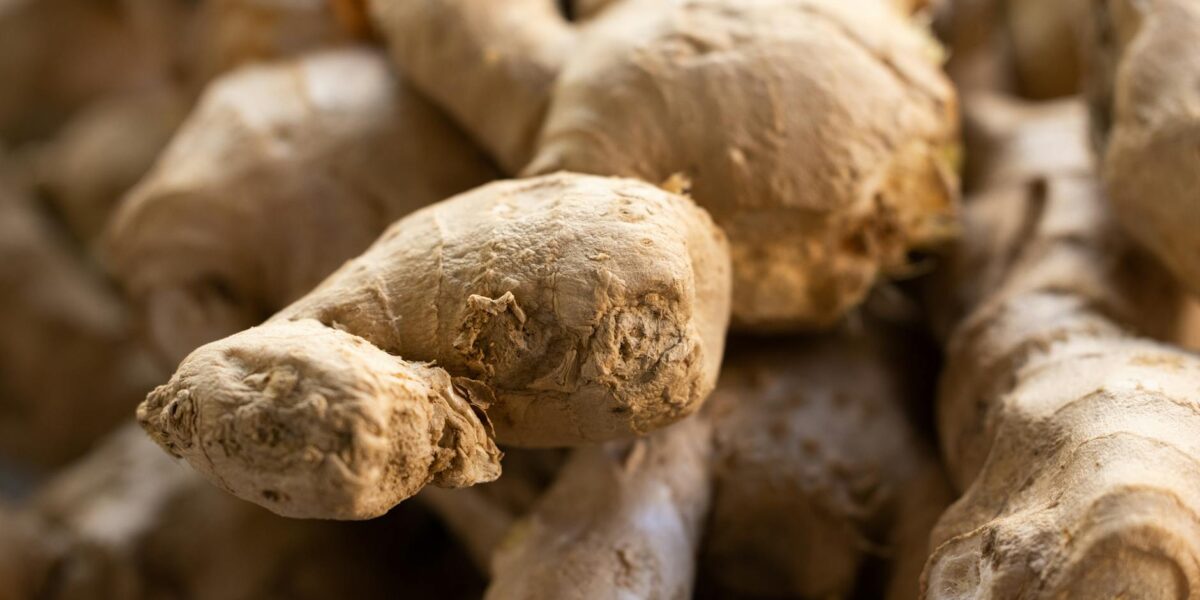
Ginger (Zingiber officinale) is a tropical flowering plant whose underground stem — called a rhizome — is used as a spice and medicine worldwide. Despite being commonly called ”ginger root,” it is technically not a root at all but a modified underground stem that grows horizontally and sends out shoots and roots from its nodes. The flesh ranges from pale yellow to ivory, with a thin, papery skin that can be tan, beige, or light brown depending on the variety and maturity.
Fresh ginger has a complex flavor profile: simultaneously spicy, warm, slightly sweet, and citrusy. The heat comes from gingerol, a bioactive compound that transforms into zingerone (milder and sweeter) when cooked, and shogaol (more pungent) when dried. This chemical transformation is why fresh ginger, dried ground ginger, and pickled ginger all taste distinctly different from one another despite coming from the same plant.
History and Origins of Ginger
Ginger originated in the tropical rainforests of Southeast Asia, most likely in the region that is now southern China and the Maritime Southeast Asian archipelago. Archaeological and botanical evidence suggests that ginger was among the earliest spices cultivated by humans, with records of its use dating back over 5,000 years. Ancient Sanskrit and Chinese texts from around 500 BCE already describe ginger both as a culinary spice and a medicinal remedy.
From its Southeast Asian homeland, ginger traveled along ancient trade routes to India, where it became deeply embedded in Ayurvedic medicine and daily cooking. Indian traders and sailors then brought ginger westward to the Middle East and the Roman Empire. By the 1st century CE, ginger was one of the most traded spices between Asia and Europe, valued almost as highly as black pepper. The Greek physician Dioscorides and the Roman naturalist Pliny the Elder both documented ginger’s medicinal properties.
During the Middle Ages, ginger became one of the most sought-after spices in Europe. Marco Polo documented the ginger trade from India in the 13th century, and by weight, ginger was sometimes valued more highly than gold. Arab merchants controlled much of the ginger supply, and the spice’s high price helped motivate the Age of Exploration. Spanish conquistadors later introduced ginger to the Caribbean and Central America, where it thrived in tropical climates. Today, India is the world’s largest producer of ginger, followed by China, Nepal, Indonesia, and Nigeria.
Varieties of Ginger
Not all ginger is the same. Several varieties and related species are used across Asian cuisines, each with distinct flavor characteristics and culinary applications.
| Variety | Origin | Flavor Profile | Best Uses |
|---|---|---|---|
| Chinese Ginger (Laiwu) | China | Sharp, pungent, fibrous when mature | Stir-fries, soups, sauces, general cooking |
| Japanese Ginger (Kintoki) | Japan | Mild, slightly sweet, less fibrous | Pickled ginger (gari), grated garnish |
| Indian Ginger (Cochin/Maran) | India | Intensely aromatic, lemony undertones | Curries, chai, chutneys, Ayurvedic teas |
| Thai Ginger (Khing) | Thailand | Clean, sharp heat with floral notes | Tom kha gai, curries, stir-fries |
| Young Ginger (Spring Ginger) | Various | Mild, juicy, almost no fiber | Pickled ginger, salads, delicate preparations |
| Galangal | Southeast Asia | Pine-like, sharp, medicinal | Thai and Indonesian curries, soups |
| Turmeric | South Asia | Earthy, slightly bitter, warm | Curries, golden milk, rice dishes |
| Sand Ginger (Kaempferia) | Southern China | Camphor-like, cooling | Cantonese poached chicken, medicinal soups |
Note that galangal and turmeric, while members of the ginger family (Zingiberaceae), are distinct spices with very different flavor profiles. They are not interchangeable with common ginger in recipes.
Fresh Ginger vs. Dried Ginger vs. Pickled Ginger
Understanding the differences between the various forms of ginger is essential for Asian cooking. Each form has a unique flavor profile and application, and they are generally not interchangeable in recipes without adjustments.
Fresh ginger has a bright, zesty heat driven primarily by the compound gingerol. It is approximately 80% water, which gives it a juicy, crisp texture. Fresh ginger is the standard in most Asian stir-fries, soups, marinades, and sauces. It is best when the peel is smooth and taut, and the flesh snaps cleanly when broken.
Dried ground ginger is more concentrated than fresh ginger. During the drying process, gingerol converts to shogaol, a compound that is roughly twice as pungent. This gives dried ginger a sharper, more biting heat with less of the citrusy brightness of fresh. Dried ginger is most commonly used in baking and spice blends rather than in Asian cooking, although it appears in some Indian spice mixes like garam masala.
Pickled ginger (gari) is young ginger that has been thinly sliced and marinated in a solution of rice vinegar, sugar, and salt. The mild acidity and subtle sweetness of gari serve as a palate cleanser between different types of sushi. The naturally pink hue of young pickled ginger comes from the anthocyanins in the rhizome reacting with the vinegar.
Crystallized (candied) ginger is fresh ginger that has been cooked in sugar syrup and coated in granulated sugar. It is popular as a snack and in desserts across many Asian cuisines, particularly in Chinese New Year celebrations.
How to Buy Fresh Ginger
Selecting good fresh ginger is straightforward once you know what to look for. Here are the key tips for buying the best ginger:
- Check the skin: Fresh, high-quality ginger has smooth, taut, shiny skin. Avoid pieces that are wrinkled, shriveled, or have soft spots, as these are signs of age and moisture loss.
- Test the firmness: Good ginger should feel hard and heavy for its size. Press it gently — there should be no give. Soft or spongy ginger has started to deteriorate.
- Smell it: Fresh ginger has a strong, clean, peppery aroma even through the skin. If it smells musty or has no aroma at all, it is past its prime.
- Check for mold: Inspect the cut ends and any joints in the rhizome for blue-green mold. A small amount of mold on the surface can be cut away, but heavily moldy ginger should be discarded.
- Choose the right size: Buy only what you need for the next week or two. Larger, thicker pieces tend to be more mature and fibrous, while smaller, thinner pieces (especially with a pinkish hue at the tips) are younger and milder.
- Where to shop: Asian grocery stores typically have the freshest ginger at the best prices. Supermarket ginger is often older and more expensive. You can also find excellent ginger on Umami Cart.
How to Store Ginger
Proper storage can extend the life of fresh ginger from a few days to several months. Here are the best methods:
Countertop (1–2 weeks): Unpeeled ginger can sit at room temperature for about a week. Keep it in a cool, dry, well-ventilated spot away from direct sunlight. This is fine if you use ginger frequently.
Refrigerator (3–4 weeks): For longer storage, wrap unpeeled ginger tightly in a paper towel, then place it in a zip-lock bag with the air squeezed out. Store it in the crisper drawer of your refrigerator. The paper towel absorbs excess moisture, preventing mold while keeping the ginger hydrated.
Freezer (up to 6 months): Freezing is the best method for long-term storage. You can freeze whole, unpeeled pieces in a zip-lock bag. When you need ginger, grate it directly from frozen — the frozen texture actually makes grating easier and produces a finer result. Alternatively, peel and mince ginger, then freeze it in ice cube trays with a small amount of water for pre-portioned cooking cubes.
In vodka or sherry (2–3 months): Peel ginger and submerge it in a jar of vodka or dry sherry in the refrigerator. The alcohol preserves the ginger and can later be used as a flavoring in cooking or cocktails.
How to Prepare Ginger for Cooking
The way you cut ginger affects both flavor intensity and texture. Here are the most common preparation methods used in Asian cooking:
- Peeling: Use the edge of a spoon to scrape off the thin skin. This is more efficient than a vegetable peeler, especially around the knobby joints. For stir-fries where the ginger will be discarded (like smashed slices), peeling is optional.
- Slicing: Cut thin coins across the grain. Sliced ginger is used in soups, braises, and infusions where you want a moderate ginger flavor that can be easily removed before serving. Essential for ramen broth and dashi stock.
- Smashing: Place a whole piece of peeled ginger under the flat side of a knife and press down firmly. Smashed ginger releases maximum flavor into liquids and is easy to fish out afterward. This technique is fundamental to Chinese red braising.
- Mincing: First slice thinly, then cut into matchsticks, then crosscut into tiny dice. Minced ginger distributes evenly throughout a dish and is standard for stir-frying.
- Grating: Use a Microplane or ceramic ginger grater to produce a fine pulp. Grated ginger releases its juice immediately and blends seamlessly into sauces, dressings, and marinades. This is the preferred method for teriyaki sauce and bulgogi marinades.
- Julienne: Cut into thin matchsticks about 2 inches long. Julienned ginger adds visual appeal and a moderate bite, commonly used as a garnish for steamed fish in Cantonese cuisine.
Ginger in Asian Cuisines: A Regional Guide
Ginger plays a different role in each Asian culinary tradition. Understanding these differences will help you use ginger more effectively in your own cooking.
Chinese cuisine: Ginger is one of the ”holy trinity” of Chinese aromatics alongside garlic and scallions. It appears in virtually every category of Chinese cooking: stir-fries, soups, braises, steamed dishes, and dipping sauces. In Cantonese cooking, ginger and scallion together form a foundational flavor base for steamed fish, poached chicken, and congee. Sichuan cooking uses ginger more sparingly, often alongside doubanjiang and Sichuan peppercorns.
Japanese cuisine: The Japanese use ginger (shoga) in both fresh and pickled forms. Grated ginger (oroshi shoga) is a common condiment served alongside grilled fish, tofu, and tempura. Pickled ginger (gari) is inseparable from sushi culture. Beni shoga (red pickled ginger) is a standard topping for dishes like gyudon (beef bowls), yakisoba, and okonomiyaki. Ginger also features prominently in Japanese curry.
Indian cuisine: India is the world’s largest producer and consumer of ginger. The spice appears in almost every savory dish, from simple dal to elaborate biryani. Ginger-garlic paste — a 1:1 mixture of minced ginger and garlic — is the foundational base for countless curries. Fresh ginger is also essential in chai (spiced tea) and is used in Ayurvedic remedies for digestion and cold relief.
Thai cuisine: Fresh ginger (khing) appears in Thai cooking primarily in stir-fries, soups, and some curry pastes. However, Thai cuisine more frequently uses ginger’s cousin, galangal (kha), in iconic dishes like tom kha gai and green curry. When ginger does appear in Thai dishes, it tends to be sliced or julienned rather than minced.
Korean cuisine: Ginger is a key aromatic in Korean cooking, used in kimchi, bulgogi marinades, and braised dishes. Korean cooking typically uses ginger in smaller quantities than Chinese or Indian cuisines, relying on it as a supporting note rather than a primary flavor. Ginger also plays a role in traditional Korean teas and medicinal drinks like saenggang-cha (ginger tea).
Southeast Asian cuisines: Across Vietnam, Indonesia, Malaysia, and the Philippines, ginger is indispensable. Vietnamese pho broth requires charred ginger for its characteristic smoky depth. Indonesian jamu (traditional herbal drinks) feature ginger prominently. Malaysian and Singaporean cuisines use ginger in everything from laksa to Hainanese chicken rice, where a ginger-scallion sauce is the essential condiment.
Nutritional Benefits of Ginger
Ginger is far more than just a flavoring agent. It has been used in traditional medicine systems across Asia for millennia, and modern scientific research has validated many of its health benefits.
| Nutrient | Amount per 1 tablespoon (6g) fresh ginger | % Daily Value |
|---|---|---|
| Calories | 5 | — |
| Carbohydrates | 1.1 g | <1% |
| Fiber | 0.1 g | <1% |
| Potassium | 25 mg | 1% |
| Magnesium | 2.6 mg | 1% |
| Vitamin C | 0.3 mg | <1% |
| Vitamin B6 | 0.01 mg | 1% |
| Gingerol (active compound) | ~15 mg | — |
While the per-serving nutritional values are modest (you only use small amounts at a time), ginger’s health benefits come primarily from its bioactive compounds:
- Anti-nausea: Multiple meta-analyses published in the British Journal of Anaesthesia and the Journal of the American Board of Family Medicine confirm ginger’s effectiveness against nausea, including morning sickness, motion sickness, and postoperative nausea. Ginger is one of the few natural remedies with strong clinical evidence behind it.
- Anti-inflammatory: Gingerol has been shown to inhibit pro-inflammatory enzymes (COX-2 and LOX), making ginger beneficial for conditions involving chronic inflammation. Studies in the Journal of Medicinal Food demonstrate significant reductions in inflammatory markers with regular ginger consumption.
- Digestive support: Ginger accelerates gastric emptying — the rate at which food moves from the stomach to the small intestine. This can help relieve bloating, indigestion, and stomach discomfort. This is one reason ginger tea is traditionally served after meals in many Asian cultures.
- Blood sugar regulation: A 2015 study in the International Journal of Food Sciences and Nutrition found that regular ginger supplementation reduced fasting blood sugar by 12% in participants with type 2 diabetes.
- Antimicrobial properties: Laboratory research published in Food Microbiology shows that ginger extract can inhibit the growth of harmful bacteria including Salmonella and E. coli, which may partly explain its traditional use as a food preservation agent.
- Antioxidant capacity: Ginger ranks among the highest antioxidant foods according to ORAC (Oxygen Radical Absorbance Capacity) values, helping to protect cells from oxidative damage.
Ginger Substitution Guide
Sometimes you might not have fresh ginger on hand, or a recipe calls for a form of ginger you do not have. Use this substitution table to make accurate swaps.
| If Recipe Calls For | Substitute | Ratio | Notes |
|---|---|---|---|
| 1 tablespoon fresh minced ginger | Ground dried ginger | 1/4 teaspoon | Dried ginger is much more concentrated; flavor will be sharper, less bright |
| 1 tablespoon fresh minced ginger | Ginger paste (tube) | 1 tablespoon | Good 1:1 swap; may contain added salt or oil |
| 1 tablespoon fresh minced ginger | Frozen ginger (grated) | 1 tablespoon | Best substitute; nearly identical to fresh |
| 1 tablespoon fresh minced ginger | Pickled ginger (gari), minced | 1 1/2 tablespoons | Add late in cooking; vinegar tang will alter dish slightly |
| 1 tablespoon fresh minced ginger | Galangal, minced | 1 tablespoon | Different flavor (piney vs. citrusy); works in Thai/SEA dishes only |
| 1 tablespoon fresh minced ginger | Ginger juice | 1 teaspoon | Pure flavor, no fiber; ideal for sauces and dressings |
| 1/4 tsp ground dried ginger | Fresh ginger, minced | 1 tablespoon | Fresh will add moisture; reduce other liquids slightly |
| Pickled ginger (gari) | Fresh young ginger + rice vinegar + sugar | Slice and marinate 1 hour | Quick-pickle method produces acceptable substitute |
Essential Recipes Using Ginger
Ginger is one of the most versatile ingredients in the Asian pantry. Here are key recipes where ginger plays a starring or essential supporting role.
1. Ginger-Scallion Sauce (Chinese)
This is arguably the most important ginger sauce in Chinese cooking. It is the traditional accompaniment to Hainanese chicken rice and Cantonese white-cut chicken. Finely mince 100g of fresh ginger and combine with thinly sliced scallions, a pinch of salt, and a drizzle of neutral oil heated until just smoking. The hot oil blooms the ginger’s aromatics and slightly cooks the scallions. Serve alongside poached chicken, steamed fish, or plain rice. This sauce keeps refrigerated for up to one week.
2. Ginger-Garlic Paste (Indian)
The foundation of countless Indian curries. Combine equal parts peeled fresh ginger and garlic cloves in a food processor with a splash of water or oil. Blend until smooth. This paste is the first ingredient added to hot oil when starting a curry — it is sauteed until fragrant (about 30 seconds) before adding onions, tomatoes, and spices. Make a large batch and freeze in ice cube trays for convenience. Use this paste in your butter chicken, chicken tikka masala, and palak paneer.
3. Pickled Sushi Ginger (Gari) — Japanese
Making your own gari is simple and the result far surpasses store-bought versions. Peel 200g of young ginger and slice paper-thin with a mandoline. Blanch slices in boiling water for 30 seconds, then drain. In a jar, combine half a cup of rice vinegar, 2 tablespoons sugar, and 1 teaspoon salt; stir until dissolved. Add the warm ginger slices and refrigerate for at least 24 hours. The ginger will develop a natural pink hue if using young ginger. Serve with homemade sushi or alongside any Japanese meal.
4. Classic Stir-Fry Aromatics Base (Chinese)
The Chinese aromatic trinity of ginger, garlic, and scallion is the starting point for the majority of Chinese stir-fries. Heat oil in a well-seasoned wok until smoking, then add 1 tablespoon minced ginger, 2 cloves minced garlic, and 2 chopped scallion whites. Stir-fry for 15 to 20 seconds until fragrant — this is the crucial moment that builds the flavor foundation. Then add your protein and vegetables. This base works for everything from beef stir-fry to chow mein.
5. Ginger Tea (Saenggang-cha / Asian Ginger Tea)
Ginger tea is consumed across all of Asia for both pleasure and health. Slice 50g of fresh ginger into thin coins and simmer in 3 cups of water for 15 to 20 minutes. The longer you simmer, the stronger the tea. Strain and sweeten with honey, brown sugar, or jaggery. In Korean tradition (saenggang-cha), the tea is sweetened with honey and garnished with pine nuts and jujube slices. In Indian tradition, ginger is simmered with black tea leaves, cardamom, and milk to make masala chai. This is one of the most effective natural remedies for cold symptoms and sore throats.
6. Vietnamese Pho Broth (Charred Ginger Method)
One of ginger’s most dramatic culinary applications is in Vietnamese pho. A large piece of ginger (about 100g) is charred directly over an open flame or under a broiler until the skin is blackened and blistered. This charring process caramelizes the sugars in the ginger and creates a deep, smoky sweetness that is impossible to achieve with raw ginger. The charred ginger is then smashed and added to the beef bone broth, where it simmers for hours alongside charred onions, star anise, cinnamon, and cloves.
7. Ginger-Soy Dipping Sauce (Pan-Asian)
A versatile dipping sauce that works with gyoza, dumplings, spring rolls, and steamed vegetables. Combine 3 tablespoons soy sauce, 1 tablespoon rice vinegar, 1 teaspoon toasted sesame oil, 1 tablespoon finely grated fresh ginger, and a pinch of sugar. For heat, add chili oil or sriracha. This sauce comes together in 2 minutes and showcases ginger’s ability to brighten and lift umami flavors.
Cooking Tips: Getting the Most Out of Ginger
- Always add ginger to hot oil first. In stir-frying, ginger goes into the wok before other aromatics. The hot oil extracts and distributes its flavor compounds throughout the dish. This technique is called ”exploding the fragrance” (bao xiang) in Chinese cooking. Learn more in our complete stir-fry guide.
- Cut against the grain for less fiber. Like meat, ginger has a grain direction. Cutting perpendicular to the fibers produces less stringy pieces, which is important when the ginger will be eaten rather than discarded.
- Use a Microplane for sauces and marinades. Grating ginger on a Microplane produces a fine pulp that dissolves into liquids, delivering maximum flavor with zero texture. This is the preferred method for teriyaki marinades and salad dressings.
- Smash and discard for infusions. When making soups, broths, or braising liquids, smash ginger and add it whole. This lets you easily remove it before serving, preventing anyone from biting into an unexpectedly sharp piece of ginger.
- Balance ginger with acid and sweetness. Ginger’s heat can be modulated by pairing it with rice vinegar (acid) or sugar/honey (sweetness). This principle underlies many Asian sauces and marinades.
- Don’t burn it. Minced ginger can go from fragrant to bitter in seconds. When stir-frying, keep the ginger moving and add your next ingredients (protein or vegetables) within 15 to 30 seconds of adding the ginger to the wok.
Ginger in Traditional Medicine
Ginger has been a medicine long before it was a kitchen staple. In Traditional Chinese Medicine (TCM), ginger is classified as a ”warm” food that dispels cold, promotes circulation, and harmonizes the stomach. Fresh ginger (sheng jiang) and dried ginger (gan jiang) are treated as two separate medicines in the Chinese pharmacopoeia, each with distinct properties. Fresh ginger is used to treat wind-cold conditions (early-stage colds with chills and runny nose), while dried ginger is reserved for deeper internal cold conditions.
In Ayurvedic medicine, ginger is called ”vishwabhesaj” — meaning ”universal medicine.” It is prescribed for digestive disorders, respiratory complaints, and joint pain. A common Ayurvedic practice is drinking warm ginger water first thing in the morning to kindle the digestive fire (agni).
In Southeast Asian traditional medicine, ginger appears in Indonesian jamu drinks — herbal tonics that combine ginger with turmeric, tamarind, and honey. These drinks have experienced a modern resurgence, with ginger shots and ginger wellness drinks becoming popular in health-food markets worldwide.
Frequently Asked Questions About Ginger
Do I need to peel ginger before cooking?
Not always. The skin is edible but can be slightly tough and bitter. For stir-fries and dishes where ginger is minced or grated, peeling is recommended. For soups, broths, and braises where the ginger will be strained out or discarded, you can skip peeling. Simply wash the ginger well and smash or slice it with the skin on.
Can I substitute ground ginger for fresh ginger?
You can, but the flavor will be noticeably different. Ground ginger is more pungent and lacks the bright, citrusy notes of fresh. Use 1/4 teaspoon ground ginger for every 1 tablespoon of fresh minced ginger. Ground ginger works better in simmered dishes (curries, stews) than in stir-fries, where fresh ginger’s aromatic brightness is essential.
What is the blue-green ring inside my ginger?
A blue or blue-green tinge inside fresh ginger is caused by anthocyanins — natural plant pigments that are pH-sensitive. This is not mold and is perfectly safe to eat. It typically occurs in ginger that has been stored at low temperatures. The flavor is not affected.
How much ginger should I use per dish?
As a general guideline: 1 tablespoon of minced ginger (about a 1-inch piece) per dish serves 2 to 4 people. Increase to 2 tablespoons for ginger-forward dishes like ginger-scallion sauce. For soups and broths, use a 2 to 3 inch piece, smashed. Start conservatively — you can always add more, but you cannot take it out.
Is ginger safe during pregnancy?
Moderate culinary amounts of ginger (up to 1 gram per day of fresh ginger) are generally considered safe during pregnancy and have been studied for their anti-nausea effects. However, high supplemental doses should be avoided. Always consult your healthcare provider for personalized guidance.
What is the difference between ginger and galangal?
Ginger and galangal are related plants from the same family (Zingiberaceae), but they taste quite different. Ginger is warm, peppery, and citrusy. Galangal is sharper, more piney, and slightly medicinal. They are not interchangeable in most recipes. Galangal is essential in Thai curries and soups (tom kha gai), while ginger dominates in Chinese, Japanese, Indian, and Korean cooking.
Can I grow ginger at home?
Yes. Ginger grows well in warm, humid conditions and can be grown in containers indoors. Plant a piece of fresh ginger (with visible growth buds) about 2 inches deep in well-draining soil. Keep it warm (70 to 80 degrees Fahrenheit), moist, and in indirect light. Ginger takes 8 to 10 months to mature, but you can harvest young ginger earlier for a milder flavor. It grows well in USDA zones 9 to 12 outdoors, or in pots anywhere with adequate warmth.
Why does my ginger taste unusually fibrous?
Fibrousness increases with age. Mature ginger (harvested after 10 or more months) has tough, stringy fibers running through the flesh. For less fibrous ginger, seek out young ginger (also called spring ginger or baby ginger), which has a pinkish hue and thin, almost translucent skin. If you are stuck with fibrous ginger, grate it on a Microplane — the grater will hold the fibers back while letting the juice and pulp pass through.
Where to Buy Ginger Online
Fresh ginger is available at virtually every grocery store, but quality varies significantly. For the best selection of fresh ginger and ginger-based products, including pickled ginger, ginger paste, crystallized ginger, and ground ginger, visit Umami Cart. Asian grocery stores, both online and in-person, typically stock the freshest ginger at better prices than conventional supermarkets. When shopping online, look for vendors who ship ginger in breathable packaging to prevent moisture buildup during transit.
Ginger is the kind of ingredient that quietly makes everything better. It may not always be the star of the plate, but take it away and you will immediately notice its absence. Stock your kitchen with fresh ginger, learn the basic cuts, and this ancient rhizome will reward you with brighter, more vibrant Asian cooking every single day.

Mei Lin Chen
Mei Lin Chen is an Asian food writer and recipe developer. Melbourne-raised and London-based, she has spent over a decade exploring the rice paddies, hawker stalls, and home kitchens of South-East and East Asia. Her recipes balance traditional technique with everyday practicality.