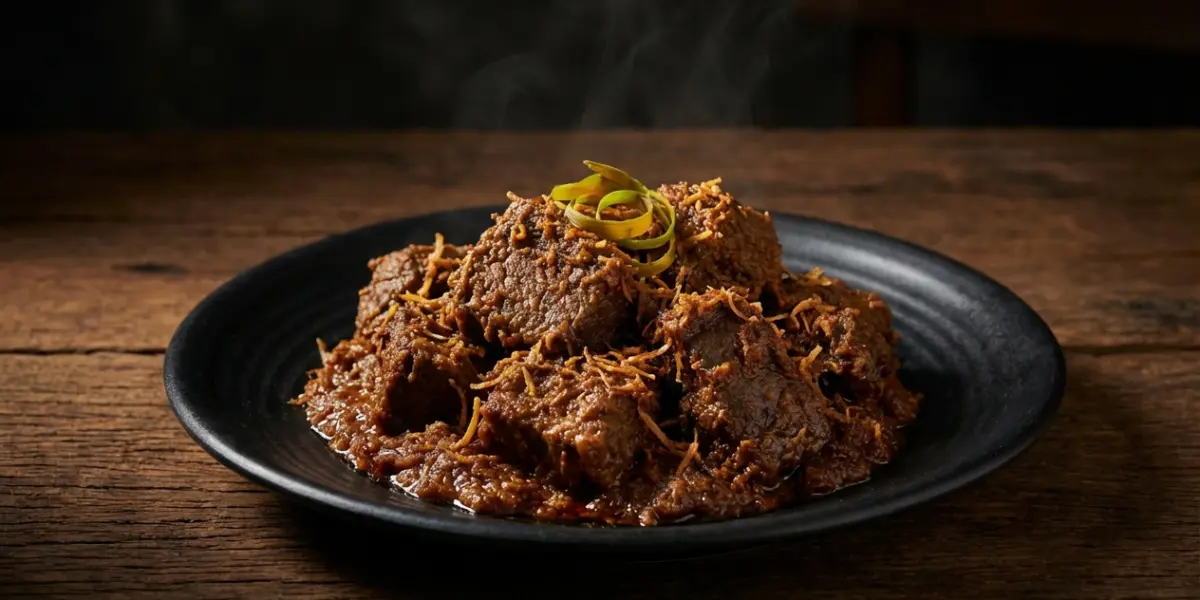
Rendang is one of the most celebrated dishes in the Malay world — a slow-cooked dry curry of exceptional depth, made by simmering meat in spiced coconut milk until every drop of liquid has evaporated and the meat has absorbed the intensely concentrated sauce. The result is dark, tender, and complex: at once rich and spicy, sweet and earthy, with a texture unlike any other curry on earth. It is a dish built for patience, and it rewards patience generously.
What Is Rendang?
Rendang originates with the Minangkabau people of West Sumatra, Indonesia, from whom it migrated across the Straits of Malacca into the Malay Peninsula centuries ago. Today it is as integral to Malaysian cuisine as it is to Indonesian, and both nations claim it with equal passion — a dispute that has generated more culinary argument than almost any other dish in the region. In Malaysia, rendang is central to Hari Raya celebrations (Eid), typically prepared in large quantities days in advance. The dish’s ability to be cooked ahead and kept without refrigeration for several days — the result of its low moisture content and antimicrobial spices — made it historically important as a travelling or celebratory food.
True rendang is a dry curry — rendang kering — in which the cooking liquid is deliberately cooked away over the course of several hours until the meat fries gently in its own released fats and the remaining spice paste. This distinguishes it from wetter curry-style dishes. There is also a wetter intermediate stage called rendang basah or kalio, where some liquid remains; this is faster to make and milder in flavour. Authentic rendang kering goes all the way to near-dryness, which is where its extraordinary flavour concentration comes from.
The spice base — the rempah — for rendang is among the most complex in Malaysian cooking. Lemongrass, galangal, fresh turmeric, chilies, garlic, shallots, and toasted coconut (kerisik) all play essential roles. Kerisik, made by toasting grated coconut until golden and then grinding it to a paste, is what gives Malaysian rendang its distinctive nutty, slightly smoky undertone that no other ingredient can replicate.
Ingredients
Serves 4 to 6
For the Rempah (Spice Paste)
- 8 dried red chilies, soaked in hot water, seeds removed
- 6 fresh red chilies
- 10 shallots, roughly chopped
- 6 cloves garlic
- 4cm (1 1/2 inch) piece galangal, roughly chopped
- 3cm (1 1/4 inch) piece fresh ginger, roughly chopped
- 2cm (3/4 inch) piece fresh turmeric (or 1 teaspoon ground turmeric)
- 4 stalks lemongrass, white part only, sliced thinly
For the Rendang
- 1kg (2 lb 3 oz) beef chuck or short rib, cut into 5cm (2 inch) cubes
- 400ml (1 2/3 cups) full-fat coconut milk
- 200ml (3/4 cup) water
- 4 stalks lemongrass, bruised and tied into a knot
- 6 kaffir lime leaves (daun limau purut), centre rib removed, sliced finely
- 3 turmeric leaves (daun kunyit), rolled and sliced finely (optional but aromatic)
- 2 tablespoons neutral oil
- 1 teaspoon salt, or to taste
- 2 teaspoons sugar
For the Kerisik (Toasted Coconut Paste)
- 100g (1 cup) freshly grated coconut or desiccated coconut
Note on key ingredients: Beef chuck (or short rib with bone removed) is the best cut for rendang — it has enough fat and connective tissue to remain moist through the very long cooking time. Lean cuts like topside become dry and stringy. Kaffir lime leaves are available fresh or frozen at Asian grocery stores and are essential for rendang’s characteristic citrusy fragrance; dried leaves have very little flavour and are not a suitable substitute. Fresh or frozen grated coconut makes better kerisik than desiccated, but desiccated works well. Galangal is again non-negotiable here — its piney, almost medicinal quality is central to the dish’s profile.
How to Make Rendang
- Make the kerisik. Place the grated or desiccated coconut in a dry wok or heavy skillet over medium heat. Toast, stirring constantly, for 8 to 12 minutes until deep golden brown and fragrant. The coconut should be the colour of peanut butter — darker than golden but not burnt. Transfer to a mortar or small food processor and grind to a paste. This releases the coconut oil and creates a thick, slightly sticky paste. Set aside.
- Make the rempah. Drain the soaked dried chilies and combine all rempah ingredients in a blender with 3 to 4 tablespoons of water. Blend until very smooth. This paste should be deeply fragrant and fairly thick.
- Fry the rempah. Heat the oil in a large, heavy-bottomed wok or pot over medium heat. Add the rempah and fry, stirring constantly, for 12 to 15 minutes until darkened, fragrant, and the oil starts to separate around the edges.
- Add the meat. Add the beef cubes to the wok and stir to coat thoroughly with the rempah. Cook, stirring occasionally, for 5 minutes until the meat is sealed on the outside.
- Add the coconut milk and aromatics. Pour in the coconut milk and water. Add the bruised lemongrass stalks, kaffir lime leaves, and turmeric leaves if using. Stir to combine. Bring to a gentle simmer.
- Start the long cook. Cook uncovered over medium-low heat, stirring every 10 to 15 minutes, for approximately 1 hour and 30 minutes. During this time the liquid will gradually reduce and thicken. The colour will deepen from pale orange to a dark reddish-brown.
- Add the kerisik. Once the liquid has reduced by about half and the sauce is noticeably thicker, add the kerisik paste and stir it through. Season with salt and sugar. Continue cooking.
- Continue to dryness. Cook for a further 30 to 60 minutes, stirring more frequently as the liquid reduces further. As the sauce becomes very thick, the heat under the pot should be very low to prevent burning. In the final stage, the meat will fry gently in its own fat and the residual coconut oil. The rendang is ready when the sauce is dark, dry, and clinging to the meat — no pooling liquid remains. The meat should be very tender and coated in a dark, almost glossy spice crust.
- Taste and adjust. Check for salt and sugar. The finished rendang should be intensely savoury with background sweetness, a deep, slow heat from the chilies, and a complex aromatic quality from the lemongrass and kaffir lime. Remove the whole lemongrass stalks before serving.
Tips for the Best Rendang
- Do not rush the drying stage. The transformation from a curry-like dish to true rendang happens in the final 30 to 45 minutes when most cooks are tempted to stop. This is when the deepest flavours develop as the coconut oil fries the spice paste into the meat. Stopping early gives you kalio (wet rendang) — delicious, but not the same thing.
- Use a heavy pot for the long cook. A thin-bottomed pot will scorch the rendang during the drying stage. A Dutch oven or heavy cast-iron pot distributes heat evenly and gives you more control over the final stages.
- Toast the kerisik until genuinely dark. Under-toasted coconut gives a raw, sweet taste. You want it deeply golden — at the edge of brown — for the nutty, almost smoky quality that defines Malaysian rendang.
- Make it 1 to 2 days ahead. Rendang is one of the rare dishes that tastes definitively better the next day. The spices continue to penetrate the meat and the flavours integrate dramatically. Many Malaysian cooks prepare it 2 days before Hari Raya specifically for this reason.
- Use beef with fat marbling. Chuck, short rib, or brisket all work. Lean beef will become dry and tough through the extended cooking. The fat is what keeps the meat moist and adds body to the finished sauce.
Variations
Chicken Rendang (Rendang Ayam): Uses bone-in chicken pieces (thighs and drumsticks work best) and requires a significantly shorter cooking time — approximately 45 minutes total since chicken cooks much faster than beef. The rempah and aromatics are identical. Chicken rendang is slightly lighter in flavour and is popular for everyday cooking rather than special occasions.
Lamb Rendang: Particularly common in Indian-Muslim (Mamak) cooking in Malaysia, lamb shoulder rendang is very rich and slightly more gamey than beef. The addition of whole spices — cinnamon stick, star anise, cardamom pods — is common in lamb versions, reflecting the Indian culinary influence. Cook time is similar to beef.
Rendang Tok (Perak-style): A regional variation from Perak state that uses even more kerisik than standard rendang and cooks for a longer time, resulting in a drier, almost crumbling texture and an even more concentrated flavour. Some versions add coconut sugar (gula melaka) for a subtle caramel sweetness.
What to Serve With Rendang
- Nasi lemak: The classic and most celebrated pairing — coconut rice with rendang is the definitive Malaysian feast combination, served at Hari Raya celebrations and upscale restaurants alike.
- Ketupat or nasi impit (compressed rice): Diamond-shaped packets of compressed rice cooked in coconut leaves, traditional for Hari Raya. The bland, dense rice is the perfect vehicle for the intensely spiced rendang sauce.
- Roti canai: The flaky flatbread tears beautifully into pieces for scooping up rendang sauce — a popular pairing at mamak stalls where rendang is served as a curry-style accompaniment.
- Acar (pickled vegetables): A sharp, sweet-sour pickle cuts through the richness of rendang and provides necessary balance on the plate.
Storage and Reheating
Rendang keeps exceptionally well. Refrigerated in an airtight container, it will last 5 to 7 days — longer than most cooked meat dishes because the reduced moisture and spices act as natural preservatives. At room temperature, traditional rendang kering can be kept for 2 to 3 days in a cool place, though refrigeration is recommended outside of tropical conditions where this practice evolved.
Rendang freezes beautifully for up to 3 months. Freeze in portions and thaw overnight in the refrigerator. Reheat gently in a covered pan over low heat with a splash of water to prevent sticking, or microwave at medium power. The flavour after freezing and reheating is, if anything, even more complex than fresh.