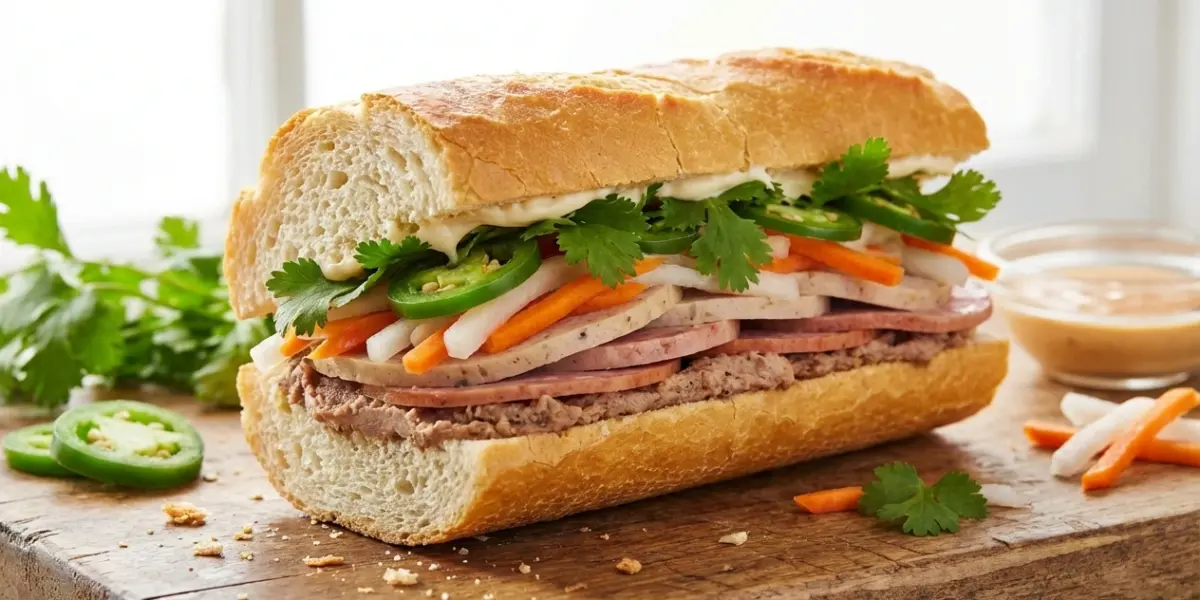
Banh mi is one of the great sandwiches of the world — a crispy French baguette filled with a carefully layered combination of savory meats, rich pâté, pickled vegetables, fresh herbs, and sliced chilies that together create a sandwich of extraordinary contrast and complexity. Born from the French colonial period in Vietnam, banh mi became entirely its own thing and is now one of Vietnam’s most iconic street foods.
What Is Banh Mi?
The word ”banh mi” simply means bread in Vietnamese — specifically the French-influenced baguette that arrived in Vietnam during the 19th century colonial period. Vietnamese bakers adapted the baguette to local conditions and ingredients, creating a loaf with a thinner, more shatteringly crispy crust and a lighter, airier interior than its French counterpart. This adaptation was not incidental — the different ratio of rice flour to wheat flour used in Vietnamese baguettes produces a loaf that shatters when you bite it, spraying crumbs in every direction, and creates a different structural texture that holds the fillings in a distinct way.
What makes banh mi culturally Vietnamese is everything that goes inside the bread. The combination of cold cuts or grilled meats with pork liver pâté, mayonnaise, pickled daikon and carrots, fresh cucumber, cilantro, and sliced chilies is a Vietnamese invention rooted in the pragmatic genius of street food: maximum flavor from affordable ingredients assembled at speed. There is no single canonical banh mi — the sandwich varies by city, by vendor, and by the time of day you buy it. But the structural logic remains constant: fat from the pâté and mayo, protein from the meat, acid and crunch from the pickles, freshness from the herbs, and heat from the chilies.
The banh mi covered in this recipe is the most universally loved version: banh mi thit nguoi, featuring Vietnamese cold cuts and pâté. It includes detailed instructions for building every component from scratch, as well as substitution guidance for those who cannot source traditional Vietnamese charcuterie.
Ingredients
For the Pickled Daikon and Carrot (Do Chua)
- 150g (5 oz) daikon radish, peeled and cut into thin matchsticks (about 5cm / 2 inches long)
- 150g (5 oz) carrots, peeled and cut into thin matchsticks
- 1 teaspoon salt
- 2 teaspoons sugar (for drawing out moisture)
- 120ml (½ cup) rice vinegar or white vinegar
- 120ml (½ cup) warm water
- 2 tablespoons sugar (for the brine)
- 1 teaspoon salt (for the brine)
For the Sandwich (per 2 sandwiches)
- 2 Vietnamese-style baguettes (or 2 short sections of a light French baguette — see notes)
- 60g (2 oz) pork liver pâté (store-bought or homemade — Vietnamese brands like Hoa Moc Lan are excellent)
- 2 tablespoons Vietnamese mayonnaise (Kewpie brand works well, or any Japanese-style mayo)
- 100g (3.5 oz) Vietnamese-style pork cold cuts, thinly sliced (cha lua — pork roll — is the most traditional, available at Asian grocery stores)
- 60g (2 oz) Vietnamese ham or roast pork, thinly sliced
- ½ cucumber, thinly sliced lengthwise into strips
- Generous handful of fresh cilantro (coriander) leaves and thin stems
- 2–4 fresh red or green chilies (Thai chilies or jalapeño), thinly sliced
- Soy sauce or Maggi seasoning sauce, a few drops (optional but traditional)
Substitution notes: If cha lua (Vietnamese pork roll) is unavailable, use thinly sliced deli ham, mortadella, or roast pork. The pâté is harder to substitute — it provides a crucial fatty, savory base layer. If Vietnamese-brand liver pâté is unavailable, use any good-quality pork liver pâté. For a non-pork version, chicken liver pâté works well. For a vegetarian banh mi, use pan-fried tofu marinated in soy sauce, lemongrass, and garlic in place of the meats, and substitute mushroom pâté.
How to Make Banh Mi
Make the Pickled Daikon and Carrot (Do Chua) — at least 1 hour ahead, ideally overnight
- Salt the vegetables: Toss the daikon and carrot matchsticks with 1 teaspoon salt and 2 teaspoons sugar. Massage gently and set aside for 15 minutes. The vegetables will release water and soften slightly — this is called a quick-wilt step that improves the texture of the final pickle.
- Rinse and dry: Rinse the vegetables thoroughly under cold water to remove the salt, then squeeze out as much moisture as possible. This prevents the pickle from becoming too salty and diluting the brine.
- Make the brine: Combine the rice vinegar, warm water, 2 tablespoons sugar, and 1 teaspoon salt. Stir until the sugar and salt dissolve completely.
- Pickle: Pack the vegetables tightly into a clean jar or container and pour the brine over them. Make sure the vegetables are submerged. Leave at room temperature for at least 1 hour before using — overnight in the refrigerator is ideal and produces a more deeply pickled, tangy result.
Assemble the Banh Mi
- Toast the bread: This step is non-negotiable. Place the baguettes in a preheated 200°C (390°F) oven for 3–4 minutes, or in a toaster oven, until the crust is crispy and shattering. The contrast between the crackling crust and the cool fillings is essential to banh mi.
- Split and hollow slightly: While still warm, split the baguette lengthwise with a bread knife, cutting about three-quarters of the way through (keeping one side as a hinge). Pull out a small amount of the inner crumb from both cut sides to create space for the fillings. This step is important — it prevents the sandwich from being overstuffed and structurally unstable.
- Spread the pâté: Spread a generous layer of pork liver pâté on the inner bottom of the baguette. This is the foundation layer — do not be stingy. The pâté provides fat, umami, and a savory richness that is the defining flavor of a proper banh mi.
- Add the mayonnaise: Spread Japanese-style mayonnaise on the inner top of the baguette. Kewpie mayo has a slightly richer, more egg-forward flavor than American mayonnaise that works better here.
- Layer the cold cuts: Lay the cha lua (pork roll) slices and Vietnamese ham over the pâté layer, overlapping slightly. Arrange neatly — a well-built banh mi has an even distribution of fillings throughout its length.
- Add cucumber: Place the cucumber strips lengthwise over the meats. They provide cool, crisp freshness and structural support for the toppings above.
- Add the pickled vegetables: Pile a generous amount of do chua on top of the cucumber. Do not hold back — the pickles are the acidic counterpoint to the fat of the pâté and mayo, and the sandwich is flat without enough of them.
- Add cilantro: Lay a generous amount of fresh cilantro leaves and thin stems over everything. In Vietnam, cilantro is used with abandon in banh mi — it is not a garnish but a key ingredient. If you dislike cilantro, you can omit it, but the sandwich will taste less Vietnamese.
- Add chilies: Distribute the chili slices evenly. For a traditional street-food level of heat, use 3–4 thin slices of Thai chili per sandwich. For a milder version, use jalapeño slices.
- Add Maggi seasoning (optional): A few drops of Maggi seasoning sauce or soy sauce across the fillings adds a final hit of savory depth. This is a very traditional addition in Vietnam.
- Close and press gently: Close the sandwich and press down very gently to compress. Serve immediately — banh mi should be eaten within minutes of assembly, while the bread is still crispy.
Tips for the Best Banh Mi
- The bread matters more than anything. A banh mi made with a light, crispy Vietnamese-style baguette and a banh mi made with a soft deli roll are completely different eating experiences. Seek out Asian bakeries that sell Vietnamese bread, or use the lightest, crispiest baguette you can find. The crust must shatter — a chewy crust changes the entire character of the sandwich.
- Make the pickles ahead. Do chua pickled overnight is incomparably better than a one-hour pickle. The extra time produces a more complex, tangy pickle and the flavors mellow from sharp to balanced. Pickles keep in the refrigerator for up to two weeks.
- Do not skip the pâté. Many home recipes omit the pâté or treat it as optional. It is not. The pâté provides the sandwich’s fatty, savory backbone — without it, the filling is just meat and vegetables in bread. It is the element that makes banh mi taste like banh mi.
- Eat immediately. Banh mi is an eat-now sandwich. The moment the crispy bread absorbs moisture from the fillings, it loses its crunch and the structural contrast that makes the experience distinctive. Assemble just before serving.
- Temperature contrast is part of the dish. The warm, crackling bread against cold pickles, cool cucumber, and room-temperature meats is intentional. Do not let the bread cool before assembling.
Variations
Banh Mi Thit Nuong (Grilled Pork Banh Mi)
Marinate 300g (10 oz) thinly sliced pork shoulder in 2 tablespoons fish sauce, 1 tablespoon honey, 2 minced garlic cloves, 1 tablespoon lemongrass (minced), and ½ teaspoon white pepper for at least 30 minutes. Grill or pan-fry over high heat until caramelized. Use in place of or alongside the cold cuts. The grilled pork version is arguably the most popular banh mi style in southern Vietnam.
Banh Mi Trung (Egg Banh Mi)
In many Vietnamese cities, morning banh mi vendors sell a version with fried or scrambled eggs, spring onions, and soy sauce instead of cold cuts. Fry 2 eggs in a thin layer of oil until the edges are lacy and crisp, season with soy sauce and white pepper, and use in place of the cold cuts. A tablespoon of sriracha adds extra life.
Banh Mi Chay (Vegetarian)
Pan-fry slices of extra-firm tofu marinated in soy sauce, lemongrass, garlic, and a touch of sugar until caramelized. Use mushroom pâté or avocado in place of liver pâté. All other components remain the same.
What to Serve With Banh Mi
- Pho or bun bo Hue soup: A bowl of Vietnamese noodle soup alongside a banh mi makes the quintessential Vietnamese street meal.
- Iced Vietnamese coffee (ca phe sua da): Strong drip coffee with sweetened condensed milk over ice is the classic banh mi accompaniment at street stalls throughout Vietnam.
- Fresh spring rolls (goi cuon): Light, fresh spring rolls provide a cool, herb-forward counterpoint to the rich sandwich.
- Nem nuong (grilled pork skewers): For a spread, add grilled pork skewers alongside the banh mi for a street-food feast.
Storage and Reheating
Banh mi is best eaten immediately and does not store well as a complete assembled sandwich — the bread softens within 30 minutes of assembly. The components, however, store separately and beautifully. Do chua pickles keep refrigerated for up to 2 weeks in their brine. Pâté keeps refrigerated for up to 1 week (follow manufacturer’s guidance for store-bought). Cold cuts keep refrigerated for 3–5 days. To revive stale baguette, sprinkle with a few drops of water and reheat in a 200°C (390°F) oven for 3 minutes — this re-crisps the crust effectively. Store all components separately and assemble to order.