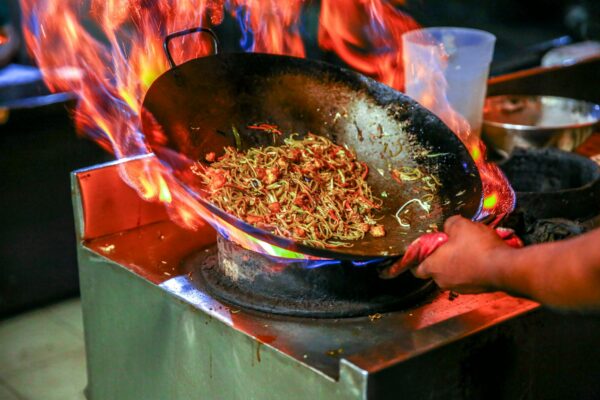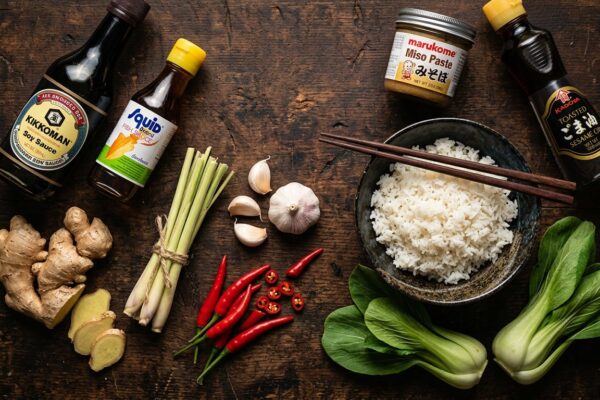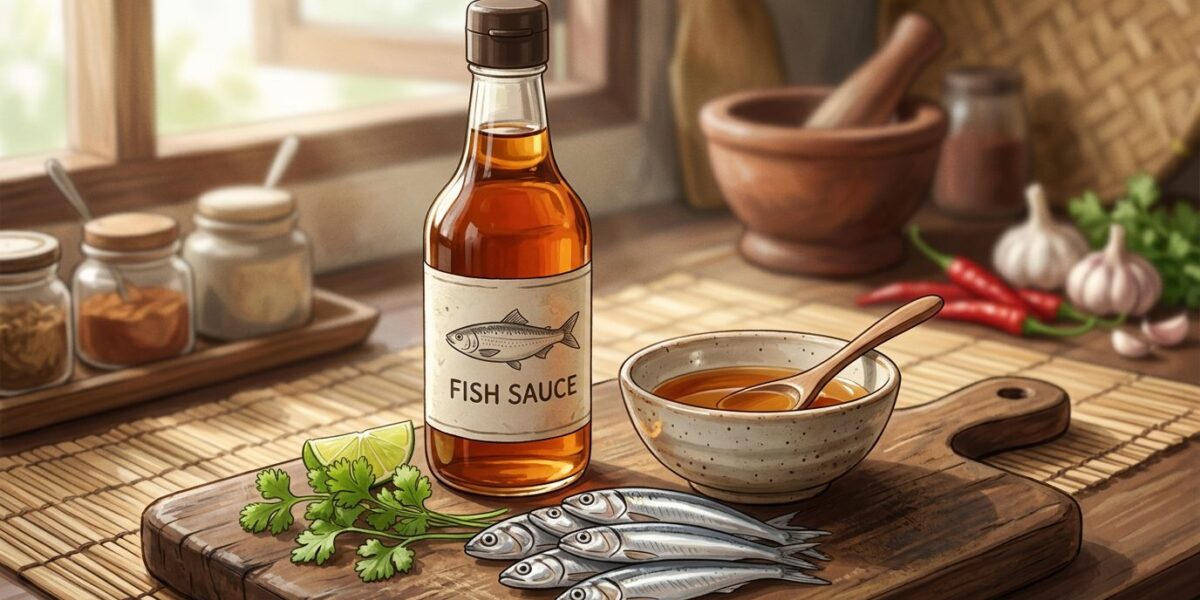
Fish sauce has been the silent driver of Southeast Asian kitchens for centuries, delivering a depth of flavor that few other condiments can match. We find it in everything from street-side noodle bowls to elegant banquet dishes, and its influence stretches across cultures and centuries.
Key Takeaways
- A single tablespoon supplies 1,250–1,560 mg of sodium, covering 55–68% of the daily value.
- The nitrogen rating (°N) gauges fermentation depth; higher numbers mean richer umami.
- Thai, Vietnamese, Filipino, and Korean varieties each carry a distinct fingerprint despite a shared base.
- Red Boat 40°N stands out as a premium choice, while Tiparos offers a reliable everyday option.
- Proper storage — cool, dark, and sealed — keeps the sauce vibrant for years.
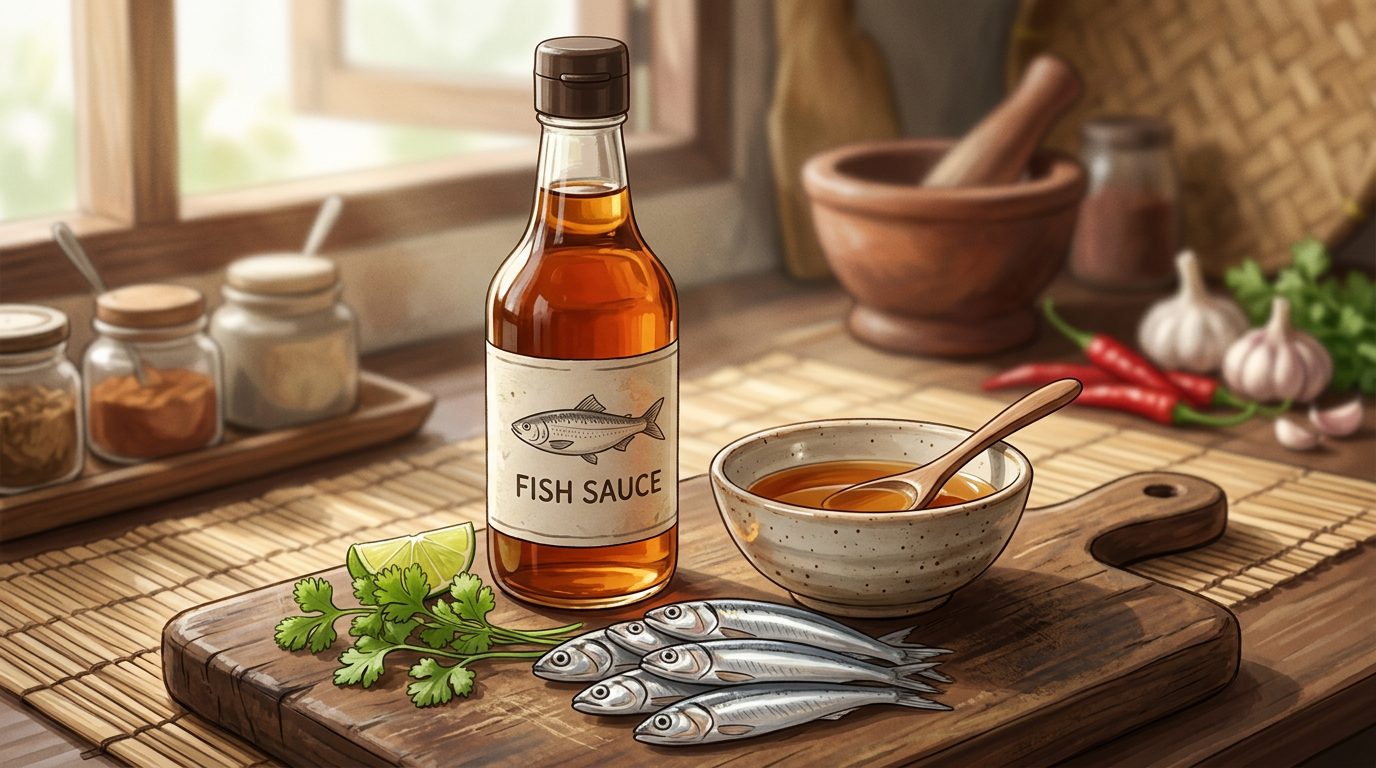
What Is Fish Sauce?
How Fish Sauce Is Made
We begin with small anchovies or other oily fish, layered with sea salt in large wooden vats or clay urns. Over months, the natural enzymes within the fish break down proteins into amino acids, creating a dark, fragrant liquid. The process is like a slow-burning reduction — time, not heat, extracts the essence. Fermentation periods range from six months for lighter styles to twenty-four months for the most prized premium varieties.
Once fermentation is complete, the liquid is drained from the vats, filtered to remove solids, and sometimes sun-dried to concentrate flavors before bottling. The result is a golden-to-deep-amber condiment that delivers salt, umami, and a subtle sweetness in one pour. Nothing else we know replicates this combination so efficiently.
The method traces back thousands of years across coastal Asia — and interestingly, ancient Rome produced an almost identical condiment called garum, made from fermented fish entrails, which was traded across the empire. That same principle of patient fermentation connects a Roman legionary’s table to a Vietnamese grandmother’s kitchen.
The Role of Salt and Anchovies
Salt performs two jobs simultaneously: it preserves the fish and it controls which microbes thrive during fermentation. The optimal salt-to-fish ratio in traditional recipes is typically 3:10 by weight — when that ratio shifts by even five percent, the final product can veer from mellow to sharply briny. Anchovies are the fish of choice in most Southeast Asian traditions because their high glutamate content provides the umami backbone the sauce is famous for.
Different regions use different fish depending on what the coastline provides. Philippine patis sometimes incorporates small sardines alongside anchovies, while Korean aekjeot may include tiny shrimp or squid alongside fish. Each of these additions subtly shifts the mineral profile and sweetness of the finished sauce.
The salt also prevents the growth of harmful bacteria during the long fermentation window. This is why traditionally produced fish sauce, despite containing fermented animal protein, is considered shelf-stable at room temperature until opened — the salinity makes it inhospitable to pathogens that would spoil other fermented products far sooner.
What the Nitrogen Rating (°N) Means
The °N (degrees nitrogen) rating measures the concentration of soluble nitrogen in the sauce — essentially how much protein has broken down into free amino acids during fermentation. A higher °N reading signals a longer, more intensive fermentation that produces a deeper, more rounded umami flavor. A standard commercial sauce might sit at 25–30°N, while a premium bottle like Red Boat 40°N has undergone significantly more protein breakdown.
Think of it as the proof rating on spirits: just as a higher ABV tells you how concentrated the alcohol is, a higher °N tells you how concentrated the savory compounds are. The difference between a 25°N and a 40°N sauce is immediately noticeable — the higher-rated sauce coats the palate and lingers, where the lower-rated version is sharper and evaporates more quickly.
For everyday cooking — stir-fries, marinades, dipping sauces — a 30°N sauce performs well and costs considerably less. Where the high °N rating makes a genuine difference is in applications where fish sauce is used raw or as a finishing condiment, such as drizzled over grilled seafood or stirred into a cold noodle salad at the last moment.
Fish Sauce by Country
The same core idea — fish, salt, time — produces four meaningfully different condiments across the region. Understanding what distinguishes each one helps you choose the right bottle for each dish in your kitchen. Browse our full Asian cooking ingredients guide to see how fish sauce sits within the broader pantry of Southeast and East Asian cooking.
Thai Nam Pla
Thai nam pla (น้ำปลา, literally ”fish water”) is typically brewed with Gulf of Thailand anchovies and a 15% salt solution, fermenting for twelve to eighteen months in large earthenware jars or stainless steel vats in modern facilities. The resulting sauce is bright amber, with a flavor that is cleaner and slightly sweeter than Vietnamese nuoc mam — assertive enough to season a dish but without the deep caramel undertone of longer-aged varieties.
Nam pla is the default seasoning in Thai cooking the way soy sauce is in Chinese cooking: it goes into nearly everything. A proper Pad Thai recipe uses it in the sauce base, som tam (green papaya salad) relies on it for its salty-sour dressing, and Thai soups like tom yum use it to balance the lemongrass and lime. It is also commonly served as a condiment alongside fresh bird’s eye chillies and sliced garlic.
Most nam pla available in Western supermarkets — Tiparos, Squid Brand, Pantai — is Thai in origin. These are accessible, consistent products that work well across the full spectrum of Southeast Asian cooking, not just Thai dishes specifically.
Vietnamese Nuoc Mam
Vietnamese nuoc mam (nước mắm) is the sauce that most connoisseurs cite when they want to illustrate what fish sauce can become at its finest. Phu Quoc island, off the southern coast of Vietnam, produces a GI-protected version that ferments for twelve to eighteen months — sometimes up to two years — in traditional wooden barrels. The extended aging develops a caramel-like depth and a color that tips toward dark mahogany.
The flavor profile is richer and rounder than its Thai counterpart, with a lower sharpness on the nose despite being similarly saline. Vietnamese cooks use it as the base for nuoc cham — the dipping sauce of lime juice, sugar, garlic, and chili that appears on Vietnamese tables as reliably as salt and pepper appear on Western ones. It is also integral to bun cha, bun bo Hue, and as a finishing sauce over broken rice.
Red Boat, the premium brand that brought Vietnamese fish sauce to international attention, is produced on Phu Quoc and carries that 40°N nitrogen rating that sets it apart from mass-produced alternatives. Its success in the Western market has prompted a broader appreciation for the regional differences between fish sauces that most Western consumers previously treated as interchangeable.
Filipino Patis
Filipino patis is made from a blend of small anchovies and sardines, with a shorter fermentation window of six to eight months. The resulting sauce is lighter in body, milder in aroma, and carries a slight sweetness that distinguishes it from both Thai and Vietnamese styles. This shorter production timeline means patis is generally more affordable and has a subtler impact on dishes.
In Filipino cooking, patis serves as both a cooking ingredient and a table condiment. It is frequently drizzled over garlic fried rice (sinangag), used as the primary seasoning in tinola (chicken ginger soup), and served alongside calamansi and chili as a dipping sauce for fried or grilled dishes. Many Filipino households keep a small bottle on the dining table in the same way others keep soy sauce.
Because its flavor is less dominant than Thai or Vietnamese versions, patis is a good entry point for cooks who are new to fish sauce and want to introduce the ingredient gradually. It can stand in for fish sauce in most Thai and Vietnamese recipes, though you may want to add a slightly larger quantity to compensate for the lighter flavor.
Korean Aekjeot (액젓)
Korean aekjeot (액젓, literally ”liquid jeot”) is made by salting and fermenting small fish — typically anchovies (myeolchi aekjeot, 멸치액젓) or sand lances — for three to six months. The flavor profile is saltier, more mineral-forward, and somewhat less sweet than Thai or Vietnamese fish sauce, reflecting both the colder fermentation conditions and the different fish varieties used along Korea’s coasts.
Aekjeot is arguably most important as a kimchi ingredient: it seasons the cabbage and provides the amino acids that fuel the lactic acid fermentation giving kimchi its sour complexity. Without aekjeot, kimchi ferments differently — the result is not wrong, but it lacks a layer of savory depth that most Koreans would find noticeable. It also appears in doenjang jjigae (soybean paste stew) and various banchan as a background seasoning.
Aekjeot is less commonly found in Western supermarkets than Thai or Vietnamese fish sauces, but Korean grocery stores and online retailers stock it reliably. For general cooking purposes, any fish sauce can substitute, but for kimchi specifically, using aekjeot makes a perceptible difference in the final fermentation character.
| Country | Local Name | Fish Used | Fermentation Time | Flavor Profile | Best Used In |
|---|---|---|---|---|---|
| Thailand | Nam Pla (น้ำปลา) | Gulf anchovies | 12–18 months | Bright, slightly sweet, clean | Pad Thai, som tam, soups |
| Vietnam | Nuoc Mam (nước mắm) | Anchovies and sardines | 12–24 months | Rich, caramel-like, deep | Nuoc cham, bun cha, spring rolls |
| Philippines | Patis | Anchovies and sardines | 6–8 months | Mild, sweet, lighter body | Sinangag, tinola, table condiment |
| Korea | Aekjeot (액젓) | Anchovies or sand lances | 3–6 months | Salty, mineral, umami-forward | Kimchi, stews, banchan |
How to Use Fish Sauce in Cooking
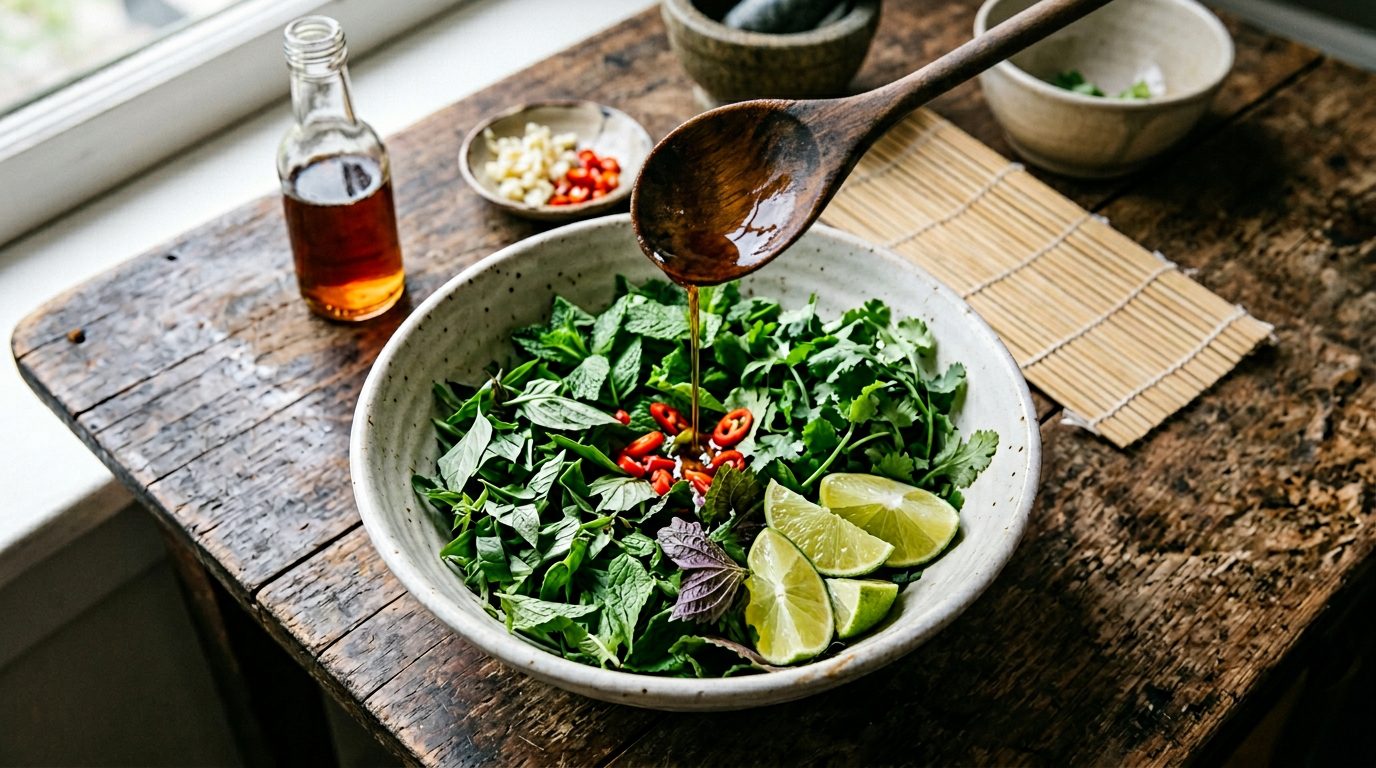
The Foundation of Southeast Asian Cooking
We think of fish sauce as the salt of Southeast Asia — the ingredient that does what table salt does in Western cooking, but with added layers of oceanic sweetness and fermented depth. In Thai, Vietnamese, Filipino, and Indonesian cooking, it seasons at every stage: it goes into marinades, stir-fry sauces, broth bases, and dipping condiments. A bowl of pho without nuoc mam is technically possible, but the broth’s richness depends on it.
The key to using fish sauce well in Southeast Asian contexts is restraint and timing. Adding it early in cooking allows it to mellow and integrate, losing some of its pungency while contributing a savory roundness. Adding it late — or using it raw in a dressing or dipping sauce — preserves the sharper, more aromatic fermented notes that define condiments like nuoc cham or nam prik.
For new cooks, the most common mistake is adding too much at once. Start with half a teaspoon, taste, and work up from there. The sauce is concentrated by design — one tablespoon delivers as much salt as a quarter-teaspoon of table salt, plus everything else that makes it worth using. Explore the full range of dishes that benefit from it in our Asian recipes collection.
Using Fish Sauce as a Salt Replacement
Because fish sauce delivers sodium alongside glutamates, it does more work per teaspoon than plain table salt. The substitution ratio we use is: one teaspoon of fish sauce for every quarter-teaspoon of salt called for in a recipe. This brings the saltiness up while simultaneously adding a savory background that salt alone cannot provide — useful in soups, stews, braises, and even roasted vegetables.
The critical question for most Western cooks is whether the dish will taste ”fishy.” The answer is almost always no, provided you use the right amount. At small quantities, fish sauce reads as savoriness, not fish. The moment most people discover that their chicken roasting pan benefits from half a teaspoon of fish sauce under the skin, they never look back.
One practical application we recommend to anyone getting started: use fish sauce in scrambled eggs. A few drops in the egg mixture before cooking produces a creamier, more savory result than salt alone. It is a small, risk-free experiment that demonstrates immediately what the sauce adds beyond pure salinity.
Fish Sauce in Western Kitchens
Western chefs and home cooks have been quietly incorporating fish sauce into non-Asian cooking for the past two decades, accelerated by chefs like David Chang and Andy Ricker popularising the ingredient in mainstream food media. A drizzle into a Caesar salad vinaigrette adds a subtle marine depth that rivals anchovy paste — and is considerably easier to measure. In a caramelized onion jam or a bolognese, a teaspoon of fish sauce balances sweetness with a whisper of the sea that most diners cannot identify but always appreciate.
Pizza is another unexpected beneficiary. Some New York pizzerias have added fish sauce to their tomato base, reporting that it amplifies the natural umami of slow-cooked tomatoes without creating any perceptible fishiness. The same logic applies to any cooked tomato dish — pasta sauce, shakshuka, stewed peppers. The fish sauce does not announce itself; it simply makes everything else taste more like itself.
The common thread across all these Western applications is that fish sauce performs best as a background note, not a headline flavor. Think of it like anchovies in a puttanesca: present, essential, but never the thing you can point to on a spoon. That invisible contribution is exactly what makes it so valuable as a pantry staple well beyond Southeast Asian cooking.
Fish Sauce Brands Compared
Tiparos
Tiparos is produced in Thailand and is one of the most widely distributed fish sauce brands in international Asian grocery stores. It carries a consistent 30°N nitrogen rating, which places it in the solid mid-range of fermentation quality — reliable, clean, and predictable. Its flavor is mild enough for everyday cooking without overwhelming dishes that call for delicate seasoning.
The bottle design is functional and the sauce pours cleanly, which matters more than it sounds when you are seasoning a wok over high heat. A 700 ml bottle typically retails for around AU$4–5, making it an economical choice for households that cook Southeast Asian food regularly. We reach for Tiparos when cooking dishes where fish sauce is one of several competing flavors rather than a centerpiece.
One thing to note: Tiparos also produces a fish sauce with added sugar under certain market labels. Check the ingredients list if you want the pure anchovies-and-salt version, as the sweetened variant behaves differently in savory applications.
Squid Brand
Squid Brand, also Thai in origin, has a bolder, more pungent profile than Tiparos. Its nitrogen rating sits around 32°N, and its flavor is noticeably more assertive — better suited to grilled meats, strong stir-fries, and dishes where you want the fish sauce to register rather than recede. Street-food vendors across Thailand favor it for its punch and value.
The iconic squid illustration on the bottle makes it one of the most recognisable fish sauce brands globally. It is available in most Asian supermarkets and a growing number of mainstream grocery chains in the UK, US, and Australia. Pricing is comparable to Tiparos, occasionally a few cents less depending on the retailer.
We find Squid Brand best in applications where it cooks for some time — marinades, long-simmered sauces, and fermented pastes where the pungency mellows during cooking. Used raw or as a finishing condiment, its boldness can overpower lighter dishes. Match the brand to the application and it performs well.
Megachef
Megachef is a Thai-Vietnamese crossover brand that produces a noticeably higher-quality product than most supermarket staples. Its nitrogen rating of approximately 35°N sits between mass-market Thai sauces and premium Vietnamese offerings, delivering a balanced flavor with a hint of caramelization that makes it stand out in blind tastings. Upscale Vietnamese restaurants frequently stock it alongside or in place of Red Boat for cost-efficiency reasons.
The sauce is darker in color than Tiparos or Squid Brand, closer to a deep amber, and its aroma is more complex — fermented and faintly sweet rather than sharply pungent. A 200 ml bottle retails for approximately AU$4–5. For the price-to-quality ratio, it is one of the strongest performers in the category and our personal recommendation for cooks who want to step up from entry-level fish sauce without committing to Red Boat prices.
Megachef’s broader product range also includes a version blended with premium cane sugar for Vietnamese-style dipping sauce applications, which is worth trying if you make nuoc cham frequently. The pre-balanced sweetness saves a step in the dipping sauce preparation without sacrificing the underlying quality of the fish sauce base.
Red Boat
Red Boat 40°N, produced on Phu Quoc island using traditional wooden barrel fermentation, is the benchmark that other premium fish sauces are measured against. The 40°N nitrogen rating reflects an intensive aging process that breaks down a higher proportion of the anchovies’ proteins into free amino acids — the result is a sauce with a lingering, silky umami that coats the palate rather than striking it sharply and disappearing.
The ingredients list reads simply: black anchovies and sea salt. No water, no sugar, no preservatives. That purity is part of what commands its premium price — a 200 ml bottle retails for approximately AU$7–9, roughly double the cost of Megachef. Whether the premium is worth it depends entirely on how you use it. For cooking, Megachef or Tiparos will serve you just as well. For raw applications — dipping sauces, dressings, drizzled over food at the table — Red Boat’s quality difference is immediately perceptible.
Red Boat also produces a fish sauce infused with phu quoc salt and a fish sauce with added coconut sugar, expanding their range into condiment and cooking-sauce territory. The original 40°N remains the one to buy for pure, unmodified fish sauce quality.
| Brand | Origin | °N Rating | Flavor Profile | Best For | Approx. Price (200 ml) |
|---|---|---|---|---|---|
| Tiparos | Thailand | 30°N | Clean, mild, slightly sweet | Everyday cooking, stir-fries | AU$3–4 |
| Squid Brand | Thailand | ~32°N | Bold, assertive, pungent | Grilled meats, strong stir-fries | AU$3–4 |
| Megachef | Thailand/Vietnam | ~35°N | Balanced, caramel note | Soups, sauces, nuoc cham | AU$4–5 |
| Red Boat | Vietnam (Phu Quoc) | 40°N | Deep, silky, lingering | Raw applications, finishing | AU$7–9 |
Fish Sauce Substitutes
Soy Sauce and Tamari
Soy sauce is the most accessible substitute and performs adequately in cooked dishes where fish sauce is one of several flavoring agents. The substitution ratio is 1:1, though soy sauce lacks the marine sweetness of fish sauce and can make dishes taste more Chinese in character. Adding a small squeeze of lime or a pinch of sugar helps compensate for what the soy sauce does not bring.
Tamari, the Japanese variant of soy sauce, is darker, less salty, and has a smoother umami profile than standard Chinese soy sauce. It works better as a fish sauce substitute in dipping sauces and dressings where the texture difference matters. Its gluten-free certification makes it the go-to option for cooks with gluten sensitivities who still want that layered salty-savory note.
For dishes that are specifically designed around fish sauce’s distinct flavor — nuoc cham, nam prik, Thai-style papaya salad — soy sauce substitutes fall noticeably short. These are dishes where the fermented fish flavor is the point, not a background note, and no plant-based substitute currently replicates it convincingly at a 1:1 ratio.
Coconut Aminos
Coconut aminos are produced by fermenting coconut blossom nectar with sea salt. The result is a dark, sweet-salty liquid that contains approximately 300 mg of sodium per tablespoon — roughly one-quarter the sodium of standard fish sauce. For cooks managing sodium intake, this is a meaningful difference, though the lower saltiness means you may need to add more to achieve equivalent seasoning.
The flavor of coconut aminos is noticeably sweeter and less complex than fish sauce, making it better suited to dishes that already contain sweetness — coconut milk curries, certain stir-fries, marinades with honey or palm sugar. In these contexts, the substitution is largely seamless. In a pho broth or a clear Vietnamese noodle soup, the sweet profile reads as an intrusion.
We recommend coconut aminos as a fish sauce substitute for people following vegan or low-sodium diets rather than as a general-purpose swap. If the goal is simply to avoid fish, tamari with a few drops of rice vinegar and a pinch of seaweed flakes gets closer to fish sauce’s complexity than coconut aminos does.
Dried Shrimp and Other Options
Finely ground dried shrimp, dissolved in a small amount of warm water, produces a paste that approximates the marine umami of fish sauce more closely than any plant-based substitute. The ratio is roughly one teaspoon of dried shrimp paste dissolved in two teaspoons of water per tablespoon of fish sauce being replaced. The resulting liquid is slightly thicker and has a more pronounced shellfish note, which works well in fried rice, stir-fries, and soups.
Worcestershire sauce, combined with a small pinch of dried seaweed (nori powder or kelp granules), creates a complex sweet-salty-savory liquid that can approximate fish sauce in Western cooking contexts. The ratio is 1:1. Worcestershire already contains anchovies in most formulations, so this is not a vegan alternative, but it works well when fish sauce is unavailable and you are cooking a non-Asian dish.
Miso paste thinned with water also functions as a fish sauce substitute in certain applications, particularly soups and braises. White miso is closest in color and brings a mild fermented saltiness; red miso is bolder and can overpower lighter dishes. A teaspoon of thinned white miso per tablespoon of fish sauce is a reasonable starting point, adjusted to taste.
| Substitute | Ratio | Flavor Match | Notes |
|---|---|---|---|
| Soy sauce | 1:1 | Salty, no marine note | Add lime juice for brightness |
| Tamari | 1:1 | Smooth, less sharp | Gluten-free; good in dressings |
| Coconut aminos | 1:1 | Sweet-salty, low sodium | Best for low-sodium or vegan diets |
| Dried shrimp paste in water | 1 tsp paste + 2 tsp water per tbsp | Marine umami, closer match | Not vegan; avoid with shellfish allergy |
| Worcestershire + seaweed | 1:1 | Complex, slightly sweet | Use sparingly; contains anchovies |
How to Store Fish Sauce
Pantry vs Fridge — What the Pros Say
The pantry-versus-fridge debate for fish sauce is genuinely contested among food scientists and professional cooks. Most producers state on the label that refrigeration after opening is recommended, and the science supports this: cooler temperatures slow oxidation of the amino acids and aromatic compounds that give fish sauce its character. An opened bottle stored in a cool, dark pantry will last twelve to eighteen months at acceptable quality; the same bottle refrigerated will hold its peak flavor for two years or more.
In practice, most Southeast Asian households and professional kitchens keep fish sauce at room temperature and use it frequently enough that a bottle does not last long enough for quality degradation to matter. The fridge recommendation is most relevant for households that use fish sauce infrequently — a bottle that sits at room temperature for three years will taste noticeably less vibrant than a fresh one.
One practical consideration: fish sauce kept in the fridge may develop a slight cloudiness or sediment as some amino acids precipitate in the cold. This is not spoilage — shaking the bottle restores the appearance. If you find the cloudiness bothersome, keeping a small pouring bottle at room temperature while storing the main supply in the fridge is a useful compromise.
Shelf Life and Signs of Spoilage
An unopened bottle of fish sauce, stored away from direct heat and light, is shelf-stable for three to four years from production. The high salt content and acidity create an environment that is genuinely hostile to the bacteria and moulds that spoil most other condiments. The use-by date on the label reflects quality rather than safety in the strict sense — a three-year-old opened bottle is unlikely to make you ill, but it will taste flat.
Spoilage signs to look for include persistent cloudiness that does not clear after shaking, a sour-milk or rancid odor that is distinct from the normal fermented pungency, and a sharp, unpleasant taste that does not belong to the sauce’s usual flavor profile. A slight darkening over time is normal oxidation and not a concern.
If you are unsure, the simplest test is the smell. Fresh fish sauce smells pungent, fermented, salty, and marine — assertive but not offensive. Spoiled fish sauce smells genuinely rancid, almost like ammonia mixed with sourness. The difference is unmistakable once you know what to look for, and it is not a subtle distinction.
Maximising Quality Over Time
Three practices make the biggest difference to long-term quality: keep the bottle tightly sealed between uses, store it away from direct sunlight, and avoid storing it near heat sources like the stovetop or oven. Light and heat are the primary accelerators of oxidation — the darkening and flattening of flavor that distinguishes old fish sauce from fresh. A dark glass bottle stored in a pantry cupboard is the ideal environment.
If you buy fish sauce in large economy bottles — common with Tiparos and Squid Brand — consider decanting into a smaller dark glass bottle for daily use and storing the remainder sealed in the fridge. This reduces how often the large bottle is opened and exposed to air, which meaningfully extends the quality of what remains.
For premium fish sauces like Red Boat, given the higher cost per bottle, refrigeration after opening is worth doing consistently. The flavor investment is significant enough that preserving the full aromatic spectrum makes practical sense. We also recommend using a small funnel when pouring from a wide-mouth bottle back into a narrower container — keeping the sauce concentrated rather than aerated during transfer makes a small but measurable difference.
FAQ
What is a good substitute for fish sauce?
The best substitute depends on the dish. For most cooked applications, soy sauce or tamari at a 1:1 ratio works reasonably well, though it lacks fish sauce’s marine sweetness. For vegan or low-sodium diets, coconut aminos deliver a sweet-salty alternative. If you want the closest flavor match, dried shrimp paste dissolved in water or Worcestershire sauce with a pinch of seaweed gets closer to fish sauce’s complexity than any fully plant-based option.
Is fish sauce healthy?
Fish sauce is high in sodium — a single tablespoon delivers 1,250–1,560 mg, representing 55–68% of the recommended daily value. For people managing hypertension or kidney conditions, this is a relevant consideration. On the positive side, the fermentation process generates beneficial free amino acids including glutamate, and fish sauce is typically used in small quantities that contribute seasoning rather than bulk nutrition. Used in moderation as a seasoning rather than a condiment, it is no more problematic than any other concentrated salt-based flavoring.
What do you eat fish sauce with?
Fish sauce works with nearly any savory dish where salt and umami are wanted. In Southeast Asian cooking, it seasons soups, stir-fries, marinades, and dipping sauces. In Western cooking, small amounts improve scrambled eggs, salad dressings, pasta sauces, braises, and roasted vegetables. The key in both contexts is using it as a seasoning — measured in teaspoons rather than tablespoons — so that it amplifies other flavors rather than announcing itself.
Can I use fish sauce if I have a shellfish allergy?
Traditional fish sauce is made from fish, not shellfish, so it does not contain the proteins that trigger shellfish allergies in most people. However, some manufacturers process fish sauce in facilities that also handle shrimp or other shellfish, creating a cross-contamination risk. If you have a diagnosed shellfish allergy, check the label for allergen warnings and look for brands that explicitly state they are produced in shellfish-free facilities. When in doubt, consult your allergist before adding any new fermented condiment to your diet.
Does fish sauce go bad?
Fish sauce does not spoil quickly due to its high salt content and natural acidity, but it does degrade in quality over time. An unopened bottle stored properly lasts three to four years. An opened bottle kept in the pantry maintains good quality for twelve to eighteen months; refrigerated, it holds for two years or longer. Signs of genuine spoilage include persistent cloudiness, rancid or ammonia-like odor, and an off-tasting sourness distinct from normal fermented pungency. If in doubt, smell it — the difference between old-but-fine and genuinely spoiled is unmistakable.
What is the difference between Thai and Vietnamese fish sauce?
Thai nam pla ferments for twelve to eighteen months and produces a lighter, brighter, slightly sweeter sauce that works across most Southeast Asian cooking applications. Vietnamese nuoc mam — particularly the premium Phu Quoc variety — ferments for up to two years in traditional wooden barrels, developing a richer, deeper, caramel-like flavor and a higher °N nitrogen rating in premium versions. The practical difference: Thai fish sauce is the everyday workhorse for stir-fries and quick dishes; Vietnamese fish sauce at its best is the choice for raw dipping sauces and applications where the sauce’s flavor is foregrounded.