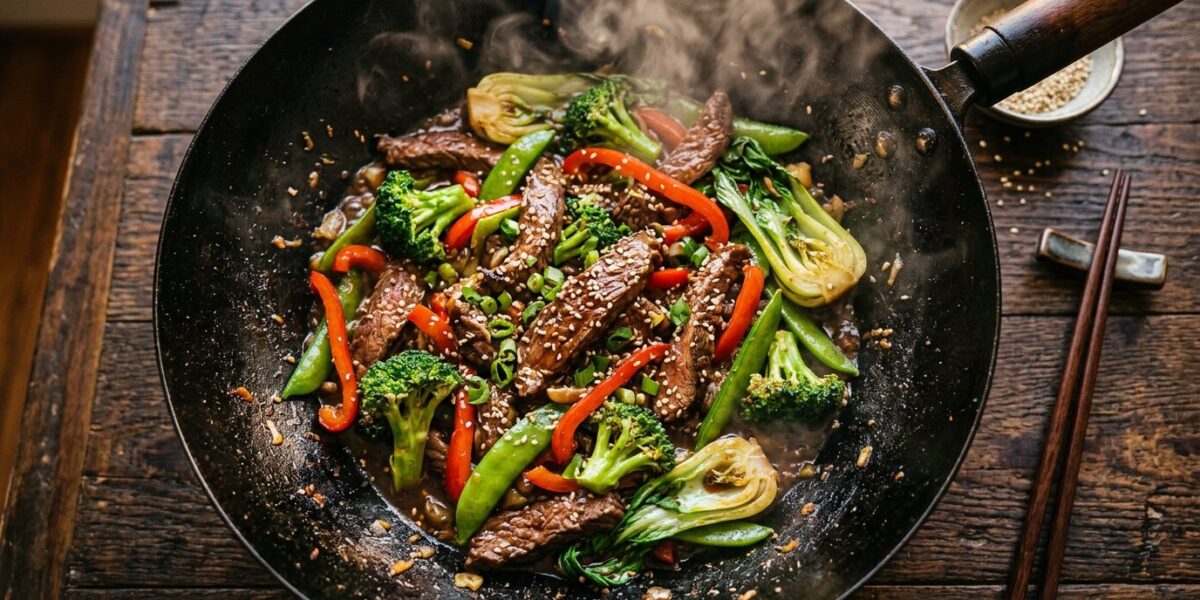

Beef Stir Fry Recipe (20 Minutes)

Beef Stir Fry Recipe (20 Minutes)

By Mei Lin Chen · Published
15 min
20 min
4
Easy
↓ Jump to Recipe
Note: This page was originally published on UmamiCart. Content is provided for informational purposes only. Always check food safety guidelines and allergen information before preparing dishes.
*Last Updated: March 23, 2026* Our **beef stir fry recipe** delivers restaurant‑level speed and texture without sacrificing flavor. By pairing the right cut with a quick velveting step, we keep the meat tender while the wok does the heavy lifting. > **Key Takeaways** > • Choose flank steak or sirloin for quick cooking. > • Velvet the beef to lock in moisture and create a silky mouthfeel. > • Use a balanced sauce ratio for flavor and glaze. > • Add vegetables in stages: dense, medium, then tender. > • Heat the wok until it smokes for true wok hei. ## Why This Recipe Works in 20 Minutes ### Choosing the Right Beef Cut Flank steak and sirloin both have long muscle fibers that break down quickly when sliced against the grain. Their natural leanness lets the high‑heat sear develop a caramelized crust without excess fat. Because the fibers are short, the meat finishes cooking in under a minute per side, keeping the total active time under ten minutes. ### The Velveting Step You Cannot Skip Velveting is a brief spa treatment for meat: a quick soak in a alkaline‑rich bath that relaxes protein fibers. The baking soda raises the pH to roughly 7–8, preventing the proteins from tightening during the sear (Food Science source). After rinsing and patting dry, the beef feels supple and stays juicy even when the wok reaches scorching temperatures. ### High Heat Is Non‑Negotiable In a professional kitchen the wok sits over a flame that pushes surface temperature past 1200 °F (650 °C), creating the coveted wok hei. At home we mimic this by pre‑heating the wok until it smokes, then adding oil and meat in a single layer. The contrast between a restaurant’s open flame and a stovetop burner is stark, but the principle—instant, intense heat—remains the same. We walk through the same approach in our post on the velveting technique we use for chicken — the only difference is a slightly longer soak for tougher cuts.
Sliced flank steak being velveted with baking soda and cornstarch for beef stir fry
## The Stir Fry Sauce (and What Every Ingredient Does) | Ingredient | Amount (for 4 servings) | Role in Dish | |————|————————|————–| | Oyster sauce | 3 tbsp | Umami foundation | | Low‑sodium soy sauce | 2 tbsp | Salty depth | | Sesame oil | 1 tbsp | Aromatic finish | | Cornstarch | 1 tbsp | Thickening agent | | Beef broth (cold) | 3 tbsp | Liquid base | | Brown sugar | 1 tsp | Light sweetness | | White pepper | ¼ tsp | Subtle heat | ### Oyster Sauce — the Umami Foundation Oyster sauce, created in Guangdong in 1888 by Lee Kum Sheung (Lee Kum Kee brand origin), supplies a deep, briny richness that anchors the entire dish. Its combination of oyster extracts and sugar adds a mellow sweetness that balances the soy’s salt. When mixed with the broth, it becomes the glossy medium that clings to each bite. ### Soy Sauce and Sesame Oil — Depth and Finish Low‑sodium soy sauce delivers the salty backbone while keeping the sodium level manageable. Sesame oil, added at the end, contributes a nutty perfume that lifts the sauce from ordinary to memorable. Together they create a three‑part rhythm: salty, nutty, and bright. ### The Cornstarch Slurry — Sauce That Clings The slurry of cornstarch and cold beef broth acts like a net, trapping flavor and coating the ingredients uniformly. As the mixture heats, the starch gelatinizes, thickening the sauce in seconds. This quick‑set glaze ensures every strand of broccoli and slice of beef shines. ## Ingredients ### For the Beef and Marinade – 1 lb (450 g) flank steak or sirloin, sliced ¼ inch against the grain – ¼ tsp baking soda – 1 tbsp low‑sodium soy sauce – 1 tsp cornstarch – 1 tsp sesame oil The baking soda begins the velveting process, while the soy and cornstarch create a thin protective film. The sesame oil adds a whisper of nuttiness that survives the high‑heat sear. Rest the mixture for fifteen minutes before rinsing to lock in moisture. ### For the Vegetables – 2 cups broccoli florets – 1 red bell pepper, sliced – 1 cup snap peas – 2 cups bok choy, chopped – 3 cloves garlic, minced – 1 tsp fresh ginger, grated These vegetables cover a spectrum of textures, from sturdy broccoli to delicate bok choy. The garlic and ginger provide an aromatic base that awakens the palate. For a closer look at selecting these items, see our guide to Asian cooking ingredients. ### For the Sauce – 3 tbsp oyster sauce – 2 tbsp low‑sodium soy sauce – 1 tbsp sesame oil – 1 tbsp cornstarch + 3 tbsp cold beef broth (slurry) – 1 tsp brown sugar – ¼ tsp white pepper The sauce balances salty, sweet, and umami notes while the white pepper adds a gentle heat. The cornstarch slurry ensures the glaze adheres without becoming watery. This precise ratio is what separates a restaurant‑style stir fry from a home‑cooked approximation. ## How to Make Beef Stir Fry Step by Step ### Step 1 — Velvet the Beef (10 Minutes) Combine the sliced beef with baking soda, soy sauce, cornstarch, and sesame oil in a bowl. Toss thoroughly and let it rest for fifteen minutes, allowing the alkaline bath to soften the fibers. Rinse under cold water, pat dry, and set aside; the meat now feels like a pampered guest ready for the wok. ### Step 2 — Prep the Vegetables While the beef marinates, wash and cut all vegetables to uniform sizes for even cooking. Mince the garlic and grate the ginger, keeping them ready for the quick aromatics stage. Arrange the vegetables in three piles—dense, medium, tender—so you can add them in the correct order during the stir fry. ### Step 3 — Cook the Stir Fry (10 Minutes) Heat the wok over the highest setting until a thin layer of oil begins to smoke. Add 1 tbsp oil, then sear the beef in a single layer for 60‑90 seconds per side; remove and set aside. Add the remaining oil, toss in garlic and ginger for 30 seconds, then follow the vegetable guide: dense vegetables first, then medium, finally tender. Return the beef, pour the sauce, and toss for another 60‑90 seconds until the glaze clings. Garnish with sliced green onions and toasted sesame seeds before serving over steamed rice. ## Vegetable Guide — What to Add and When ### Dense Vegetables First (Broccoli, Carrots) Broccoli florets and carrots retain their bite when exposed to the wok’s intense heat for a full two minutes. Their sturdy stems benefit from the initial sear, which locks in color and crunch. Adding them first prevents overcooking the more delicate vegetables that follow. ### Medium Vegetables Second (Bell Peppers, Snap Peas) Bell peppers and snap peas cook quickly, needing only a minute to soften while staying crisp. Their bright colors and sweet snap complement the earthy broccoli, creating a balanced visual and textural contrast. Stir them in after the dense vegetables to preserve their vivid hue. ### Tender Vegetables Last (Bok Choy, Green Onions) Bok choy leaves and green onions wilt in seconds, so they belong at the end of the cooking sequence. A brief 30‑second toss is enough to wilt the stems without turning them mushy. This final addition preserves the fresh, leafy aroma that finishes the dish. ## Tips, Swaps, and Make‑Ahead Notes ### Beef Cut Substitutions If flank steak is unavailable, sirloin works equally well; both have a fine grain that benefits from thin slicing. For a budget‑friendly option, top round can replace flank, though it may require a slightly longer marinating period. Avoid heavily marbled cuts like ribeye, as excess fat interferes with the rapid sear and can make the sauce greasy. ### Sauce Adjustments and Variations Increase the oyster sauce by one tablespoon for a richer umami punch, or swap half of it for hoisin if you prefer a sweeter profile. Adding a splash of Shaoxing wine to the slurry introduces a subtle acidity that brightens the glaze. For heat lovers, a pinch of dried chili flakes in the garlic‑ginger stage adds a gentle sting without overwhelming the balance. ### Storage and Reheating Cool the stir fry to room temperature before transferring to an airtight container; it stores well for up to two days in the refrigerator. Reheat in a hot wok or skillet for one minute, adding a splash of broth if the sauce has thickened too much. The beef remains tender thanks to the velveting step, even after a short refrigeration period. Looking for what to cook next? Browse our full collection of Asian recipes for more weeknight-ready dishes from across Asia. ## FAQ ### What ingredients go into a beef stir fry? A typical beef stir fry includes thinly sliced beef, a velveting mixture of baking soda, soy sauce, cornstarch, and sesame oil, plus a mix of vegetables such as broccoli, bell peppers, snap peas, and bok choy. The sauce combines oyster sauce, soy sauce, sesame oil, cornstarch slurry, brown sugar, and white pepper for flavor and glaze. ### How do you make beef tender for stir fry? Tenderness comes from slicing the meat against the grain, then briefly velveting it with a alkaline‑rich bath that raises the pH and prevents protein contraction. Rinsing and patting dry after the rest period ensures the surface is ready for a quick, high‑heat sear that locks in moisture. ### What is the secret ingredient in stir fry? The secret is the velveting step, which acts like a spa treatment for the beef, giving it a silky texture that survives the wok’s intense heat. Coupled with the right cut, this technique makes a 20‑minute stir fry feel like a restaurant dish. ### Can I make beef stir fry ahead of time? Yes, you can prepare the beef and vegetables in advance, then store them separately. When ready to serve, give the wok a quick heat‑up, re‑sear the beef briefly, and toss the vegetables with the sauce. The dish stays juicy thanks to the velveting process. ### What vegetables work best in beef stir fry? Sturdy vegetables like broccoli and carrots should go in first, followed by medium‑density items such as bell peppers and snap peas, and finally tender greens like bok choy and green onions. This layering ensures each vegetable reaches its optimal texture without becoming soggy. **Nutrition per Serving** Calories: 285 | Protein: 28 g | Carbs: 14 g | Fat: 12 g | Fiber: 3 g | Sodium: 720 mg
Mei Lin Chen

Mei Lin Chen

Asian Food Writer & Recipe Developer

Mei has spent 15 years traveling across Asia, learning from home cooks and street vendors. She's tested over 500 Asian recipes in her London kitchen, focusing on authentic techniques and accessible ingredients.

Mei Lin Chen

Mei Lin Chen

Mei Lin Chen is an Asian food writer and recipe developer. Melbourne-raised and London-based, she has spent over a decade exploring the rice paddies, hawker stalls, and home kitchens of South-East and East Asia. Her recipes balance traditional technique with everyday practicality.
Recipe Details

Full recipe schema is added by RankMath Recipe block when this page is converted to a WordPress post.

You Might Also Like