Last updated: March 29, 2026
Open the spice drawer of any Korean home cook and you will find a bag of coarse, brick-red pepper flakes that smell faintly of sun-dried fruit and smoke. That bag is gochugaru (고추가루), the engine of Korean cooking. It paints kimchi crimson, gives stews their warming glow, and seasons everything from cold noodles to grilled mackerel. Without it, the cuisine simply does not exist as we know it.
And yet, outside Korea, gochugaru is still misunderstood. Too many recipes call it ”Korean chili flakes” and tell you to swap in crushed red pepper from the pizza place. That substitution will ruin your kimchi. Gochugaru is its own ingredient with its own personality: medium heat, fruity sweetness, smoky-savory backbone, and a vivid color that no other chili can match. This guide will tell you exactly what gochugaru is, where it comes from, how to buy the right kind, how to store it so it stays alive, what to substitute when you can’t find it, and how to actually cook with it across five reliable recipes.
What Is Gochugaru?
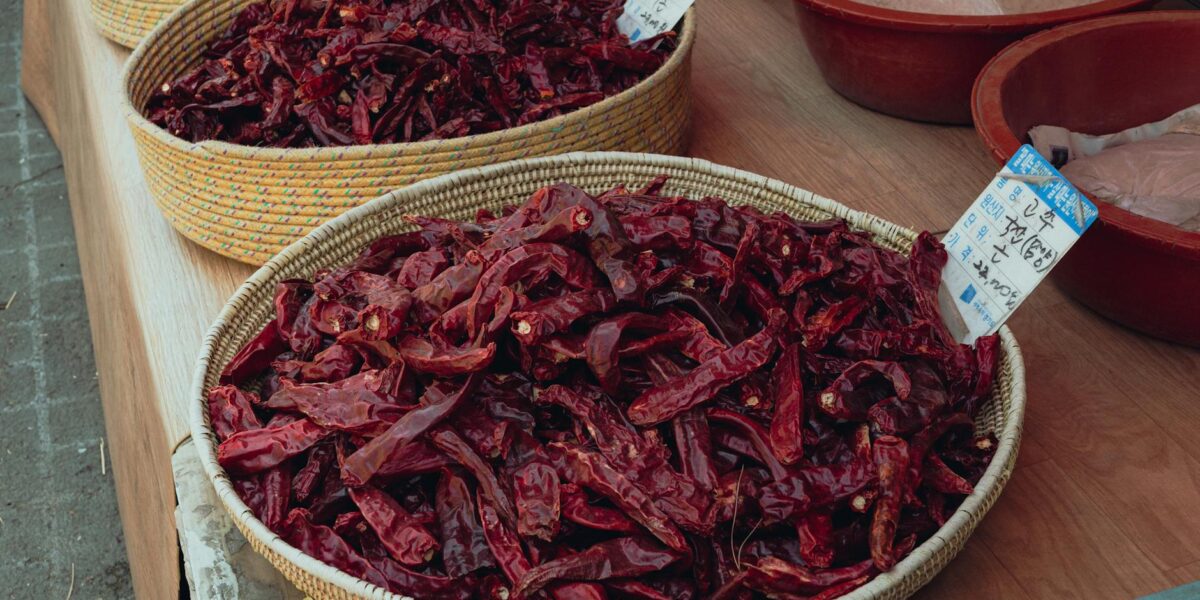
Gochugaru is sun-dried Korean red chili pepper, ground or crushed into flakes. The word literally translates as ”chili (gochu) powder (garu),” and it covers a spectrum of grinds: from coarse, almost-confetti-like flakes used in kimchi to a fine, sandy powder used in seasoning blends and dipping sauces. It is the dry, ground form of the same peppers that, when fermented with salt and glutinous rice, become gochujang.
The flavor is what sets it apart. Gochugaru sits at a comfortable medium heat, generally 4,000 to 8,000 Scoville Heat Units, depending on the variety. That is hotter than a poblano but milder than a serrano. Beyond heat, it brings layered fruity sweetness, a mild smokiness from the drying process, and a brick-red color that turns broths and pastes into something visually unmistakable. It is the rare chili that you can use in tablespoon quantities without overwhelming a dish, which is why Korean cooks often build entire flavor profiles around it.
Crucially, gochugaru is not the same as cayenne, paprika, or generic crushed red pepper. Cayenne is finer, hotter, and one-dimensional. Paprika lacks the heat and the textural integrity. Italian crushed red pepper contains seeds and stems and tastes brassy by comparison. Gochugaru’s seeds are largely removed during processing, the flesh is dried whole, and only then is it crushed. The result is a clean, fruit-forward chili with the structural body to coat fish, season tofu, and ferment cabbage without turning to mush.
The History and Origin of Gochugaru
Korean cuisine without chili sounds like a contradiction, but for most of the peninsula’s history that is exactly what it was. Chilies are New World peppers, and they did not arrive in Korea until the late 16th or early 17th century, most likely via Portuguese traders who reached Japan and pushed northward through the trade networks that linked Nagasaki, Tsushima, and Busan. Some scholars argue for an even earlier introduction through Manchurian routes, but the textual record is clearest from around 1614, when chili pepper appears in Korean writings as nambancho or ”barbarian pepper.”
For the first century after its arrival, the chili was an oddity. Court cuisine and the records of yangban scholars rarely mention it. By the 18th century, however, things had changed. Korean farmers, working in a climate that suited Capsicum annuum varieties, began breeding peppers with milder heat and broader shoulders. The cookbook Jeungbo Sallim Gyeongje, written around 1766, describes a kimchi recipe using ground red pepper, and from that point onward gochugaru became central to the national table. Earlier kimchi had been preserved with salt, perilla seeds, and Sichuan pepper. The arrival of gochugaru did not merely add flavor — it changed what kimchi looked like, lasted, and tasted like, and it set the cuisine on the trajectory we recognize today.
The traditional method of producing gochugaru is unchanged in its outline. Peppers are harvested when fully ripe and bright red. They are washed, sliced or left whole, and laid out on woven mats or rooftops to dry under the sun for several days. The drying process is what concentrates sweetness and develops the smoky undertone. Once dry, the peppers are seeded by hand or machine, then ground to the desired texture. Industrial production today often uses oven drying or hybrid sun-and-machine methods, but the highest-grade gochugaru, called taeyangcho or ”sun-dried,” is still made the traditional way and commands a premium price.
Geography matters. The most prized gochugaru in Korea comes from the southern county of Yeongyang in North Gyeongsang Province, where the volcanic soil, sharp temperature swings between day and night, and long sunshine hours produce peppers of exceptional sweetness and color. Goesan in North Chungcheong Province is another celebrated origin. Just as Champagne can only come from Champagne, true Yeongyang gochugaru carries a regional designation, and bags labeled with it cost noticeably more than generic Korean or Chinese-grown product.
Varieties of Gochugaru
Walk into a Korean grocery store and you will not see one bag labeled ”gochugaru” — you will see five or six, in different colors, weights, and textures. Knowing which is which transforms the way you cook.
By grind: The two most important categories are coarse (gulgeun-gochugaru) and fine (goun-gochugaru). Coarse gochugaru looks like flat flakes about the size of a sesame seed, sometimes a little larger. It is the standard for kimchi, where the flakes need to coat cabbage leaves without dissolving and contribute texture as well as color. Fine gochugaru is more like a sandy powder, used in stews, marinades, dipping sauces, and seasoning sprinkles where you want the chili to dissolve seamlessly. Some brands sell a medium grind that splits the difference, often labeled simply ”all-purpose.”
By heat level: Korean producers grade gochugaru by Scoville-style heat units, often labeled deol-maewoon (mild), bo-tong (medium), or maewoon (hot). Mild gochugaru runs around 1,500 to 3,000 SHU, medium is the standard 4,000 to 8,000 SHU, and hot can reach 10,000 SHU or more. For most Korean home cooking, medium is the right choice. Mild is favored for traditional white-and-mild kimchi or for cooking with children. Hot grades are used by Korean grandmothers who want stew to fight back.
By drying method: Sun-dried (taeyangcho) is the gold standard. Machine-dried versions are cheaper but lack the depth of fruit and smoke that comes from days under the sun. If a bag is labeled taeyangcho and clearly identifies a Korean origin region, you are buying the best. Hybrid varieties dry partly in the sun and partly in dehydrators and represent good value.
By origin: Korean-grown gochugaru is the benchmark, but a substantial volume on the market is grown in China and processed for the Korean diaspora trade. Chinese-grown gochugaru can be perfectly serviceable and is significantly cheaper, but the flavor tends to be flatter and the color less vivid. Look at the back of the bag; ”Product of Korea” with a regional name is the clearest indicator of premium quality.
How to Buy Gochugaru
The single best place to buy gochugaru is a Korean grocery store, in person. H Mart, Hannam Chain, Galleria, and similar Korean-American chains all carry multiple brands at multiple price points. Online options have improved dramatically: Umamicart, Weee!, and Kim’C Market all ship Korean grocery items nationally in the United States, and Yamibuy carries several reliable Korean brands. Amazon has gochugaru, but quality varies wildly and you cannot inspect the bag.
What to look for, in order of importance:
- Color. A vivid, deep red is what you want. Brown or rust tones suggest old stock or low-grade peppers.
- Origin label. ”Product of Korea” beats ”Product of China.” A regional designation like Yeongyang or Goesan beats both.
- Grind type. Match the grind to your cooking. Coarse for kimchi and visible flake dishes; fine for stews, sauces, and seasoning blends.
- Packaging. Resealable foil pouches preserve color and aroma far better than clear plastic bags or paper. Avoid bulk bins where light has been hitting the peppers for weeks.
- Date. Check the manufacturing date if printed. Korean producers usually mark a ”best by” of 12 to 18 months from packing, but flavor peaks in the first six.
- Price. Expect roughly $8 to $15 per pound for a competent Korean-grown gochugaru. Premium taeyangcho from a named region runs $20 per pound or more. Anything under $5 a pound is almost certainly a low-grade Chinese product or padded with red bell pepper powder.
If you cook Korean food more than a couple of times a month, buy a 1-pound bag of medium-grind, sun-dried Korean gochugaru and a smaller bag of fine grind. That covers virtually every use case.
How to Store Gochugaru
Gochugaru is a dried product, but it is also a living one. The volatile aromatic compounds that give it fruity sweetness are fragile, and the bright red color oxidizes the moment air, light, or heat get involved. Treat it like a high-end coffee: airtight, cool, dark, and used quickly.
The single biggest mistake home cooks make is leaving gochugaru in its original plastic bag on a pantry shelf. Within three months, the color dulls and the flavor flattens. Within six, you are essentially cooking with sawdust that bites. Refrigerator storage solves the problem. Transfer the gochugaru to an airtight glass or food-grade plastic container and keep it in the fridge for everyday use, where it will stay vibrant for six to nine months. For long-term storage, the freezer is even better. Gochugaru does not freeze solid because it is so low in moisture; you can scoop straight out of the freezer with a dry spoon, and a freezer-stored bag will hold its color and aroma for over a year.
Always use a dry spoon. Any moisture introduced into a gochugaru container is a path to clumping and, over time, mold. If you see clumps forming, the gochugaru is not ruined, but it has been exposed to humidity; break them up and use the bag faster. If you see actual mold, dark spots, or smell anything musty, throw it out.
Gochugaru Substitutes
Nothing tastes exactly like gochugaru. The varieties below get you in the neighborhood for emergencies, with the caveats noted. None of them will produce authentic kimchi — for that, you need the real thing.
| Substitute | Ratio (vs gochugaru) | Best for | Notes and limitations |
|---|---|---|---|
| Aleppo pepper | 1:1 | Stews, marinades, seasoning | The closest substitute. Fruity, mild heat, similar coarse texture. Slightly more raisin-like and less smoky. |
| Kashmiri chili powder | 1:1 | Color-driven dishes, marinades | Excellent red color and mild heat. Indian flavor profile with a hint of paprika sweetness; not authentic but works. |
| Smoked paprika + cayenne | 3 parts paprika : 1 part cayenne (use 1:1 of blend) | Sauces, dry rubs, soups | Closer in color than pure cayenne. The smoke can read too charred for delicate dishes. |
| Ancho chili powder | 1:1, plus a pinch of cayenne | Braises, marinades | Fruity, mild, too earthy on its own. Add cayenne to bring heat to gochugaru levels. |
| Crushed red pepper (Italian) | 1/2 the volume | Last resort only | Significantly hotter, contains seeds and stems, brassy flavor. Reduce quantity and accept the result. |
| Gochujang | 1 tbsp gochujang per 1 tsp gochugaru | Stews, sauces (NEVER kimchi) | Adds sweetness, salt, and umami. Works only when those flavors are welcome. |
| Cayenne pepper | 1/4 the volume | Heat only, not flavor | Hot but flavorless next to gochugaru. Adds no fruit, no smoke, no body. |
The honest answer: if a recipe asks for more than a tablespoon of gochugaru, find a way to get the real thing. Substitutions work fine for a teaspoon in a dipping sauce. They fall apart at scale.
How to Cook with Gochugaru
Gochugaru is one of the most forgiving spices in any pantry. It does not burn easily because it lacks fine particles. It does not turn bitter the way some chili powders do. It can be added at the start, middle, or end of cooking, with each timing producing a slightly different flavor profile. A few principles to internalize:
- Bloom it in oil. A teaspoon of gochugaru sizzled in 1 to 2 tablespoons of neutral oil for 10 to 20 seconds before adding aromatics releases its color and fruit. This is the foundation of dishes from tteokbokki to spicy dipping oils.
- Add it to broth at a rolling simmer. For stews and soups, gochugaru goes in once the broth is bubbling. The fat in the broth carries the flavor and color through the dish.
- Use it raw for finishing. A pinch of gochugaru sprinkled over cold noodles, fried eggs, or grilled meat works as a finishing flake, contributing color and a clean, almost-fruity heat.
- Pair it with garlic, ginger, soy, and sugar. The classic Korean flavor base of these five ingredients is so fundamental that it appears in dozens of recipes from bulgogi marinades to japchae sauce.
- Hydrate it for kimchi. When making kimchi, the gochugaru should be mixed with the salted vegetables, fish sauce, and aromatics into a wet paste. The flakes hydrate, swell slightly, and release their color into the brine.
Recipe 1: Authentic Baechu Kimchi
Napa cabbage kimchi is the most important application of gochugaru, and it is the one that most clearly shows why generic chili flakes will fail. The coarse, fruity, slightly smoky character of real Korean gochugaru is what makes properly fermented kimchi taste like itself.
Yield: About 4 pounds of finished kimchi. Time: 4 hours active and salting, 2 to 5 days fermentation.
Ingredients:
- 1 large napa cabbage (about 4 pounds), quartered lengthwise through the core
- 1/2 cup coarse sea salt
- 3 tablespoons sweet rice flour
- 1 1/2 cups water
- 1 tablespoon sugar
- 1 cup coarse-grind gochugaru
- 1/4 cup fish sauce
- 2 tablespoons salted shrimp (saeujeot), finely chopped
- 10 garlic cloves, minced
- 1 tablespoon grated fresh ginger
- 1 small Korean radish (mu) or daikon, julienned (about 2 cups)
- 1 bunch scallions, cut into 2-inch lengths
- 4 to 6 garlic chives, cut into 2-inch lengths (optional)
Method: Salt the cabbage by sprinkling salt between every leaf, working from the outside in. Place in a large bowl, sprinkle the remaining salt over the top, and let stand 2 to 3 hours, turning every 30 minutes. The cabbage is ready when the white parts bend without snapping. Rinse three times in cold water, drain in a colander for 30 minutes, and squeeze out excess moisture.
While the cabbage salts, make the porridge: whisk sweet rice flour with cold water in a small saucepan, bring to a simmer over medium heat, and cook 3 minutes until thick and translucent. Stir in sugar, remove from heat, and cool completely.
In a large bowl, combine the cooled porridge, gochugaru, fish sauce, salted shrimp, garlic, and ginger. Stir into a thick red paste and let stand 10 minutes for the gochugaru to bloom. Add the radish, scallions, and chives, and toss to coat.
Wearing gloves, rub the paste between every leaf of every cabbage quarter. Pack the quarters into a large glass or ceramic container, pressing down to remove air pockets. Cover loosely. Let ferment at room temperature 24 to 48 hours until you see bubbles and smell tang, then refrigerate. Kimchi is good to eat after 3 days and continues to develop flavor for weeks. Full instructions and a deeper walkthrough live in our step-by-step kimchi recipe.
Recipe 2: Spicy Korean Cucumber Salad (Oi Muchim)
This 10-minute side dish is the simplest way to taste gochugaru solo. It also pairs perfectly with rich grilled meat — try it next to Korean BBQ or rice bowls.
Yield: 4 servings. Time: 10 minutes.
Ingredients:
- 2 large Persian or Kirby cucumbers (about 12 ounces), thinly sliced
- 1/2 teaspoon kosher salt
- 1 tablespoon coarse-grind gochugaru
- 2 teaspoons soy sauce
- 1 teaspoon rice vinegar
- 1 teaspoon sugar
- 1 teaspoon toasted sesame oil
- 1 small garlic clove, grated
- 1 scallion, thinly sliced
- 1 teaspoon toasted sesame seeds
Method: Toss cucumbers with salt and let stand 5 minutes. Drain off any liquid that pools. In a small bowl, whisk gochugaru, soy sauce, vinegar, sugar, sesame oil, and garlic until the gochugaru darkens and absorbs the liquid. Add cucumbers, scallion, and sesame seeds. Toss and serve immediately, or chill for 1 hour for crisper, more sour notes.
Recipe 3: Sundubu Jjigae (Soft Tofu Stew)
Bubbling, brick-red, and deeply satisfying on a cold night, sundubu jjigae is a 25-minute case study in how gochugaru builds an entire dish around itself.
Yield: 2 servings. Time: 25 minutes.
Ingredients:
- 2 tablespoons neutral oil
- 2 tablespoons fine-grind gochugaru
- 4 garlic cloves, minced
- 1/2 small yellow onion, diced
- 4 ounces ground pork (optional)
- 2 tablespoons soy sauce
- 1 teaspoon doenjang (optional but recommended)
- 3 cups anchovy or chicken broth
- 1 (12-ounce) tube silken or soft tofu
- 4 ounces shrimp or clams (optional)
- 2 scallions, sliced
- 1 large egg
- Cooked short-grain rice, for serving
Method: Heat oil in a small pot or Korean ttukbaegi over medium heat. Add gochugaru, garlic, and onion, and stir 30 seconds until you see the oil turn red and smell roasted chili. Add pork (if using) and cook until no longer pink. Stir in soy sauce and doenjang, then pour in broth and bring to a simmer.
Squeeze the tofu directly out of its tube into the simmering broth, breaking it into rough chunks with a spoon. Add shrimp (if using) and simmer 4 to 5 minutes. Crack the egg into the center of the stew, sprinkle with scallions, and serve still bubbling, with rice on the side.
Recipe 4: Spicy Pork Bulgogi (Jeyuk Bokkeum)
Where classic beef bulgogi leans sweet and savory, jeyuk bokkeum is the spicy pork cousin built on a gochugaru-forward marinade. It is one of the most popular cheap-and-fast dinners in Seoul.
Yield: 4 servings. Time: 30 minutes plus 30 minutes marinating.
Ingredients:
- 1 1/2 pounds pork shoulder or butt, sliced 1/4-inch thick against the grain
- 3 tablespoons coarse-grind gochugaru
- 2 tablespoons gochujang
- 3 tablespoons soy sauce
- 2 tablespoons mirin or sake
- 2 tablespoons brown sugar
- 2 tablespoons grated Asian pear or apple
- 1 tablespoon grated ginger
- 5 garlic cloves, minced
- 1 tablespoon toasted sesame oil
- 1/2 yellow onion, sliced
- 1 tablespoon neutral oil
- 3 scallions, cut into 2-inch lengths
- 1 teaspoon toasted sesame seeds
Method: Whisk gochugaru, gochujang, soy sauce, mirin, sugar, pear, ginger, garlic, and sesame oil into a paste. Toss with sliced pork and onion. Marinate 30 minutes (or up to overnight in the fridge for deeper flavor).
Heat neutral oil in a large skillet over high heat until shimmering. Add pork in a single layer, working in two batches if needed, and cook 4 to 5 minutes per batch until edges char and pork is cooked through. In the last 30 seconds, add scallions and toss. Sprinkle with sesame seeds and serve over rice with lettuce leaves for wrapping.
Recipe 5: Gochugaru Honey Butter Wings
This is the most ”fusion” recipe in the lineup, but it shows what gochugaru can do outside the canon of Korean tradition. Sticky, fruity, mildly hot, and addictive — perfect for game day or as a riff on Korean fried chicken.
Yield: 4 servings. Time: 50 minutes.
Ingredients:
- 2 pounds chicken wings, split into drumettes and flats
- 1 1/2 teaspoons kosher salt
- 1 teaspoon baking powder
- 4 tablespoons unsalted butter
- 3 tablespoons gochugaru (medium heat)
- 3 tablespoons honey
- 1 tablespoon soy sauce
- 1 tablespoon rice vinegar
- 2 garlic cloves, grated
- 1 teaspoon toasted sesame seeds
- 2 scallions, thinly sliced
Method: Pat wings dry. Toss with salt and baking powder and arrange skin-side up on a wire rack set over a sheet pan. Roast at 425°F for 40 minutes, rotating the pan once, until skin is deeply golden and crisp.
Meanwhile, melt butter in a small saucepan over medium-low heat. Add gochugaru and stir 20 seconds until fragrant and the butter turns brick red. Whisk in honey, soy sauce, vinegar, and garlic, and simmer 1 minute until glossy. Toss the hot wings in the sauce, sprinkle with sesame seeds and scallions, and serve immediately.
Nutritional Benefits of Gochugaru
A teaspoon of gochugaru is essentially calorie-free, but the nutrition packed into that small volume is surprisingly dense. Korean red pepper flakes contribute meaningful amounts of vitamins, antioxidants, and bioactive compounds, especially when used in the tablespoon-scale portions typical of Korean cooking.
| Nutrient (per 1 tablespoon, ~7g) | Approximate amount | Health relevance |
|---|---|---|
| Calories | 20 kcal | Negligible at culinary doses |
| Vitamin A (carotenoids) | ~2,500 IU | Vision, immune function, skin |
| Vitamin C | ~5 mg | Antioxidant; partially preserved through drying |
| Vitamin E | ~0.4 mg | Antioxidant, cell membrane health |
| Capsaicin | ~30-100 mg | Anti-inflammatory; may boost metabolism |
| Iron | ~0.5 mg | Oxygen transport, red blood cell formation |
| Potassium | ~150 mg | Blood pressure, fluid balance |
| Fiber | ~2 g | Digestion, blood sugar regulation |
The headline compound is capsaicin, the heat-producing alkaloid that gives chilies their bite. Capsaicin has been studied extensively for its potential anti-inflammatory effects, modest metabolic-rate boost, and possible cardiovascular benefits when consumed regularly. The carotenoids — particularly capsanthin, which gives gochugaru its characteristic red — are powerful antioxidants. And because Korean cuisine pairs gochugaru with fermented foods like kimchi, jang pastes, and fermented soybean products, you also get the gut-health benefit of probiotic bacteria delivered alongside the spice.
Caveats: gochugaru itself is sodium-free, but most dishes built around it (kimchi, stews, marinades) are high in sodium from soy sauce, fish sauce, and salted shrimp. Anyone managing blood pressure should mind the supporting cast more than the gochugaru itself. People with reflux or sensitive stomachs may also need to start with mild grades and small quantities.
Gochugaru vs Gochujang: Understanding the Difference
Beginners frequently confuse these two pillars of Korean cooking, sometimes catastrophically. They are not interchangeable.
Gochugaru is dry, ground chili pepper. It contributes heat, color, and chili flavor only. It is not salty, not sweet, not fermented, not umami-laden.
Gochujang is a thick, fermented chili paste made from gochugaru, glutinous rice, fermented soybeans (meju), salt, and sometimes barley malt. It has heat, but it also has deep umami, salt, sweetness, and a slow-fermented funkiness. It is wet. It is sticky. It is, structurally, a totally different ingredient.
You can sometimes substitute gochujang for gochugaru in stews and marinades — about 1 tablespoon of gochujang per 1 teaspoon of gochugaru — but you have to compensate for the extra salt and sweetness. You cannot substitute the other way: dry chili powder cannot replicate gochujang’s body and depth in any recipe that depends on the paste’s texture and umami, like bibimbap sauce or tteokbokki glaze. For a deeper dive on the paste, see our complete guide to gochujang.
Common Mistakes When Cooking with Gochugaru
A few patterns crash recipes that should be reliable. Watch for these.
- Substituting Italian crushed red pepper. The single most common mistake. The texture, heat curve, and flavor are wrong, and your kimchi will taste harsh and mealy.
- Using fine grind in kimchi. Fine gochugaru in fermented kimchi can dissolve into a slurry and make the brine murky and bitter. Use coarse for kimchi, every time.
- Adding gochugaru to cold oil. The chili needs heat to bloom. Adding it to oil that is not yet hot results in a raw, dusty taste in stews and stir-fries.
- Burning gochugaru in oil. The flip side. If oil is smoking, gochugaru will scorch within seconds and turn bitter. Bloom it for 10 to 20 seconds at medium heat, no longer.
- Storing it warm. Pantry shelves above the stove are ovens for spices. Move it to the fridge or freezer.
- Buying generic ”Korean chili flakes” without a country of origin. A bag with no origin label is almost always low-grade Chinese product or padded with red bell pepper powder.
Frequently Asked Questions
Is gochugaru spicy?
Standard gochugaru runs 4,000 to 8,000 Scoville Heat Units, which is medium heat. It is hotter than poblano but milder than serrano or Thai bird’s eye. Most cooks find it pleasant rather than punishing, especially because the fruity, slightly smoky flavor balances the heat.
Can I make gochugaru at home?
You can dry and grind your own chili flakes, but matching the flavor of true Korean gochugaru is essentially impossible without Korean chili varieties. The genetics of the pepper matter: Capsicum annuum cultivars bred over centuries in Yeongyang and Goesan are what produce the characteristic sweetness and color. Drying jalapeños or Fresnos and grinding them gives you a pretty chili flake that is not gochugaru.
Is gochugaru gluten-free?
Pure gochugaru is naturally gluten-free — it is just dried, ground chili pepper. However, some commercial bags are processed in facilities that also handle wheat-containing products, so check labels if you are highly sensitive. Notably, gochujang (the paste) often contains gluten via barley malt or wheat-based fermentation; gochugaru does not.
Why is my gochugaru brown instead of red?
Two likely culprits: age and storage. Gochugaru loses color rapidly when exposed to light, heat, or air. If your bag has been sitting on a pantry shelf for a year, the color and flavor have both faded. The fix is buying smaller bags more frequently and storing them in the fridge or freezer. A second possibility is low-grade product to begin with — some Chinese-grown or padded gochugaru starts out brown.
Can I use gochugaru in non-Korean cooking?
Absolutely. Gochugaru is a tremendous all-purpose chili, and it works beautifully in Mexican-style salsas, Italian spaghetti olio, Thai dipping sauces, BBQ rubs, and finishing oils. Its medium heat and clean fruit make it more flexible than cayenne, and the coarse texture gives it visual presence that fine chili powders lack.
What’s the difference between gochugaru and gochutgaru?
They are the same thing, romanized differently. The Korean word 고추가루 can be transliterated either way depending on which romanization system is used. You will see ”gochugaru,” ”gochutgaru,” ”kochukaru,” and ”gochu garu” all on different bags. Same product.
How long does gochugaru last?
Sealed and refrigerated, it stays vivid for 6 to 9 months. Frozen, more than a year. Stored at room temperature, expect noticeable flavor loss within 3 months. The food itself does not become unsafe — gochugaru is too dry to support bacterial growth — but the color and aroma fade enough that it is essentially a different ingredient.
Is gochugaru the same as Korean red pepper powder?
Yes. ”Korean red pepper powder,” ”Korean chili powder,” ”Korean chili flakes,” and ”Korean red pepper flakes” are all English translations of gochugaru. The grind size determines whether the same product is called ”powder” or ”flakes” in casual translation.
Can I sub gochugaru for paprika?
For color and mild fruity character, yes — but be aware that gochugaru has noticeable heat and paprika is essentially heatless. If a recipe asks for sweet paprika and you have only gochugaru, use slightly less and accept a spicier dish. Do not substitute the other way for kimchi or anything where heat is the point.
Final Thoughts
Gochugaru is one of those rare ingredients that rewrites your understanding of an entire cuisine the moment you start using it correctly. The transformation from ”Korean food is spicy red food” to ”Korean food is layered, fruity, smoky, and surprisingly nuanced” happens almost entirely through gochugaru. A good bag in your fridge changes what you cook on a Tuesday night. It enables real kimchi, real tteokbokki, real bibimbap sauce, and a hundred small touches in dishes that are not officially Korean but get better the moment a pinch of brick-red flakes hits them.
Buy from a Korean source. Read the country of origin. Choose your grind for the dish at hand. Store it cold and dark. Bloom it in fat. The rules are simple, and the payoff is enormous. For more on building a Korean pantry, see our complete Korean recipes guide and our deep dives on gochujang and doenjang, the two great fermented siblings that pair with gochugaru on the Korean table.

Mei Lin Chen
Mei Lin Chen is an Asian food writer and recipe developer. Melbourne-raised and London-based, she has spent over a decade exploring the rice paddies, hawker stalls, and home kitchens of South-East and East Asia. Her recipes balance traditional technique with everyday practicality.