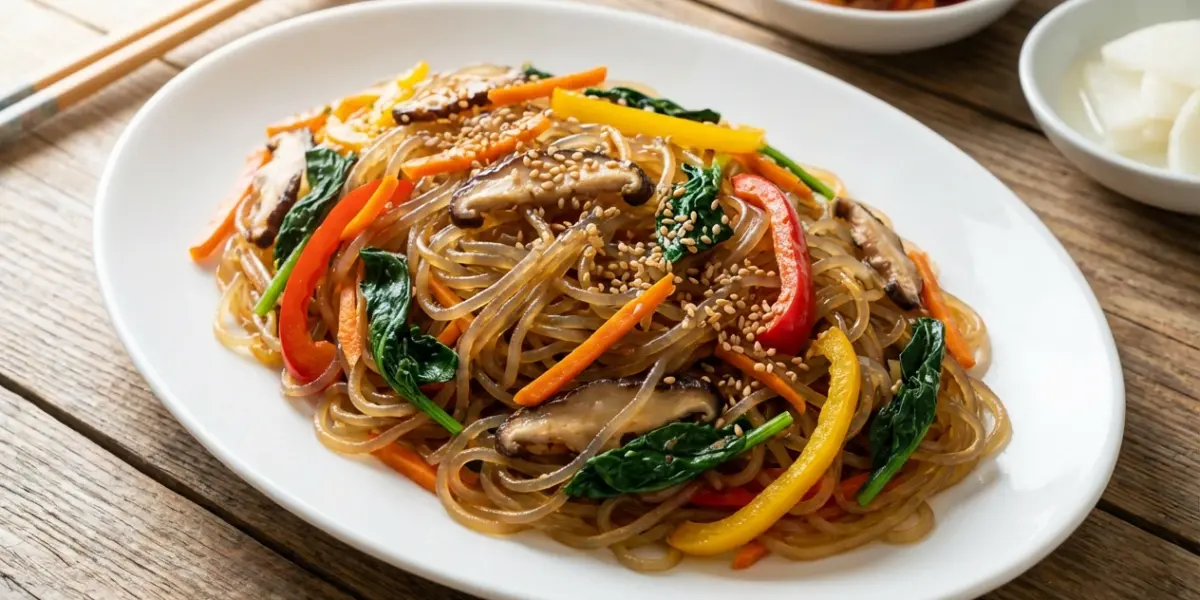
Japchae is one of Korea’s most beloved celebration dishes — a vibrant stir-fry of silky sweet potato glass noodles tossed with colourful vegetables, tender beef, and a sweet, savoury soy sauce dressing. Found at virtually every Korean birthday party, holiday table, and wedding feast, it is a dish that carries deep cultural meaning while also being approachable enough to make on a weeknight. Whether served warm as a main or at room temperature as a side, japchae is satisfying, beautiful, and unlike any noodle dish you’ve tasted before.
What Is Japchae?
Japchae (잡채) literally translates to ”mixed vegetables” in Korean — though today the dish is defined as much by its distinctive glass noodles as by the vegetables within it. The dish dates back to the 17th century, reportedly created during the reign of King Gwanghaegun of Joseon and originally made without the noodles we associate with it today. Noodles were added later, and over time, dangmyeon (당면), sweet potato starch glass noodles, became the defining ingredient of the dish.
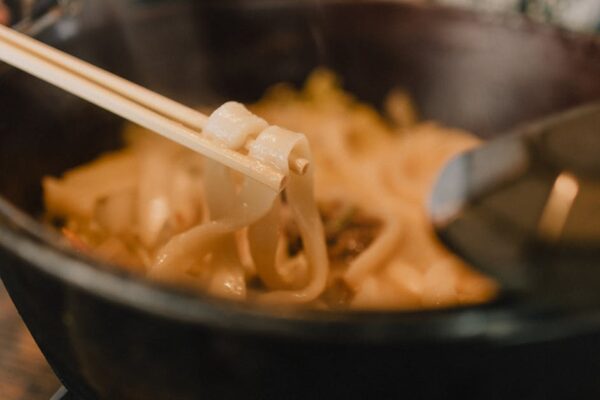
Dangmyeon noodles are remarkable. Made entirely from sweet potato starch, they cook up chewy, slightly slippery, and pleasantly springy in texture — nothing like wheat or rice noodles. They are also naturally gluten-free. When dressed with sesame oil and soy sauce, they absorb the flavours of the sauce and the vegetables beautifully, turning a deep, glossy brown.
Traditional japchae includes beef sirloin (sliced thin and marinated), spinach, mushrooms (typically shiitake), carrot, and egg strips. Each component is cooked separately to preserve its colour and texture, then everything is combined and dressed together. This attention to detail — cooking each ingredient individually — is what gives japchae its layered complexity and visual appeal. It is a labour of love, but the result is worth every step.
Ingredients
For the Noodles and Beef
- 200g (7 oz) dangmyeon sweet potato glass noodles
- 150g (5 oz) beef sirloin or ribeye, thinly sliced (or substitute with mushrooms for a vegetarian version)
- 3 tablespoons soy sauce (for the main sauce)
- 2 tablespoons sugar (or honey)
- 2 tablespoons sesame oil
- 1 tablespoon sesame seeds, toasted, for garnish
For the Beef Marinade
- 1 tablespoon soy sauce
- 1 teaspoon sesame oil
- 1 teaspoon sugar
- 1 clove garlic, minced
- Black pepper to taste
For the Vegetables
- 100g (3.5 oz) fresh spinach
- 2 medium carrots, julienned (about 1 cup)
- 1 medium yellow onion, thinly sliced
- 3–4 dried shiitake mushrooms, soaked in warm water for 30 minutes, stems removed and caps sliced (or 120g / 4 oz fresh shiitake)
- 1 red bell pepper, thinly sliced (optional, but adds colour and sweetness)
- 2 cloves garlic, minced
- 2–3 tablespoons neutral oil (vegetable or sunflower) for stir-frying
- Salt to taste
For the Egg Garnish (Jidan)
- 2 large eggs, separated
- Pinch of salt
- 1 teaspoon neutral oil
Key Ingredient Notes
- Dangmyeon noodles: These are sold as dried noodles in clear or semi-transparent bundles at Korean or Asian grocery stores. Do not substitute with glass noodles made from mung bean starch (cellophane noodles) — they behave differently. The sweet potato version has a distinct chewiness that is essential to authentic japchae.
- Beef: Sirloin or ribeye sliced very thinly works best. Partially freezing the meat for 20–30 minutes makes it much easier to slice thin. You can also ask a Korean butcher for pre-sliced bulgogi beef and use it here.
- Shiitake mushrooms: Dried shiitake, rehydrated, have a deeper, more intense flavour than fresh. Save the soaking liquid — it can be used as a stock in other recipes.
How to Make Japchae
- Marinate the beef. Combine the soy sauce, sesame oil, sugar, garlic, and black pepper in a bowl. Add the sliced beef and toss to coat evenly. Set aside to marinate for at least 15 minutes while you prepare the other ingredients.
- Rehydrate dried mushrooms (if using). Cover the dried shiitake with warm water and soak for 30 minutes until fully softened. Squeeze out the excess water, remove the stems, and slice the caps thinly. Set aside.
- Cook the noodles. Bring a large pot of water to a boil. Add the dangmyeon noodles and cook according to the package directions — usually 7–8 minutes for dried noodles, until tender but still slightly chewy. Drain and rinse under cold water to stop the cooking. Using scissors, cut the noodles into roughly 15–20cm (6–8 inch) lengths to make them easier to eat and toss. Place in a large mixing bowl.
- Season the noodles. Add 1 tablespoon of soy sauce and 1 tablespoon of sesame oil to the cooked noodles and toss well. This prevents them from sticking together and adds a base layer of flavour.
- Blanch the spinach. Bring a small pot of water to a boil and add a pinch of salt. Blanch the spinach for 30–45 seconds until just wilted. Drain immediately and rinse under cold water. Squeeze out as much water as possible with your hands. Season with a tiny pinch of salt and a few drops of sesame oil. Add to the noodle bowl.
- Stir-fry the vegetables separately. Heat a large pan or wok over medium-high heat. Add a small amount of oil and stir-fry each vegetable separately with a pinch of salt until just cooked. Suggested order: carrots (2 minutes), onion (3 minutes until softened and lightly golden), mushrooms (3–4 minutes, with a splash of soy sauce), bell pepper if using (2 minutes). As each vegetable is cooked, transfer it to the noodle bowl. Wipe the pan between each vegetable to keep the colours clean.
- Cook the beef. Increase the heat to high. Add the marinated beef to the hot pan in a single layer. Let it sear undisturbed for 1 minute, then stir-fry for another 1–2 minutes until cooked through and slightly caramelised. Transfer to the noodle bowl.
- Make the egg garnish (jidan). Separate the egg yolks and whites. Beat each separately with a pinch of salt. In a lightly oiled pan over low heat, cook a thin layer of egg white, then a thin layer of egg yolk, each as a flat crepe. Remove and cut into thin julienne strips. Set aside for garnish.
- Prepare the final sauce. In a small bowl, mix the remaining 2 tablespoons of soy sauce, 2 tablespoons of sugar, and 1 tablespoon of sesame oil until the sugar dissolves.
- Combine and dress. Pour the sauce over the noodle and vegetable bowl. Using your hands or tongs, toss everything together gently but thoroughly, ensuring the sauce coats every strand of noodle and piece of vegetable. Taste and adjust — add more soy sauce if it needs salt, more sugar if it needs sweetness, more sesame oil if it needs richness.
- Garnish and serve. Transfer the japchae to a serving platter. Arrange the egg jidan strips on top and sprinkle generously with toasted sesame seeds. Japchae can be served warm immediately, or at room temperature, which is how it is traditionally served at Korean celebrations.
Tips for the Best Japchae
- Cook each ingredient separately. This is the most important principle of japchae. Every component has different cooking requirements, and cooking everything together will result in overcooked vegetables and uneven flavour. The extra time is worthwhile — each element stays vibrant in colour and retains its proper texture.
- Don’t overcook the noodles. Dangmyeon should be tender but with a noticeable chew — never mushy. They will continue to soften slightly as they absorb the dressing, so err on the side of slightly underdone when you drain them. Cutting them to manageable lengths with scissors is a step many recipes omit but makes a real difference in eating.
- Use your hands to toss. Korean home cooks typically toss japchae with their hands, which gives you far more control and ensures even coating of the noodles. Use clean hands (or food-safe gloves) and work gently so you don’t break up the vegetables.
- Balance sweet and savoury. Japchae should have a pleasant sweetness that is balanced by the savoury depth of soy sauce and the nuttiness of sesame. Taste as you go — different brands of soy sauce vary in saltiness, and your personal preference should guide you. The dish should not taste overly sweet or overly salty.
- Serve at room temperature for authentic flavour. Although warm japchae is also delicious, the dish is traditionally made in advance and served at room temperature at Korean celebrations. At room temperature, the sesame oil fragrance blooms and the noodles have a slightly firmer texture.
Variations
Vegetarian Japchae
Omit the beef and replace with additional mushrooms — king oyster mushrooms, enoki, or a mix of fresh and dried shiitake work beautifully. For a vegan version, also skip the egg jidan garnish. The dish is just as satisfying and flavourful without meat, since the vegetables and noodles carry the dish.
Seafood Japchae
Some Korean restaurants offer japchae with prawns or squid in place of beef. Use medium prawns (about 150g / 5 oz, peeled and deveined) marinated briefly in garlic, sesame oil, and a pinch of salt, then stir-fried over high heat until just pink and curled — about 2 minutes. Add to the bowl with the vegetables.
Spicy Japchae
For a kick, add 1–2 teaspoons of gochujang (Korean red chilli paste) to the final dressing. This turns the sauce a rich reddish colour and adds a pleasant heat that works well with the sweetness of the noodles. A small amount of gochugaru (Korean chilli flakes) sprinkled over the finished dish also works well.
What to Serve With Japchae
- Steamed white rice: Japchae is commonly served as a banchan (side dish) alongside a bowl of steamed white rice in a Korean meal. The combination of chewy noodles and fluffy rice may seem unexpected, but it is a staple of Korean home cooking.
- Korean BBQ: Japchae pairs perfectly with grilled bulgogi (marinated beef), galbi (short ribs), or samgyeopsal (pork belly) at a Korean barbecue spread. The cool, sweet noodles balance the smoky, charred meat beautifully.
- Kimchi: The sharp, funky acidity of kimchi provides an excellent counterpoint to the sweet, nutty flavour of japchae. Any style — baechu kimchi (cabbage) or kkakdugi (radish) — works well.
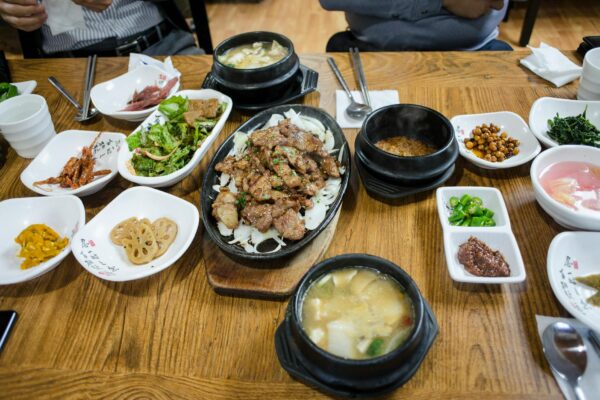
- Doenjang jjigae: A bowl of doenjang jjigae (Korean fermented soybean paste stew) alongside japchae and rice makes for a classic, deeply satisfying Korean home meal.
Storage and Reheating
Japchae is best eaten on the day it is made, as the noodles continue to absorb the dressing and soften over time. That said, leftovers stored in an airtight container in the refrigerator will keep for up to 3 days. The flavour remains excellent, though the noodles will be softer.
To reheat, place the japchae in a pan over medium heat with a small splash of water or sesame oil and stir-fry gently for 2–3 minutes until heated through. Add a drizzle of soy sauce and sesame oil to refresh the seasoning, as the noodles will have absorbed much of the original dressing. Japchae does not freeze well — the noodles become mushy upon thawing, so it is best made fresh or stored only in the refrigerator.
Many Korean cooks prepare each component in advance (blanched spinach, sliced vegetables, cooked beef) and store them separately in the fridge for up to 24 hours, then cook the noodles and assemble fresh when ready to serve. This is a practical approach when cooking for a party or celebration.