Sinigang is the sour, savory soup that Filipino families turn to for comfort, and it earns its place as one of the country’s most beloved dishes. Built around tamarind broth and loaded with vegetables, it strikes a balance between sharp acidity and rich, meaty depth that is immediately recognizable and deeply satisfying.
What Is Sinigang?
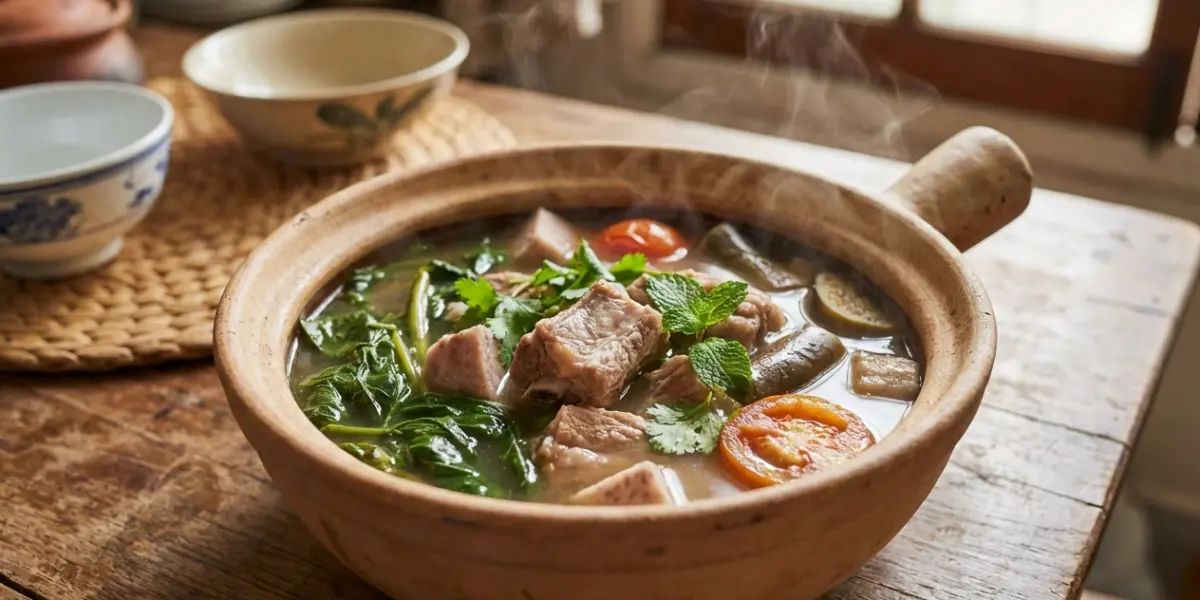
Sinigang (pronounced see-NEE-gang) is a Filipino sour soup made with meat or seafood and an assortment of vegetables, all simmered in a broth acidified with tamarind. The sourness is the defining characteristic — it should be pronounced, not just a hint — and it comes most traditionally from green, unripe tamarind (sampalok). Other souring agents appear across regions: guava (bayabas), green mango, calamansi, and bilimbi (kamias) each produce a slightly different kind of tartness, but tamarind remains the standard.
The dish predates Spanish colonization, appearing in Filipino records well before the influence of European or Asian trade routes reshaped local cuisine. Its name derives from the Tagalog verb sigang, meaning to cook in a sour broth. Pork and shrimp are the two most common proteins, though beef, fish, and chicken versions exist. Pork belly (liempo) and pork ribs are the cuts traditionally used — both benefit from a long simmer that renders the fat and softens the meat until it collapses from the bone.
The vegetable combination is flexible but typically includes sitaw (long beans), kangkong (water spinach), eggplant, radish, and tomatoes. The tomatoes dissolve partially into the broth, adding body. Fish sauce (patis) is the salt of choice, stirred in at the end and offered at the table for additional seasoning.
Ingredients
For the sinigang (serves 4–6):
- 1 kg (2.2 lbs) pork belly or pork ribs, cut into 5 cm (2-inch) pieces
- 2 medium tomatoes, quartered
- 1 medium white onion, quartered
- 2 litres (8 cups) water
- 1 packet (40g / 1.4 oz) tamarind soup base (sinigang mix), or 200g (7 oz) fresh tamarind pulp, boiled and strained
- 1 medium Japanese eggplant, cut into 4 cm (1.5-inch) rounds
- 200g (7 oz) long beans (sitaw), cut into 5 cm (2-inch) lengths
- 1 medium daikon radish, peeled and sliced into 1 cm (0.4-inch) rounds
- 150g (5 oz) water spinach (kangkong), stems and leaves separated
- 2–3 tbsp fish sauce (patis), to taste
- 2 fresh green chillies (optional, for heat)
- Freshly ground black pepper, to taste
Ingredient notes: Sinigang mix packets are sold in Asian supermarkets under the Knorr or Mama Sita’s brand. Fresh tamarind gives more complexity but requires extra preparation. Kangkong wilts quickly — add it at the very end of cooking. If unavailable, substitute baby spinach.
How to Make Sinigang
- Blanch the pork (optional but recommended): Place pork pieces in a pot, cover with cold water, and bring to a boil. Cook for 3 minutes, then drain and rinse under cold water. This removes impurities and produces a cleaner broth.
- Build the broth: In a large pot over medium-high heat, combine the blanched pork, tomatoes, and onion with 2 litres of fresh water. Bring to a boil.
- Simmer the pork: Reduce heat to medium-low, cover, and simmer for 45–60 minutes until the pork is tender but not yet falling apart. Skim any foam that rises to the surface during the first 10 minutes.
- Add the souring agent: Stir in the tamarind mix (or strained fresh tamarind pulp). Taste the broth — it should be noticeably sour. Add more tamarind if needed.
- Add hardy vegetables first: Add the daikon radish. Cook for 8 minutes until the radish begins to turn translucent.
- Add the remaining vegetables: Add the eggplant and long beans. Cook for 5–6 minutes until just tender.
- Season with fish sauce: Add 2 tablespoons of fish sauce and black pepper. Taste and adjust — the broth should be sour, savory, and lightly salty. Add more fish sauce or tamarind as needed.
- Add kangkong last: Add the kangkong stems first and cook for 1 minute, then add the leaves and cook for 30 seconds more until just wilted.
- Serve immediately in deep bowls over steamed white rice, with extra fish sauce and fresh chillies on the side.
Tips for the Best Sinigang
- Use bone-in cuts. Pork ribs or bone-in belly deliver far more flavor to the broth than boneless pork. The collagen from the bones enriches the soup as it simmers.
- Don’t rush the simmer. Pork belly needs at least 45 minutes to become tender. Rushing produces chewy, tough meat. You can simmer up to 90 minutes for fall-off-the-bone texture.
- Add vegetables in stages. Daikon takes longest; kangkong takes seconds. Staggering the additions prevents everything from turning mushy at the same time.
- Taste the sourness before adding vegetables. Get the broth’s acid level right at step 4 — it will mellow slightly as the vegetables release moisture, so err on the slightly tarter side.
- Fresh tamarind beats powder for depth. If you have access to fresh tamarind pods, simmer the pulp in 2 cups of water, strain it, and use the liquid. The flavor is more complex and less one-dimensional than the packets.
Variations
Sinigang na Hipon (Shrimp Sinigang): Replace pork with 500g (1 lb) of whole shell-on shrimp. The shrimp cook in just 3–5 minutes, so add them after all the vegetables. The broth becomes sweeter and lighter.
Sinigang sa Miso: Add 3 tablespoons of white miso paste to the broth along with the tamarind. The miso deepens the umami and softens the sourness slightly. This version is common with fish — bangus (milkfish) is the classic choice.
Beef Sinigang: Substitute pork with 1 kg of beef short ribs or brisket. Simmer for at least 2 hours (or use a pressure cooker for 40 minutes) before adding vegetables. Beef sinigang has a more robust, mineral flavor.
What to Serve With Sinigang
- Steamed white rice — essential, eaten by spooning the broth directly over the rice in the bowl
- Patis (fish sauce) and chillies — served on the side so each diner can adjust sourness and heat
- Fried galunggong (round scad) or tuyo (dried salted fish) — a traditional pairing that adds contrasting crispy, salty elements
- Ensaladang talong (grilled eggplant salad) — a simple Filipino side that complements the soup’s acidity
Storage and Reheating
Store sinigang in an airtight container in the refrigerator for up to 3 days. The kangkong will discolor and soften overnight — this is normal and does not affect taste. Reheat gently on the stovetop over medium-low heat; avoid boiling aggressively, which can make the pork tough. The broth’s sourness intensifies slightly after a day in the fridge, which many Filipinos actually prefer. Sinigang does not freeze well due to the vegetable content — the eggplant and leafy greens become unpleasantly mushy when thawed.