Last updated: March 27, 2026
Rice noodles are arguably the most versatile and widely used noodle category in Asian cooking, slipping with quiet ease into soups, stir-fries, salads, spring rolls, and curries from Yangon to Ho Chi Minh City. Pulled from a tradition that stretches back more than two thousand years across Southern China and Southeast Asia, they exist in dozens of shapes and widths, from gossamer-thin vermicelli to wide, slippery ribbons that drape around braised beef. They are naturally gluten-free, shelf-stable in their dried form, and forgiving enough for beginners while rewarding to cooks who chase the perfect bowl of pho or pad see ew.
This guide walks through every aspect of rice noodles: how they were born along the rivers of Southern China, the major varieties you will encounter at an Asian grocery, how to read a noodle package, how to soak versus boil them, how to store and substitute, five canonical recipes that show off their range, and how they fit into a balanced diet. By the end, you will know exactly which noodle to reach for whether you are simmering a Vietnamese beef broth or tossing a chilled Thai salad.
What Are Rice Noodles?
Rice noodles are noodles made from rice flour and water, sometimes with the addition of tapioca starch or cornstarch to improve elasticity and chew. Unlike wheat-based noodles, they contain no gluten, which gives them a softer, slipperier mouthfeel and a slightly translucent appearance once cooked. The dough is typically made into a thin batter, steamed in sheets, and then cut into strands, or it is extruded directly into hot water to set the shape.
Across Asia, rice noodles go by a dizzying number of names. In Mandarin they are mi fen or he fen, in Cantonese they are mai fun or ho fun, in Vietnamese they are bun, pho, banh pho, or hu tieu, in Thai they are sen mee, sen lek, and sen yai, and in the Philippines they appear as bihon. Each name signals a slightly different width, texture, or regional style. Despite the variety, the core idea is the same: a noodle that carries broth, sauce, and aromatics without competing with them.
Rice noodles can be sold dried, fresh, or as flat sheets that you cut yourself. Dried noodles are the easiest to find outside Asia because they store almost indefinitely at room temperature. Fresh rice noodles, sold in refrigerated plastic bags at Asian markets, have a delicate bite and a satin sheen that dried noodles can only approximate, but they spoil within two or three days. Knowing which form to buy is half the battle of cooking with them well.
The History and Origin of Rice Noodles
The story of rice noodles begins in Southern China, most likely along the Yangtze and Pearl River basins, where rice cultivation has been the foundation of agriculture for more than five thousand years. The traditional account places their invention in Guangxi or Guangdong during the Qin dynasty, when soldiers from the wheat-eating north were stationed in the rice-growing south. According to one popular story, the soldiers craved noodles but had no wheat, so cooks ground rice into a paste, steamed it, and cut it into strands. Whether or not the legend is literal, archaeological and textual evidence does place rice noodle production in Southern China by at least the early imperial era.
From Southern China, the technology traveled along trade routes and migration corridors into Vietnam, Thailand, Laos, Cambodia, Burma, Malaysia, Indonesia, and the Philippines. Each region adapted the noodle to local ingredients and climate. Vietnam developed bun and pho noodles to pair with fresh herbs and clear beef and pork broths. Thailand turned out sen lek for pad thai and sen yai for pad see ew. Burma made the soft round noodles that anchor mohinga, the national breakfast soup. The Philippines, influenced by both Chinese traders and Spanish colonizers, embraced bihon and palabok as fiesta staples.
The industrialization of rice noodles in the twentieth century was a quiet revolution. Mechanical extruders and continuous steamers made it possible to produce uniform noodles at scale, and improved drying technology let producers ship them around the world. Today, rice noodles are made in industrial volumes in Thailand, Vietnam, China, and Taiwan, and exported globally. Even so, in many Asian cities you can still buy fresh ho fun cut from a steaming sheet that morning, a reminder of how the noodle began.
How Rice Noodles Are Made
Despite the variety of finished products, almost all rice noodles start from one of two methods: the steamed sheet method or the extrusion method. The steamed sheet method, used for flat noodles like ho fun and banh pho, begins by milling long-grain rice into flour and mixing it with water and a small amount of starch into a thin, pourable batter. The batter is ladled onto a flat tray or cloth, spread into a thin layer, and steamed for a minute or two until it sets into a glossy sheet. The sheet is then folded, oiled lightly to prevent sticking, and cut into ribbons of the desired width.
The extrusion method is used for round noodles like bun and sen mee. Here, the rice flour and water are mixed into a stiffer dough, sometimes briefly fermented to develop flavor and softness, then forced through a perforated plate directly into a pot of boiling water. The noodles cook for a few seconds as they fall through the water, then are rinsed in cold water to halt the cooking and stop them from sticking. Some traditional producers in Yunnan and Northern Vietnam still ferment the rice batter for a day or two before extruding, which gives the finished noodle a faintly sour tang.
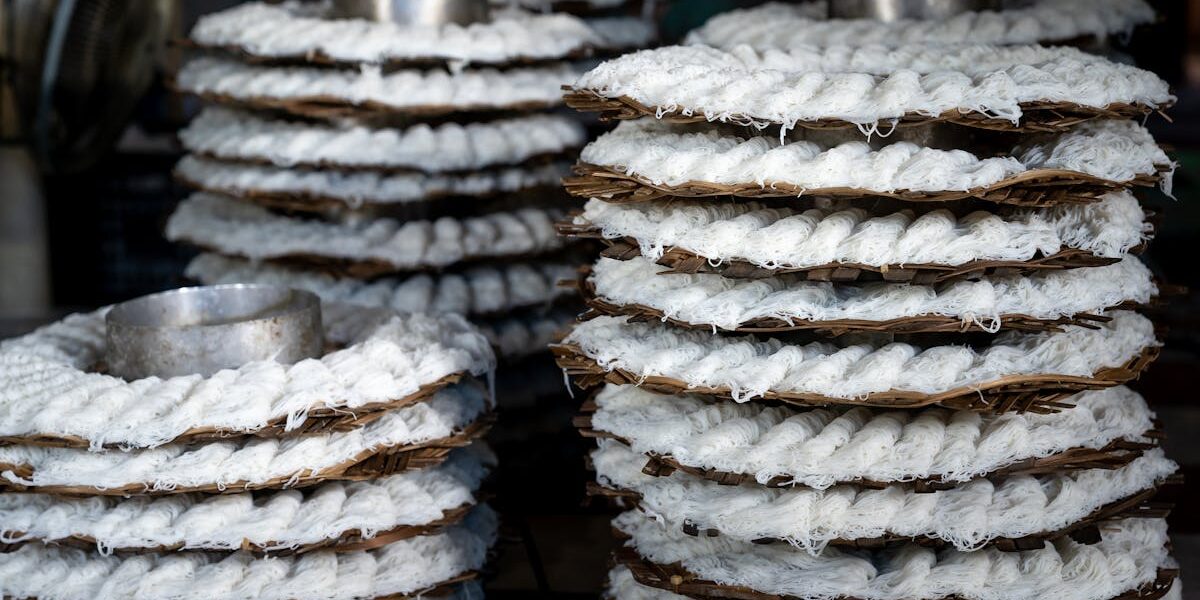
After cooking, fresh noodles can be sold as is, refrigerated for two to three days. To produce dried noodles, the fresh strands are folded into bundles or nests, then dried in temperature-controlled chambers until their moisture content drops below twelve percent. Properly dried rice noodles can keep for a year or more in a sealed bag, which is why most home cooks outside Asia rely on the dried form. The trade-off is texture: dried noodles never quite recover the silky pliability of freshly steamed sheets.
Major Varieties of Rice Noodles
Walk down the noodle aisle of a well-stocked Asian market and you will see at least a dozen distinct rice noodles, often with overlapping names. Sorting them by width and shape is the most practical way to learn them.
Rice Vermicelli (Thin Round Noodles)
Rice vermicelli is the thinnest rice noodle, roughly the diameter of a sewing thread. In China it is mi fen, in Vietnam it is bun, in Thailand it is sen mee or khanom jeen, and in the Philippines it is bihon. Dried vermicelli looks like white angel-hair pasta and softens in a few minutes of hot water. It is the noodle in Singapore noodles, Vietnamese bun bowls, Thai pad woon sen substitutes, and Filipino pancit bihon.
Sen Lek (Medium Flat Noodles)
Sen lek are flat rice noodles about three millimeters wide, the classic pad thai noodle. In Vietnam, the close cousin is banh pho, the noodle for the famous beef noodle soup. Dried sen lek is sold in clear plastic packs labeled simply ”rice stick noodles” or ”Chantaboon” rice noodles after the Thai region of Chanthaburi where they were first industrialized.
Sen Yai and Ho Fun (Wide Flat Noodles)
Sen yai in Thailand and ho fun (also written he fen or hor fun) in Cantonese cuisine are wide, slippery, ribbon-like noodles, typically a centimeter or more across. Fresh ho fun is the gold standard for beef chow fun and pad see ew, while dried versions exist but lack the same satin chew. In Vietnam, the wide noodle for pho is sometimes also called banh pho, but you may see a wider version sold for hu tieu or specifically labeled banh pho lon.
Mixian, Bun Bo Hue, and Round Thick Noodles
Yunnan mixian, Vietnamese bun bo Hue noodles, and Burmese mont di are round rice noodles thicker than vermicelli, often between two and four millimeters in diameter. They have a slightly chewy bite from longer fermentation and pair well with rich, spicy broths. If you cannot find these specifically, thick spaghetti-sized dried rice noodles often labeled ”Jiangxi mi xian” make a reasonable substitute.
Rice Sheets, Spring Roll Wrappers, and Specialty Forms
Not all rice flour products are strand noodles. Cantonese cheong fun is a rolled rice noodle sheet stuffed with shrimp or beef and steamed for dim sum. Vietnamese banh trang are dried round rice paper sheets soaked briefly in water to wrap fresh summer rolls. Both are made from essentially the same batter as rice noodles, just shaped differently. Knowing this helps you understand why their cooking principles overlap with rice noodles even though their uses look very different.
Rice Noodle Variety Comparison Table
| Variety | Width | Shape | Origin | Classic Use |
|---|---|---|---|---|
| Rice Vermicelli (bun, bihon, mi fen) | 0.8–1 mm | Round | Southern China, SE Asia | Bun bowls, pancit, spring roll filling |
| Sen Mee (Thai vermicelli) | 1 mm | Round | Thailand | Boat noodles, mee krob |
| Banh Pho / Sen Lek | 3–5 mm | Flat | Vietnam, Thailand | Pho, pad thai |
| Sen Yai / Ho Fun | 10–25 mm | Flat wide | Thailand, Guangdong | Pad see ew, beef chow fun |
| Mixian (Yunnan) | 2–3 mm | Round | Yunnan, China | Crossing-the-bridge noodles |
| Bun Bo Hue Noodles | 2–3 mm | Round | Central Vietnam | Bun bo Hue spicy beef soup |
| Mont Di / Mohinga Noodles | 1.5–2 mm | Round | Myanmar | Mohinga fish noodle soup |
| Cheong Fun Sheet | Wide sheet | Flat sheet | Guangdong | Dim sum rice noodle rolls |
| Banh Trang | 16–22 cm round | Translucent sheet | Vietnam | Summer rolls, banh trang nuong |
How to Buy Rice Noodles
Buying rice noodles well starts with the package label. Look for ”rice flour” and ”water” as the first two ingredients, with at most a small amount of tapioca starch, cornstarch, or salt added. Avoid noodles with long ingredient lists that include modified starches, preservatives, or vegetable oils unless you are buying a specialty product. The best dried rice noodles come from Thailand, Vietnam, or Taiwan, where the climate and rice varieties are best suited to noodle making.
For dried noodles, check that the strands are intact and pale white with a faintly translucent glow. Yellow or grayish tones can indicate stale stock or inferior rice. Bend a strand: it should snap cleanly, not crumble. For fresh noodles in the refrigerated case, look for a uniform pale color and a soft, pliable feel through the plastic. Avoid packages with visible condensation or any sticky brown spots, which signal early spoilage.
Pay attention to width markings, which vary by manufacturer. Thai brands often use S, M, and L codes for sen mee, sen lek, and sen yai. Vietnamese brands may list a number like ”banh pho 3mm” or ”5mm.” When in doubt, eyeball the strands through the clear window in the package and match the width to your recipe. For pad thai, three to five millimeters is the sweet spot. For pho, three millimeters or thereabouts. For chow fun, look for the widest flat noodles you can find, or buy fresh.
If you have access to a Cantonese, Vietnamese, or Thai market with a fresh noodle counter, treat yourself to fresh ho fun or banh pho at least once. The textural difference is profound. Fresh noodles need to be used within forty-eight hours of purchase, ideally the same day, and they often come already lightly oiled to keep them from sticking together.
Storage Tips for Rice Noodles
Dried rice noodles are among the most forgiving pantry items you can stock. Store unopened packages in a cool, dry cabinet away from direct sunlight, and they will keep for one to two years past their purchase date without meaningful loss of quality. Once opened, transfer leftover noodles to an airtight container or zip-top bag to keep humidity out, especially in summer or in humid climates. Moisture is the enemy: a humid pantry can cause dried noodles to lose snap and develop musty notes.
Fresh rice noodles are the opposite. They must be refrigerated and used within two to three days of purchase. If you must keep them slightly longer, you can place the unopened package in the coldest part of the refrigerator, but expect the texture to firm up and become chalky after the second day. To revive slightly hardened fresh noodles, microwave them in their bag for thirty seconds, then loosen the strands by hand under warm running water before adding to a hot pan.
Cooked rice noodles do not store well. They continue to absorb moisture and swell, becoming bloated and mushy by the next day. If you must store cooked noodles, toss them with a teaspoon of neutral oil before refrigerating, and reheat by tossing in a hot wok with a splash of water rather than reheating in the microwave. For meal prep, it is almost always better to store the protein and sauce separately and cook fresh noodles to order.
Freezing fresh rice noodles is possible but not ideal. The strands tend to break and become brittle when thawed because the starch retrogrades during freezing. If you do freeze, divide into single-meal portions, wrap tightly, and use within one month. Thaw at room temperature, then steam briefly to revive before cooking.
How to Cook Rice Noodles Correctly
The most common mistake home cooks make with rice noodles is boiling them like spaghetti. Rice noodles, especially the thinner and flatter varieties, do not need to be boiled at all. The correct approach for most dried rice noodles is to soak them in warm or hot water until pliable but still firm, then finish the cooking in the broth or wok where they will absorb flavor. Boiling fully cooked rice noodles before stir-frying almost guarantees a sticky, mushy result.
For pad thai or other stir-fries using sen lek, soak the dried noodles in lukewarm water for thirty to forty minutes until they are bendable and slightly al dente. They will look about eighty percent of their final hydrated size. Drain thoroughly. When you add them to the hot wok with sauce, they will absorb liquid and finish cooking in two or three minutes. For pho and other soups, soak the same noodles in warm water for twenty minutes, then drop them into rapidly boiling water for ten to twenty seconds just before serving. Drain, divide into bowls, and ladle hot broth on top.
Vermicelli is the quickest. Pour boiling water over dried bun or bihon, let stand for three to five minutes, drain, and rinse with cold water if you are using them in a cold or room-temperature bowl. Wide ho fun, if dried, requires the longest soak, typically forty-five minutes in warm water followed by a brief boil. Fresh ho fun simply needs to be loosened by hand under warm water to separate the strands before going into the wok.
Mixian and thicker round noodles often benefit from a brief boil of three to five minutes after a soak, because their density does not always hydrate enough through soaking alone. Taste a strand: it should be tender with the slightest resistance at the center. Once cooked, rinse with cold water for cold preparations, or transfer directly to broth or wok for hot ones.
Rice Noodle Substitution Table
Substituting one rice noodle for another usually works as long as you match the general width and texture. Substituting non-rice noodles is trickier but possible for many dishes. Use this table as a quick reference.
| If You Need | Best Substitute | Second Choice | Notes |
|---|---|---|---|
| Rice Vermicelli (bun) | Bihon, Thai sen mee | Capellini (gluten) | Match width, cook time |
| Banh Pho (3 mm) | Thai sen lek, dried pad thai noodle | Linguine (gluten) | Slightly thicker is fine |
| Sen Yai / Ho Fun (wide) | Fresh kway teow | Pappardelle (gluten) | Texture differs, sauce sticks well |
| Yunnan Mixian | Thick spaghetti-shaped rice noodle | Bun bo Hue noodle | Slightly chewier okay |
| Bun Bo Hue Noodle | Yunnan mixian | Thick round udon (not gluten-free) | Round and chewy |
| Cheong Fun Sheet | Homemade rice batter sheet | Thin lasagna noodle (gluten) | Difficult to truly replicate |
| Glass Noodles (mung bean) | Rice vermicelli | Sweet potato starch noodles | Less translucent, similar slip |
| Egg Noodles (Cantonese) | Wide rice ho fun | Soba (gluten) | Loses egg flavor |
Five Recipes Using Rice Noodles
The best way to understand rice noodles is to cook with them. The five recipes below cover the broadest spectrum of techniques: a Thai stir-fry with sweet-sour-salty balance, a Vietnamese soup that is the gold standard for rice noodles in broth, a Cantonese smoky wok dish, a chilled Vietnamese rice vermicelli bowl, and a Northern Thai curry noodle that is one of the great soup noodles of the world.
1. Pad Thai with Sen Lek
Pad thai is the dish that introduced rice noodles to most of the Western world. The noodle is sen lek, a flat three-to-five-millimeter dried noodle that softens to a tender chew. Soak 200 grams of dried sen lek in lukewarm water for thirty minutes. In a wok over high heat, scramble two eggs in a tablespoon of oil, push them aside, add three sliced shallots and three minced garlic cloves, then add 200 grams of peeled shrimp or pressed tofu and stir-fry for a minute. Add the drained noodles and a quarter cup of pad thai sauce (tamarind paste, fish sauce, palm sugar, in roughly equal parts). Toss for two to three minutes until the noodles absorb the sauce. Finish with bean sprouts, chopped chives, crushed roasted peanuts, and a lime wedge. The noodles should be glossy, separated, and slightly chewy. Read the full authentic pad thai recipe for a deeper dive into the sauce.
2. Vietnamese Pho with Banh Pho Noodles
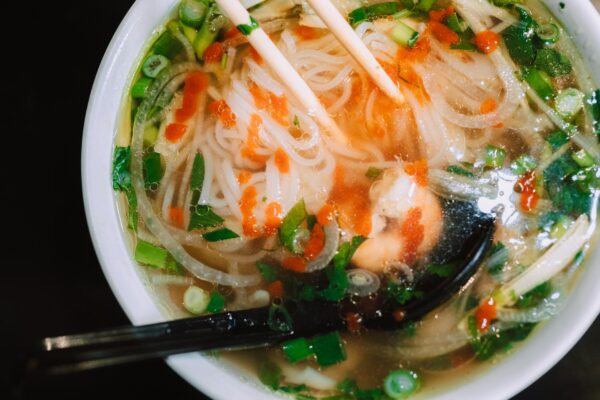
Pho is the platonic ideal of a rice noodle soup: a clear, slow-simmered beef broth, soft tender noodles, paper-thin raw beef that cooks in the broth, and a forest of fresh herbs. Start with a homemade or quality store-bought pho broth, simmered with charred onion and ginger, star anise, cloves, cinnamon, and beef bones. Soak 200 grams of dried banh pho in warm water for twenty minutes. Boil a kettle of water and dunk the drained noodles for ten seconds, then divide between bowls. Top with paper-thin slices of raw eye round steak, then ladle bubbling hot broth on top to cook the beef. Serve with bean sprouts, Thai basil, cilantro, lime, and sliced bird’s eye chilies. See our detailed pho broth guide for the foundation.
3. Cantonese Beef Chow Fun with Fresh Ho Fun
Beef chow fun is the quintessential test of a Cantonese stir-fry cook: silky, smoky, with the unmistakable ”wok hei” perfume of seared rice noodles. Use 400 grams of fresh ho fun, separated gently by hand. Marinate 250 grams of thinly sliced flank steak in a tablespoon of soy sauce, a teaspoon of cornstarch, and a teaspoon of Shaoxing wine. Heat a wok until smoking, add two tablespoons of oil, sear the beef in a single layer, then remove. Add bean sprouts and a bunch of garlic chives cut in two-inch lengths. Add the noodles and a sauce of dark soy sauce, light soy sauce, sugar, and a splash of stock. Toss with a flat wok spatula, not a stirring motion, lifting from underneath so the noodles do not break. Return the beef, toss once more, and serve immediately. The wok hei guide explains the smoky technique in detail.
4. Bun Thit Nuong (Vietnamese Grilled Pork Vermicelli Bowl)
Bun thit nuong shows off rice vermicelli in its cold-bowl glory. Marinate thinly sliced pork shoulder in a paste of lemongrass, garlic, fish sauce, sugar, and a splash of oil for at least an hour, then grill until the edges char. Soak 200 grams of dried rice vermicelli in just-boiled water for three minutes, drain, and rinse in cold water. Build the bowl with vermicelli on the bottom, then shredded lettuce, cucumber matchsticks, pickled carrot and daikon, fresh mint, and the grilled pork. Top with crushed peanuts, fried shallots, and chopped scallion oil, then drench in nuoc cham (fish sauce, lime juice, sugar, garlic, chili, water). The noodle stays cool and silky against the warm pork and tangy dressing.
5. Khao Soi with Rice Noodle Base
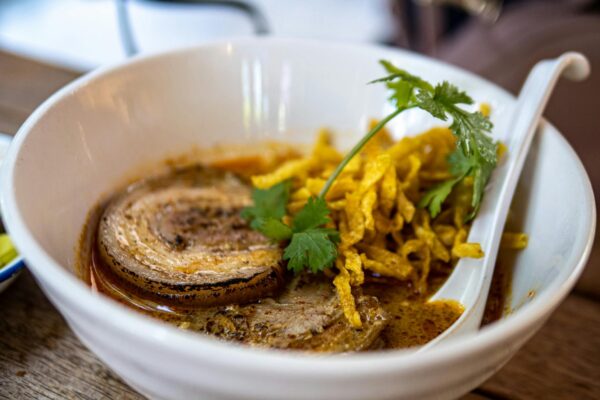
Khao soi is traditionally made with egg noodles, but a popular Northern Thai variation uses rice noodles in the broth and reserves crispy fried noodles for the topping. Make a base from yellow curry paste, coconut milk, and chicken stock, then simmer chicken thighs until tender. Soak 150 grams of dried banh pho until pliable, then briefly blanch and divide into bowls. Top with curry, then pile on shallot, lime, pickled mustard greens, and a tangle of deep-fried wonton strips or fried rice vermicelli. The contrast of slippery rice noodles in spiced coconut broth and the crackle of fried noodle topping is among the great textural pleasures of Asian cooking. The full khao soi recipe walks through the curry paste.
Nutritional Benefits of Rice Noodles
From a nutritional standpoint, rice noodles are essentially a refined carbohydrate. A cooked one-cup serving of rice noodles delivers roughly 190 to 220 calories, about 44 grams of carbohydrates, 3 to 4 grams of protein, almost no fat, and very little fiber. They are naturally gluten-free, which makes them a welcome staple for people with celiac disease or gluten sensitivity. They also contain no eggs or dairy, fitting into vegan and vegetarian diets without modification.
The glycemic index of cooked rice noodles is medium-high, around 60 to 70 depending on the variety and cooking method, which means they raise blood sugar more quickly than whole grains. For people managing diabetes or insulin resistance, the best practice is to pair them with substantial protein, vegetables, and a small amount of healthy fat, which slows the glycemic response. Throwing rice noodles into a bowl of pho with thinly sliced beef, herbs, and bean sprouts is a far more balanced meal than eating noodles alone.
Some brown rice noodles are now available, made with brown rice flour or a blend of brown and white rice. These offer more fiber and trace minerals like magnesium and selenium, but they also have a chewier, slightly grainier texture that does not work for every dish. They shine in noodle salads, less so in delicate broths like pho. If you want more fiber from a rice noodle meal, the highest-impact change is loading the bowl with vegetables and herbs rather than switching the noodle itself.
Sodium is the variable to watch most closely. The noodles themselves are nearly sodium-free, but the sauces and broths they swim in (soy sauce, fish sauce, broth bases) can deliver a day’s worth of sodium in a single bowl. If you cook rice noodles often, learn to season conservatively and balance with acid (lime, vinegar) and aromatics (ginger, garlic, chili), which give big flavor without adding salt.
Rice Noodles in Asian Pantry Planning
If you are setting up an Asian pantry, two or three types of rice noodles cover most weeknight needs. A bag of thin rice vermicelli handles bun bowls, spring roll fillings, and quick soups. A bag of medium banh pho (three-millimeter flat) covers pad thai and pho. A bag of wide dried ho fun stands in for chow fun in a pinch, although fresh is dramatically better if you can find it. Together, that is roughly 800 to 1,500 grams of dried noodles, a six-month supply for an average household, at a total cost of under fifteen dollars at most Asian markets.
Rice noodles also play well with the rest of an Asian pantry. They are the carbohydrate platform that makes soy sauce, fish sauce, sesame oil, oyster sauce, and chili oil sing. Pair them with a few proteins (eggs, tofu, ground pork, shrimp), a handful of aromatics (garlic, ginger, scallions, lemongrass), and some vegetables (bean sprouts, bok choy, mushrooms, leafy greens), and you can make at least twenty different dishes from the same starting set.
Storage-wise, rice noodles take up surprisingly little cabinet space. A standard 400-gram package is about the size of a thin paperback book and can be stacked vertically in a drawer. This makes them ideal for small kitchens and apartments where pantry real estate is precious.
Common Mistakes with Rice Noodles
The single most common mistake, already mentioned, is overcooking. Dried rice noodles continue to soften in residual heat and in any sauce or broth they touch, so they should always come off the heat slightly underdone. If you boil dried sen lek for eight minutes and then add it to a hot wok with sauce, you will end up with mush. Soak briefly, drain, then finish cooking in the wok.
The second mistake is over-stirring. Rice noodles are more delicate than wheat noodles and will break into shorter pieces if you toss them aggressively. In a stir-fry, lift and fold them gently with a wide spatula rather than stirring. In a soup, pour broth over the noodles rather than dropping noodles into the boiling pot, where the agitation can shred them.
The third mistake is not separating them before they cook. Fresh ho fun, fresh banh pho, and freshly soaked dried noodles all tend to stick to themselves. Gently massaging and separating the strands before they hit the heat or broth makes the difference between a clumpy, gluey result and a glossy, distinct strand. If they are particularly clumpy, a brief dip in warm water with a teaspoon of oil helps.
The fourth mistake is using the wrong width for the dish. Pad thai made with vermicelli loses its bite; pho made with wide ho fun loses its elegance. The width is part of the dish’s identity. If you can only find one width, lean toward the wider option for stir-fries and the narrower option for soups, but ideally match the recipe.
Rice Noodles Around Asia: Regional Specialties
Every rice-growing region in Asia has its signature noodle dish. In Vietnam alone, you can spend a year eating a different rice noodle preparation every day, from pho in Hanoi to bun bo Hue in the central coast to hu tieu in the south. In Thailand, the noodle traditions of Bangkok (pad thai, kuay tiew nam), the north (khao soi), and the south (mee hokkien) are each distinct, with their own preferred noodle widths and sauces.
In Southern China, the Guangdong tradition built around ho fun and chow fun runs alongside Fujian’s thin mi xian noodles and Yunnan’s chewy mixian that anchor crossing-the-bridge noodles, where hot broth cooks raw ingredients at the table. In Myanmar, mohinga, a fish-based rice noodle soup, is the country’s unofficial national dish and breakfast of choice. In Indonesia and Malaysia, bihun (the same word as bihon) appears in soup dishes like soto and fried in mee siam.
The Philippines has a particularly strong rice noodle tradition thanks to centuries of Chinese influence. Pancit bihon, pancit palabok, pancit Malabon, and many other regional variations all use rice vermicelli as the base, dressed with everything from soy and calamansi to a sun-dried-shrimp gravy thickened with annatto. Each version reflects the local ingredients and the family’s claim to the best recipe.
FAQ: Rice Noodles
Are rice noodles gluten-free?
Pure rice noodles, made from rice flour and water, are naturally gluten-free. Some commercial brands add wheat starch or are processed in facilities that handle wheat, so people with celiac disease should always read the label and look for an explicit gluten-free certification.
Are rice noodles healthier than wheat noodles?
Calorie-for-calorie, rice noodles and wheat noodles are roughly comparable. Rice noodles are slightly lower in protein, contain no gluten, and have a similar glycemic impact to most refined wheat noodles. Neither is dramatically healthier than the other; what matters most is what you pair them with.
Why are my rice noodles always mushy?
The most likely reason is that you boiled them like spaghetti. Most rice noodles should be soaked in warm water until pliable, drained, then finished in the wok or broth. They cook far faster than wheat noodles and absorb additional moisture from sauce or stock.
Can I make rice noodles from scratch at home?
Yes, especially the flat sheet varieties. The traditional method is to mix rice flour, tapioca starch, and water into a batter, steam thin layers on a flat tray, and cut the sheets into strands. The technique is closely related to making cheong fun rice noodle rolls and is well within reach for a confident home cook.
What is the difference between rice noodles and glass noodles?
Rice noodles are made from rice flour and turn opaque white when cooked. Glass noodles, sometimes called cellophane or mung bean noodles, are made from mung bean starch or sweet potato starch and turn fully transparent when cooked. The two have different chew, with glass noodles bouncier and more elastic.
How long do dried rice noodles last?
Unopened, dried rice noodles keep for one to two years past the printed best-by date, sometimes longer, if stored cool and dry. Once opened, transfer to an airtight container; in a humid climate, refrigeration extends shelf life. Discard if you see any mold, off smells, or insect activity.
Can I substitute fresh rice noodles for dried in any recipe?
Usually yes, with adjustments. Fresh noodles need only to be loosened with warm water, not soaked, and they cook in seconds. As a general rule, 200 grams of dried noodles equals about 400 grams of fresh, since dried noodles roughly double in weight upon hydration.
Why do my rice noodles stick together?
Two reasons: insufficient water during soaking, or sitting in the colander too long after draining. Use plenty of water, drain quickly, and either toss with a teaspoon of neutral oil or add to the dish immediately. For fresh noodles, separate strands by hand before they hit the heat.
What rice noodles are best for pho?
Look for dried banh pho noodles in the three-to-five-millimeter flat range, ideally a Vietnamese or Thai brand labeled specifically for pho. Some specialty grocers and Vietnamese restaurants also sell fresh banh pho, which is silkier and a noticeable upgrade.
Are rice noodles vegan?
Almost always, yes. Pure rice noodles contain only rice flour, water, and sometimes tapioca starch or cornstarch. None of these are animal-derived. Check labels to be sure no egg or animal products have been added, which is rare but possible in some specialty noodles.
Bringing It All Together
Rice noodles deserve a permanent spot in any cook’s pantry. They are inexpensive, shelf-stable, naturally gluten-free, and remarkably versatile across cuisines, from Vietnamese pho to Cantonese chow fun to Filipino pancit. The keys to cooking them well are simple: choose the right width for your dish, soak rather than boil, separate the strands before they cook, finish them in the sauce or broth, and serve immediately.
Once those fundamentals click, the noodle becomes a blank canvas. Pair them with a Thai stir-fry sauce, a Vietnamese herb plate, a Cantonese wok sear, or a Burmese fish broth, and the same package of dried noodles will produce wildly different meals. That is the everyday magic of rice noodles: a humble ingredient born along the rivers of Southern China that, two millennia later, still bends easily to whatever flavor you put in front of it.
Stock a few widths, treat them gently, and you have one of the most useful tools in Asian home cooking sitting in your cabinet, ready for any night of the week.

Mei Lin Chen
Mei Lin Chen is an Asian food writer and recipe developer. Melbourne-raised and London-based, she has spent over a decade exploring the rice paddies, hawker stalls, and home kitchens of South-East and East Asia. Her recipes balance traditional technique with everyday practicality.