Last updated: March 23, 2026
Yunnan cuisine is one of the most exciting regional Chinese food traditions that most Americans have never tasted. Tucked into the far southwest corner of China, bordered by Myanmar, Laos, Vietnam, and Tibet, Yunnan province is a mountainous tapestry of 25 recognized ethnic minorities, more than 800 edible wild mushroom species, and a culinary identity that borrows freely from Southeast Asian neighbors while remaining deeply Chinese. For home cooks and food lovers searching beyond the familiar borders of Sichuan, Cantonese, and Hunan, Yunnan opens a doorway to some of the most aromatic, herbal, and ingredient-driven cooking in all of Asia.
This guide walks you through the history, regions, essential pantry, must-try dishes, and core techniques of Yunnan cuisine. Whether you are a restaurant industry professional tracking the hyper-regional authenticity trend of 2026 or a curious cook planning your first Yunnan-inspired meal, you will find everything you need to understand this extraordinary cuisine and start cooking it at home.
A Brief History of Yunnan Cuisine
Yunnan’s culinary history stretches back more than two thousand years and reflects the province’s role as a cultural crossroads between the Chinese heartland, Tibet, and Southeast Asia. The name Yunnan means ”south of the clouds,” a poetic reference to the province’s location south of the Yunling mountain range. Its cooking has been shaped by extreme geography, with elevations ranging from subtropical river valleys near Xishuangbanna to alpine meadows above 13,000 feet in the Tibetan borderlands.
During the Han dynasty, Yunnan was a distant frontier that contributed exotic goods like cowrie shells, bronze, and horses to the imperial court. The opening of the Southern Silk Road, also called the Tea Horse Road, turned Yunnan into a vibrant trading hub where caravans carried Pu’er tea, salt, and spices between China, Tibet, Burma, and India. Many of the cuisine’s defining flavors, including the abundant use of fresh herbs, grilled meats, and fermented ingredients, entered the Yunnan kitchen through these cross-border exchanges.
The Ming and Qing dynasties brought successive waves of Han Chinese settlers, particularly soldier-farmers from Jiangsu and Hunan. They introduced stir-frying techniques, cured hams, and a love of rice cakes that fused with indigenous Bai, Dai, Yi, and Naxi food traditions. The result is a cuisine that feels simultaneously familiar to anyone who has eaten Chinese food and distinctly otherworldly to anyone expecting another round of dan dan noodles or char siu. For broader context on Chinese regional cooking, see our complete guide to Chinese recipes.
The Regions of Yunnan and Their Signature Styles
Yunnan is not a single unified food region. The province covers 152,000 square miles, nearly the size of California, and its cuisine fragments into at least five distinct sub-styles based on climate, ethnicity, and geography. Understanding these sub-regions is the single best way to make sense of the enormous variety you encounter in Yunnan restaurants.
Kunming and Central Yunnan
The provincial capital, Kunming, sits on a high plateau and represents the most cosmopolitan face of Yunnan cooking. This is the home of Crossing-the-Bridge Noodles, steam-pot chicken, and many of the dishes that traveled out to represent Yunnan food in other parts of China. Central Yunnan cooking leans on milder, herbal flavors with generous use of local mushrooms and Xuanwei ham.
Dali and the Bai Homeland
Dali, on the shore of Erhai Lake, is the cultural capital of the Bai people. Bai cuisine favors fresh-water fish, sour pickled vegetables, and a distinctive cow’s milk cheese called rushan that is draped in long ribbons and fried until golden. The style is lighter and tangier than central Yunnan food.
Xishuangbanna and the Dai South
In the tropical south along the Mekong River, Dai cooking borrows heavily from Thai and Lao food. Expect sticky rice, grilled tilapia stuffed with lemongrass, banana leaf-wrapped parcels, and liberal use of chili, galangal, and makrut lime. The line between Dai and Thai food is linguistically and culinarily faint.
Lijiang and the Naxi Highlands
The Naxi people of northwestern Yunnan cook heartier food suited to cool mountain elevations. Naxi specialties include baba flatbreads, yak meat dishes, and the famous Jidou Liangfen, a chilled chickpea jelly noodle.
Shangri-La and the Tibetan Borderlands
High-altitude northwest Yunnan overlaps with Tibetan food culture. Butter tea, barley tsampa, and yak-based stews dominate. For more on this style, see our Tibetan food guide.
Essential Yunnan Ingredients
The Yunnan pantry is unlike any other regional Chinese kitchen. The province’s biodiversity gives cooks access to wild mushrooms, fresh herbs, cured hams, and fermented pastes that rarely appear in Sichuan or Cantonese cookbooks. If you want to build a starter Yunnan pantry, focus on the ingredients in the table below.
| Ingredient | Chinese Name | Role in Yunnan Cooking | Substitute |
|---|---|---|---|
| Xuanwei ham | 宣威火腿 | Aged dry-cured ham used in soups, stir-fries, and steam-pot dishes | Jinhua ham, Spanish jamón, or prosciutto |
| Matsutake mushroom | 松茸 | Prized wild mushroom grilled, steamed, or sliced raw | Fresh porcini or king trumpet |
| Chicken-leg mushroom | 鸡枞菌 | Summer mushroom used in soups and stir-fries | Oyster or maitake |
| Huajiao (Sichuan peppercorn) | 花椒 | Numbing spice used sparingly compared to Sichuan | See our Sichuan peppercorn guide |
| Rubing cheese | 乳饼 | Cow’s milk curd cheese, pan-fried or grilled | Fresh halloumi or paneer |
| Rushan cheese | 乳扇 | Stretched cow’s milk ”fan” cheese | String cheese (pan-fried) |
| Er kuai rice cakes | 饵块 | Chewy rice cakes for stir-fries and grilling | Korean tteok or mochi |
| Mi xian rice noodles | 米线 | Round rice noodles, the foundation of breakfast | Thick rice vermicelli, see rice noodles guide |
| Lemongrass | 香茅草 | Used in Dai grilled fish and stir-fries | See our lemongrass guide |
| Dai-style chili paste | 舂辣子 | Pounded fresh chilies with herbs for dips | Fresh sambal or Thai nam prik |
| Pu’er tea | 普洱茶 | Fermented tea used for drinking and tea-smoked dishes | Aged dark teas |
| Doubanjiang | 豆瓣酱 | Chili bean paste used in some southern Yunnan dishes | See our doubanjiang guide |
| Wild tree tomatoes | 树番茄 | Tangy-sour tomato used in Dai and Wa dips | Tamarillos or tart Roma tomatoes |
| Banana flower | 香蕉花 | Thinly sliced for Dai salads | Thinly sliced artichoke hearts |
| Sawtooth coriander | 刺芹 | Herb with stronger flavor than cilantro | Regular cilantro plus parsley |
One of the most striking features of a Yunnan pantry is how much of it overlaps with Southeast Asian pantries. If you already cook Thai, Burmese, or Lao food, you have a head start. If not, many of these ingredients are available at Chinese and pan-Asian grocery stores. For a broader introduction, see our complete guide to Asian cooking ingredients.
12 Must-Try Yunnan Dishes
Below are the dishes that define Yunnan cuisine for visitors and locals alike. If you are planning a Yunnan dinner, try to include at least one dish from each category: a noodle soup, a grilled item, a cheese or tofu dish, and a ham or mushroom specialty.
1. Crossing-the-Bridge Noodles (Guo Qiao Mi Xian)
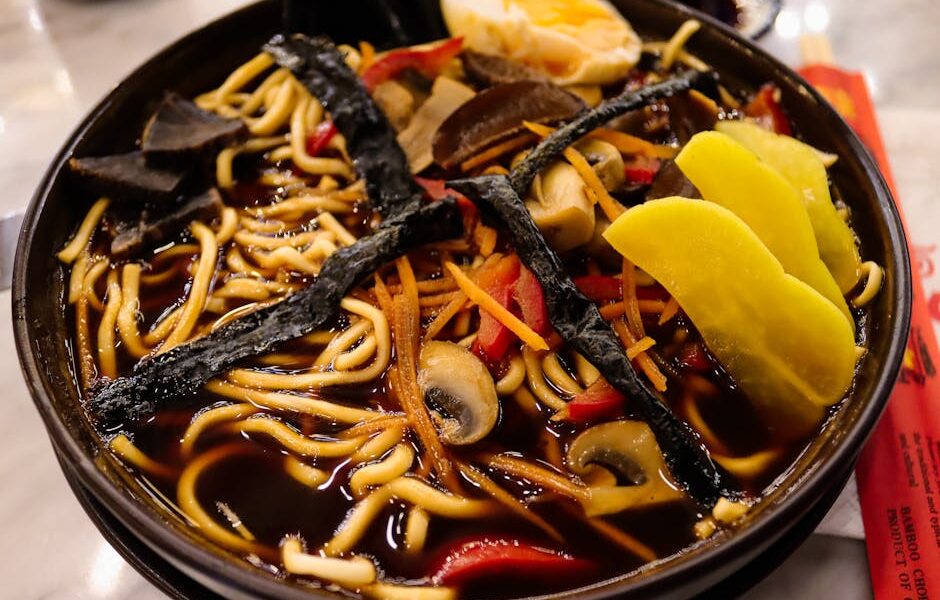
Yunnan’s most famous dish and a deserved national treasure. A scalding bowl of chicken broth arrives with a slick of oil on top that traps heat. Diners add raw, thinly sliced chicken, pork, fish, quail egg, vegetables, chrysanthemum petals, and rice noodles, which cook instantly at the table. The legend claims a Qing dynasty scholar’s wife invented the dish to keep his lunch hot during long walks across a bridge to his study.
2. Steam-Pot Chicken (Qi Guo Ji)
Cooked in a signature Jianshui clay pot with a chimney-like spout rising into the interior, steam-pot chicken produces an ethereal clear broth flavored with ginger, Yunnan ham, and wolfberries. The dish is a master class in steam cooking; the broth forms entirely from condensed steam and the chicken’s own juices. For more on clay cooking, see our clay pot cooking guide.
3. Xuanwei Ham with Honey
One of China’s three great hams, Xuanwei ham is dry-cured for at least two years at elevation. It appears in steam-pot chicken, wild mushroom stir-fries, and a celebrated dessert of steamed ham slices glazed with honey and served with mantou buns. The fat renders into something between Spanish jamón and Chinese lap yuk.
4. Wild Mushroom Stir-Fry (Ye Sheng Jun Chao)
During the summer rainy season, Kunming markets overflow with dozens of fresh wild mushroom varieties. A simple stir-fry of ji zong (chicken-leg mushroom), jian shou qing, or matsutake with garlic, dried chili, and a splash of lard is one of the purest pleasures in Chinese cooking. Yunnan cooks treat wild mushrooms with the same reverence Italians reserve for white truffles.
5. Er Kuai Stir-Fry (Chao Er Kuai)
Er kuai are chewy rice cakes made by steaming and then pounding short-grain rice. Sliced thin, they stir-fry with pickled mustard greens, ham, and eggs in a dish that tastes like the Yunnan answer to Korean tteokbokki or Japanese mochi stir-fry.
6. Fried Rushan Cheese (Zha Ru Shan)
Rushan is a Bai specialty: cow’s milk stretched into long ”fan” ribbons and sun-dried. Fried until crisp and dusted with sugar or rose petal jam, it is equal parts snack, dessert, and oddity. Rushan pairs beautifully with Pu’er tea.
7. Dai-Style Grilled Fish (Bao Shao Yu)
A whole tilapia or carp is slit, stuffed with lemongrass, sawtooth coriander, garlic, chili, and tomato, then clamped between bamboo tongs and grilled over charcoal. The result has obvious kinship with Thai pla pao but uses distinctively Yunnanese herbs.
8. Pineapple Rice (Bo Luo Fan)
A Dai specialty from Xishuangbanna: purple glutinous rice steamed inside a hollowed pineapple with cashews, raisins, and a touch of honey. The dish is a regular fixture at banquet tables and wedding feasts across the south.
9. Mint Chicken Salad (Bo He Ji)
Poached chicken is shredded and tossed with a generous fistful of fresh mint, crushed peanuts, chili oil, lime juice, and a splash of fish sauce. The dish reads as more Laotian than Chinese and reflects how porous Yunnan’s southern borders truly are.
10. Naxi Baba Flatbread
Round flatbreads made from wheat flour, lard, and a filling of brown sugar, ham, or pickled greens, then pan-fried on a griddle. They are the quintessential Lijiang street-food breakfast and pair beautifully with butter tea.
11. Jidou Liangfen
A chilled jelly noodle made from chickpea flour. The translucent noodles are cut into thick ribbons and dressed with chili oil, black vinegar, garlic, sesame paste, and cilantro. It is refreshing in a way that few cold Chinese dishes manage and a Lijiang classic.
12. Rice Wine Sweet Soup (Jiu Niang Yuan Zi)
A dessert of tiny glutinous rice balls simmered in sweet fermented rice wine with a beaten egg swirled in. Yunnan cooks often add rose petal jam or tree tomato, pushing the flavor into distinctly local territory.
Core Techniques of Yunnan Cooking
Yunnan cooks use fewer heavy sauces than their Sichuan and Cantonese counterparts. The techniques emphasize preserving the natural flavor of ingredients rather than transforming them with overwhelming seasoning. Here are the methods that define the cuisine.
Steam-Pot Cooking
The Jianshui clay pot has an internal spout that channels steam up and into the chamber where food sits. As steam condenses on the cool lid, it drips back down, slowly poaching the ingredients in their own juices. The result is an almost impossibly clear broth. Steam-pot cooking works best with aromatic proteins like chicken, pigeon, or silkie, and it requires long cooking times of two to four hours.
Banana Leaf Roasting (Bao Shao)
A Dai technique where ingredients like fish, mushrooms, tofu, or minced pork are wrapped in banana leaves and grilled directly over embers. The leaf chars and imparts a subtle grassy aroma while sealing in moisture.
Pestle-and-Mortar Pounding (Chong)
Chong means to pound, and the Dai kitchen produces countless dips and salads this way. Green papaya, tomato, chili, garlic, and herbs are pounded together in a large wooden mortar until the textures blend. The technique is identical to Thai som tam preparation.
Dry-Frying (Gan Bian)
Yunnan cooks dry-fry mushrooms, Yunnan ham, and green beans at high heat with minimal oil to concentrate flavor and drive off moisture. The technique is closely related to Sichuan gan bian but uses less chili. See our how to stir-fry guide for wok technique fundamentals.
Sour-Spicy Dipping Sauces (Zhan Shui)
Many Yunnan tables arrive with multiple dipping sauces: a chili-lime-cilantro sauce for grilled meat, a vinegar-garlic sauce for dumplings, a fermented tofu sauce for vegetables. The sauces are usually built from fresh, not cooked, ingredients.
Cold Tossing (Liang Ban)
Yunnan excels at cold dishes, from liangfen noodles to poached chicken salads. The toss is done à la minute with chili oil, vinegar, mint, and crushed peanuts. Compared to northern Chinese cold dishes, Yunnan versions read as brighter and herbier.
Yunnan vs. Sichuan vs. Cantonese: How They Compare
Because Yunnan food is still relatively unknown in the United States, it is helpful to locate it on the map of Chinese regional cuisines. The table below compares Yunnan cooking with two of the better-known regional styles.
| Feature | Yunnan | Sichuan | Cantonese |
|---|---|---|---|
| Flavor profile | Herbal, fresh, mildly sour-spicy | Numbing-spicy (ma la), bold | Clean, umami-driven, subtly sweet |
| Signature technique | Steam-pot, banana-leaf grilling | Stir-fry with toasted chilies | Steaming, roasting, dim sum |
| Key aromatics | Fresh mint, lemongrass, sawtooth coriander | Sichuan peppercorn, dried chili | Ginger, scallion, white pepper |
| Starch base | Rice noodles, er kuai rice cakes | Rice, wheat noodles | Long-grain rice, wonton |
| Protein highlight | Free-range chicken, wild mushrooms, fresh-water fish | Pork, tofu, offal | Seafood, roast meats |
| Borrowed influences | Thai, Lao, Burmese, Tibetan | Mongolian, Hunan | Teochew, Hakka, Southeast Asian |
| Heat level | Medium, herbal | High, numbing | Low |
| Cheese usage | Yes (rushan, rubing) | None | None |
| Iconic dish | Crossing-the-Bridge Noodles | Mapo Tofu | Char Siu |
For deeper dives into the comparison points above, see our regional guides to Sichuan food, Cantonese food, and Hunan food.
The Role of Wild Mushrooms in Yunnan Cooking
No ingredient defines Yunnan like wild mushrooms. The province is home to more than 800 edible species and accounts for two-thirds of China’s total wild mushroom harvest. In the summer rainy season from June through September, Kunming’s Mushan market fills with baskets of ji zong, qing tou jun, niu gan jun, and matsutake, and restaurants build entire seasonal menus around whichever species arrived that morning.
Cooking wild mushrooms in Yunnan is a matter of safety as much as flavor. Certain species, like jian shou qing (the ”sitting-spectator mushroom”), are mildly toxic if undercooked and require a full fifteen-minute sauté in lard with slices of garlic. Local diners know the rules, and restaurant menus sometimes include a warning notice. At home, stick to commonly available species like matsutake, porcini, and king trumpet, which carry no toxicity risk.
A classic Yunnan mushroom preparation pairs three or more species in a single hotpot flavored with chicken, Xuanwei ham, and wolfberries. The broth is sipped slowly over a two-hour meal as the mushrooms infuse layer after layer of umami. For home cooks, a simpler approach is a dry-fry of mixed mushrooms with garlic, dried chili, and a splash of soy sauce.
Crossing-the-Bridge Noodles in Depth
Crossing-the-Bridge Noodles deserve their own section because the dish embodies so much of what makes Yunnan food special: the elegance of clear broth, the theatrics of DIY table cooking, the reliance on rice noodles rather than wheat, and the willingness to combine textures and temperatures in a single bowl.
The broth is the most important component. Made from old hen, pork bones, and Xuanwei ham simmered for six to eight hours, it is served scaldingly hot with a thick layer of rendered chicken fat floating on top. That fat layer acts as insulation, keeping the broth above 180°F long enough to cook delicate ingredients added at the table.
Typical add-ins include paper-thin slices of raw chicken breast, pork loin, and fresh-water fish; a raw quail egg; bean sprouts; pea shoots; tofu skin; chrysanthemum petals; and, crucially, the rice noodles themselves. You drop the protein in first, then the vegetables, then the noodles. Within ninety seconds, everything is cooked and the bowl is ready to eat.
At home, you can approximate Crossing-the-Bridge Noodles with a rich homemade chicken stock, thinly sliced raw chicken from the freezer (easier to slice when semi-frozen), and dried rice noodles rehydrated in hot water. The experience is not exactly the same as eating it in Kunming, but it is genuinely delicious.
Ethnic Minority Influences on Yunnan Cuisine
Yunnan is officially home to 25 recognized ethnic minority groups in addition to the Han Chinese majority. Each group brings its own food traditions, and many Yunnan restaurants specialize in the cooking of a single minority. The major culinary contributions include:
- Bai (Dali): Erkuai rice cakes, rushan cheese, pickled fresh-water fish, preserved plum dishes.
- Dai (Xishuangbanna): Sticky rice, grilled fish in banana leaves, pineapple rice, lemongrass and galangal pastes.
- Yi (Chuxiong): Mountain goat stews, smoked ham, fermented tofu, roasted buckwheat cakes.
- Naxi (Lijiang): Baba flatbreads, yak jerky, butter tea, pickled mustard greens.
- Hani (Honghe): Terraced red rice, bamboo-tube rice, banana-heart soup.
- Wa (Cangyuan): Sour tree-tomato salads, smoked meats, chili dips pounded in wooden mortars.
- Lisu and Lahu: Wild game, fermented soybeans, blood cakes, millet beer.
- Tibetan (Shangri-La): Butter tea, tsampa, yak stews (see our Tibetan food guide).
This ethnic diversity is a major reason why Yunnan cuisine has become a symbol of China’s hyper-regional authenticity trend in 2026. Consumers searching for food that has not been mass-marketed are finding their way to Dai and Bai restaurants in Kunming, and increasingly in New York, San Francisco, and Los Angeles.
Meal Planning: How to Build a Yunnan Dinner at Home
A balanced Yunnan meal uses the same shared-dish structure as most regional Chinese cuisines, but with attention to Yunnan’s characteristic textures and flavors. Aim for the following five elements on your table.
- A brothy dish: Steam-pot chicken, a simple wild mushroom soup, or Crossing-the-Bridge Noodles.
- A grilled or roasted protein: Dai-style grilled fish, Xuanwei ham with honey, or lemongrass chicken wings.
- A cold herbal salad: Mint chicken salad, Dai banana-blossom salad, or pounded eggplant dip.
- A vegetable or mushroom stir-fry: Pea shoots with garlic, dry-fried mixed mushrooms, or pickled mustard greens with ham.
- A starch: Steamed rice, purple glutinous rice, er kuai rice cakes, or mi xian rice noodles. For technique, see our how to cook rice guide.
Serve everything family-style with several dipping sauces on the table. Yunnan meals pair beautifully with Pu’er tea, rice wine, or a crisp lager. Avoid heavy-bodied red wines, which overwhelm the delicate broths.
Where to Buy Yunnan Ingredients in the US
Sourcing Yunnan ingredients in the United States has become dramatically easier over the past five years. Here is a practical buying strategy.
- Rice noodles and er kuai: Most Chinese supermarkets carry dried mi xian rice noodles. Er kuai can be substituted with Korean tteok (rice cakes) or Japanese kirimochi.
- Xuanwei ham: Rarely available in the US. Substitute Jinhua ham, Spanish jamón serrano, or good prosciutto. Jinhua ham is occasionally sold frozen at large Asian markets.
- Wild mushrooms: Dried matsutake, porcini, and wood ear are widely available online. Fresh king trumpet, maitake, and oyster mushrooms work well as substitutes for Yunnan’s native varieties.
- Rushan and rubing cheese: Almost impossible to find outside Yunnan. Substitute halloumi for rubing and pan-fried string cheese for rushan.
- Dai-style chili pastes: Use fresh sambal oelek, Thai nam prik, or pound your own with bird’s-eye chilies, garlic, lemongrass, and lime.
- Sichuan peppercorns and doubanjiang: Widely available. See our guides to Sichuan peppercorn and doubanjiang.
- Fresh herbs: Mint, cilantro, and Thai basil are easy. Sawtooth coriander (aka culantro) appears in Caribbean and Vietnamese markets.
- Pu’er tea: Available from specialty tea importers. Look for ripe (shou) Pu’er for cooking and raw (sheng) Pu’er for drinking.
Common Mistakes to Avoid When Cooking Yunnan Food
Home cooks approaching Yunnan food for the first time often overcompensate for the lack of familiar flavors with too much of the wrong thing. Here are the most common pitfalls.
- Overseasoning broths: Yunnan broths are minimally seasoned to let the chicken, ham, and mushrooms speak. Resist the urge to add soy sauce or bouillon cubes to steam-pot chicken.
- Using cilantro when sawtooth coriander is needed: The two herbs are not the same. If you cannot find sawtooth coriander, use a mix of cilantro stems and flat-leaf parsley for more savory depth.
- Undercooking wild mushrooms: When buying wild-harvested mushrooms from an Asian market, always cook them for at least ten minutes. This is not a matter of texture; it is a safety rule.
- Boiling rice noodles too long: Yunnan mi xian should be silky, almost slippery, and never mushy. Soak dried noodles in hot water rather than boiling them, and finish in the soup for 30 seconds.
- Forgetting the dipping sauces: Zhan shui dipping sauces are not optional; they are often what distinguishes one regional Yunnan style from another.
- Skipping the ham: Even one slice of good cured ham transforms the flavor of a Yunnan soup. Do not omit it.
- Treating Dai food as Thai food: They overlap, but Dai cooking uses less coconut milk and more local herbs. Respect the difference.
Pu’er Tea and the Yunnan Tea Culture
Yunnan is the birthplace of tea. The province holds the world’s oldest cultivated tea trees, some of which are more than 3,200 years old. Pu’er, named for the trading town of Pu’er in southern Yunnan, is the province’s most famous tea and one of the few teas in the world that is intentionally aged and fermented.
There are two broad categories of Pu’er. Sheng (raw) Pu’er is processed lightly and ages over decades, developing complex floral and stone-fruit flavors. Shou (ripe) Pu’er is fermented in controlled conditions for 45 to 70 days and yields a darker, earthier, more immediately accessible tea. Both styles are pressed into cakes, bricks, or tuo (nest) shapes that can be stored for years.
In Yunnan cooking, Pu’er tea appears as a beverage at every meal, but it is also used to smoke duck and chicken, to braise pork belly in Dai-style preparations, and to flavor eggs in tea-egg snacks. The tea’s mellow earthiness pairs naturally with the cuisine’s mushrooms and cured hams.
How Yunnan Cuisine Fits into the 2026 Hyper-Regional Trend
Restaurant analysts have named hyper-regional authenticity as the dominant Asian food trend of 2026. Diners who have exhausted the basics of Sichuan, Cantonese, and Hunan are now searching for lesser-known provinces with distinctive identities. Yunnan sits at the center of this wave for several reasons.
First, Yunnan’s cuisine looks nothing like the strip-mall Chinese food that most Americans grew up with. There is no sweet-and-sour chicken, no lo mein, no crab rangoon. Second, Yunnan offers a natural bridge to the Southeast Asian flavors that US consumers already love. Diners comfortable with Thai or Vietnamese cooking find Dai food instantly accessible. Third, Yunnan’s biodiversity creates menus that change with the seasons, which appeals to the same audience that seeks out farmers-market cooking and farm-to-table restaurants.
New Yunnan-focused restaurants have opened in New York, the San Gabriel Valley, San Francisco, Chicago, and Houston over the past three years. At the same time, home cooks are ordering Yunnan ingredients online and watching Kunming food-market videos on TikTok. If you are just beginning to explore Chinese regional cooking, starting with Yunnan in 2026 is an exceptionally well-timed choice.
Frequently Asked Questions About Yunnan Cuisine
Is Yunnan food spicy?
Moderately. Yunnan food uses fresh chilies more than dried, and the heat level is usually balanced by herbs and acid. Compared to Sichuan or Hunan, Yunnan leans milder, though specific Dai and Wa dishes can rival any Sichuan stir-fry for heat.
What makes Yunnan cuisine unique compared to other Chinese regional cuisines?
Three features stand out: the abundance of wild mushrooms, the Southeast Asian influence from Dai and Wa minorities, and the use of dairy products (rushan and rubing cheese) in a Chinese cuisine. No other major regional Chinese cooking tradition combines these elements.
Can I cook Yunnan food without specialty equipment?
Mostly yes. You do not need a Jianshui steam pot; a regular double-boiler setup approximates steam-pot cooking. You do not need a bamboo mortar; a heavy pestle-and-mortar or even a food processor pulsed carefully works for Dai dips. A wok is useful for stir-frying (see our best wok guide) but a wide, heavy skillet can substitute.
Is Yunnan food healthy?
Yunnan’s reliance on fresh herbs, mushrooms, lean proteins, and clear broths places it among the healthier regional Chinese cuisines. The cured hams and fried cheeses should be consumed in moderation. The cuisine’s vegetable-forward Dai dishes are particularly well suited to a Mediterranean-style eating pattern.
What is the difference between Dai food and Thai food?
The Dai people are ethnically related to Thais (both belong to the broader Tai-Kadai language family), and many of the ingredients overlap. However, Dai cooking uses less coconut milk, fewer shrimp paste-based dishes, more tree tomato and tamarillo, and more Chinese-style stir-frying techniques. Dai food is also more likely to include fresh-water fish than seafood.
What rice should I use for Yunnan cooking?
For most Yunnan dishes, long-grain Thai jasmine rice is an excellent choice. For Dai dishes from the south, use sticky rice (glutinous rice) soaked overnight and steamed. For Hani red rice dishes, look for unpolished red cargo rice from Thailand or California. For Bai rice cake preparations, use short-grain Calrose or Japanese short-grain rice. See our best rice for Asian cooking guide.
Can I make Crossing-the-Bridge Noodles without a chicken-based broth?
You can make a vegetarian version with a rich mushroom broth built from dried shiitake, king trumpet, and kombu. You lose the Xuanwei ham dimension, but the dish remains satisfying. Use flavored oils (chili, sesame) to create the insulating fat cap that keeps the broth hot enough to cook the add-ins.
Are wild mushrooms from Yunnan safe to eat?
Properly identified and properly cooked, yes. Yunnan mushroom poisoning cases each year almost always involve misidentification at home rather than restaurant meals. As a home cook outside Yunnan, stick to cultivated and widely recognized wild varieties like matsutake, porcini, morels, and chanterelles, and cook them fully.
What should I order at a Yunnan restaurant in the US?
Start with Crossing-the-Bridge Noodles to anchor the meal. Add a steam-pot chicken if the restaurant offers one. Round it out with a Dai-style grilled fish or mint chicken salad, a wild mushroom stir-fry, and a side of purple sticky rice. If you see rubing cheese or er kuai on the menu, order them.
Is Yunnan cuisine suitable for vegetarians?
Surprisingly yes. The cuisine’s vegetable and mushroom repertoire is unmatched in Chinese regional cooking. Dai stir-fried mushrooms, Bai pickled vegetable dishes, Jidou Liangfen chickpea jelly noodles, Naxi baba flatbreads with sugar filling, and most wild mushroom hot pots are easily adapted for vegetarian or vegan diets. Just watch out for the fish sauce in some Dai dipping sauces.
Final Thoughts on Cooking Yunnan Food
Yunnan cuisine rewards patience, curiosity, and a willingness to step outside familiar flavor combinations. It asks you to treat ingredients as the main event rather than seasoning, to embrace herbal freshness alongside fermented complexity, and to think of a meal as a constellation of small dishes rather than a single main course. For anyone who has loved exploring Sichuan, Thai, or Vietnamese cooking, Yunnan is the next logical destination.
Start with Crossing-the-Bridge Noodles to understand the cuisine’s love of table-side drama. Graduate to a homemade steam-pot chicken for a weekend project. Build up your herb garden to include mint, Thai basil, and sawtooth coriander. Stock your pantry with dried mushrooms, a good cured ham, and a bottle of quality Pu’er tea. And when you sit down at the table, remember the province’s motto: south of the clouds, the land is rich, the herbs are fragrant, and every meal is a small journey across a bridge.

Mei Lin Chen
Mei Lin Chen is an Asian food writer and recipe developer. Melbourne-raised and London-based, she has spent over a decade exploring the rice paddies, hawker stalls, and home kitchens of South-East and East Asia. Her recipes balance traditional technique with everyday practicality.