Last updated: March 20, 2026
Hainanese chicken rice is one of the most beloved dishes in all of Southeast Asia — and once you taste it, you’ll understand why. Silky poached chicken with impossibly tender skin, fragrant rice cooked in rich chicken fat and broth, and a trio of punchy sauces that tie everything together. It’s comfort food at its finest, deceptively simple yet deeply satisfying. This Hainanese chicken rice recipe walks you through every step to nail this dish at home, from achieving that signature gelatinous skin to building the most aromatic rice you’ve ever tasted.
While the dish traces its roots to Hainan province in southern China, it was perfected in the bustling hawker stalls of Singapore and Malaysia, where it became nothing short of a national treasure. In 2020, Singapore’s hawker culture — including its legendary chicken rice stalls — earned UNESCO Intangible Cultural Heritage status. Versions of this dish exist across Thailand (khao man gai), Vietnam, and Indonesia, each with local twists, but the core technique remains the same: poach the chicken gently, use every drop of that liquid gold broth, and cook the rice in it. Zero waste, maximum flavor.
What Is Hainanese Chicken Rice?
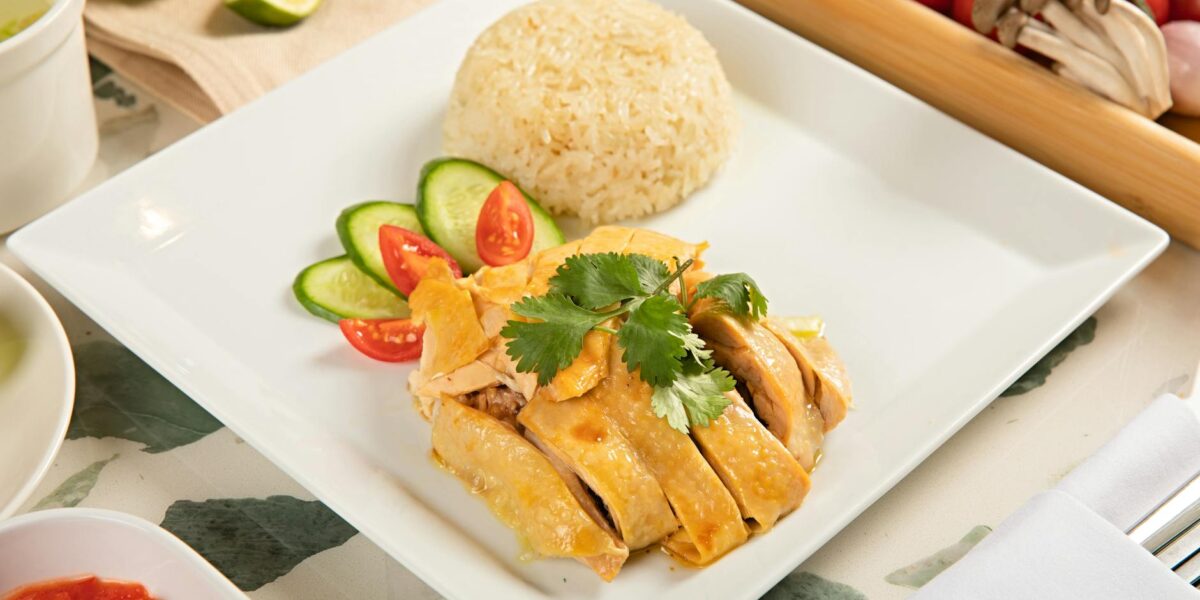
Hainanese chicken rice (海南鸡饭, Hǎinán jī fàn) is a complete meal built around three components: poached chicken, oiled rice, and dipping sauces. The chicken is gently poached in aromatics, then shocked in ice water to achieve that trademark jelly-like skin and silky meat. The poaching broth is then used to cook jasmine rice that’s been toasted in chicken fat, garlic, and ginger — producing grains so fragrant and flavorful they’re practically a dish on their own. The meal is finished with chili sauce, ginger-scallion sauce, and dark soy sauce.
The beauty of this dish lies in its restraint. There are no heavy spices, no aggressive marinades — just clean, pure chicken flavor amplified at every stage. The chicken fat renders into the rice. The poaching liquid becomes a soup course. Even the ginger and scallion trimmings get repurposed. It’s the ultimate nose-to-tail, waste-nothing approach to cooking, and the reason a dish this simple has captivated millions.
Why This Recipe Works
Most home recipes for Hainanese chicken rice fall short in one of three ways: the chicken comes out rubbery, the rice tastes bland, or the sauces are an afterthought. This recipe addresses all three with techniques borrowed directly from Singapore’s best hawker stalls.
First, we use a gentle poach-and-steep method rather than continuous boiling. The chicken goes into boiling water, the heat is killed, and the bird steeps in residual heat. This produces impossibly juicy meat because the proteins never seize up from high, sustained heat. Second, the rice gets a proper toast in rendered chicken fat before the broth goes in — this is the step most recipes skip, and it’s the difference between good rice and transcendent rice. Third, we give the sauces the attention they deserve, because a plate of Hainanese chicken rice without great sauces is like a burger without condiments.
Ingredients for Hainanese Chicken Rice
Here’s everything you need to make authentic Hainanese chicken rice at home. Most of these ingredients are pantry staples in Asian cooking, and you can find all of them at Umami Cart.
For the Poached Chicken
| Ingredient | Amount | Notes |
|---|---|---|
| Whole chicken | 3.5–4 lbs (1.6–1.8 kg) | Free-range preferred for better flavor and texture |
| Fresh ginger | 3-inch piece, sliced | Unpeeled is fine — smash lightly to release oils |
| Scallions | 4 stalks | Tied in a knot for easy removal |
| Salt | 1 tablespoon | Kosher or sea salt |
| Sesame oil | 1 tablespoon | Toasted sesame oil for finishing |
| Pandan leaves (optional) | 2 leaves | Adds a subtle floral aroma |
| Water | Enough to cover the chicken | About 4 quarts in a large stockpot |
For the Chicken Rice
| Ingredient | Amount | Notes |
|---|---|---|
| Jasmine rice | 2 cups (400g) | Long-grain Thai jasmine rice works best |
| Chicken fat | 2 tablespoons | Trimmed from the chicken cavity and rendered |
| Garlic | 4 cloves, minced | Fresh garlic only — no powder |
| Fresh ginger | 1-inch piece, minced | Adds warmth to the rice |
| Chicken broth | 2 cups | From the poaching liquid |
| Pandan leaf (optional) | 1 leaf, knotted | Traditional fragrance booster |
| Salt | ½ teaspoon | Adjust to taste |
For the Chili Sauce
6–8 red bird’s eye chilies (or a mix of Fresno and Thai chilies), 4 cloves garlic, 1-inch piece fresh ginger, 2 tablespoons lime juice, 1 tablespoon chicken broth, 1 teaspoon sugar, ½ teaspoon salt, 1 teaspoon rice vinegar.
For the Ginger-Scallion Sauce
3-inch piece fresh ginger (finely minced), 3 scallions (finely sliced), 3 tablespoons neutral oil (heated until smoking), ½ teaspoon salt, pinch of sugar.
For Serving
Dark soy sauce (sweet), sliced cucumbers, fresh cilantro sprigs, and a bowl of the chicken poaching broth garnished with scallions.
Equipment You’ll Need
You don’t need any special equipment for this recipe, but having the right tools makes the process smoother. A large stockpot (at least 8 quarts) is essential for submerging the whole chicken. You’ll also want a large bowl filled with ice water for the ice bath step. A rice cooker or heavy-bottomed pot with a tight lid handles the rice. A food processor or mortar and pestle makes quick work of the chili sauce. And a Chinese cleaver is ideal for chopping the chicken through the bone, though a sharp chef’s knife works too.
Step-by-Step Instructions
Step 1: Prepare the Chicken
Remove the chicken from the fridge 30 minutes before cooking to take the chill off — this ensures more even cooking. Pull out any excess fat from the cavity and around the neck. Set this fat aside; you’ll render it for the rice. Pat the chicken dry with paper towels. Rub the entire bird, inside and out, with 1 tablespoon of salt. Stuff the cavity with the smashed ginger slices and knotted scallions.
Step 2: Poach the Chicken
Fill a large stockpot with about 4 quarts of water and bring it to a rolling boil. If using pandan leaves, add them now. Carefully lower the chicken into the pot, breast-side down. The water should cover the chicken completely — add more boiling water if needed.
Bring the water back to a boil. This will take 5–8 minutes. Once it reaches a full boil, immediately reduce heat to the lowest possible setting. Cover the pot and let the chicken steep for exactly 45 minutes. Do not lift the lid during this time. The residual heat will gently cook the chicken through without toughening the meat.
To check doneness, insert an instant-read thermometer into the thickest part of the thigh. It should read 165°F (74°C). If it’s not there yet, return the chicken to the hot broth for another 5–10 minutes.
Step 3: Ice Bath
This is the step that gives Hainanese chicken rice its signature look and texture. Prepare a large bowl or basin filled with ice water. The moment the chicken is cooked, transfer it directly into the ice bath. Let it sit for 15 minutes. This rapid cooling does two critical things: it stops the cooking process immediately (preventing overcooking), and it causes the layer of fat under the skin to solidify into that prized gelatinous texture. It also tightens the skin, giving the meat a beautiful, clean appearance when sliced.
After the ice bath, remove the chicken, pat it dry, and rub the skin with a thin layer of sesame oil. This adds a subtle nutty fragrance and a gorgeous sheen. Let the chicken rest at room temperature while you prepare the rice.
Step 4: Render the Chicken Fat
Take the reserved chicken fat and place it in a small pan over medium-low heat. Cook it slowly, stirring occasionally, until the fat melts into liquid gold and the solid pieces turn into crispy cracklings (about 8–10 minutes). Strain the rendered fat — you’ll need about 2 tablespoons for the rice. The cracklings are a cook’s snack: sprinkle them with salt and eat them while you work.
Step 5: Cook the Chicken Rice
Rinse the jasmine rice under cold water until the water runs relatively clear (3–4 rinses). Drain well. Heat the rendered chicken fat in a medium saucepan or rice cooker pot over medium heat. Add the minced garlic and ginger, and sauté for 1–2 minutes until fragrant but not browned.
Add the drained rice to the pot and stir to coat every grain in the chicken fat. Toast the rice for 2–3 minutes, stirring frequently, until the grains turn slightly translucent around the edges. This step is crucial — it’s what gives the rice that distinctive nutty, savory depth.
Add 2 cups of the chicken poaching broth (skim any scum off the top first), the pandan leaf if using, and salt. If using a rice cooker, transfer everything to the cooker and let it do its job. If cooking on the stove, bring to a boil, then reduce heat to the lowest setting, cover tightly, and cook for 18 minutes. Do not lift the lid. After 18 minutes, turn off the heat and let the rice rest, covered, for another 10 minutes. Fluff with a fork or rice paddle.
Step 6: Make the Chili Sauce
Combine the bird’s eye chilies, garlic, ginger, lime juice, chicken broth, sugar, salt, and rice vinegar in a food processor or blender. Pulse until you reach a slightly chunky consistency — you want some texture, not a smooth purée. Taste and adjust: it should be fiery, tangy, and slightly sweet. This sauce is the soul of the dish. In Singapore, hawker stalls are often judged primarily by the quality of their chili sauce.
Step 7: Make the Ginger-Scallion Sauce
Place the finely minced ginger and sliced scallions in a heatproof bowl. Add the salt and sugar. Heat the neutral oil in a small pan until it shimmers and just barely smokes. Pour the hot oil directly over the ginger-scallion mixture — it will sizzle and bubble. Stir to combine. The hot oil blooms the aromatics, creating a sauce that’s sharp, bright, and irresistibly fragrant. This technique is similar to making chili oil — hot oil transforms raw aromatics into something magical.
Step 8: Chop and Serve
Using a sharp cleaver or chef’s knife, cut the chicken into pieces. The traditional Singapore style is to debone the chicken and slice the breast and thigh meat into neat, even pieces about ½-inch thick. Alternatively, you can chop through the bone into bite-sized pieces in the Chinese style.
Arrange the chicken slices on a plate over a bed of sliced cucumbers. Mound the fragrant rice on a separate plate or shape it into a dome using a small bowl. Serve with the chili sauce, ginger-scallion sauce, and a small dish of dark sweet soy sauce on the side. Ladle some of the remaining poaching broth into small bowls, garnish with sliced scallions and white pepper, and serve as a soup course alongside the meal.
Tips for the Best Hainanese Chicken Rice
Choose the right chicken. A whole free-range or kampung (village) chicken makes a noticeable difference. These birds have more flavor and better texture than conventional chickens. If you can find a fresh (never frozen) chicken, even better — frozen birds tend to release more water during poaching, resulting in less concentrated flavor.
Don’t skip the ice bath. This is arguably the most important step in the entire recipe. Without the ice bath, the chicken continues to cook in its own residual heat, the skin loses its gelatinous quality, and the texture becomes more like ordinary boiled chicken. The contrast between the cold, firm jelly-skin and the warm, tender meat is what makes this dish special.
Use the poaching broth for everything. The broth is liquid gold. Use it for the rice. Serve it as soup. Save extras for congee the next morning. This zero-waste approach is baked into the dish’s DNA.
Toast the rice properly. When the rice grains turn slightly translucent and you can smell the chicken fat and garlic, they’re ready for the broth. This step creates a flavor foundation that no amount of broth can replicate on its own.
Temperature control is everything. The gentle poach-and-steep method works because the water temperature drops gradually. If you keep the heat on even at low, you risk overcooking the chicken. Trust the process — kill the heat, close the lid, and walk away.
Make the sauces ahead. Both the chili sauce and ginger-scallion sauce can be made a day in advance and refrigerated. In fact, the chili sauce improves overnight as the flavors meld. Bring them to room temperature before serving.
Variations and Adaptations
Khao Man Gai (Thai version): Thailand’s take on this dish uses a slightly sweeter soybean dipping sauce (tao jiew) alongside the chili sauce. The rice preparation is almost identical, though some Thai cooks add a bit of lemongrass to the poaching liquid. If you love Thai flavors, try adding a splash of fish sauce to the chili sauce instead of salt.
Roasted version: Many Singapore stalls offer roasted chicken rice as an alternative to poached. The chicken is marinated in soy sauce and five-spice powder, then roasted until the skin is caramelized and crispy. The rice and sauces remain the same. To make this at home, roast a marinated chicken at 425°F (220°C) for 45–50 minutes, basting with a mixture of hoisin sauce, honey, and soy sauce.
Instant Pot / pressure cooker method: For a faster weeknight version, poach the chicken on the pressure cooker’s ”poultry” setting for 18 minutes with natural release. The texture won’t be quite as silky as the traditional method, but it’s very close and cuts the cooking time significantly.
Rice cooker shortcut: If you want to streamline, cook the chicken and rice simultaneously. Place seasoned chicken on a rack above the rice in a large rice cooker. The chicken juices drip down into the rice as everything cooks together.
Boneless chicken thighs: If you don’t want to deal with a whole chicken, use 2 lbs of bone-in, skin-on chicken thighs. Reduce the poaching time to 25 minutes. You’ll have less broth, so supplement with store-bought chicken stock for the rice.
Common Mistakes to Avoid
Boiling instead of steeping: The number one mistake is keeping the heat on while the chicken cooks. Active boiling toughens the proteins and squeezes out moisture, leaving you with dry, stringy meat. The gentle steep method is non-negotiable.
Skipping the ice bath: Without this step, the skin turns flabby and the chicken overcooks from carryover heat. Yes, it adds an extra step and you need a lot of ice. It’s worth it.
Using regular cooked rice: Plain steamed rice served alongside poached chicken is not Hainanese chicken rice. The rice must be cooked in chicken fat and broth — this is what elevates the dish from simple to extraordinary.
Underseasoning the sauces: The sauces do the heavy lifting flavor-wise. The chili sauce should be punchy and assertive. The ginger-scallion sauce should sting your nose with fresh ginger. If your sauces taste mild, the whole dish falls flat. Don’t hold back.
Using cold chicken broth for the rice: Always use hot or warm broth when adding it to the toasted rice. Cold broth shocks the grains and can result in unevenly cooked rice.
Nutritional Information
Hainanese chicken rice is a surprisingly well-balanced meal. The chicken provides lean protein, the rice delivers carbohydrates for energy, and the sauces add micronutrients from fresh ginger, garlic, and chilies. Here’s the approximate nutritional breakdown per serving (based on 4 servings).
| Nutrient | Amount per Serving | % Daily Value |
|---|---|---|
| Calories | 620 kcal | 31% |
| Total Fat | 22g | 28% |
| Saturated Fat | 6g | 30% |
| Cholesterol | 145mg | 48% |
| Sodium | 980mg | 43% |
| Total Carbohydrates | 58g | 21% |
| Dietary Fiber | 1g | 4% |
| Protein | 45g | 90% |
| Vitamin A | 85 IU | 2% |
| Vitamin C | 12mg | 13% |
| Calcium | 35mg | 3% |
| Iron | 3.2mg | 18% |
Values are approximate and will vary based on chicken size, the amount of skin consumed, and rice portion size. The dish is naturally gluten-free (assuming gluten-free soy sauce is used). To reduce calories, serve with less rice and more cucumber, or remove the chicken skin before eating.
How to Store and Reheat
Refrigerating: Store leftover chicken and rice separately in airtight containers. The chicken keeps well for 3–4 days in the fridge. The rice is best consumed within 2 days. The sauces last up to 1 week refrigerated. Store the poaching broth separately — it’s excellent for making egg drop soup, wonton soup, or as a base for stir-frying vegetables.
Reheating the chicken: The best method is to steam the chicken pieces for 5–7 minutes until heated through. This preserves the silky texture. Microwaving works in a pinch — cover the chicken with a damp paper towel and heat in 30-second intervals. Avoid pan-frying or oven-reheating, which dries out the delicate meat.
Reheating the rice: Sprinkle a tablespoon of chicken broth or water over the rice, cover, and microwave for 1–2 minutes. The added moisture prevents the rice from drying out. Alternatively, steam the rice in a bamboo steamer for 5 minutes.
Freezing: The poaching broth freezes beautifully for up to 3 months. The chicken can be frozen for up to 1 month but will lose some of its signature silky texture upon thawing. We don’t recommend freezing the cooked rice or sauces — they’re best made fresh.
Hainanese Chicken Rice: A Brief History
The story of Hainanese chicken rice begins on Hainan Island, the southernmost province of China, where a simple dish of boiled chicken and oiled rice called Wenchang chicken (文昌鸡) was a local specialty. In the early 20th century, Hainanese immigrants brought this dish to the port cities of Southeast Asia — Singapore, Penang, Kuala Lumpur, and Bangkok — where it took on new life.
In Singapore, a Hainanese immigrant named Wang Yiyuan is credited with popularizing the dish in the 1930s and 1940s, serving it from a pushcart in the streets. His version — with its signature trio of sauces and chicken fat rice — established the template that Singapore’s hawker stalls follow to this day. The dish evolved from humble street food into a symbol of national identity, appearing on everything from government tourism campaigns to airline menus.
Malaysia, too, claims Hainanese chicken rice as its own, with the debate over its ”true” origin sparking good-natured (and sometimes heated) rivalry between the two countries. The truth is that the dish belongs to the Hainanese diaspora, shaped by every kitchen and hawker stall that’s cooked it. Today, you’ll find outstanding versions from Ipoh to Bangkok to Los Angeles, each reflecting local tastes while honoring the dish’s humble roots.
What to Serve with Hainanese Chicken Rice
In Singapore and Malaysia, Hainanese chicken rice is typically served as a standalone meal — the chicken, rice, sauces, cucumber, soup, and sometimes a small plate of blanched bok choy with oyster sauce. But if you’re serving it for a dinner party or want to build a more elaborate spread, here are some excellent accompaniments:
Vegetables: Blanched choy sum, gai lan (Chinese broccoli), or bok choy dressed with oyster sauce is the classic pairing. A simple cucumber salad with rice vinegar and sesame oil also works beautifully.
Soup: The chicken poaching broth served with sliced wintermelon, napa cabbage, or tofu makes for a light, comforting soup course. Add a few drops of sesame oil and white pepper.
Additional proteins: For a hawker-style feast, add char siu (Chinese BBQ pork), roast duck, or crispy tofu to the table.
Drinks: Iced barley water, chrysanthemum tea, or a cold Tiger beer are all traditional pairings in Singapore.
Frequently Asked Questions
Can I use chicken parts instead of a whole chicken?
Yes, bone-in, skin-on chicken thighs are the best alternative. Use about 2 pounds and reduce the poaching time to 25 minutes. Chicken breasts can also work but are more prone to drying out — remove them from the broth a few minutes earlier and test with a thermometer. The broth from parts won’t be as rich as from a whole bird, so consider supplementing with store-bought chicken stock for the rice.
Why is my chicken rubbery?
Rubbery chicken almost always comes from overcooking. If you kept the heat on during the steeping period, the water stayed too hot for too long. Make sure to turn the heat completely off after the water returns to a boil. Also ensure the chicken was at room temperature before going into the pot — a fridge-cold bird throws off the timing.
How do I get that jelly-like skin?
The ice bath is the key. Plunging the hot chicken into ice water causes the subcutaneous fat layer to rapidly solidify, creating that signature gelatinous texture. Make sure your ice bath is truly cold — use plenty of ice. The chicken should spend a full 15 minutes submerged.
Can I make this in a rice cooker?
The rice can absolutely be made in a rice cooker — just sauté the garlic and ginger in chicken fat on the stovetop first, then transfer everything to the rice cooker. Some large rice cookers can even cook the chicken and rice simultaneously (place seasoned chicken on a steamer tray above the rice), though the texture won’t match the traditional poaching method.
Is Hainanese chicken rice gluten-free?
The base dish (chicken, rice, ginger-scallion sauce, chili sauce) is naturally gluten-free. However, the dark sweet soy sauce served on the side typically contains wheat. Substitute with tamari or a certified gluten-free soy sauce if needed.
What’s the best chicken for this recipe?
In Southeast Asia, free-range kampung chickens are preferred for their firmer texture and more pronounced flavor. In the US, look for free-range or organic whole chickens. Avoid very large birds (over 4.5 lbs) as they take longer to cook through and the outer meat can overcook before the center is done. A 3.5–4 lb bird is ideal.
Can I make this ahead for meal prep?
Hainanese chicken rice is excellent for meal prep. Poach the chicken and make the rice and sauces on Sunday, and you’ll have lunches for 3–4 days. Store the chicken submerged in a small amount of broth to keep it moist. The chili sauce and ginger-scallion sauce keep well for a full week in the fridge.
How is this different from regular boiled chicken?
The technique is fundamentally different. Regular boiled chicken is cooked at a rolling boil, which toughens the proteins. Hainanese-style poaching uses the gentle steep method, where the chicken sits in gradually cooling water. This produces dramatically more tender and juicy results. The ice bath step further differentiates it, creating the unique gelatinous skin that boiled chicken simply doesn’t have. And of course, the fragrant rice and sauces transform it from a plain protein into a complete, multi-layered meal.
Make It Your Own
Hainanese chicken rice is one of those rare dishes where simplicity and depth coexist perfectly. The technique is straightforward, the ingredients are accessible, and the result rivals anything you’d find at a hawker stall. Once you’ve nailed the basic recipe, experiment with your own touches — swap in lemongrass and galangal for the ginger in a Thai-inspired version, try roasting the chicken for a crispy-skinned variation, or make it with duck for something truly decadent.
The essential philosophy of this dish — extracting maximum flavor from minimum ingredients, wasting nothing, and building complexity through technique rather than an endless list of spices — is a masterclass in Asian cooking. It’s the reason Hainanese chicken rice has endured for generations and continues to win new fans around the world. Now it’s your turn. Pick up a good chicken, prep your sauces, and cook yourself a plate of one of Asia’s greatest dishes.

Mei Lin Chen
Mei Lin Chen is an Asian food writer and recipe developer. Melbourne-raised and London-based, she has spent over a decade exploring the rice paddies, hawker stalls, and home kitchens of South-East and East Asia. Her recipes balance traditional technique with everyday practicality.