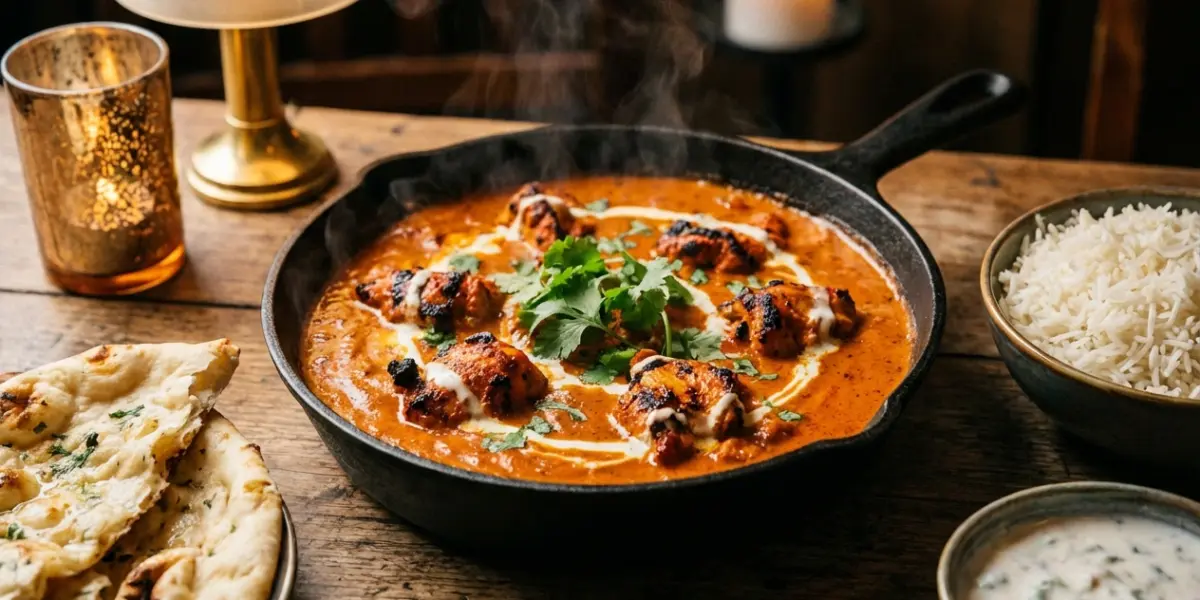
Chicken Tikka Masala is one of the most beloved curry dishes in the world — tender, charred chicken pieces bathed in a rich, creamy tomato-spiced sauce that is both warming and deeply satisfying. Whether its roots are in the Punjab region of India or the kitchens of Glasgow, Scotland, there is no question that this dish has earned its place as a global icon of flavor.
What Is Chicken Tikka Masala?
Chicken tikka masala is a two-part dish: first, boneless chicken is marinated in spiced yogurt and cooked at high heat until charred and smoky — this is the tikka. Then the tikka pieces are simmered in a masala sauce, a velvety blend of tomatoes, cream, onions, garlic, ginger, and aromatic spices. The result is a dish that bridges the smoky intensity of the tandoor with the richness of a braised curry.
The origin debate is well-documented and genuinely contested. Many food historians point to the South Asian diaspora communities in Britain, particularly in Glasgow, where a chef is said to have added a tomato cream sauce to tandoori chicken to satisfy a customer’s request for gravy. Others argue that masala-sauced tikka dishes existed in the Punjab long before the British version was popularized. The truth likely lies somewhere in between — the dish is a genuine evolution shaped by both traditions. What matters for home cooks is not the politics of origin but the method: making it right.
An authentic approach means marinating the chicken twice (a quick acid marinade followed by the spiced yogurt), cooking the tikka in a very hot oven or under a broiler to achieve char, and building the masala sauce from scratch with whole spices bloomed in oil. No premade paste, no shortcuts on the char — these two elements are what separate a deeply flavored chicken tikka masala from a mediocre one.
Ingredients
For the Chicken Tikka
- 700g (1.5 lbs) boneless, skinless chicken thighs, cut into 4cm (1.5-inch) pieces
- 2 tablespoons fresh lemon juice
- 1 teaspoon salt
- 120ml (½ cup) full-fat plain yogurt
- 3 garlic cloves, finely grated
- 1 tablespoon fresh ginger, finely grated
- 1 teaspoon Kashmiri chili powder (or ½ tsp sweet paprika + ½ tsp cayenne)
- 1 teaspoon ground cumin
- 1 teaspoon ground coriander
- ½ teaspoon turmeric
- ½ teaspoon garam masala
- 2 tablespoons neutral oil
For the Masala Sauce
- 3 tablespoons ghee or neutral oil
- 1 large onion, finely diced
- 4 garlic cloves, minced
- 1 tablespoon fresh ginger, minced
- 1 teaspoon cumin seeds
- 2 green cardamom pods, lightly crushed
- 1 bay leaf
- 1 teaspoon ground coriander
- 1 teaspoon Kashmiri chili powder
- 1 teaspoon sweet paprika
- ½ teaspoon turmeric
- 400g (14 oz) canned crushed tomatoes
- 1 teaspoon sugar
- 1 teaspoon salt, plus more to taste
- 120ml (½ cup) heavy cream
- 1 teaspoon garam masala (added at the end)
- 1 tablespoon unsalted butter (finishing, optional)
- Fresh cilantro leaves, for serving
Substitution notes: Kashmiri chili powder gives the sauce its characteristic deep red color without excessive heat. If unavailable, use sweet smoked paprika as the base with a small amount of cayenne. Ghee can be replaced with a mix of butter and neutral oil. Chicken thighs are strongly preferred over breasts — they stay juicy under high broiler heat and in the sauce.
How to Make Chicken Tikka Masala
- First marinade: In a bowl, combine the lemon juice, 1 teaspoon salt, and chicken pieces. Toss well and set aside for 20 minutes at room temperature. This acid step helps tenderize the protein and prepares the surface for the yogurt marinade.
- Second marinade: Mix together the yogurt, grated garlic, grated ginger, Kashmiri chili powder, cumin, coriander, turmeric, garam masala, and oil. Pour over the pre-marinated chicken, toss to coat thoroughly, cover, and refrigerate for at least 4 hours, ideally overnight.
- Prepare to cook the tikka: Take the chicken out of the refrigerator 30 minutes before cooking. Preheat your oven to 240°C (460°F) or set your broiler to its highest setting. Thread the chicken onto metal skewers or spread on a wire rack set over a foil-lined baking sheet. This allows heat to circulate and drippings to fall away.
- Cook the tikka: Roast or broil for 12–15 minutes, turning once halfway, until the chicken is cooked through and has visible charred spots. The char is essential — it adds the smoky depth that defines chicken tikka. Set aside.
- Start the masala sauce: Heat ghee in a heavy-bottomed pan or Dutch oven over medium heat. Add cumin seeds, cardamom pods, and the bay leaf. Fry for 60 seconds until fragrant.
- Build the base: Add the diced onion and cook over medium-low heat for 15–18 minutes, stirring regularly, until deeply golden and soft. Do not rush this step — well-cooked onions form the sweet, savory foundation of the sauce.
- Add aromatics: Add the minced garlic and ginger to the onions and cook for 2 minutes, stirring constantly, until the raw smell dissipates.
- Bloom the ground spices: Add the ground coriander, Kashmiri chili powder, sweet paprika, and turmeric. Stir continuously for 1 minute to toast the spices in the fat. This step intensifies their flavor dramatically.
- Add tomatoes: Pour in the crushed tomatoes, add the sugar and salt, and stir well. Bring to a simmer and cook uncovered for 20–25 minutes, stirring occasionally, until the sauce has reduced and the fat begins to separate at the edges. This bhunao (frying) process removes the raw tomato flavor and deepens the sauce.
- Blend (optional but recommended): Remove the cardamom pods and bay leaf. Use an immersion blender or transfer to a blender to puree the sauce until smooth. Return to the pan.
- Finish the sauce: Stir in the heavy cream over low heat. Add the cooked chicken tikka pieces and simmer gently for 5–8 minutes to meld the flavors. Add the garam masala and the finishing butter if using. Taste and adjust salt.
- Serve: Ladle into bowls, garnish generously with fresh cilantro, and serve immediately with naan or basmati rice.
Tips for the Best Chicken Tikka Masala
- Do not skip the char. The maillard reaction on the tikka creates complex, smoky flavor compounds that no amount of spice can replicate. If your oven cannot get hot enough to char the chicken, finish it briefly under the highest broiler setting.
- Patience with the onions. The difference between a flat-tasting masala and a deeply layered one often comes down to properly cooked onions. Take the full 15–18 minutes and let them turn genuinely golden, not just soft and translucent.
- Use whole spices for the tadka. The cumin seeds and cardamom pods bloomed in fat at the start add a layer of aroma that ground spices alone cannot provide. Remove them before blending if you puree the sauce.
- Kashmiri chili is non-negotiable for color. The vivid brick-orange color of proper chicken tikka masala comes from Kashmiri chili’s high ratio of pigment to heat. Substituting with cayenne alone will give you heat but not the right color or sweetness.
- Marinate overnight. A four-hour marinade will work but overnight is transformative. The yogurt enzymes tenderize the chicken in a way that short marination cannot match.
Variations
Dhaba-Style (Rustier, More Robust)
Roadside dhabas in northern India often make a rougher, smokier version with more whole spices, less cream, and higher heat. Skip the blending step for a chunkier texture, increase the chili, and add a pinch of dried fenugreek leaves (kasuri methi) crushed between your palms directly into the sauce at the end. The fenugreek adds a distinctive bittersweet quality that is a hallmark of restaurant-style Indian cooking.
Paneer Tikka Masala (Vegetarian)
Replace the chicken with 500g (1 lb) of firm paneer cut into cubes. Marinate and cook exactly as the chicken tikka, watching carefully as paneer can turn rubbery if overcooked. Reduce broiling time to 8–10 minutes.
Lamb Tikka Masala
Boneless leg of lamb cut into 4cm pieces works beautifully here. The stronger flavor of lamb holds up well against the bold masala sauce. Increase the marination time to a full 24 hours for the best texture, and add an extra 5 minutes simmering time in the sauce.
What to Serve With Chicken Tikka Masala
- Garlic naan: The classic pairing. Use naan to scoop up the sauce — no utensil captures the masala quite as well.
- Basmati rice: Long-grain basmati, cooked by the absorption method with a whole cardamom pod and bay leaf, balances the richness of the sauce perfectly.
- Cucumber raita: A simple yogurt, cucumber, and cumin dip provides cooling contrast to the warmth of the spices.
- Tarka dal: Serving a simple lentil dal alongside makes this a complete, deeply satisfying Indian meal.
Storage and Reheating
Chicken tikka masala keeps well and arguably improves after a day in the refrigerator as the flavors develop. Store in an airtight container for up to 4 days. The sauce freezes excellently for up to 3 months — freeze the sauce and tikka together, fully combined. Reheat on the stovetop over medium-low heat with a splash of water or cream to loosen the sauce. Avoid the microwave if possible as it can toughen the chicken, but if using a microwave, reheat in short 60-second bursts at medium power and stir between each burst.