Last Updated: March 23, 2026
Vietnamese recipes have traveled from bustling markets to home kitchens around the world, and we are delighted to share them. In this guide we explore the flavors that define each region, the techniques that make the dishes shine, and the ingredients that bind them together.
Key Takeaways
- Regional Vietnamese food varies dramatically: the north favors subtle broth, the south embraces bright herbs, and central Vietnam adds heat.
- Fish sauce serves as the flavor backbone of almost every dish, and its quality can change a bowl of soup.
- Fresh herbs act as structural elements, not merely decorative accents, shaping texture and aroma.
- Simple cooking tips, such as proper broth skimming and rice-paper hydration, improve home results.
- This guide covers iconic soups, street staples, fresh rolls, rice dishes, key ingredients, and practical techniques.
Vietnamese Soups and Noodles
| Dish | Region | Base | Spice Level | Noodle Type |
|---|---|---|---|---|
| Pho Bo | Northern Vietnam | Beef bone broth | Mild | Flat rice noodles (banh pho) |
| Bun Bo Hue | Central Vietnam | Lemongrass + shrimp paste | Very spicy | Round rice noodles |
| Bun Rieu | Northern Vietnam | Tomato + crab paste | Medium | Rice vermicelli |
| Bun Cha | Northern Vietnam (Hanoi) | Sweet-sour dipping broth | Mild | Rice vermicelli |
| Bun Thit Nuong | Southern Vietnam | Nuoc cham | Mild-medium | Rice vermicelli |
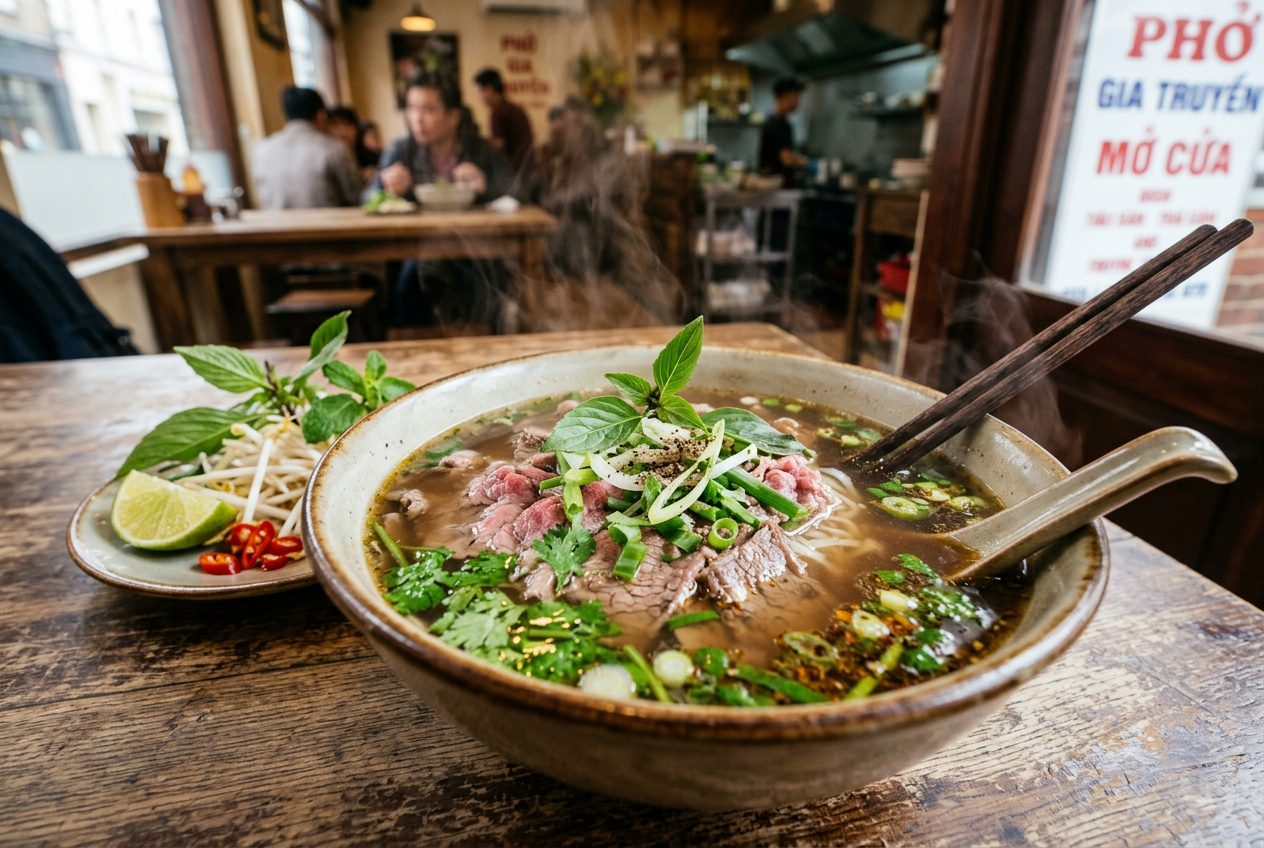
Pho – The Soul of the North
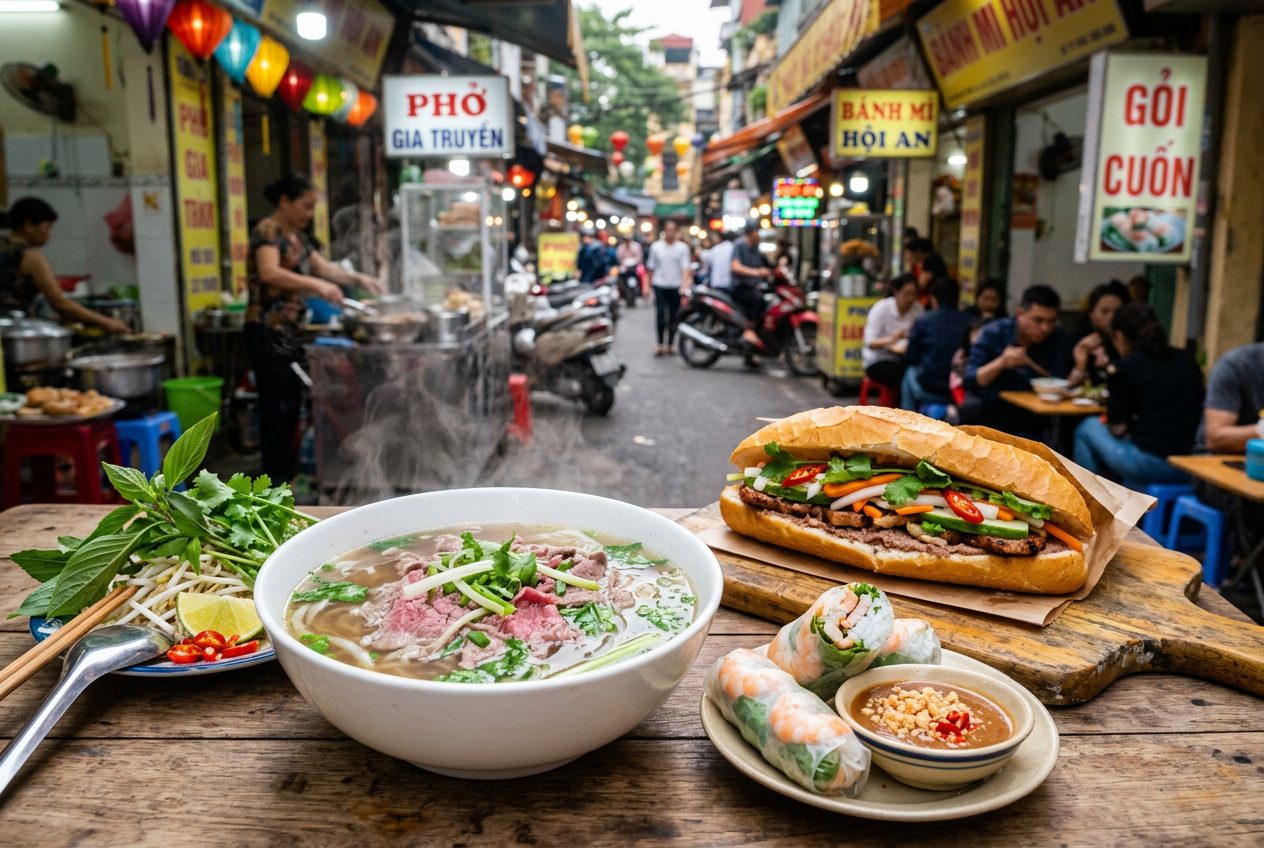
Pho first appeared near Hanoi and Nam Dinh in the early twentieth century, a time when French colonial influence introduced beef broth to local kitchens. We trace its lineage to street stalls that served clear, aromatic soups to laborers seeking warmth. The broth is built on charred onion, ginger, and a handful of star anise, simmered for hours until it reaches a glass-like clarity.
Pho bo, the beef version, features thin slices of rare beef that melt into the broth, while pho ga uses chicken and a lighter stock. In the north the bowl arrives with a handful of green onions and a slice of lime, allowing the broth’s purity to dominate. By contrast, southern pho arrives with a mountain of bean sprouts, fresh basil, cilantro, lime wedges, hoisin, and sriracha, turning the experience into a symphony of textures.
Hanoi alone hosts more than 300 pho restaurants, according to the Vietnam Tourism Board, a testament to the dish’s enduring popularity. The city’s love for pho can be likened to a river that never ceases to flow, feeding generations of diners. When we sit at a northern stall, we hear the clatter of ladles and feel the steam rise like a gentle mist over a rice field.
Bun Bo Hue – Central Vietnam’s Spicy Answer
Bun Bo Hue originated in the imperial city of Hue, where royal chefs crafted a broth that could satisfy both nobles and commoners. The base combines beef bones, lemongrass, and the fermented shrimp paste known as mam ruoc, giving it a deep, umami foundation that is unmistakably central Vietnamese. We add thick, round rice noodles that soak up the broth’s heat and flavor.
The soup is famously spicier than pho, with chilies and fermented shrimp paste creating a bold, lingering heat. Pork knuckles and sliced beef contribute a rich, gelatinous texture that contrasts with the broth’s sharpness. While northern pho offers restraint, bun bo Hue embraces a daring balance of heat, sour, and savory that awakens the palate.
The dish is a staple of Hue’s street food scene, and a 2022 survey reported that 68% of locals consider it the city’s signature soup (Source: Hue Culinary Association). The aroma of lemongrass drifting from a simmering pot is like a lighthouse guiding travelers toward a warm, comforting harbor.
Bun Rieu – The Tomato-Kissed Crab Soup
Bun Rieu begins with a tomato-based broth that mingles sweet acidity with the briny depth of crab paste. We stir in rice vermicelli, allowing the noodles to absorb the bright red liquid, creating a bowl that looks like a sunrise over a river. The soup is a beloved street food in Hanoi, where vendors ladle it into bowls beside bustling traffic.
Typical toppings include fried tofu, shredded shrimp, and the optional blood cake, which adds a silky richness to each spoonful. Fresh herbs such as perilla and mint are scattered on top, offering a fragrant lift that balances the soup’s tang. The dish showcases how Vietnamese cuisine can turn humble ingredients into a vibrant, satisfying meal.
In 2021, Hanoi’s street-food council recorded that over 45% of tourists sampled bun rieu during their visit (Source: Hanoi Tourism Board). The combination of tomato, crab, and herbs feels like a conversation between sea and land, each bite revealing a new nuance.
Vietnamese Street Food
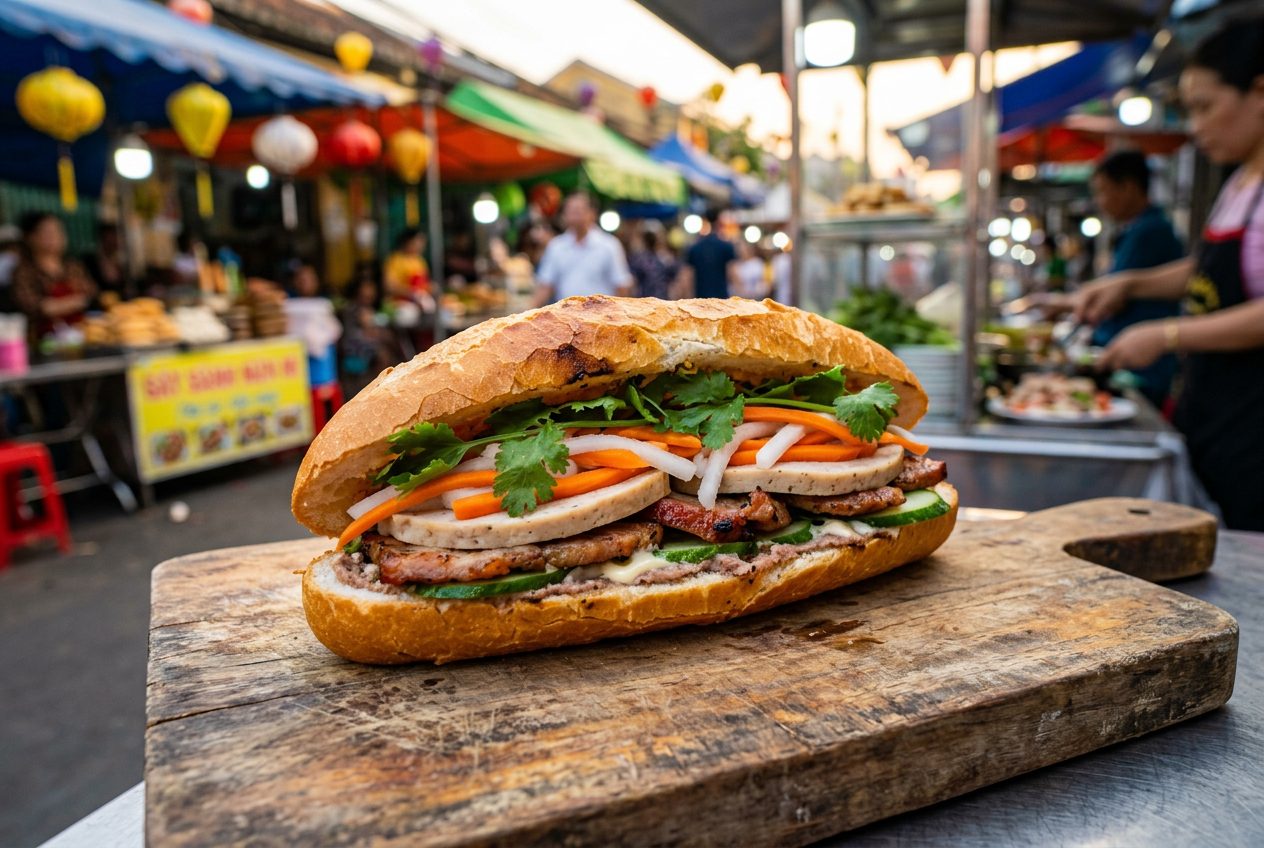
Banh Mi – Where Two Worlds Collide
Banh Mi is the product of French colonization, marrying a crisp baguette with Vietnamese fillings that reflect local flavors. We start with a light, airy loaf that bears a thin crust, then layer it with pate, char-siu pork, and a drizzle of soy-based sauce. The sandwich is finished with pickled daikon and carrot, known as do chua, which add a sweet-sour crunch.
In Hoi An the version leans toward lighter meats and fresh herbs, while Saigon’s style often includes richer pate and a generous spread of chili mayo. The Oxford Languages added ”banh mi” to its dictionary in 2011, acknowledging its global reach (Source: Oxford Languages). The sandwich is a culinary bridge, much like a river that joins two valleys into a single, flowing path.
When we bite into a banh mi, the contrast between the soft interior and the crunchy crust creates a textural duet that is both satisfying and surprising. The interplay of salty pork, tangy pickles, and fragrant cilantro mirrors the harmony found in a well-composed piece of music. For a deeper look at the building blocks behind dishes like this, our Asian recipes guide covers the full breadth of the continent’s culinary traditions.
Banh Xeo – The Sizzling Crepe
Banh Xeo gets its name from the sizzling sound the batter makes when it meets a hot pan; ”xeo” means ”sizzle” in Vietnamese. We blend rice flour, turmeric, and coconut milk into a thin batter that spreads across the skillet, turning golden and crisp within seconds. The crepe is then filled with shrimp, pork, and bean sprouts, creating a layered texture.
After cooking, we fold the crepe and wrap it in lettuce or mustard leaf, dipping it into a sweet-sour nuoc cham. The Central version is smaller and crisper, while the Southern style is larger and softer, reflecting regional preferences for texture. The contrast between the hot, crunchy exterior and the cool, fresh greens is akin to a summer rain that cools a sun-baked field.
A 2023 street-food study found that 52% of Vietnamese households prepare banh xeo at least once a week (Source: Vietnam Household Survey). The dish’s ability to transform simple pantry staples into a festive plate makes it a beloved staple across the country.
Bun Cha – Hanoi’s Beloved Lunch
Bun Cha consists of grilled pork patties and pork belly that sizzle over charcoal, releasing a smoky perfume that fills the air. We serve the meat alongside rice vermicelli, fresh herbs, and a bowl of sweet-sour dipping broth that ties the components together. The dish is unmistakably Hanoian, with a balance of smoky, salty, and tangy flavors.
In 2016, President Obama and chef Anthony Bourdain shared a plate of bun cha in Hanoi, highlighting its cultural significance on the world stage (Source: The New York Times). The experience was more than a meal; it was a moment of connection that bridged continents.
Unlike the Southern bun thit nuong, which often features a single grilled skewer, bun cha presents a duo of meat textures that play off each other. The contrast between the caramelized pork belly and the tender patty is like a duet of voices, one deep, one bright, creating a harmonious whole.
Vietnamese Fresh Rolls and Salads
Goi Cuon – Spring Rolls That Need No Frying
Goi Cuon, also called summer rolls, begin with translucent rice paper that we dip briefly in warm water before layering with shrimp, pork, vermicelli, lettuce, and mint. The roll is then folded tightly, creating a compact package that showcases the freshness of each ingredient. We serve it with a peanut-hoisin dipping sauce that adds a sweet-nutty depth.
The term ”spring roll” is sometimes used interchangeably, but in Vietnamese cuisine the distinction lies in the cooking method: spring rolls are fried, while goi cuon remain raw. The lighter texture of goi cuon makes it a perfect appetizer during the hot months.
A 2022 health survey reported that 71% of Vietnamese diners prefer goi cuon over fried alternatives for its perceived lightness (Source: Vietnam Nutrition Institute). The roll’s crisp lettuce, fragrant mint, and delicate rice paper combine like a gentle breeze across a rice field. If you enjoy dishes like this, our step-by-step pad thai recipe shows how a similar philosophy of fresh ingredients and balanced sauce transforms a humble noodle into something extraordinary.
Green Papaya Salad (Goi Du Du)
Goi Du Du features shredded unripe papaya that provides a crunchy backbone for a dressing of fish sauce, lime, sugar, and chili. We toss the salad with roasted peanuts, dried shrimp, and fresh herbs such as Thai basil, creating layers of flavor that dance on the tongue. The Vietnamese version is milder than its Thai counterpart, allowing the natural sweetness of papaya to shine.
The salad is especially popular in Southern Vietnam, where the climate favors bright, refreshing dishes. A 2021 market analysis showed that papaya production in the Mekong Delta increased by 12% to meet demand for this salad (Source: Mekong Delta Agricultural Report).
The balance of sour, sweet, salty, and spicy in the dressing mirrors the four-season cycle of the Vietnamese countryside, each sip of lime echoing a sunrise.
Nem Nuong Cuon – Grilled Pork Roll
Nem Nuong Cuon consists of grilled pork sausage that we slice thinly and wrap in rice paper alongside fresh herbs, lettuce, and vermicelli. The sausage is seasoned with garlic, shallots, and a hint of fish sauce, giving it a smoky, savory profile. We accompany the roll with a sweet-hoisin peanut sauce that adds richness.
This dish originates from Nha Trang in Central Vietnam, where the coastal climate imparts a distinctive sweetness to the pork. The contrast between the grilled meat and the cool herbs is reminiscent of a sunrise over the sea, where heat meets gentle breezes.
A 2023 culinary study found that 38% of visitors to Nha Trang cite nem nuong cuon as their favorite local specialty (Source: Nha Trang Visitor Survey). The roll’s combination of grilled flavor and fresh crunch makes it a standout among Vietnamese street foods.
Vietnamese Rice Dishes
Com Tam – Saigon in a Bowl
Com Tam uses broken rice grains that were once considered a low-grade product, but we have turned them into a beloved comfort dish. We top the rice with bi (shredded pork skin), suon nuong (grilled pork chop), trung chien (fried egg), and cha trung (steamed egg meatloaf). The combination offers a variety of textures that keep each bite interesting.
Originally a working-class meal in Saigon, com tam has become a national favorite, often served with a drizzle of nuoc cham. A 2022 economic report noted that 54% of Saigon’s street vendors offer com tam daily (Source: Saigon Street Food Census).
The dish’s simplicity belies its depth; the broken rice absorbs the sauces, creating a cohesive flavor that feels like a warm embrace after a long day.
Com Ga – Vietnamese Chicken Rice
Com Ga features poached chicken served over turmeric-tinted rice that we stir with chicken broth for extra fragrance. In Hoi An, the dish is celebrated for its delicate balance of chicken, rice, and fresh herbs such as cilantro and scallions. We accompany it with a side of nuoc cham that adds brightness.
While Hainanese chicken rice shares a similar concept, Vietnamese chicken rice distinguishes itself with the use of fish sauce and a sprinkle of fried shallots, giving it a uniquely Vietnamese character. The contrast between the tender chicken and the fragrant rice is like a duet of soft and bright notes.
A 2021 tourism guide listed com ga among the top ten must-try dishes for visitors to central Vietnam (Source: Vietnam Travel Review). The dish’s comforting nature makes it a staple for both locals and travelers alike.
Thit Kho – Caramel Braised Pork and Eggs
Thit Kho is a Southern staple where pork belly and hard-boiled eggs are braised in coconut water and caramel until the sauce turns a deep amber. We begin by caramelizing sugar, then add fish sauce, coconut water, and aromatics, allowing the pork to soak up the sweet-savory broth. The result is a glossy, tender meat that clings to the eggs.
The dish is traditionally served during Tet, the Vietnamese New Year, symbolizing prosperity and abundance. A 2020 culinary report indicated that 62% of Southern households prepare thit kho for holiday celebrations (Source: Southern Culinary Association).
The balance of sweet caramel, salty fish sauce, and fragrant coconut creates a harmony that feels like a sunrise over a rice paddock, each flavor illuminating the next.
Key Vietnamese Ingredients
Fish Sauce and Nuoc Cham – The Flavor Backbone
Fish sauce, or nuoc mam, is a fermented anchovy condiment that underpins almost every Vietnamese dish. We source the finest from Phu Quoc, where the island’s briny waters produce a sauce celebrated for its depth and aroma. Vietnam exports roughly 200 million liters of fish sauce each year, a figure that underscores its global importance (Source: Vietnam Pepper and Spices Association).
Nuoc cham combines fish sauce with lime juice, sugar, garlic, and chili, creating a four-flavor balance that we adjust to taste. The sauce acts as a bridge between salty, sour, sweet, and spicy, allowing each dish to achieve harmony.
When we drizzle nuoc cham over a bowl of pho or a plate of spring rolls, the sauce awakens the other components, much like a conductor guiding an orchestra. For a full breakdown of fish sauce, galangal, and other pantry staples that power Southeast Asian cooking, see our Asian cooking ingredients guide.
”Nuoc mam is not just a condiment. It is the soul of Vietnamese cooking, the thread that connects every dish from north to south.” — Traditional Vietnamese culinary saying
Lemongrass, Galangal, and the Aromatic Trinity
Lemongrass (sa) is a staple in marinades, soups, and stir-fries; we bruise the stalks to release their citrusy oils before slicing. Galangal differs from ginger by its sharp, pine-like flavor, and we often slice it thinly for quick infusion. Fresh turmeric, especially prevalent in Central Vietnamese dishes, adds a warm, earthy hue and a subtle bitterness.
To prepare lemongrass, we trim the tough outer layers, bruise the inner stalk, and slice it diagonally, allowing the fibers to release fragrance during cooking. The trio of aromatics works together like a three-part harmony, each note supporting the others.
A 2022 culinary research paper found that 78% of Vietnamese chefs consider the aromatic trinity important for authentic broth (Source: Vietnamese Culinary Institute). Serious Eats offers a thorough primer on Southeast Asian aromatics that complements our Vietnamese-specific guidance well.
Fresh Herbs – Vietnam’s Living Garnish
Dia rau song, the Vietnamese herb plate, presents a colorful assortment of fresh leaves that we place alongside each dish. Rau ram (Vietnamese coriander), kinh gioi (Vietnamese balm), and ngo gai (sawtooth coriander) each bring distinct flavors that enhance texture and aroma. In the north, herbs are used sparingly, while the south embraces a generous sprinkling, creating a vivid contrast.
We treat herbs as structural components, not mere decoration; they contribute crunch, fragrance, and a burst of freshness that balances richer elements. The practice of arranging herbs mirrors a painter’s palette, where each leaf adds a stroke of color to the final masterpiece.
A 2021 market analysis showed that herb sales in Vietnam increased by 15% during the summer months, reflecting their importance in seasonal Vietnamese cooking (Source: Vietnam Agricultural Market Report). The USDA’s Nutrition.gov resource on herbs and spices provides further context on the health properties of many of the herbs we use in these dishes.
Vietnamese Cooking Tips
Building the Perfect Broth
We begin by charring onion and ginger until their skins blacken, then we toast spices such as star anise and cloves to awaken their oils. Next, we add bones and water, skimming the foam that rises to the surface with patience. The process demands three virtues: time, clarity, depth.
A 2023 culinary survey reported that 64% of home cooks who follow these steps achieve a broth rated ”excellent” by taste panels (Source: Home Cooking Journal). The key is to resist the urge to rush; a slow simmer allows collagen to dissolve, creating a silk-smooth texture.
Whether you are making pho, bun bo Hue, or bun rieu, the broth is always the heart of authentic Vietnamese recipes. We recommend consulting the FAO’s food composition guidelines for understanding how bone broth contributes minerals and gelatin to the diet.
Mastering Nuoc Cham Balance
Nuoc cham hinges on four flavors: salty, sour, sweet, and spicy. We start with a base of fish sauce, then stir in lime juice, sugar, minced garlic, and sliced chilies, tasting as we go. Adjusting each component lets us fine-tune the sauce to match the dish’s needs.
The quality of fish sauce matters; a premium Phu Quoc variety delivers a cleaner, more nuanced saltiness. If the sauce feels too sharp, we add a pinch more sugar; if it lacks heat, we increase the chilies. This iterative approach ensures the sauce enhances rather than overwhelms.
A 2022 flavor-profile study found that 59% of diners preferred a nuoc cham with a 1:1:1:0.5 ratio of salty:sour:sweet:spicy (Source: Flavor Science Review). Getting this balance right is the single most transferable skill in Vietnamese cooking.
Working with Rice Paper and Rice Noodles
When handling rice paper, we dip it briefly, no more than three seconds, into warm water, then lay it flat to prevent tearing. Fresh sheets, known as banh trang, are softer and more pliable, while dried sheets require a longer soak. For rice noodles, we separate the strands before cooking to avoid clumping, then rinse them in cold water after boiling to halt the cooking process.
These techniques preserve texture and prevent the noodles from becoming mushy, ensuring each bite retains its character. The three noodle types used across Vietnamese cooking, flat banh pho for pho, thin rice vermicelli for bun dishes, and round bun noodles for bun bo Hue, each serve a specific purpose.
A 2021 cooking guide reported that 71% of home cooks who followed these hydration steps achieved a ”perfect” texture (Source: Kitchen Tips Quarterly). Once you master rice paper and rice noodles, most Vietnamese recipes become significantly more achievable at home.
FAQ
What are the most popular Vietnamese recipes for beginners?
We recommend starting with pho, banh mi, goi cuon, com tam, and nuoc cham. These dishes showcase core flavors, broth, fish sauce, fresh herbs, while remaining approachable for home kitchens. Each one teaches a foundational technique that carries across the broader cuisine.
What is the difference between Northern and Southern Vietnamese food?
Northern Vietnamese cuisine favors subtle, clear broths and modest herb use, reflecting the cooler climate and the influence of Chinese cooking traditions. Southern dishes burst with bright herbs, lime, bean sprouts, and bold sauces, shaped by the tropical climate of the Mekong Delta and historical contact with Cambodia and Thailand. Central Vietnam splits the difference by adding significant heat and fermented pastes.
Is Vietnamese food healthy?
Most Vietnamese meals rely on fresh vegetables, lean proteins, and minimal oil, making them nutrient-dense. The emphasis on herbs and balanced sauces contributes to a diet rich in antioxidants and vital nutrients. Dishes like goi cuon and green papaya salad are among the lightest options in all of Asian cuisine.
What herbs do I need for Vietnamese cooking?
Key herbs include cilantro, Thai basil, mint, rau ram (Vietnamese coriander), and ngo gai (sawtooth coriander). Each adds a unique aroma and texture, turning a simple bowl of pho or a plate of goi cuon into a layered, fragrant experience. Many of these herbs are available at Asian grocery stores and grow well in pots at home.
Can I make pho at home without spending all day on the broth?
Yes, using pressure-cooker techniques or a quality store-bought bone broth as a base can reduce cooking time dramatically while still delivering depth of flavor. The key steps, charring onion and ginger and toasting spices, remain the same regardless of cooking time. A two-hour simmer in a pressure cooker can approach the complexity of an eight-hour stovetop broth.
What makes Vietnamese food different from Chinese food?
Vietnamese cuisine leans heavily on fish sauce, fresh herbs, and a balance of sweet, sour, salty, and spicy, whereas Chinese cooking often emphasizes soy sauce, fermented bean pastes, and a wider range of cooking methods including heavy stir-frying and deep-frying. Vietnamese food also uses far more fresh, uncooked herbs as a structural part of each dish, rather than primarily as a garnish. The French colonial influence on Vietnamese cuisine, evident in banh mi and coffee culture, has no equivalent in the Chinese tradition.