Last updated: March 06, 2026
Crispy chili oil noodles are the dish that broke the internet and refused to leave. Born in the home kitchens of Sichuan and Shaanxi, popularized by a generation of Chinese-American food creators, and now a permanent fixture on weeknight dinner rotations from Brooklyn to Berlin, this recipe represents everything that makes Chinese cooking so addictive: maximum flavor, minimum effort, and a sizzle moment that turns a five-minute bowl of noodles into a small piece of theater. The technique is simple. You cook noodles, you pile aromatics on top, and you pour smoking-hot oil over the whole thing. The aromatics scream, the chili flakes bloom, the soy sauce caramelizes against the heat, and you have dinner.
This complete guide walks you through the authentic Chinese version of crispy chili oil noodles (sometimes called la you ban mian, or simply chili oil noodles), explains every ingredient and substitution, gives you a step-by-step recipe with troubleshooting tips, and answers the most common questions home cooks ask. Whether you are making this for the first time or you are trying to crack the code on the version you saw on TikTok, this is the resource you will keep coming back to.
What Are Crispy Chili Oil Noodles?
Crispy chili oil noodles are a category of Chinese hand-tossed or boiled noodle dishes that share a single defining technique: hot oil is poured directly onto a bed of dry aromatics resting on cooked noodles. That single pour transforms raw garlic, scallions, and chili flakes into a sizzling, fragrant topping that perfumes the entire bowl. The noodles are then tossed with soy sauce, black vinegar, and a touch of sugar to balance the heat with brightness and umami.
The dish has multiple regional ancestors. In Shaanxi province, you find biang biang noodles dressed with hot oil and chili. In Sichuan, the technique appears in countless variations of dry-tossed noodles known broadly as ban mian. In Henan, similar oil-poured noodles appear under the name you po mian. The modern viral version that has spread across global social media is a streamlined home-cook adaptation that draws from all of these traditions, optimized for pantry ingredients and a 15-minute clock.
What makes the dish work is the contrast. The noodles are slick and chewy. The oil is smoking hot and aromatic. The soy and vinegar are sharp. The chili flakes are smoky and slightly sweet. The scallions are raw and grassy. Every bite carries five or six distinct sensations at once, which is the hallmark of well-built Chinese noodle cookery.
Why This Recipe Works
Most viral versions of this recipe online cut corners that affect the final result. Some skip the proper oil temperature and end up with raw garlic. Some use the wrong type of chili flake and miss the deep, fruity smokiness that defines the dish. Some forget the vinegar, which is the ingredient that keeps each bite from feeling heavy. This recipe addresses all of those issues directly.
- Two-stage oil pour: The first pour blooms the chili flakes at a moderate temperature so they release color without burning. The second pour, hotter, crisps the garlic and scallion whites.
- Soy and vinegar in the bowl, not the oil: Pouring liquids into hot oil creates dangerous splatter and ruins the texture. Layering them under the noodles lets the heat from the oil do the integration.
- Toasted Sichuan peppercorns: A quick dry-toast unlocks their numbing tingle (ma) that traditional viral recipes often skip but Chinese diners expect.
- The right noodle: Wide, chewy wheat noodles hold the sauce far better than thin egg noodles. We tested seven varieties to identify what actually works.
Ingredients You Will Need
The ingredient list is short, but every component matters. Read through it before shopping so you can make smart substitutions if you need to.
| Ingredient | Quantity (serves 2) | Why It Matters |
|---|---|---|
| Wide wheat noodles (fresh or dried) | 8 oz / 225 g | The chewy backbone of the dish. Wider is better for sauce cling. |
| Garlic, finely minced | 4 large cloves | Provides the sharp aromatic backbone when bloomed in hot oil. |
| Scallions (green onions), thinly sliced | 3 stalks, separated white and green | Whites crisp under hot oil; greens stay fresh on top. |
| Korean gochugaru OR Chinese erjingtiao chili flakes | 2 tbsp | Coarse flakes with deep red color and mild-to-medium heat. |
| Sichuan peppercorns, lightly toasted and crushed | 1/2 tsp | Adds the signature numbing-tingling sensation. |
| White sesame seeds | 2 tsp | Toasted nuttiness and visual contrast. |
| Light soy sauce | 2 tbsp | Salty umami base. Use Chinese light soy or a Japanese koikuchi. |
| Chinkiang black vinegar | 2 tsp | Smoky, malty acidity. Balsamic is an okay substitute, rice vinegar is not. |
| Sugar (granulated or brown) | 1 tsp | Rounds the flavor and helps the soy caramelize on contact with oil. |
| Neutral oil (canola, peanut, or grapeseed) | 1/4 cup / 60 ml | High smoke point is essential. Olive oil will not work here. |
| Optional: chili crisp | 1 tbsp | Adds crunch, fermented depth, and extra heat. |
| Optional: bok choy or spinach | 2 cups | Blanched in the noodle water for a complete meal. |
Choosing the Right Noodle
Noodle selection is the single biggest variable in this recipe. The dish is built around chewy, hand-cut wheat noodles that have a substantial bite and a slightly rough surface that grips the oil. Here are your best options, ranked.
- Fresh biang biang noodles: Wide, hand-pulled, irregular. The gold standard. Available frozen at well-stocked Chinese grocery stores.
- Fresh knife-cut noodles (dao xiao mian): Slightly thinner but with the perfect chew. A close second.
- Fresh wheat lo mein noodles: Thinner and rounder, but they cook quickly and absorb sauce well.
- Dried wheat noodles (Mongolian thick-cut, or thick udon): A reliable pantry option. Cook two minutes longer than the package suggests for the right chew.
- Korean kalguksu noodles: Surprisingly close in texture and widely available.
- Avoid: Thin egg noodles, ramen, instant noodles, rice noodles, and any pre-flavored noodle. These either fall apart or taste wrong with this preparation.
If you can only find dried wheat noodles, look for ones that are at least 3 millimeters thick. Anything thinner and the dish loses its identity. The noodle is supposed to be the main event, and it cannot do that if it disappears under the sauce.
The Right Chili Flake Matters
This is where many recipes go sideways. Generic crushed red pepper from a supermarket spice rack is the wrong product for this dish. It is too hot, too dry, and lacks the deep, fruity, slightly smoky character that good chili oil requires. You want a coarse, bright-red flake with moderate heat and high color saturation.
- Korean gochugaru (coarse): The most accessible option in the US. Sweet, slightly smoky, low to medium heat. Available at most Asian grocery stores and online.
- Chinese erjingtiao chili flakes: The classic choice for Sichuan cooking. Mild, deeply aromatic, fragrant.
- Chinese facing heaven (chao tian jiao) chili: Hotter and fruitier. Use less if you choose this one.
- Aleppo or Marash pepper: Surprisingly close substitutes from the Middle Eastern aisle.
Whatever you use, smell it before you cook with it. Good chili flakes should have a bright, almost berry-like aroma underneath the heat. Old, dusty flakes will only give you bitterness when they meet hot oil.
Step-by-Step Cooking Instructions
The total time from start to finish is around 15 minutes. Read through the entire method once before you start so the timing flows. The hot oil pour happens fast and you do not want to be searching for the soy sauce while your oil is smoking.
Step 1: Toast the Sichuan Peppercorns
Place a small dry skillet over medium-low heat. Add the Sichuan peppercorns and toast them, swirling the pan, for about 90 seconds, until they smell intensely citrusy and slightly piney. They should not change color much. Transfer them to a mortar or a spice grinder and crush them coarsely. Set aside.
Step 2: Bring the Noodle Water to a Boil
Fill a large pot with at least 4 quarts of water and bring it to a rolling boil. Do not salt the water. Chinese noodles are not boiled in salted water the way Italian pasta is, because the sauce already carries plenty of salt. While the water heats, prepare your aromatics in the next steps.
Step 3: Build the Bowls
In each of two large serving bowls, layer the bottom with 1 tablespoon of light soy sauce, 1 teaspoon of black vinegar, and 1/2 teaspoon of sugar. This is the seasoning base. The hot oil and noodles will integrate it later. Do not stir.
Step 4: Pile the Aromatics
On top of the seasoning base in each bowl, create a small mound containing half of the minced garlic, half of the scallion whites, half of the chili flakes, half of the toasted Sichuan peppercorns, and 1 teaspoon of sesame seeds. Keep the components close together but do not mix. The goal is a tight pile that the hot oil can hit all at once.
Step 5: Cook the Noodles
Drop the noodles into the boiling water. Cook according to package directions, generally 3 to 5 minutes for fresh and 6 to 8 minutes for dried. They should be just past al dente, with a chewy bite and a slight slip on the tooth. If you are adding bok choy or spinach, add it to the pot during the last 60 seconds of cooking.
Step 6: Heat the Oil
While the noodles cook, place a small saucepan over medium-high heat. Add the neutral oil and heat it until it shimmers and a single sesame seed dropped in fizzes immediately and turns golden in 5 seconds. This is roughly 350 to 375 F (175 to 190 C). Do not let the oil smoke heavily. If a wisp of smoke appears, remove the pan from the heat and let it drop for 10 seconds.
Step 7: Drain and Plate the Noodles
Drain the noodles in a colander, but do not rinse them. The starch on the surface helps the sauce cling. Divide the hot noodles between the two prepared bowls, draping them over the aromatic piles. The noodles should be steaming and just slick enough that the chili flakes and garlic stay perched on top.
Step 8: The Sizzle Pour
This is the moment everyone watches. Pour roughly 2 tablespoons of the hot oil directly onto the aromatic pile in each bowl. You should hear an immediate, vigorous sizzle. The garlic should turn golden but not brown. The chili flakes should bloom into a vibrant red. The Sichuan peppercorns should release their citrusy aroma. The whole kitchen will smell, in two seconds, exactly like a roadside Sichuan noodle stall.
Step 9: Toss and Serve
Top each bowl with the reserved scallion greens and an optional spoonful of chili crisp. Bring them to the table and toss everything together at the last moment, lifting the noodles up high so the seasoning at the bottom integrates with the aromatics on top. Eat immediately. The contrast of textures is best in the first three minutes.
Tips for Perfect Chili Oil Noodles Every Time
The recipe is forgiving but a few small details separate a good bowl from a great one. These tips come from years of testing in home kitchens with varying equipment and ingredient access.
- Mince the garlic by hand, not in a press. Pressed garlic releases too much liquid and burns instantly when hot oil hits it. Hand-minced garlic browns evenly.
- Use room-temperature soy sauce. Cold soy from the refrigerator drops the noodle temperature too quickly and dulls the sizzle moment.
- Pile the aromatics tightly. If they are spread out, the oil will not be hot enough by the time it hits the last few flakes. A tight mound gets cooked all at once.
- Test the oil temperature with a sesame seed. A single dropped seed should fizz immediately and brown in 5 seconds. Faster than that means the oil is too hot. Slower means it needs more time.
- Keep the noodles in motion. Once tossed, sticky noodles ruin the dish. Use chopsticks to lift and aerate them as you mix.
- Save a splash of pasta water. If the noodles look dry after tossing, a tablespoon of starchy cooking water loosens everything beautifully.
- Do not skip the vinegar. Even people who do not like vinegar are surprised at how much the dish flattens without it. The acidity is the contrast that makes the heat readable.
Variations and Add-Ins
The base recipe is intentionally minimal so you can build it up however you like. Here are six tested variations, ordered from quickest to most elaborate.
1. Soft-Boiled Egg Topping
Drop an egg into your noodle water during the last 6 minutes of cooking. Shock it in cold water, peel, and halve it onto the finished bowl. The runny yolk acts as a sauce extender and tames the heat for spice-sensitive eaters.
2. Crispy Pork Floss or Ground Pork
Brown 4 oz of ground pork seasoned with a little soy and Shaoxing wine in a hot skillet until crispy at the edges. Spoon it over the finished noodles for a quick zha jiang-adjacent meal. Pork floss from a Chinese grocery is an even faster option.
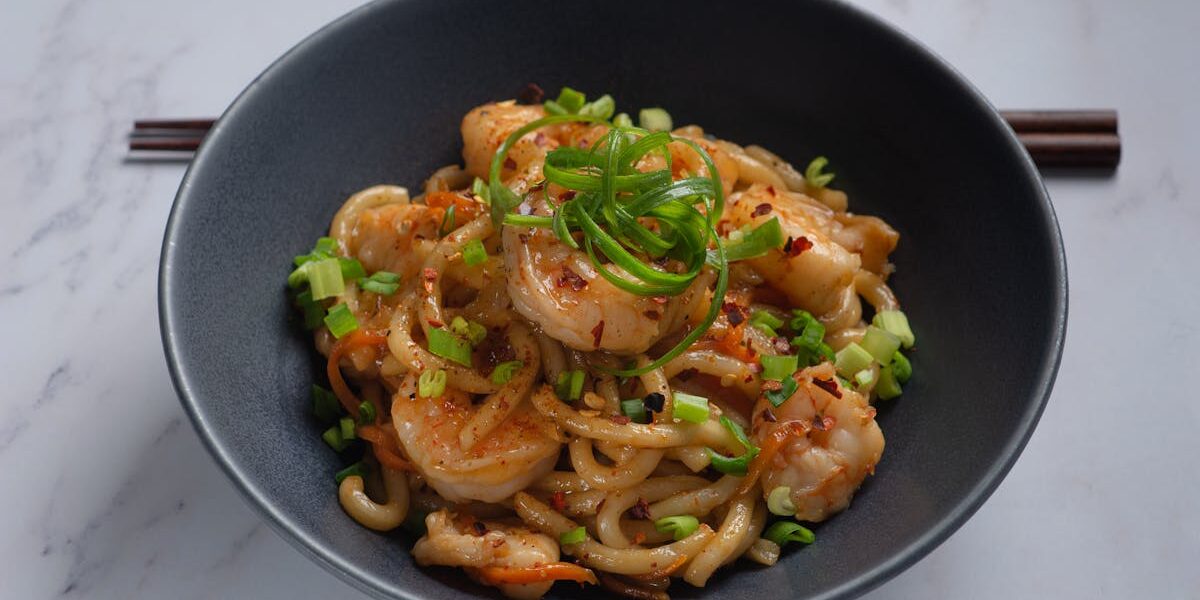
3. Garlic Butter Shrimp
Quickly sear peeled shrimp in butter and garlic, then plate them on top of the noodles before the oil pour. The butter melts into the sauce and adds a rich, almost dan dan-like quality.
4. Vegan / Plant-Based
The base recipe is already vegan. To make it more substantial, add pan-fried crispy tofu, sauteed mushrooms, or a handful of edamame. A teaspoon of mushroom soy sauce in place of regular soy adds even more umami depth without animal products.
5. Peanut Butter Chili Oil Noodles
Whisk 1 tablespoon of natural peanut butter into the seasoning base before plating. The result is a richer, dan dan-style bowl with a creamy backbone. A favorite among kids and skeptics.
6. Cold Sesame Variant
For summer, rinse the cooked noodles in cold water, drain well, and follow the same plating method but with cold noodles and oil at room temperature. Add an extra teaspoon of sesame oil and a sprinkle of cucumber matchsticks. A different dish, but it scratches the same itch.
Common Mistakes and How to Fix Them
| Problem | Cause | Fix |
|---|---|---|
| Garlic tastes raw or sharp | Oil was not hot enough | Test with a sesame seed before pouring; aim for 350-375 F. |
| Garlic tastes burnt | Oil was smoking when poured | Pull oil off heat for 10 seconds before pouring. |
| Chili flakes look dark or muddy | Used the wrong type or oil was too hot | Switch to gochugaru or erjingtiao; reduce oil temperature. |
| Sauce pools at the bottom | Noodles too thin or rinsed | Use thicker noodles; never rinse after draining. |
| Bowl tastes flat | Vinegar or sugar omitted | Add 1/2 tsp vinegar at the table to revive. |
| Not spicy enough | Old chili flakes | Add 1/2 tsp fresh flakes or chili crisp at the end. |
| Too spicy | Used hot facing heaven chili | Add an egg, a spoon of peanut butter, or extra noodles. |
| Noodles stick together | Sat too long before serving | Toss with a splash of reserved cooking water immediately. |
Nutritional Information
The values below are estimates for one serving of the base recipe (without optional add-ins), based on standard wheat noodles and the ingredient quantities listed. Actual values vary by brand and substitutions.
| Nutrient | Per Serving | % Daily Value |
|---|---|---|
| Calories | 520 kcal | 26% |
| Total Fat | 26 g | 33% |
| Saturated Fat | 3 g | 15% |
| Sodium | 1,180 mg | 51% |
| Total Carbohydrate | 62 g | 23% |
| Dietary Fiber | 3 g | 11% |
| Sugars | 3 g | — |
| Protein | 11 g | 22% |
| Iron | 3.5 mg | 19% |
| Calcium | 40 mg | 4% |
| Vitamin C | 5 mg | 6% |
To reduce sodium, use low-sodium soy sauce and skip the optional chili crisp. To increase protein, add a soft-boiled egg (adds about 6 g) or 4 oz of cooked shrimp or chicken (adds about 22 g).
Storage and Reheating
Chili oil noodles are at their best within 30 minutes of being made. The crisp aromatics soften, the noodles absorb sauce and lose their bounce, and the oil seizes when refrigerated. That said, leftovers are still good if you handle them right.
- Refrigerator: Store cooled noodles in an airtight container for up to 2 days. The aromatics will lose crispness but the flavor remains good.
- Reheating: The microwave is the fastest option. Add 1 tablespoon of water before heating in 30-second bursts. Stir between bursts to redistribute the oil.
- Stir-fry revival: The best way to handle leftovers is to convert them to a stir-fry. Heat a skillet, add a teaspoon of oil, and toss the cold noodles for 3 to 4 minutes. They develop a slightly crispy exterior and the flavor wakes back up.
- Make-ahead components: The aromatic blend (garlic, scallion whites, chili flakes, peppercorns, sesame) can be mixed and refrigerated for up to 3 days. Plate over freshly cooked noodles for a 5-minute weeknight dinner.
- Freezer: Not recommended. The noodles turn gummy and the oil separates.
What to Serve With Chili Oil Noodles
Chili oil noodles are usually a meal on their own, but a small side or two turns them into a complete dinner table. The pairings should be cooling, crunchy, or mild to balance the heat. Avoid serving anything else with strong chili heat in the same meal.
- Smashed cucumber salad (pai huang gua): A classic Sichuan side. Cool, crunchy, garlicky, and perfectly balanced against the heat of the noodles.
- Steamed bok choy with garlic: Fast, green, light. Brings vegetables to the meal without competing for flavor.
- Cold tofu with scallion oil: Silken tofu, soy sauce, scallion oil. A traditional Cantonese cooling dish.
- Wonton soup: Mild, broth-forward. Acts as a temperature and flavor counterweight.
- Pickled radish: A small dish of pickled daikon or carrot resets the palate between bites.
- Light beer or unsweetened iced tea: Pilsner or jasmine tea both work. Avoid heavy reds and sugary cocktails.
The History Behind the Dish
The technique of pouring hot oil over aromatics is far older than the modern viral dish suggests. In Shaanxi cuisine, the method has been documented for at least 200 years in connection with hand-pulled noodle stalls. The classic you po che mian (oil-poured wide noodles) of Xi’an is widely considered the direct ancestor of today’s chili oil noodles. Workers and travelers in dusty wheat-belt towns wanted dinner in a hurry, the noodle pullers had wheat dough and chili oil, and the technique stuck.
The Sichuan branch of the family arrived later. As Sichuan cuisine codified its love of la (heat) and ma (numbing tingle) in the 19th and early 20th centuries, the hot oil method became a standard finishing technique for noodles, dumplings, and dipping sauces. Sichuan added the peppercorn. Henan added the black vinegar. The dish moved across China and across borders, and now sits comfortably on weeknight tables in cities the original noodle-pullers never imagined.
The current viral wave traces back to a small handful of Chinese-American food creators who began posting short-form videos in 2020 and 2021. The visual drama of the hot oil pour, combined with the simplicity of the ingredient list, made the dish irresistible to social media platforms. By 2026 the dish has become a kind of universal entry point into Chinese home cooking, the way scrambled eggs are an entry point into French technique.
Equipment You Will Need
- A large pot for boiling noodles (4 quarts minimum).
- A small saucepan for heating the oil.
- A colander or fine-mesh strainer for draining noodles.
- Two large, wide bowls. The wider the better, so the noodles can spread out and the aromatics can sit on top of the pile.
- A small dry skillet for toasting peppercorns. Optional if you skip the toast step.
- A mortar and pestle or spice grinder for crushing peppercorns. A heavy knife on a cutting board works in a pinch.
- Sturdy chopsticks or tongs for tossing.
You do not need a wok for this recipe. The hot oil pour happens in a small saucepan, which gives you better temperature control than a wide wok. Save the wok for stir-fries.
Frequently Asked Questions
Are chili oil noodles spicy?
The dish has a moderate, warming heat rather than an aggressive burn. Korean gochugaru and Chinese erjingtiao chili flakes both have low to medium Scoville ratings. If you keep the chili flake amount at 2 tablespoons split between two servings, the heat is approachable for most palates. To make it milder, reduce to 1 tablespoon. To make it hotter, add a teaspoon of chili crisp or a pinch of facing heaven chili.
Can I make this gluten-free?
Yes. Substitute the wheat noodles with thick rice noodles (the kind used for pad see ew) or sweet potato glass noodles. Replace the soy sauce with tamari or a gluten-free soy sauce. The result is slightly different in texture but the flavor remains close to the original.
What if I cannot find Chinese black vinegar?
Chinkiang vinegar is the gold standard, but a one-to-one substitution of good-quality balsamic vinegar works surprisingly well. Avoid white vinegar, apple cider vinegar, and rice vinegar, which all lack the smoky maltiness that black vinegar provides. As a last resort, mix one teaspoon of balsamic with a few drops of soy sauce.
Can I make the oil ahead of time?
You can make a separate batch of homemade chili oil ahead of time and use it in place of the hot oil pour, but the dish will lose the dramatic sizzle moment. The fresh oil pour is also crisper than even good chili oil from a jar. If you want to save time, prep the aromatics ahead and reserve the oil pour for the moment of serving.
Can I use chili crisp instead of fresh chili flakes?
Yes, but the result is different. Chili crisp already contains cooked aromatics and oil, so there is no sizzle to be had. You will end up with a dressed noodle dish rather than a hot-oil-poured one. If you go this route, use 2 tablespoons of chili crisp per bowl, skip the oil pour, and toss directly. It is faster but loses the theatrical character.
Why does my oil splatter so violently?
Splattering happens when there is moisture in the bowl that contacts the hot oil. Make sure your noodles are well drained, your bowls are dry, and the soy sauce or vinegar is layered at the bottom of the bowl rather than mixed with the aromatics on top. The aromatics themselves should be dry. If splatter persists, lower your oil temperature slightly.
Is this the same as TikTok chili oil noodles?
The viral TikTok recipe is a streamlined home version of the same dish family. Most viral versions use simpler ingredient lists and skip the Sichuan peppercorn and black vinegar steps. This recipe goes a step further toward authenticity while keeping the entire dish under 15 minutes. Once you have made it the way it is written, the TikTok shortcut version will feel a bit thin by comparison.
Can I scale this recipe up?
Yes. Multiply the ingredient quantities directly. The only thing that does not scale linearly is the oil temperature. Use a slightly larger saucepan and a slightly larger total oil quantity (about 2 tablespoons per bowl) so the oil can hit each pile at the correct heat. For four servings, double everything. For six or more, work in batches; the noodles need to be hot when the oil hits.
What is the difference between this and dan dan noodles?
Dan dan noodles are a closely related Sichuan dish but they include sesame paste and ground pork as defining components. Chili oil noodles are simpler, lighter, and faster, with the focus entirely on the aromatic oil pour. Dan dan is a sit-down restaurant dish; chili oil noodles are a 15-minute weeknight dinner.
Can I freeze leftover chili oil?
If you have made a separate batch of chili oil for general use, store it in a clean glass jar in the refrigerator for up to 6 weeks. The flavor actually improves after a day or two as the aromatics infuse. Freezing is not recommended because the oil texture changes and aromatics lose their crispness.
Final Thoughts
Chili oil noodles are one of those rare recipes that delivers far more pleasure than the effort required to make them. Twelve minutes of work, eight ingredients, one sizzle, and a bowl that tastes like a roadside Sichuan stall on a cold evening. Make it once, and it becomes the recipe you reach for when you have nothing in the fridge but you want dinner to feel like an event. Make it twice, and you start riffing. Make it five times, and you will find that you have stopped following the recipe entirely and are simply cooking. That is the entire point.
Keep good chili flakes, real Chinese black vinegar, and a bag of fresh wheat noodles in your kitchen, and you are always twelve minutes away from one of the best bowls of noodles you can make at home.

Mei Lin Chen
Mei Lin Chen is an Asian food writer and recipe developer. Melbourne-raised and London-based, she has spent over a decade exploring the rice paddies, hawker stalls, and home kitchens of South-East and East Asia. Her recipes balance traditional technique with everyday practicality.