Last updated: March 25, 2026
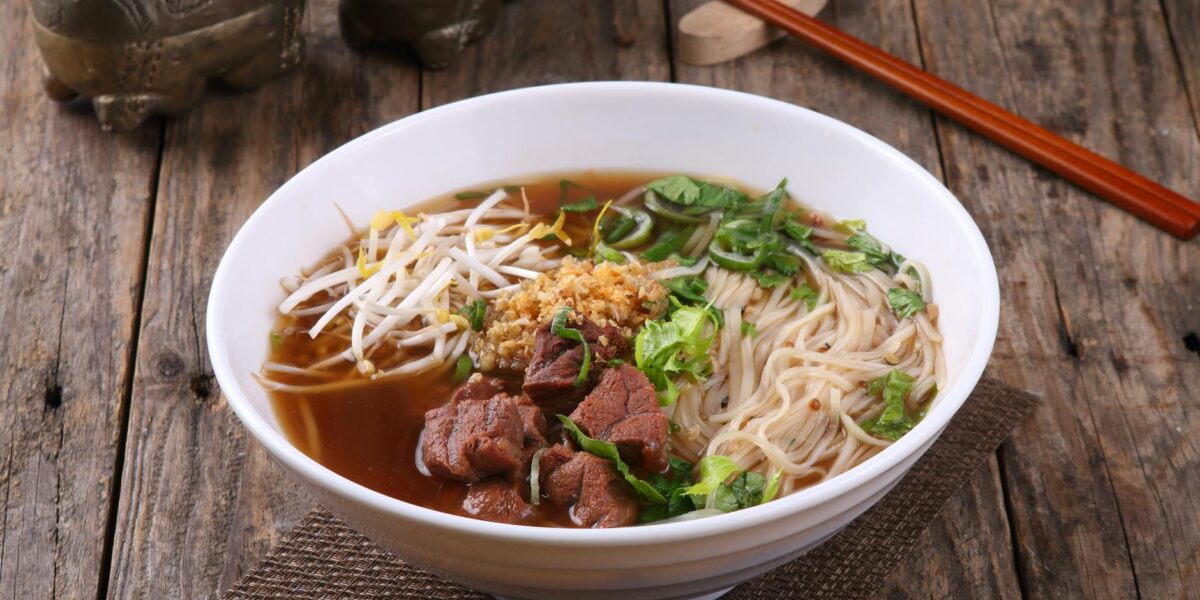
If pho is the gentle, fragrant ambassador of Vietnamese cuisine, bun bo Hue is its bolder, spicier cousin from central Vietnam. This soul-warming noodle soup hails from the imperial city of Hue and tells a different story altogether: one of lemongrass-perfumed broth, fiery shrimp paste, thick round rice noodles, and slabs of tender beef shank simmered until they yield to the spoon. For generations, bun bo Hue has been the beloved breakfast and street-food staple of central Vietnam, and its complex, layered flavors are finally getting the global recognition they deserve.
This recipe walks you through every step of building authentic bun bo Hue at home, from charring the aromatics to tempering the signature chili-annatto oil. The result is a bowl that is bracingly spicy, deeply savory, brightened with herbs, and entirely worth the patient simmer.
What Is Bun Bo Hue?
Bun bo Hue (pronounced ”boon baw hway”) translates literally to ”noodles with beef from Hue.” It is a noodle soup that originated in Hue, the former imperial capital of Vietnam, located in the country’s central region. While pho is associated with Hanoi in the north and Saigon in the south, bun bo Hue is the signature noodle soup of central Vietnamese cuisine, and the differences between them go far beyond geography.
Where pho is delicate and clear, bun bo Hue is bold and assertive. The broth is built on a foundation of beef bones and pork bones simmered with bruised lemongrass stalks, then seasoned with fish sauce and a dose of fermented shrimp paste called mam ruoc. A finishing layer of red chili-annatto oil floats on top, lending the broth its signature crimson color and slow-burning heat. Thick, round bun bo Hue rice noodles, more substantial than the flat pho noodles, soak up the broth beautifully.
Traditional bowls feature a generous combination of proteins: tender slices of beef shank, beef brisket, pork hock, cubes of pork blood, and chewy little cha (Vietnamese pork sausage) patties. Each spoonful gives you something different to chew on, and the contrast between the rich broth and the bright herb plate served alongside is what makes this soup so addictive.
The History and Cultural Significance of Bun Bo Hue
Hue served as the capital of Vietnam during the Nguyen Dynasty from 1802 until 1945, and the city’s cuisine reflects the refined tastes of its imperial court. Hue cooking is known for its careful seasoning, dramatic presentation, and emphasis on small, varied dishes — but bun bo Hue stands apart as one of the few hearty, generous dishes to come out of this otherwise delicate culinary tradition. Some food historians trace the dish to the village of Van Cu, a few miles outside Hue, which has been famed for its rice noodle production for centuries.
The combination of lemongrass and shrimp paste is unmistakably central Vietnamese, and the use of beef alongside pork reflects an abundance that was once associated with royal kitchens. Today, bun bo Hue is sold in markets, street stalls, and dedicated soup shops throughout Vietnam, with each region — and indeed each cook — putting a personal stamp on the recipe. In Vietnamese-American communities from Westminster to Houston, bun bo Hue has become a cornerstone of Sunday family meals, and dedicated bun bo Hue specialists have been opening across the United States and Australia at a steady clip.
Why You’ll Love This Recipe
- Layered, complex flavor: Lemongrass, shrimp paste, fish sauce, and annatto oil combine to create a broth unlike anything else in the Asian noodle soup canon.
- Forgiving for the home cook: Most of the work is hands-off simmering, and the broth tastes even better the next day.
- Customizable heat: You control how much chili-annatto oil and fresh chili go in, so the spice level is yours.
- Restaurant-quality results: A proper homemade pot easily rivals the version at your local Vietnamese soup shop.
- Crowd-pleasing presentation: Set out the herb plate, lime wedges, and chili oil and let everyone build their own bowl.
Bun Bo Hue vs. Pho: Understanding the Difference
Anyone familiar with Vietnamese cuisine knows pho, but bun bo Hue deserves the same level of recognition. Here is how the two soups compare side by side.
| Feature | Pho | Bun Bo Hue |
|---|---|---|
| Region of origin | Northern Vietnam (Hanoi) | Central Vietnam (Hue) |
| Broth color | Clear amber to golden | Deep red-orange |
| Signature aromatics | Star anise, cinnamon, clove, ginger | Lemongrass, shrimp paste, annatto |
| Noodles | Flat rice noodles (banh pho) | Thick round rice noodles (bun bo Hue) |
| Spice level | Mild, sweet | Spicy, savory, pungent |
| Typical proteins | Beef (raw, brisket, meatballs) | Beef shank, pork hock, blood, pork sausage |
| Garnishes | Thai basil, bean sprouts, lime, chili | Banana blossom, mint, perilla, lime, chili |
| Texture profile | Delicate, soothing | Bold, hearty, layered |
Essential Ingredients for Bun Bo Hue
The flavor of bun bo Hue depends on a small handful of distinctive ingredients. Most are available at any well-stocked Asian grocery, and a few are worth seeking out specifically for this dish.
Lemongrass
Fresh lemongrass is non-negotiable. The bruised stalks are bundled and dropped into the broth, where they release their citrusy, floral aroma over hours of simmering. Use the lower, fatter portion of the stalk for maximum flavor and discard the dry, papery upper sections. Plan on six to eight large stalks for a six-quart pot.
Shrimp Paste (Mam Ruoc Hue)
Mam ruoc is a fermented shrimp paste specific to central Vietnam, with a thinner consistency and rosier color than its Thai or Malaysian counterparts. It smells assertive raw but mellows beautifully in the broth, contributing the deep, briny umami that defines the dish. Look for it at Vietnamese markets in glass jars labeled ”mam ruoc Hue.” Thai shrimp paste (kapi) can substitute in a pinch, used in slightly smaller quantities.
Annatto Seeds (Hat Dieu Mau)
Annatto seeds are the small, brick-red seeds of the achiote tree. When bloomed in oil, they release a vivid orange-red color with a faint, earthy flavor. The resulting annatto oil forms the base of bun bo Hue’s signature chili-oil topping. If you cannot find annatto, a small amount of paprika or sweet chili powder can approximate the color, though the depth of hue will not be quite the same.
Fish Sauce
A high-quality fish sauce seasons the broth from the inside out. Look for brands like Red Boat, Three Crabs, or Son with a high anchovy content listed first on the label. Avoid heavily diluted or artificially sweetened versions.
Bun Bo Hue Noodles
These thick, round, white rice noodles are sold dried in clear plastic packages labeled ”bun bo Hue” or ”bun tuoi.” They are noticeably chunkier than vermicelli and chewier than the flat rice noodles used in pho. If you cannot find them, thick udon-shaped rice noodles (sometimes called Jiangxi rice noodles) are the closest substitute.
Beef Shank and Pork Hock
Beef shank with a clear cross-section of bone delivers the connective tissue that makes the broth silky and the meat tender. A bone-in pork hock (sometimes called pork shank or hock) adds richness and gelatin. Ask your butcher to cut the pork hock crosswise into two-inch sections so the marrow can flavor the broth.
Full Ingredient List with Quantities
The recipe below serves six to eight people generously. It scales linearly if you want to feed a crowd, and the broth freezes well for up to three months.
For the Broth
- 3 pounds beef bones (preferably marrow bones or knuckle bones)
- 2 pounds beef shank, in two large pieces
- 2 pounds bone-in pork hock, cut into 2-inch sections
- 1 pound pork bones (optional, for added richness)
- 8 large stalks lemongrass, trimmed, bruised, and tied in two bundles
- 1 large yellow onion, halved and charred
- 1 four-inch piece ginger, halved lengthwise and charred
- 3 tablespoons fish sauce, plus more to taste
- 2 tablespoons mam ruoc (Hue shrimp paste), dissolved in 1/2 cup hot water and strained
- 2 tablespoons rock sugar (or 1 1/2 tablespoons granulated sugar)
- 2 teaspoons fine sea salt
- 5 quarts cold water
For the Chili-Annatto Oil (Sa Te)
- 1/2 cup neutral oil (such as canola or grapeseed)
- 2 tablespoons annatto seeds
- 4 large lemongrass stalks (bottom 4 inches only), finely minced
- 6 large garlic cloves, minced
- 3 large shallots, minced
- 2 tablespoons Vietnamese chili powder (or Korean gochugaru)
- 1 tablespoon paprika
- 1 teaspoon fish sauce
- 1 teaspoon sugar
For Serving
- 2 pounds bun bo Hue rice noodles, dried
- 1 pound Vietnamese pork sausage (cha lua), sliced into 1/4-inch rounds
- 1 small banana blossom, thinly sliced and soaked in lemon water (optional)
- 2 cups bean sprouts
- 1 small head red cabbage, finely shredded
- 1 bunch Thai basil leaves
- 1 bunch perilla (tia to) or mint leaves
- 1 bunch fresh cilantro, roughly chopped
- 1 bunch sawtooth herb (ngo gai), chopped (optional)
- 4 scallions, thinly sliced
- 1 medium yellow onion, very thinly sliced and rinsed in cold water
- 3 limes, cut into wedges
- 2 to 3 fresh red Thai chilies, thinly sliced
Step-by-Step Cooking Instructions
Step 1: Parboil and Rinse the Bones and Meat
Place the beef bones, beef shank, pork hock, and pork bones (if using) in a large stockpot. Cover with cold water by two inches and bring to a rolling boil over high heat. Boil aggressively for 5 to 7 minutes, until a thick layer of gray foam rises to the top.
Drain everything into a colander in the sink and rinse each piece of meat and bone individually under cold running water, scrubbing off any clinging scum. Wash out the stockpot with hot water until it is sparkling clean. This parboiling step is essential for a clear, sweet-tasting broth — skip it and your soup will turn cloudy and muddy.
Step 2: Char the Aromatics
Place the halved onion and ginger cut-side-down directly over a gas flame, on a hot dry skillet, or under the broiler. Char until visibly blackened in spots and intensely fragrant, about 4 to 6 minutes total. The deep blackening is what gives the broth its sweet, smoky undertone, so do not pull them too early.
Step 3: Build the Broth
Return the rinsed bones and meat to the cleaned stockpot. Add 5 quarts of fresh cold water, the charred onion and ginger, both bundles of lemongrass, the rock sugar, and the salt. Bring to a boil over high heat, then immediately reduce to the barest simmer. Skim any remaining scum that rises to the surface during the first 15 minutes.
After 1 hour and 15 minutes, the beef shank should be fork-tender. Remove it to a bowl, cover, and refrigerate. After another 30 to 45 minutes, the pork hock should be tender as well. Remove and refrigerate alongside the beef. Continue simmering the broth with the bones for an additional 1 to 2 hours, for a total of about 3 to 4 hours of simmering time.
Step 4: Make the Chili-Annatto Oil
While the broth simmers, prepare the sa te. In a small saucepan over medium-low heat, warm the neutral oil with the annatto seeds. Steep gently for 5 minutes, swirling occasionally, until the oil is bright orange-red. Strain the oil through a fine-mesh sieve and discard the seeds.
Return the strained annatto oil to the saucepan over medium-low heat. Add the minced lemongrass, garlic, and shallots. Cook, stirring frequently, for 6 to 8 minutes, until the lemongrass is golden and fragrant. Stir in the chili powder, paprika, fish sauce, and sugar. Cook for 1 more minute, then remove from heat. Set aside.
Step 5: Season the Broth
Once the broth has finished its long simmer, strain it through a fine-mesh sieve into a clean stockpot, discarding the solids. You should have about 4 quarts of liquid; if you are short, top up with hot water. Bring the strained broth back to a gentle simmer.
Stir in the strained shrimp paste mixture, fish sauce, and 3 to 4 tablespoons of the chili-annatto oil. Taste and adjust: the broth should be deeply savory, slightly sweet, and pleasantly briny. If it tastes flat, add another tablespoon of fish sauce. If it is too pungent from the shrimp paste, balance with another teaspoon of sugar. Keep at a low simmer while you prepare the noodles and proteins.
Step 6: Prepare the Noodles
Bring a large separate pot of water to a rolling boil. Cook the bun bo Hue rice noodles according to the package directions — usually 7 to 9 minutes — until tender but still al dente. Drain and rinse briefly under cool water to halt the cooking. Toss with a few drops of neutral oil to prevent sticking and divide into individual serving bowls.
Step 7: Slice the Proteins
Take the chilled beef shank and pork hock from the refrigerator. The cold makes them much easier to slice cleanly. Slice the beef against the grain into thin pieces, no more than 1/4-inch thick. Slice the pork hock through the meat, leaving the bone for one lucky eater per bowl. Slice the cha lua sausage into 1/4-inch rounds.
Step 8: Assemble and Serve
To each noodle-filled bowl, add a few slices of beef shank, a piece of pork hock, and several rounds of cha lua. Ladle 1 1/2 to 2 cups of hot broth over the top, ensuring the proteins are submerged so they warm through. Drizzle an extra spoonful of chili-annatto oil over each bowl for color and heat.
Top with sliced raw onion, scallions, and a small handful of cilantro. Serve immediately with the herb plate, banana blossom, bean sprouts, lime wedges, and sliced chilies on the side. Each diner squeezes lime, tosses in herbs and sprouts, and stirs in extra chili oil to taste.
Pro Tips for the Best Bun Bo Hue
- Do not skip the parboil. Cleaning the bones and meat at the start is the difference between a clear, sweet broth and a muddy, off-tasting one.
- Bruise lemongrass aggressively. Whack each stalk with the side of a cleaver or rolling pin before tying it into bundles. Cracked stalks release exponentially more flavor.
- Charr the aromatics fully. Pale, undercooked onion and ginger will not contribute the smoky depth the broth needs. Look for visible black patches.
- Bloom the shrimp paste in hot water. Adding raw mam ruoc directly to the broth makes it cloudy. Dissolving it in hot water and straining out grit gives you all the flavor without the sediment.
- Skim, then walk away. Once the broth is clear, leave it alone at the gentlest simmer. A roiling boil clouds and emulsifies the fat into the broth.
- Make the broth a day ahead. Like most slow-simmered soups, bun bo Hue is markedly better on day two. Refrigerate overnight, lift off the solidified fat, and reheat to serve.
- Salt your noodle water generously. Bun bo Hue noodles are bland on their own and need a salty cook to wake them up.
- Toast your annatto gently. If the oil starts to smoke or the seeds darken to deep brown, you have gone too far and the oil will taste bitter. Aim for a slow, gentle infusion.
Common Mistakes to Avoid
Even experienced cooks can stumble on a few specifics with this soup. Here are the missteps to watch for.
- Boiling the broth too hard. An aggressive boil emulsifies fat and proteins together, turning the broth opaque. Keep it at the lowest possible simmer.
- Overcooking the beef shank. If you let it simmer for the full 4 hours, the meat will fall apart and lose its sliceable texture. Pull it as soon as it is fork-tender.
- Adding too much shrimp paste at once. Mam ruoc is potent. Start with the suggested amount, taste, and add more in small increments.
- Using the wrong noodles. Pho noodles, vermicelli, or wheat noodles will not give you the chewy bite that defines bun bo Hue.
- Skipping the chili-annatto oil. The bright crimson layer is not just decorative — it is a critical flavor and texture element.
- Forgetting the herb plate. A plain bowl is missing half its character. The fresh herbs, sprouts, and lime are not optional accessories.
Variations and Regional Styles
While the version above represents a faithful Hue-style approach, bun bo Hue has evolved as it has traveled. Here are several common variations you might see or want to try.
Bun Bo Hue with Pork Blood (Tiet)
Traditional bowls in Vietnam often include cubes of cooked pork blood, which have a smooth, custardy texture and absorb broth like a sponge. Some Vietnamese markets in the United States sell pre-cooked blood cakes; if you find them, simmer in the broth for 5 minutes before serving.
Saigon-Style Sweeter Broth
Restaurants in southern Vietnam and Vietnamese-American eateries often pull back on the shrimp paste and increase the rock sugar, producing a sweeter, mellower broth. Reduce the mam ruoc to 1 tablespoon and add an extra tablespoon of rock sugar if you prefer this style.
Spicier Northern Adaptations
Some cooks double the chili-annatto oil and add a tablespoon of bird’s eye chili paste directly to the broth. The result is fiercer heat that will please anyone who reaches for the sambal jar at every meal.
Chicken Bun Bo Hue (Bun Ga Hue)
For a lighter take, replace the beef and pork with a whole chicken cut into pieces and chicken bones. The simmer time drops to about 90 minutes. The flavor profile shifts toward something between bun bo Hue and pho ga, but the lemongrass-shrimp-paste backbone keeps it firmly in central Vietnamese territory.
Vegetarian Bun Bo Hue (Bun Bo Hue Chay)
A vegan version replaces the bones with shiitake mushrooms, kombu, and roasted vegetables; the shrimp paste is swapped for fermented bean curd or extra fermented soybean paste. Crispy fried tofu and seitan slices stand in for the meats. It will not be identical to the original, but it captures most of the magic.
What to Serve with Bun Bo Hue
Bun bo Hue is a complete meal on its own, but a few light accompaniments round it out beautifully:
- Fresh Vietnamese spring rolls with shrimp and pork make a perfect cool, crunchy contrast to the rich broth.
- Vietnamese iced coffee (ca phe sua da) rounds out the meal as a sweet, bracing finish.
- Banh mi at lunch the next day, made with leftover sliced beef shank and pork hock from your bun bo Hue pot.
- Pickled vegetables such as quick-pickled daikon and carrot brighten the palate between sips.
- Sliced fresh fruit like rambutan, lychee, or pineapple offers a clean, sweet finish to the meal.
Nutritional Information
The values below are approximate per serving, based on the recipe yielding 8 bowls. Actual nutritional content will vary based on broth reduction, the amount of fat skimmed, and the proteins selected.
| Nutrient | Per Serving | % Daily Value (2,000 cal) |
|---|---|---|
| Calories | 620 kcal | 31% |
| Total Fat | 26 g | 33% |
| Saturated Fat | 9 g | 45% |
| Cholesterol | 105 mg | 35% |
| Sodium | 1,640 mg | 71% |
| Total Carbohydrates | 56 g | 20% |
| Dietary Fiber | 3 g | 11% |
| Sugars | 5 g | — |
| Protein | 40 g | 80% |
| Iron | 5 mg | 28% |
| Calcium | 120 mg | 9% |
| Vitamin C | 14 mg | 16% |
Storage and Reheating Tips
Bun bo Hue keeps and reheats remarkably well, which makes it an excellent batch-cooking project for busy weeks.
Refrigerator Storage
Strain the broth and store it separately from the proteins, noodles, and herbs. Refrigerate the broth in airtight containers for up to 5 days. The fat will solidify on top — leave it as a natural seal, then lift it off when you reheat. Sliced beef shank and pork hock should be stored separately in their own airtight container with a small ladleful of broth to keep them moist; they keep for 4 days.
Freezer Storage
The broth freezes beautifully for up to 3 months. Portion into quart-sized containers, leaving an inch of headspace for expansion. The chili-annatto oil also freezes — store it in a small jar and thaw at room temperature before use. Avoid freezing cooked noodles or the herb plate; both should be made fresh each time you serve.
Reheating
Reheat broth on the stovetop over medium heat until steaming, about 8 to 10 minutes for a quart. Avoid the microwave, which heats unevenly and can leave the proteins tough. Cook fresh noodles each time you serve — leftover noodles get gummy and absorb too much broth in storage.
Equipment You Will Need
- An 8-quart stockpot or larger, deep enough to hold all the bones, meat, and 5 quarts of water with room to skim.
- A fine-mesh sieve for straining both the shrimp paste mixture and the finished broth.
- A small saucepan for the chili-annatto oil.
- A heavy skillet or wok for charring the onion and ginger if you do not have a gas burner.
- A large slotted spoon or skimmer for clarifying the broth as it simmers.
- A sharp knife for thinly slicing the chilled beef shank.
- Eight large soup bowls with at least 24-ounce capacity. Bun bo Hue is generous by nature, and small bowls feel stingy.
Frequently Asked Questions
Can I make bun bo Hue in a pressure cooker?
Yes. After parboiling and rinsing the bones, pressure-cook everything (along with the charred aromatics, lemongrass, and salt) on high for 75 minutes with a natural release. Pull the meats out, then pressure-cook the bones again for another 30 minutes if you want a more concentrated broth. The flavor is excellent, though purists argue stovetop simmering produces a slightly cleaner taste.
Where do I buy mam ruoc Hue in the United States?
Most mid-sized to large Asian supermarkets carry it in the condiment aisle, often alongside fish sauce and soybean pastes. Look specifically for jars labeled ”mam ruoc Hue” with a pinkish-purple paste inside. If your local store does not stock it, online retailers like Amazon, Asian Food Grocer, and Umamicart ship it nationwide.
Is bun bo Hue gluten-free?
The broth and noodles themselves are naturally gluten-free, but you should double-check your fish sauce and any commercial cha lua sausage, both of which can occasionally contain wheat-based fillers. Most quality brands are gluten-free; reading labels is your safest move.
How spicy is bun bo Hue compared to other Asian noodle soups?
It sits squarely in the medium-to-hot range — spicier than pho or ramen, but milder than most Sichuan noodle soups or Korean kimchi jjigae. Because the chili-annatto oil is added at the end, you can easily moderate the heat to your taste.
Can I substitute beef bouillon or stock for the homemade broth?
You can, but the result will be markedly different. The hours-long simmer of fresh bones is what gives the broth its signature body and sweetness. If you must shortcut, start with low-sodium beef stock, add the lemongrass, charred onion, and ginger, and simmer for at least 45 minutes before adding the shrimp paste, fish sauce, and chili oil. The result will be acceptable but lacks the silkiness of the from-scratch version.
What is the difference between cha lua and other Vietnamese sausages?
Cha lua, also called gio lua, is a steamed pork sausage with a springy, smooth texture. It is typically sold cooked, wrapped in banana leaves or plastic, and you simply slice it for use. Some bun bo Hue cooks also add cha bo (beef sausage) or cha que (cinnamon-spiced pork sausage) for variety. All three are interchangeable in this recipe.
Why is my broth not red?
The deep crimson color comes almost entirely from the chili-annatto oil added at the end, not the broth itself. If your soup looks more brown than red, you simply need to drizzle on a more generous spoonful of the oil. The base broth is naturally a clear amber.
Can I make this recipe ahead for a dinner party?
Absolutely — and you should. Make the broth, chili-annatto oil, and slice the proteins up to 2 days ahead. On the day of serving, prep the herb plate and slice your accompaniments. Cook the noodles fresh just before guests arrive, and reheat the broth while you assemble bowls. The whole final assembly takes less than 15 minutes once everything is staged.
What if I cannot find bun bo Hue rice noodles?
The closest substitutes, in order of preference, are: thick Jiangxi-style rice noodles, large round rice noodles labeled ”guilin rice noodles,” or — in a real pinch — fresh udon. Avoid pho-style flat noodles or thin vermicelli, both of which will give you the wrong texture.
How do I know when the broth is properly seasoned?
A well-seasoned bun bo Hue broth tastes savory first, then briny, with a whisper of sweetness on the finish. The lemongrass should be present but not overpowering, and the shrimp paste should add depth without being identifiable as shrimp. Taste from a wide spoon, not a deep ladle, and adjust gradually with fish sauce, sugar, or salt as needed.
Bringing Bun Bo Hue to Your Table
Bun bo Hue rewards patience and attention more than any single Vietnamese soup short of a proper bowl of pho. Once you have made it, you will understand why central Vietnam is so fiercely proud of this dish, and why a steaming bowl on a cold morning is one of the great food experiences anywhere in the world. The lemongrass, the shrimp paste, the chili-annatto oil, the chewy noodles, the sliced beef shank, the cool herbs and crisp sprouts — every element pulls its weight, and the whole is much greater than the sum.
Make the broth on a weekend afternoon, let it deepen overnight, and serve it on a Sunday with friends and family who appreciate big, bold flavors. Pair with a few of our other Vietnamese recipes for a memorable meal, and stock your pantry through Umamicart so the next batch comes together effortlessly. With practice, this becomes the soup you reach for when you want to cook with care, feed people generously, and remind yourself just how much a single pot can hold.

Mei Lin Chen
Mei Lin Chen is an Asian food writer and recipe developer. Melbourne-raised and London-based, she has spent over a decade exploring the rice paddies, hawker stalls, and home kitchens of South-East and East Asia. Her recipes balance traditional technique with everyday practicality.