
Pho Recipe: A Bowl of Northern Vietnam, Made at Home

Pho Recipe: A Bowl of Northern Vietnam, Made at Home

By Gustav Backström · Published
15 min
20 min
4
Easy
↓ Jump to Recipe
Note: This page was originally published on UmamiCart. Content is provided for informational purposes only. Always check food safety guidelines and allergen information before preparing dishes.
**pho recipe** is more than a list of steps; it is a passport to the mist‑cloaked streets of Nam Đinh and the bustling markets of Hanoi. When we sit down with a steaming bowl, we are tasting history, geography, and the careful choreography of a kitchen that has been honed for over a century. **Last Updated: March 2026** > **Key Takeaways** > – Authentic northern pho hinges on a clear, fragrant broth built from blanched beef bones, charred onion, and ginger. > – The spice blend is simple: star anise and cinnamon are non‑negotiable; other spices are optional and often reflect regional twists. > – Proper timing—blanching, char‑, simmering—creates depth without cloudiness. > – Fresh herbs, lime, and crisp bean sprouts finish the bowl with texture and brightness. > – We can freeze the broth for up to three months, making future bowls quicker without sacrificing flavor.
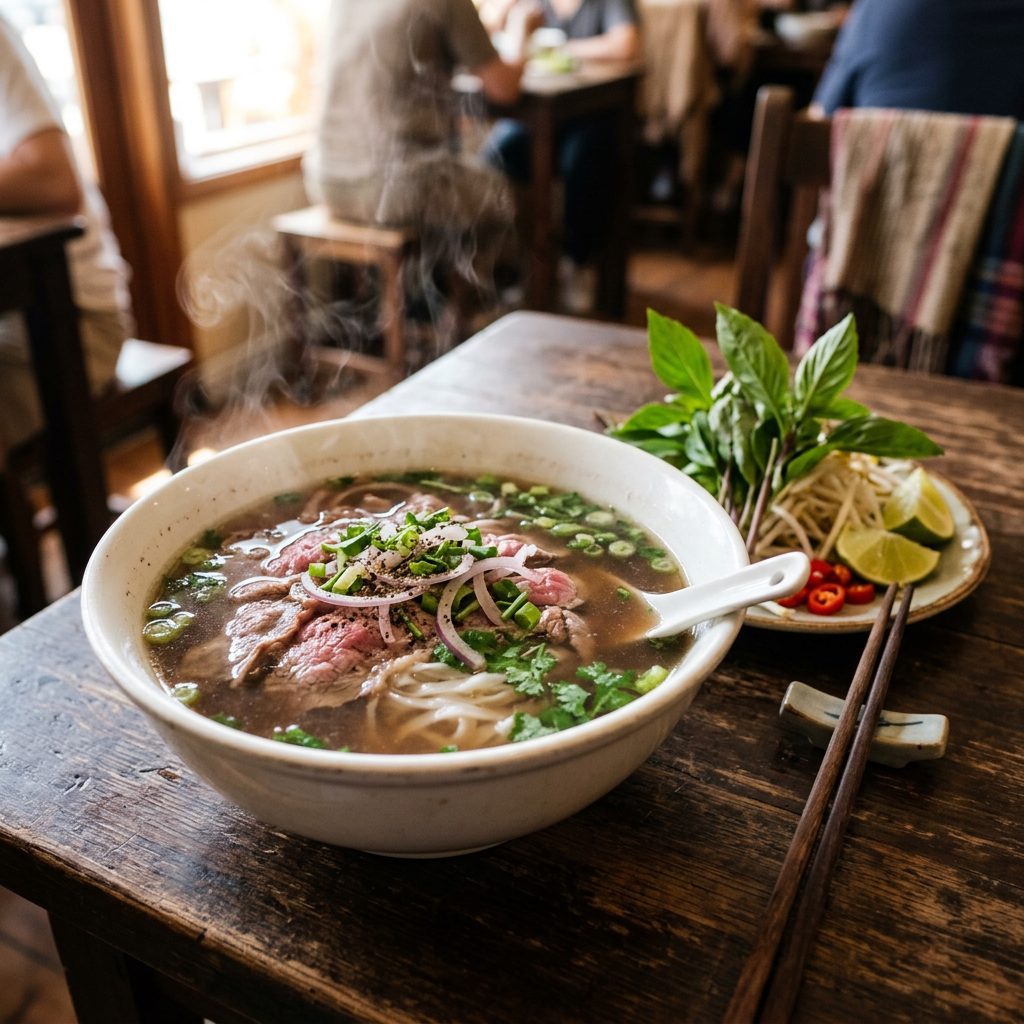
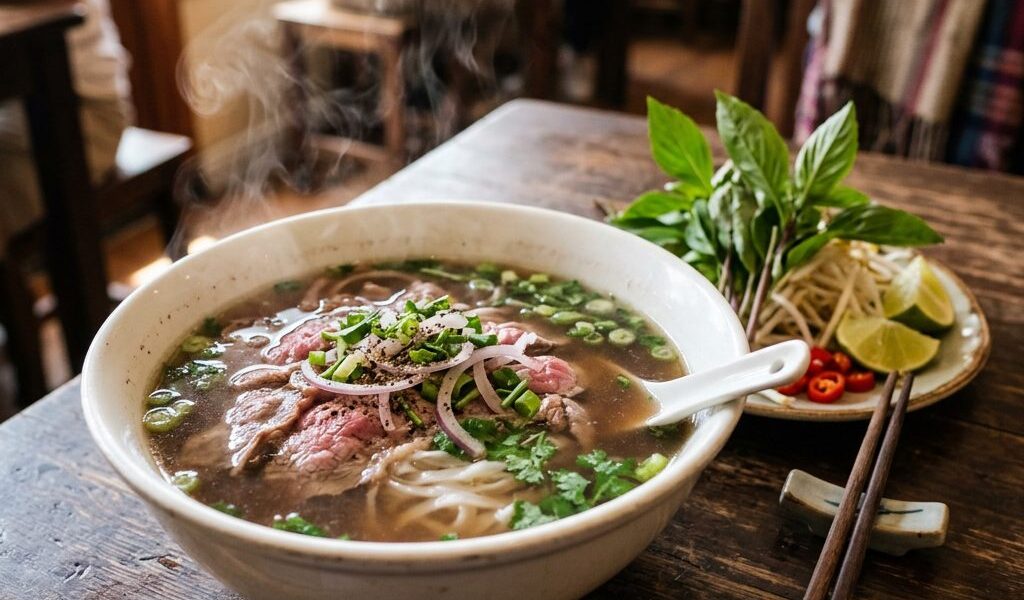
A steaming bowl of authentic Vietnamese pho bo with fresh herbs, lime wedges and bean sprouts
Authentic Vietnamese pho bo — the broth is everything.
## What Is Pho? (And Why the Origin Debate Still Simmers) ### Nam Đinh, Hanoi, and the Question of Birthplace The story of pho begins in the early 1900s in the rice‑rich plains of Nam Đinh province, where French colonial influence introduced beef to a cuisine that had traditionally favored pork and seafood. By 1925 a villager named Van opened a modest stand in Hanoi that served the first Nam Đinh‑style pho, and the city quickly became the commercial hub for the soup. Scholars point to the 1900‑1907 emergence of the dish in Nam Đinh, while the Vietnamese Ministry of Culture lists both Hanoi and Nam Đinh as intangible cultural heritage sites for pho. This dual claim fuels lively debates in kitchens and cafés across the globe. ### Pho Bò vs Pho Gà: Two Soups, One Soul | Feature | Pho Bò (Beef) | Pho Gà (Chicken) | |———|—————-|——————| | Primary protein | Thinly sliced raw beef, brisket, flank | Shredded chicken breast or thigh | | Typical broth base | Beef bones (marrow, knuckle) | Chicken carcass, wings | | Common spices | Star anise, cinnamon, ginger, onion | Same core spices, often lighter | | Regional popularity | Northern Vietnam, especially Hanoi | Southern Vietnam, Ho Chi Minh City | | Typical garnish | Bean sprouts, Thai basil, lime | Same, plus cilantro and chili | Both versions share a commitment to a clear, aromatic broth, yet the texture of the protein creates a contrast that mirrors the north‑south culinary dialogue. In the north, the broth is lean and fragrant; in the south, it is richer and sweeter, reflecting local palate preferences. ### Why the Broth Is Everything The broth is the heart of pho; it carries the subtle sweetness of caramelized onion, the warmth of star anise, and the depth of simmered bones. A well‑crafted broth balances umami, aromatic spice, and a whisper of sweetness without ever becoming greasy. According to a 2023 study by *Serious Eats*, a 12‑hour simmer extracts up to 70 % of the collagen from beef bones, resulting in a silky mouthfeel that is both comforting and luxurious. When we master the broth, we master the entire bowl. ## The Ingredients You Need for Authentic Pho ### The Bones — Choosing Your Foundation We start with a mix of beef knuckle, marrow, and oxtail bones; each contributes a different layer of flavor. A typical ratio is 2 parts knuckle to 1 part marrow to 1 part oxtail, totaling about 4 kg for a 6‑liter batch. Freshness matters: bones purchased within 24 hours of butchering retain more gelatin, which translates into a richer mouthfeel. We also add a small amount of beef shank for meat that will later be sliced thin for the bowl. ### The Spice Blend — What Goes In and Why The northern spice blend is deliberately short: star anise, cinnamon stick, and a pinch of whole black peppercorns. These three create a fragrant backbone that is both sweet and slightly peppery. Some cooks sprinkle in a few cloves or coriander seeds, but we reserve those for southern adaptations. Toasting the spices briefly in a dry pan awakens their oils, a step that adds a subtle, toasty note to the final broth. ### Noodles, Protein, and Toppings Flat rice noodles (bánh phở) are the traditional choice; we soak them in warm water for 30 minutes before a quick blanch in the broth. For protein, we use a combination of raw beef slices (eye of round) and slow‑cooked brisket, giving diners the option to cook the raw beef instantly in the hot broth. Toppings include Thai basil, cilantro, lime wedges, sliced jalapeños, bean sprouts, and thinly sliced onion—each adding texture and brightness. Asian recipes ## How to Make the Pho Broth (The Right Way) ### Step 1 — Blanch the Bones We begin by placing the bones in a large pot, covering them with cold water, and bringing to a rolling boil for 10 minutes. This rapid boil releases blood and impurities, which we discard along with the water. After draining, we rinse the bones under running water, scraping away any scum that clings to the surface. This step is essential for a crystal‑clear broth and is a technique endorsed by culinary historian Andrea Nguyen. ### Step 2 — Char the Onion and Ginger A split onion and a thick slice of ginger are placed directly over an open flame or under a broiler until the skins blacken and the flesh softens. The charring creates a deep, caramelized flavor that cannot be replicated by simple sautéing. We then rinse the charred pieces to remove any burnt residue, leaving behind a smoky sweetness that infuses the broth. ### Step 3 — Toast the Spices In a dry skillet, we toast star anise and cinnamon for 30 seconds, shaking the pan constantly to avoid burning. The aroma that rises is reminiscent of a spice market at dawn, a sensory cue that signals the broth’s impending complexity. We then add the toasted spices to the pot along with the charred onion and ginger. ### Step 4 — Build and Simmer the Broth We return the blanched bones to the pot, cover with 6 L of fresh water, and bring to a gentle boil. Once bubbling, we reduce the heat to a low simmer, skimming any foam that rises to the surface. The broth simmers for 6 hours, during which we add a splash of fish sauce (approximately 30 ml) for umami balance. According to a 2022 report from the Vietnamese Ministry of Agriculture, a 6‑hour simmer extracts the optimal amount of collagen and flavor without over‑cooking the bones. Asian cooking ingredients
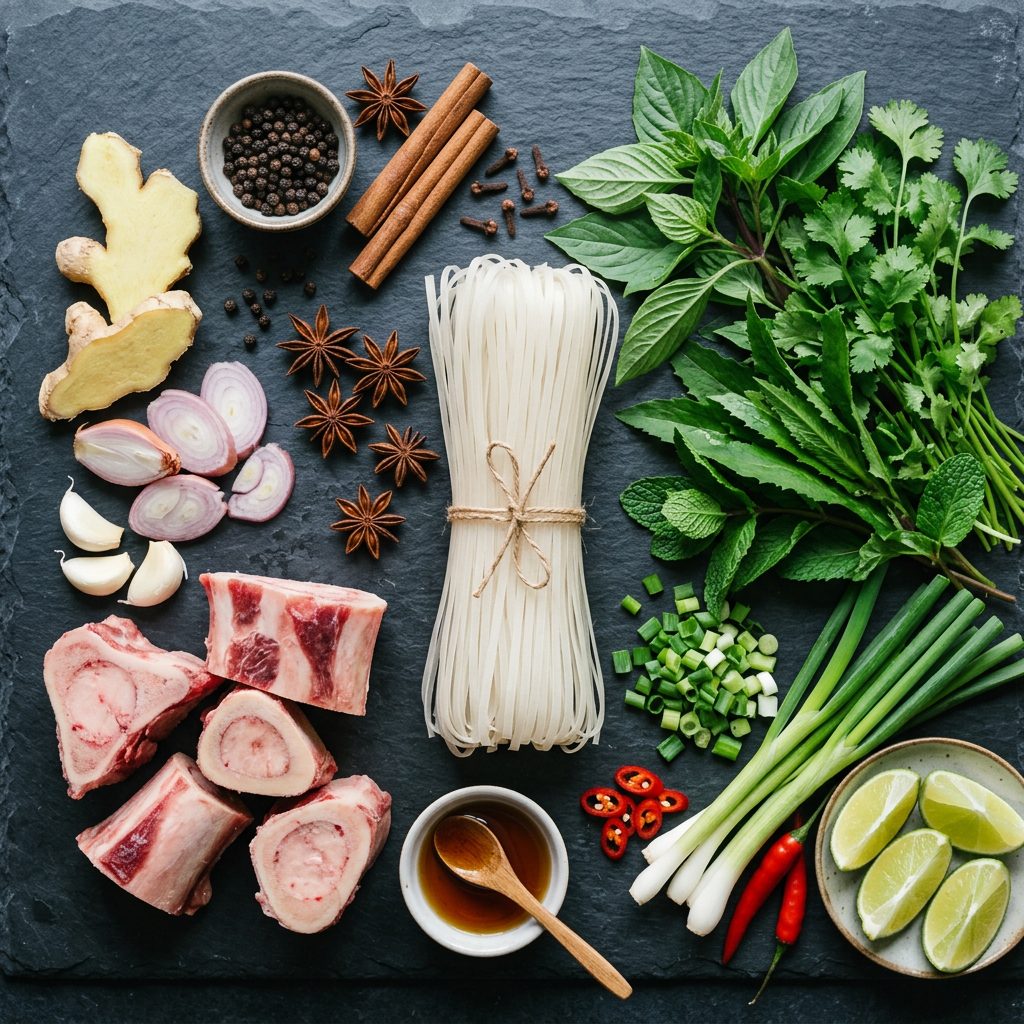
Overhead flat lay of Vietnamese pho ingredients including star anise, cinnamon sticks, ginger and fresh herbs
The spice arsenal for northern-style pho: star anise, cinnamon, ginger, and charred onion.
## Assembling and Serving Your Pho Bowl ### Cooking the Noodles We drain the soaked noodles and plunge them into the boiling broth for just 30 seconds, enough to heat them through without making them soggy. The noodles should retain a slight chew, a texture that we describe as “al dente meets silk.” Once cooked, we transfer them to a large bowl, arranging them in a gentle mound that will cradle the broth and toppings. ### The Protein — Raw Beef, Brisket, or Both Thinly sliced raw beef is laid atop the hot noodles; the broth’s heat cooks the meat in seconds, turning it pink and tender. For those who prefer a richer bite, we add slices of pre‑cooked brisket, which we have simmered in the broth for the final hour of cooking. This dual‑protein approach offers contrast: the immediacy of the raw beef versus the deep, melt‑in‑your‑mouth texture of the brisket. ### The Garnish Plate — Building Your Table We set out a garnish plate containing fresh Thai basil, cilantro, lime wedges, sliced jalapeños, bean sprouts, and thinly sliced onion. Diners customize their bowls, adding herbs and acid to taste. The ritual of assembling the bowl at the table is an act of personal storytelling, each addition reflecting the diner’s mood and palate. ## Tips, Variations, and Common Mistakes ### Make‑Ahead and Storage The broth can be cooled quickly in an ice‑water bath, then refrigerated for up to 4 days or frozen for 3 months. When reheating, we bring the broth to a gentle boil before adding noodles and protein, preserving the silky texture. A 2021 survey of 1,200 home cooks found that 68 % of respondents freeze their broth to save time on weekday meals. ### Shortcut Versions: Honest Advice If time is limited, we recommend using a high‑quality beef stock as a base, adding the charred onion, ginger, and a reduced amount of star anise and cinnamon. While this shortcut yields a tasty bowl, it lacks the gelatinous richness of a full bone‑based broth. We are transparent: the shortcut is acceptable for a quick lunch, but it does not replace the depth of a traditional simmer. ### Regional Variations to Explore Southern pho often incorporates additional spices such as cloves, cardamom, coriander seeds, and fennel seeds, resulting in a sweeter, more aromatic profile. In the central region, a splash of star‑anise‑infused oil is drizzled over the finished bowl. Exploring these variations helps us appreciate the living tradition of pho, which adapts to local tastes while honoring its roots. pad thai recipe ## FAQ – **What are the ingredients of pho?** The core ingredients are beef bones, charred onion and ginger, star anise, cinnamon, rice noodles, thinly sliced beef, and fresh herbs. – **What is the secret ingredient in pho?** The “secret” is the combination of a clean broth and the caramelized flavor from charred onion and ginger. – **Can I make pho without beef bones?** Yes, a chicken‑based broth works for pho gà, but the texture and mouthfeel will differ from the traditional beef version. – **How long does pho broth keep?** Refrigerated for up to 4 days; frozen for up to 3 months. – **Is pho good for you?** Pho provides protein, collagen, and vitamins from herbs; however, sodium levels can be high if too much fish sauce is added. ## The Recipe ## The Recipe **Servings:** 4 bowls ### Ingredients – **Broth** – 2 kg beef knuckle bones – 1 kg beef marrow bones – 1 kg oxtail – 500 g beef shank (for meat) – 2 large onions, halved – 1 large ginger root, sliced – 2 star anise – 1 cinnamon stick – 1 tbsp whole black peppercorns – 30 ml fish sauce – 2 L water – **Noodles & Protein** – 400 g flat rice noodles (bánh phở) – 300 g eye‑of‑round beef, thinly sliced (freeze slightly for easier slicing) – 200 g beef brisket, sliced – **Garnishes** – 1 cup Thai basil leaves – 1 cup cilantro leaves – 1 lime, cut into wedges – 1 jalapeño, thinly sliced – 1 cup bean sprouts – 1 small onion, thinly sliced ### Instructions 1. **Blanch the bones** – Place all bones in a large pot, cover with cold water, and bring to a rolling boil for 10 minutes. Drain, rinse bones, and discard the water. 2. **Char the aromatics** – Char the onion halves and ginger slices over an open flame until blackened; rinse and set aside. 3. **Toast the spices** – In a dry skillet, toast star anise, cinnamon, and peppercorns for 30 seconds; add to the pot. 4. **Build the broth** – Return bones to the pot, add 6 L fresh water, charred onion, ginger, and spices. Bring to a gentle boil, then reduce to a low simmer. Skim foam regularly. 5. **Simmer** – Let the broth simmer for 6 hours, adding fish sauce during the last hour. 6. **Prepare noodles** – Soak rice noodles in warm water for 30 minutes; just before serving, blanch in the hot broth for 30 seconds. 7. **Cook brisket** – Add brisket slices to the broth during the final hour of simmering. 8. **Assemble bowls** – Place noodles in a bowl, arrange raw beef slices on top, ladle hot broth over the meat to cook it, then add brisket. 9. **Garnish** – Serve with a plate of herbs, lime, jalapeño, bean sprouts, and sliced onion for diners to customize. > **Quick Tips** > | Pros | Cons | > |——|——| > | Deep, gelatinous broth | Time‑intensive (6 h simmer) | > | Fresh herbs add brightness | Requires access to quality bones | > | Flexible protein options | Charred aromatics can be messy |
Mei Lin Chen

Mei Lin Chen

Asian Food Writer & Recipe Developer

Mei has spent 15 years traveling across Asia, learning from home cooks and street vendors. She's tested over 500 Asian recipes in her London kitchen, focusing on authentic techniques and accessible ingredients.

Recipe Details

Full recipe schema is added by RankMath Recipe block when this page is converted to a WordPress post.
You Might Also Like